Pothos is one of the most forgiving houseplants you can own, but light still plays a huge role in how healthy, full, and vibrant it looks. While this plant is famous for surviving almost anywhere, the best light conditions help it grow faster, develop larger leaves, and maintain strong color.
This guide breaks down exactly what kind of light pothos prefers, how to read your space, and how to adjust if your plant isn’t thriving.
Why Light Matters for Pothos
Light fuels photosynthesis, which is how pothos produces energy to grow new leaves and vines. When light is balanced, the plant stays compact, lush, and evenly colored. When light is off, pothos will still survive—but you’ll see signs of stress over time.
Good light results in:
- Faster growth
- Larger, thicker leaves
- Better color and variegation
- Stronger vines with shorter gaps between leaves
Poor light often causes:
- Slow or stalled growth
- Smaller leaves
- Long, leggy vines
- Fading or dull leaf color
Ideal Light Conditions for Pothos
Bright Indirect Light (Best Overall)
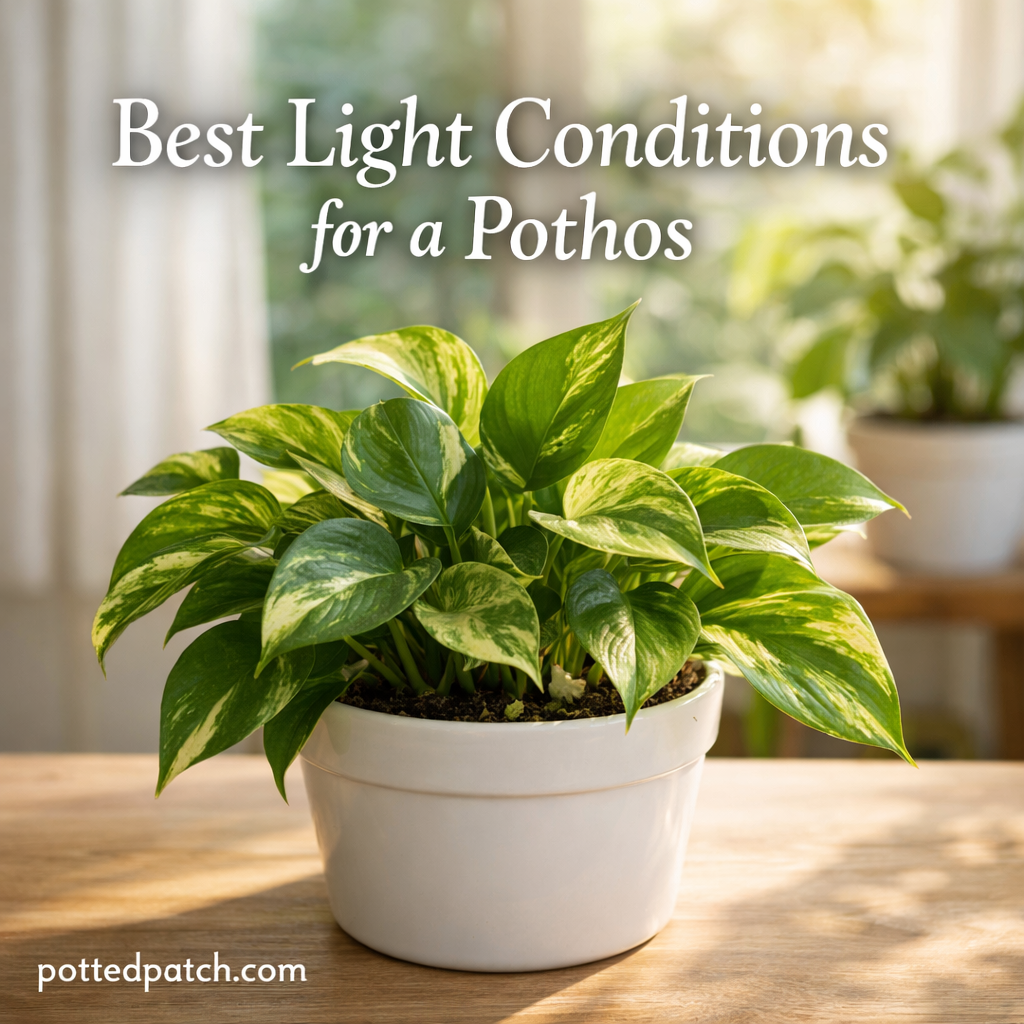
Bright, indirect light is the sweet spot for pothos.
This means:
- Plenty of natural light
- No direct sun rays hitting the leaves
- Light that fills the room rather than beams directly onto the plant
Ideal placements include:
- Near an east-facing window
- A few feet back from a south- or west-facing window
- Rooms with large windows and sheer curtains
In these conditions, pothos grows quickly and maintains its classic trailing shape.
Medium Light (Still Very Good)
Pothos also performs well in medium light, especially in homes without large windows.
Medium light includes:
- Rooms that feel naturally bright during the day
- Light coming from a nearby window, but not close enough to read small print easily
- Filtered daylight through blinds or curtains
Growth will be slower than in bright indirect light, but the plant will still look healthy and full with proper care.
Low Light (Survivable, Not Ideal)
Pothos is often labeled a low-light plant—and technically, that’s true. It can survive in low light, but it won’t thrive there.
Low light includes:
- Interior rooms with little natural light
- Hallways or corners far from windows
- Spaces where artificial lights are the main source
In low light:
- Growth becomes very slow
- Leaves may shrink in size
- Variegated varieties lose contrast
- Vines stretch toward the nearest light source
If your pothos lives in low light, patience is key. Adjust watering carefully, since the soil will dry more slowly.
Can Pothos Handle Direct Sunlight?
Short answer: not well.
Direct sunlight—especially midday or afternoon sun—can damage pothos leaves.
Signs of too much direct sun include:
- Yellow or pale patches on leaves
- Brown, crispy edges
- Leaf scorch that doesn’t recover
Morning sun from an east-facing window is usually safe, but harsh afternoon sun should always be filtered or avoided.
How Varieties Affect Light Needs
Not all pothos varieties react the same way to light.
Solid Green Pothos
- Tolerates lower light better
- Maintains color in dimmer spaces
- Ideal for offices or shaded rooms
Variegated Pothos (Marble Queen, Golden, Neon)
- Needs brighter light to keep patterns vivid
- Loses variegation in low light
- Performs best near bright windows with indirect light
If leaf patterns start fading, it’s usually a sign the plant needs more light.
How to Tell If Your Pothos Is Getting the Right Light
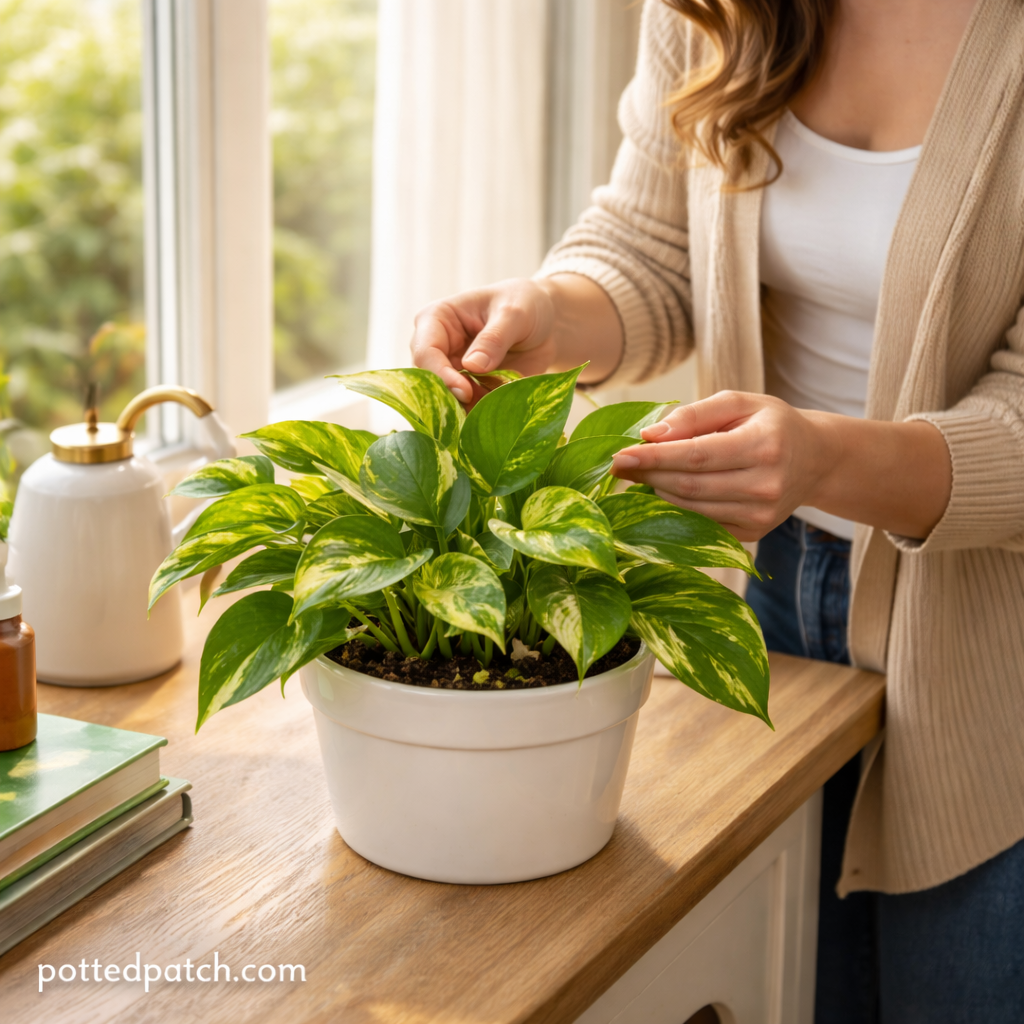
Your plant will tell you what it needs—if you know what to look for.
Signs of Too Little Light
- Slow or no new growth
- Long stretches of vine between leaves
- Smaller, thinner leaves
- Loss of variegation
Signs of Too Much Light
- Yellowing leaves
- Burned or crispy spots
- Drooping despite moist soil
Healthy pothos leaves should be:
- Firm, not floppy
- Medium to deep green (or vibrant variegation)
- Evenly spaced along the vine
Adjusting Light Without Moving Windows
If your home’s natural light is limited, you still have options.
Rotate the Plant
Turning the pot every couple of weeks helps even out growth and prevents leaning.
Use Sheer Curtains
Sheer curtains soften harsh sunlight while keeping brightness high.
Supplement With Grow Lights
Low-watt LED grow lights work well for pothos, especially in darker rooms or during winter months.
Use grow lights for:
- 8–12 hours per day
- A distance of 12–24 inches from the plant
- Consistent daily timing
Seasonal Light Changes to Keep in Mind
Light changes throughout the year, even if your plant stays in the same spot.
- Winter light is weaker and shorter
- Summer sun is stronger and can shift angles
- A window that’s safe in winter may be too intense in summer
It’s normal to:
- Move pothos slightly closer to windows in winter
- Pull it back or add filtering during summer
Small adjustments make a big difference.
Final Thoughts
Pothos is adaptable, but the best results come from giving it bright, indirect light whenever possible. While it can survive in low light, providing better lighting leads to faster growth, healthier leaves, and a more attractive plant overall.
If you’re unsure, aim for a space that feels naturally bright during the day without direct sun hitting the leaves—and adjust slowly as your pothos responds.