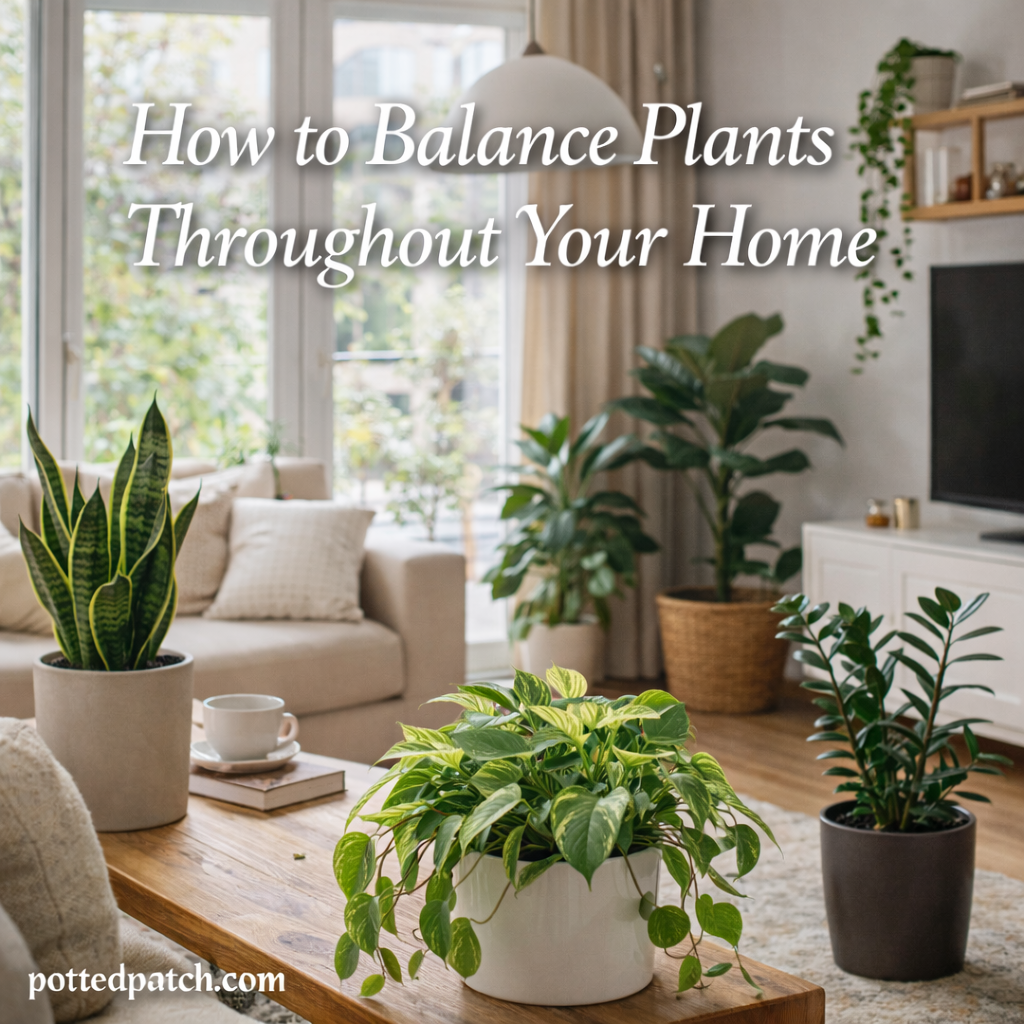
Adding plants to your home isn’t just about filling empty corners. When plants are placed thoughtfully, they create visual balance, guide the eye, and make a space feel calm and intentional rather than cluttered.
This guide shows you how to balance plants throughout your home room by room, helping greenery feel like a natural part of your lifestyle instead of an afterthought.
What Does “Balancing Plants” Really Mean?
Balancing plants means distributing greenery so no single area feels overcrowded or bare. It’s about proportion, flow, and harmony—not symmetry or strict rules.
Well-balanced plant placement:
- Feels natural and effortless
- Supports how you use each space
- Enhances furniture and lighting
- Prevents visual clutter
- Makes rooms feel more alive
Think of plants as part of your home’s layout, not just décor.
Start With Visual Weight, Not Plant Count
One large plant can visually balance several smaller ones. Size, height, and fullness matter more than the number of plants.
When considering balance, think about:
- Tall plants anchoring corners
- Medium plants filling mid-level spaces
- Small plants softening surfaces
Avoid clustering all your largest plants in one room while leaving others empty.
Use Plants to Anchor Key Areas
Plants work best when they visually anchor important parts of a room.
Good anchor spots include:
- Living room corners
- Next to sofas or chairs
- Near windows or sliding doors
- Beside entryway furniture
A tall floor plant in these areas creates stability and structure in the space.
Distribute Plants Across Different Heights
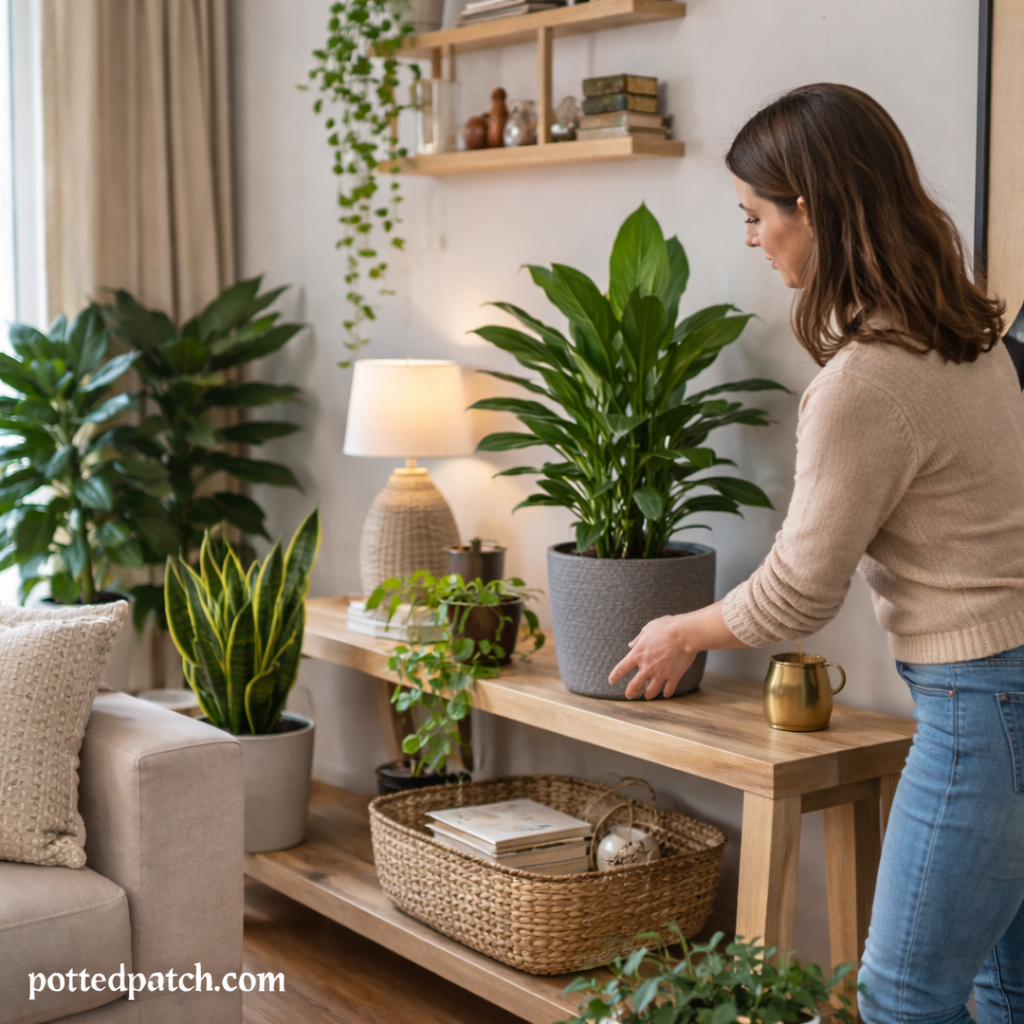
Balanced homes use vertical variety.
Aim to include plants at multiple levels:
- Floor plants for grounding
- Tabletop plants for warmth
- Shelf or hanging plants for upward movement
If all your plants sit at the same height, the space can feel flat or heavy.
Balance Plants With Furniture and Decor
Plants should complement what’s already in the room.
For example:
- Pair a large leafy plant with solid furniture
- Use delicate plants near lighter décor
- Offset hard lines with soft foliage
If a room has bold furniture, fuller plants help soften it. Minimal rooms benefit from a few strong plant statements rather than many small ones.
Think Room-to-Room, Not Room-by-Room
Instead of styling each room in isolation, consider how plants flow throughout the home.
Ask yourself:
- Does greenery appear consistently across spaces?
- Are plants evenly distributed from room to room?
- Does one area feel noticeably empty or overloaded?
This approach creates cohesion and makes your home feel thoughtfully designed.
Balance Light Needs With Placement
Plant balance should always respect light conditions.
Avoid forcing symmetry if lighting doesn’t support it.
Tips for light-aware balance:
- Place light-loving plants near windows
- Use low-light plants deeper in rooms
- Balance visually with plant size, not exact placement
A healthy plant in the right light always looks better than a struggling one placed for symmetry.
Use Groups, But Leave Breathing Room
Grouping plants can be powerful, but spacing matters.
When grouping plants:
- Vary heights and textures
- Leave visible space between pots
- Avoid lining them up perfectly
Balanced groupings feel organic, not crowded.
Entryways, Hallways, and Overlooked Spaces
These areas are often forgotten but make a big impact.
Simple ideas include:
- A single statement plant in an entryway
- Slim plants along hallways
- Small plants on console tables or shelves
These touches help greenery flow naturally through the home.
When Your Home Feels Over-Planted
Too many plants can feel chaotic instead of calming.
Signs you need to rebalance:
- Surfaces feel crowded
- Plants block walkways or light
- Maintenance feels overwhelming
Removing or relocating a few plants often improves balance immediately.
Final Thoughts on Balancing Plants at Home
Balancing plants throughout your home is about intention, not perfection. By thinking in terms of visual weight, height, and flow, plants become part of the home’s rhythm rather than decorative clutter.
When greenery is balanced well, your home feels calmer, brighter, and more connected—room to room. 🌿