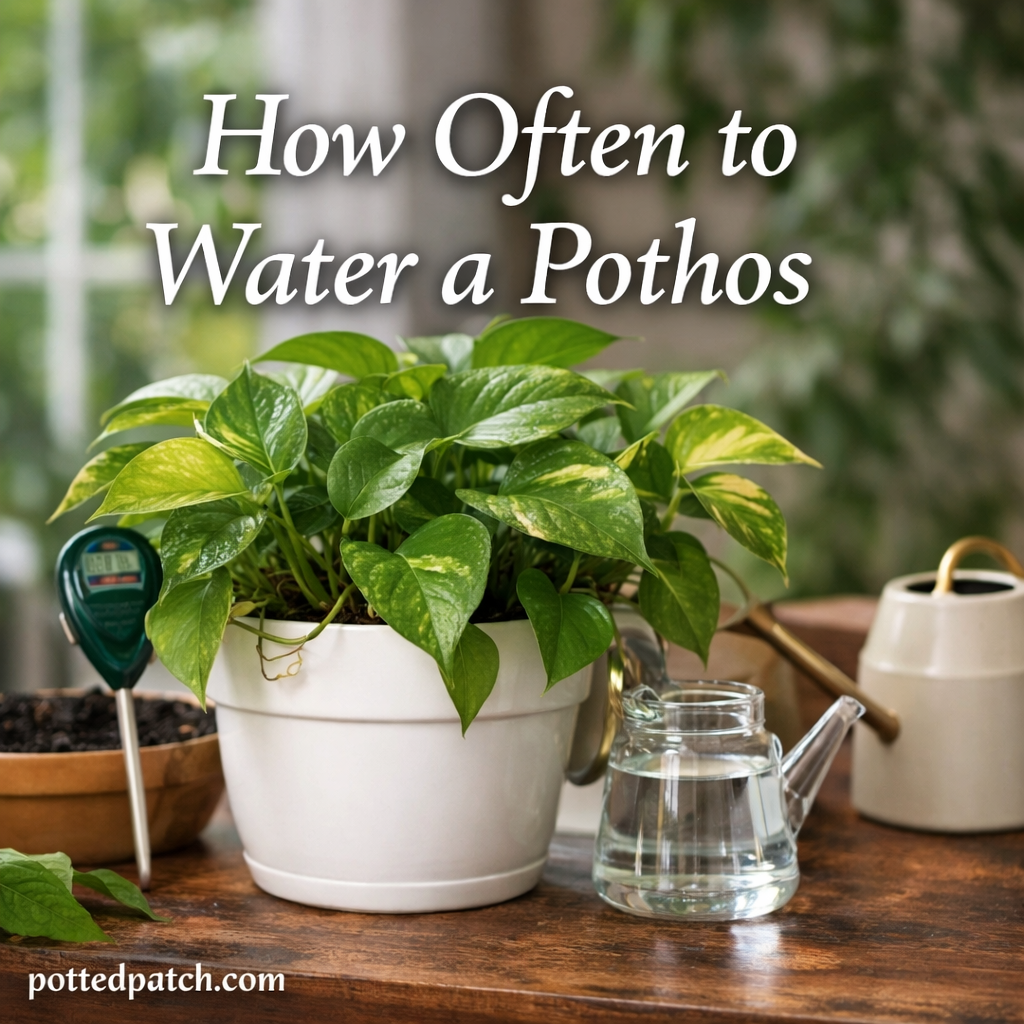
Pothos plants are famously forgiving, but watering is still the one area where most people accidentally stress them out. Too much water leads to yellow leaves and root rot. Too little water causes drooping, curling, and dry brown tips.
The good news? Once you understand how pothos actually use water, getting it right becomes easy and predictable.
This guide walks through how often to water pothos, what factors change the schedule, and how to tell exactly when your plant is thirsty.
How Often Should You Water a Pothos?
On average, most pothos plants need water every 7–10 days.
That said, pothos should never be watered on a strict calendar. They do best when watered based on soil dryness, not the date.
A healthy pothos watering rhythm usually looks like this:
- Spring and summer: every 5–8 days
- Fall: every 7–10 days
- Winter: every 10–14 days
Always adjust based on light, temperature, and pot size.
The Best Way to Tell If Your Pothos Needs Water
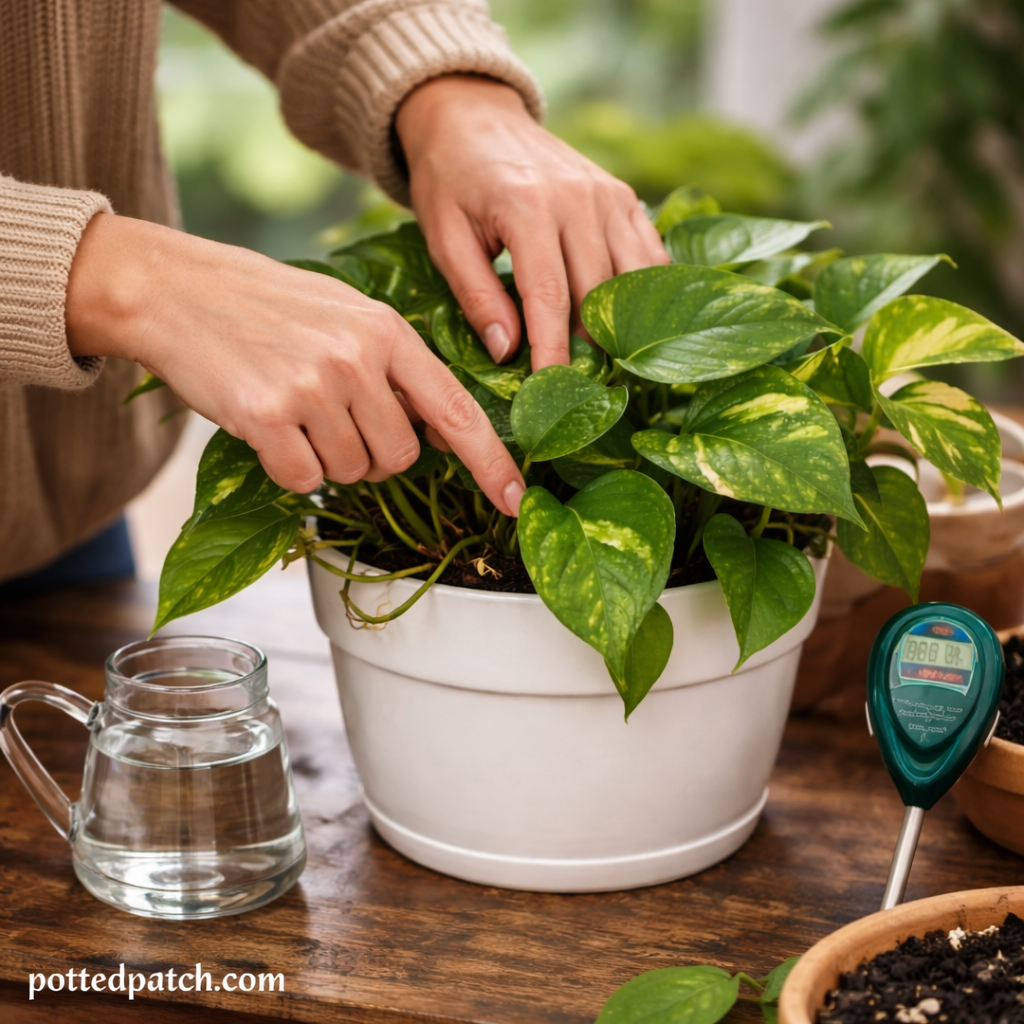
The soil test is more reliable than any schedule.
Check your pothos by doing the following:
- Insert your finger 1–2 inches into the soil
- If the soil feels dry, it’s time to water
- If the soil still feels damp, wait a few more days
You can also lift the pot. A dry pothos pot feels noticeably lighter than a freshly watered one.
Signs You’re Watering Too Often
Overwatering is the most common pothos problem. Watch for these warning signs:
- Yellowing leaves, especially near the base
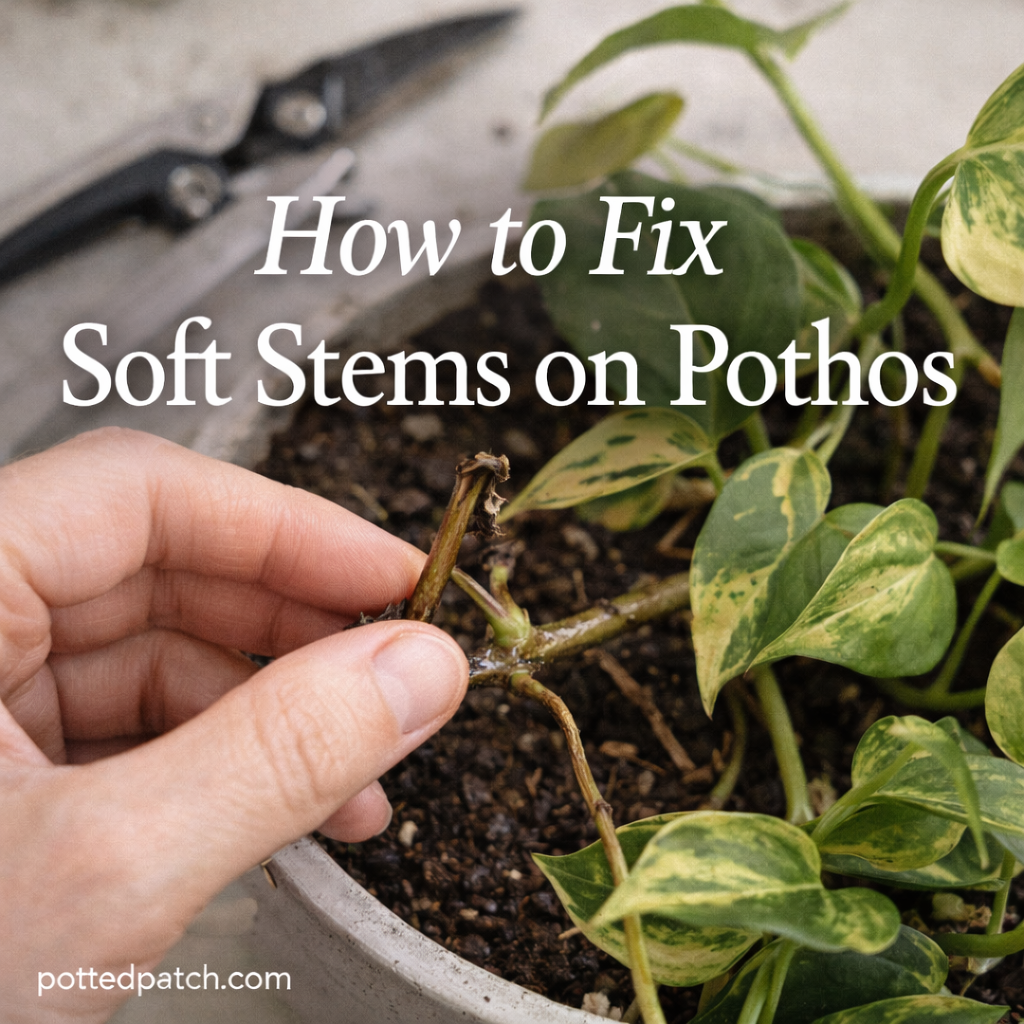
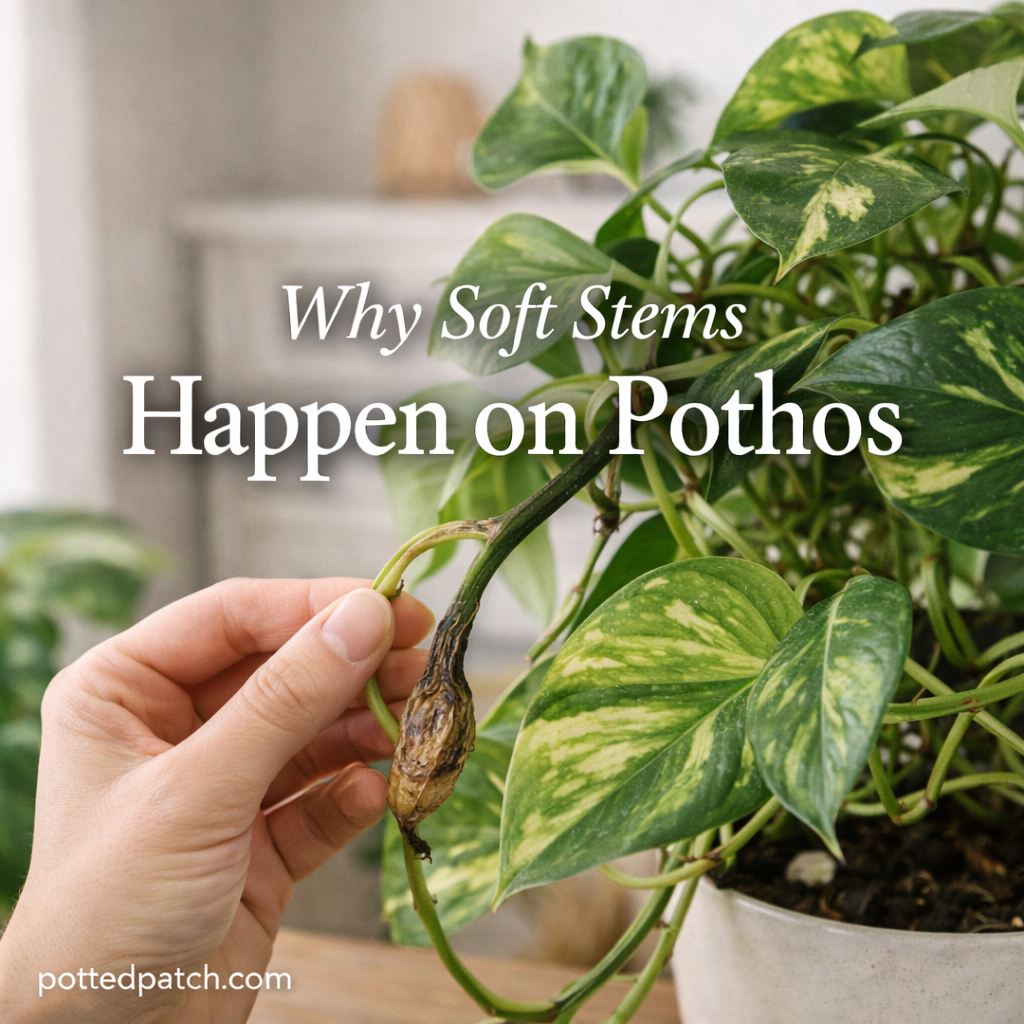
- Soft or mushy stems
- Leaves dropping suddenly
- A musty or sour smell from the soil
- Slow or stalled growth
If you notice these, reduce watering and make sure the pot has proper drainage.
Signs Your Pothos Needs More Water
Underwatering is less dangerous than overwatering, but it still stresses the plant.
Common signs include:
- Leaves drooping or looking limp
- Dry, crispy leaf edges
- Soil pulling away from the sides of the pot
- Leaves curling inward
If caught early, pothos usually bounce back quickly after a thorough watering.
How Light Affects Pothos Watering Frequency
Light directly affects how fast your pothos uses water.
Bright indirect light
- Soil dries faster
- Water more frequently
Medium light
- Balanced drying
- Average watering schedule
Low light
- Soil stays wet longer
- Water less often
A pothos in a bright room may need water twice as often as one placed farther from a window.
Pot Size and Soil Matter More Than You Think
Smaller pots dry out faster and need more frequent watering. Larger pots hold moisture longer.
Soil type also plays a major role:
- Well-draining potting mix dries evenly and prevents root rot
- Heavy or compacted soil stays wet too long
- Pots without drainage dramatically increase overwatering risk
Always use a container with drainage holes and a loose indoor plant mix.
How to Water a Pothos Properly
When you water, do it thoroughly.
Follow these steps:
- Water until excess drains from the bottom of the pot
- Let the pot fully drain before placing it back
- Never leave the plant sitting in standing water
Shallow watering leads to weak roots and uneven moisture.
Seasonal Watering Tips
Pothos growth slows in cooler months, which means less water is needed.
Spring and summer
- Water when the top inch of soil dries
- Expect faster growth
Fall and winter
- Allow soil to dry slightly deeper
- Reduce watering frequency
- Avoid cold drafts and overwatering
Heating systems can dry soil faster, so continue checking moisture rather than relying on season alone.
Common Pothos Watering Mistakes
Avoid these frequent errors:
- Watering on a fixed schedule without checking soil
- Using pots without drainage holes
- Letting water collect in saucers
- Watering lightly instead of deeply
- Assuming drooping always means thirst
Most pothos problems improve once watering habits are corrected.
Final Thoughts on Watering Pothos
Pothos thrive when allowed to dry out slightly between waterings. If you remember one rule, make it this: check the soil, not the calendar.
A properly watered pothos rewards you with steady growth, vibrant leaves, and an easy-care routine that fits almost any home.