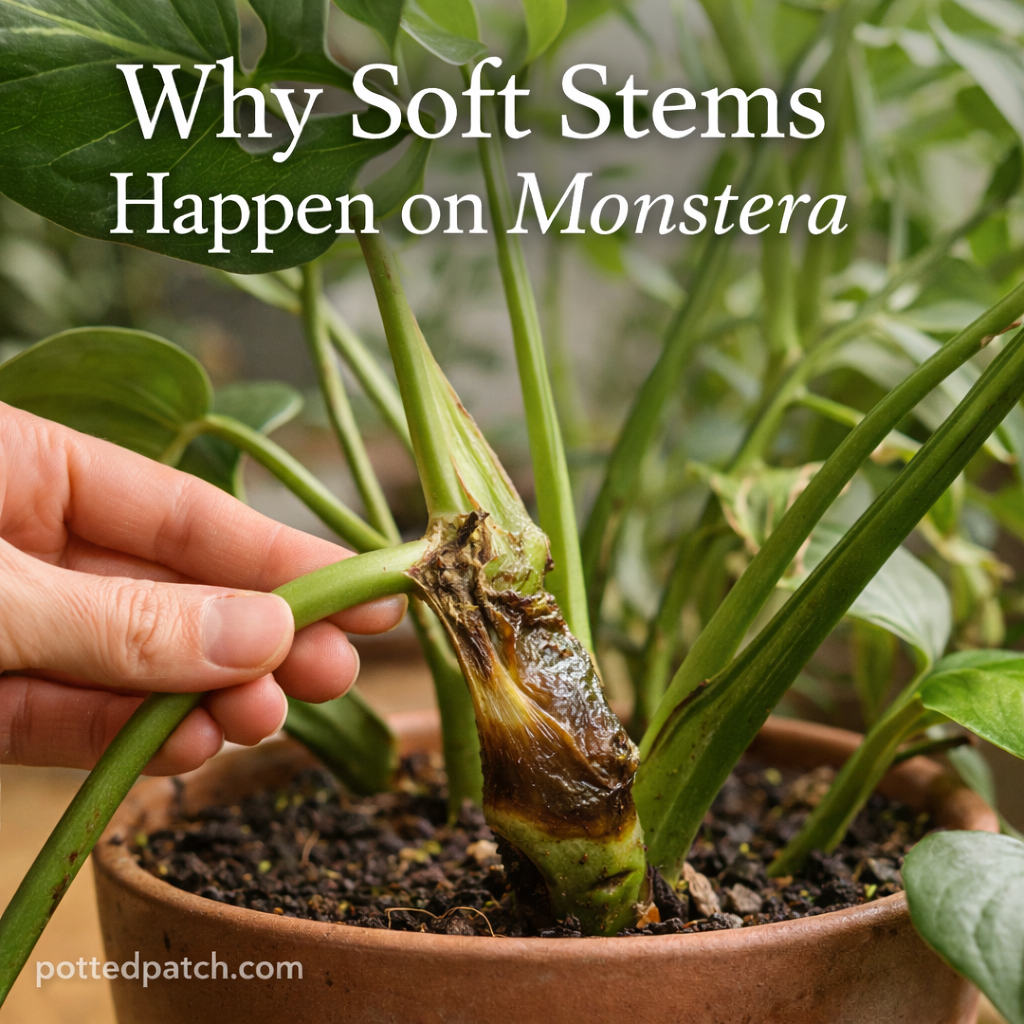
Soft or mushy stems on a Monstera plant are a warning sign that something in its care routine is off. Monstera plants are known for their thick, sturdy stems, so when they start feeling weak, limp, or squishy, it usually means the plant is under stress—most often below the soil surface.
Understanding why soft stems happen is the key to fixing the problem early and preventing permanent damage.
What Healthy Monstera Stems Should Feel Like
A healthy Monstera stem should be:
- Firm to the touch
- Slightly flexible but not bendy
- Upright or well-supported if climbing
- Free from dark, wet, or translucent spots
When stems become soft, the plant is struggling to transport water and nutrients properly.
The Most Common Cause: Overwatering
Overwatering is the number one reason Monstera stems turn soft.
How overwatering affects stems
- Roots sit in constantly wet soil
- Oxygen levels drop in the root zone
- Roots begin to rot
- Rot spreads upward into stems
- Stems lose structure and become mushy
Even if you water “on schedule,” soil that stays wet too long can cause this issue.
Signs overwatering is the problem
- Soft stems near the base
- Yellowing lower leaves
- Soil that smells sour or musty
- Slow or stalled growth
Poor Drainage and Compacted Soil
Sometimes watering frequency isn’t the real issue—drainage is.
Drainage problems that cause soft stems
- Pots without drainage holes
- Heavy or dense potting soil
- Soil compacted over time
- Roots circling tightly with no airflow
When water can’t escape the pot efficiently, roots suffocate, and stem tissue begins to break down.
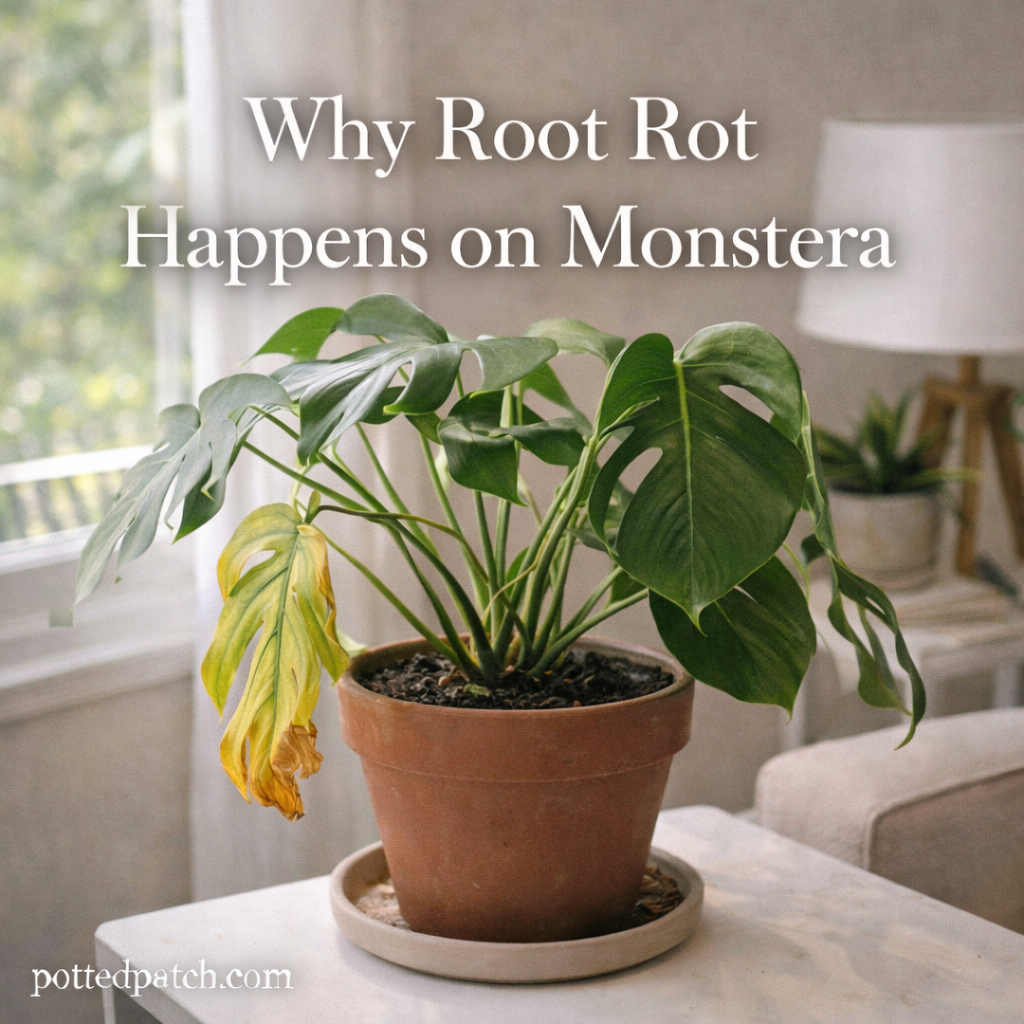
Root Rot Spreading Upward
Soft stems are often a visible symptom of root rot.
How root rot leads to soft stems
- Roots begin to decay in soggy soil
- Diseased roots can’t absorb water correctly
- Bacteria and fungi move upward
- Stem tissue weakens and collapses
If the stem feels soft right at the soil line, root rot is very likely involved.
Cold Stress and Temperature Shock
Monsteras are tropical plants and react poorly to cold conditions.
Cold-related stem damage can happen from:
- Drafty windows in winter
- Cold floors or tile
- Air conditioning vents
- Sudden temperature drops
Cold stress slows water movement inside the plant, causing cells to weaken and stems to lose firmness.
Low Light Combined With Watering Issues
Low light alone rarely causes soft stems, but it becomes a problem when combined with watering mistakes.
Why low light makes things worse
- The plant uses water more slowly
- Soil stays wet longer
- Roots become stressed
- Stems weaken over time
A Monstera kept in dim light needs far less water than one in bright indirect light.
Physical Damage or Internal Stem Rot
In some cases, only one section of the plant is affected.
Possible causes
- Accidental bending or snapping
- Hidden internal rot inside a thick stem
- Old damage that worsened over time
Soft spots that appear suddenly on an otherwise healthy plant may indicate internal decay rather than a full-root issue.
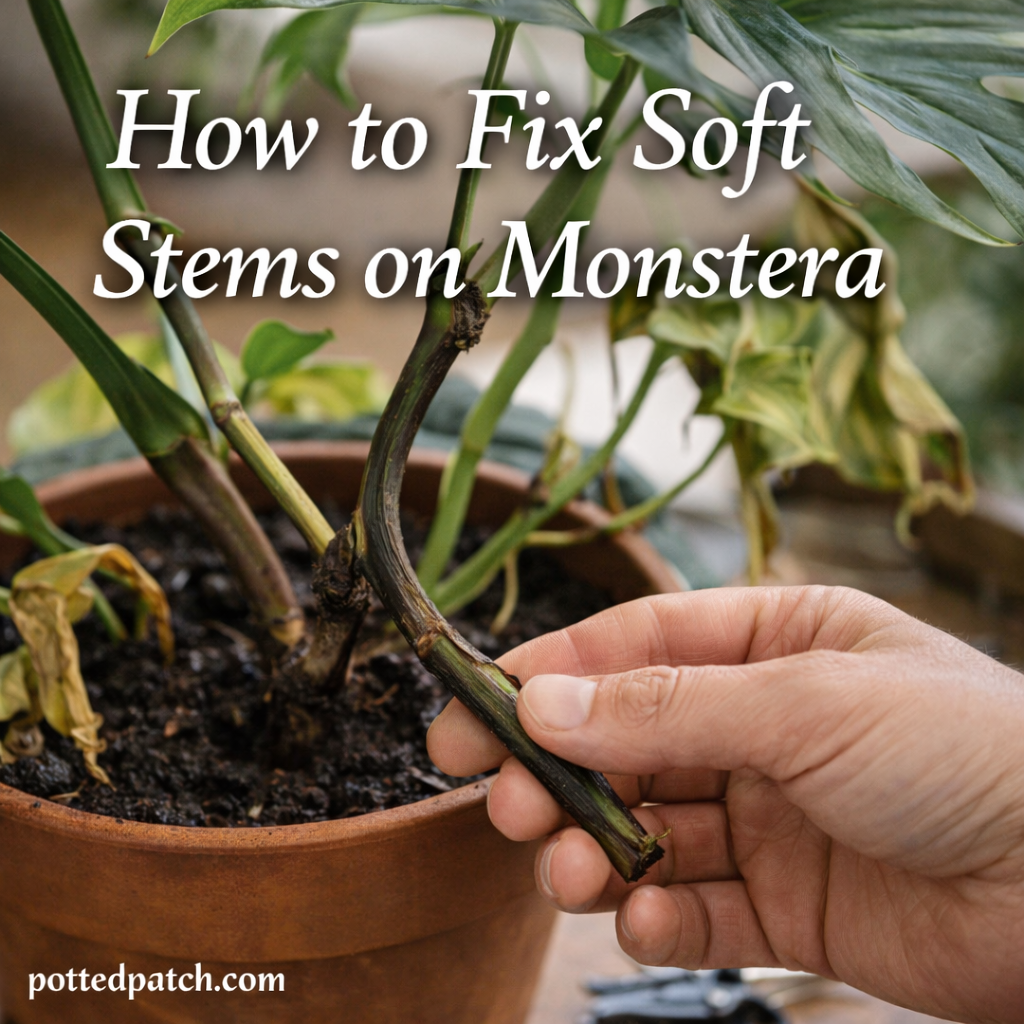
How to Fix Soft Stems on Monstera
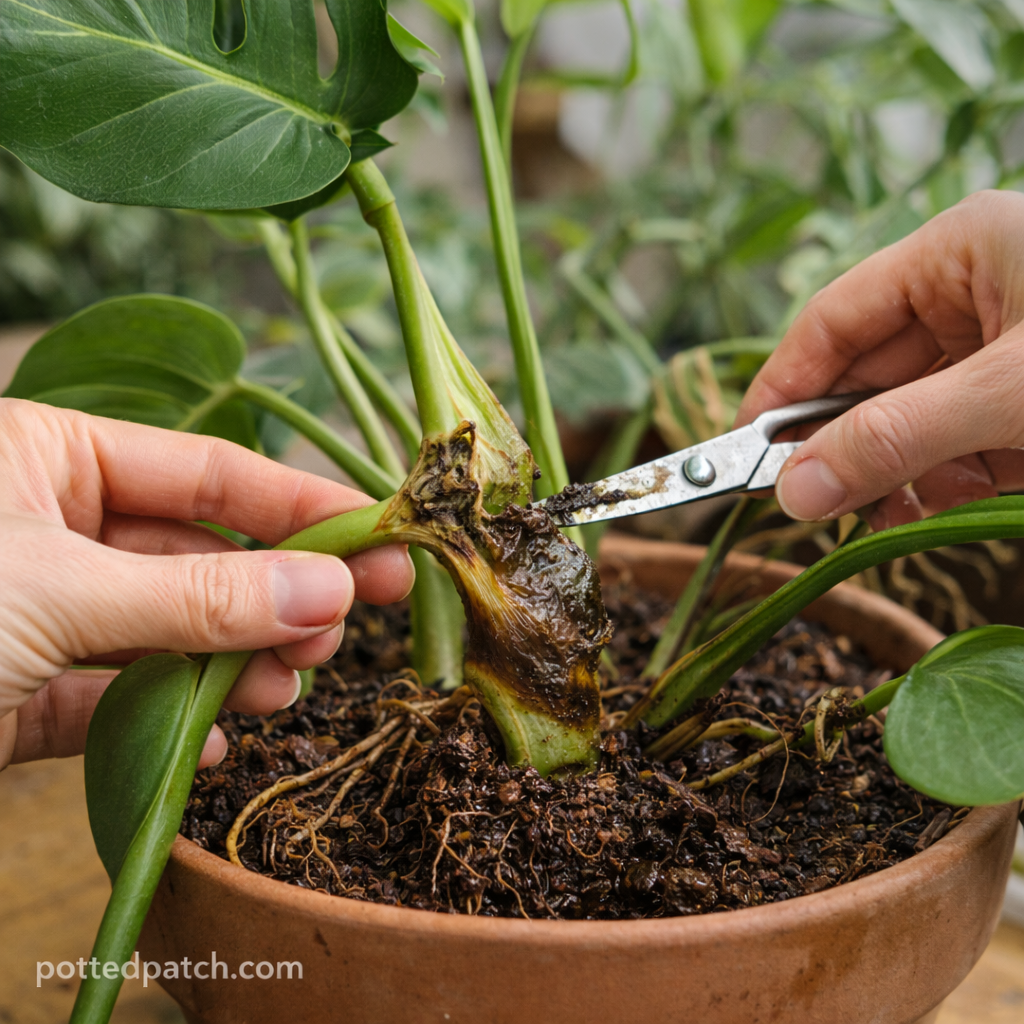
The solution depends on how advanced the problem is.
Step 1: Check the soil and roots
- Remove the plant from its pot
- Inspect roots for dark, mushy sections
- Healthy roots should be firm and light-colored
Step 2: Trim damaged areas
- Cut away rotted roots with clean scissors
- Remove severely softened stem sections
- Disinfect tools between cuts
Step 3: Improve drainage
- Switch to a well-draining soil mix
- Use a pot with proper drainage holes
- Avoid oversized containers
Step 4: Adjust watering habits
- Water only when the top 2 inches of soil are dry
- Empty saucers after watering
- Reduce watering in low light or cooler months
Step 5: Provide support and warmth
- Move the plant to bright, indirect light
- Keep temperatures consistent
- Use a moss pole or stake if stems are weak
Can a Monstera Recover From Soft Stems?
Yes—if caught early.
Monsteras are resilient plants. If some healthy roots and firm stem tissue remain, the plant can recover and produce new growth. However, severely rotted stems rarely firm up again and usually need to be removed to protect the rest of the plant.
Preventing Soft Stems in the Future
Prevention is far easier than repair.
Best prevention practices
- Use airy, fast-draining soil
- Water based on soil dryness, not a schedule
- Provide bright, indirect light
- Avoid cold drafts and temperature swings
- Repot every 1–2 years to refresh soil
Healthy roots lead to strong stems.
Final Thoughts
Soft stems on a Monstera are almost always a sign of root stress, most commonly from excess moisture or poor drainage. By correcting the environment, trimming damaged areas, and adjusting watering habits, you can stop the problem early and help your plant return to firm, healthy growth.
Pay attention to what your Monstera’s stems are telling you—they’re often the first clue something needs fixing. 🌿