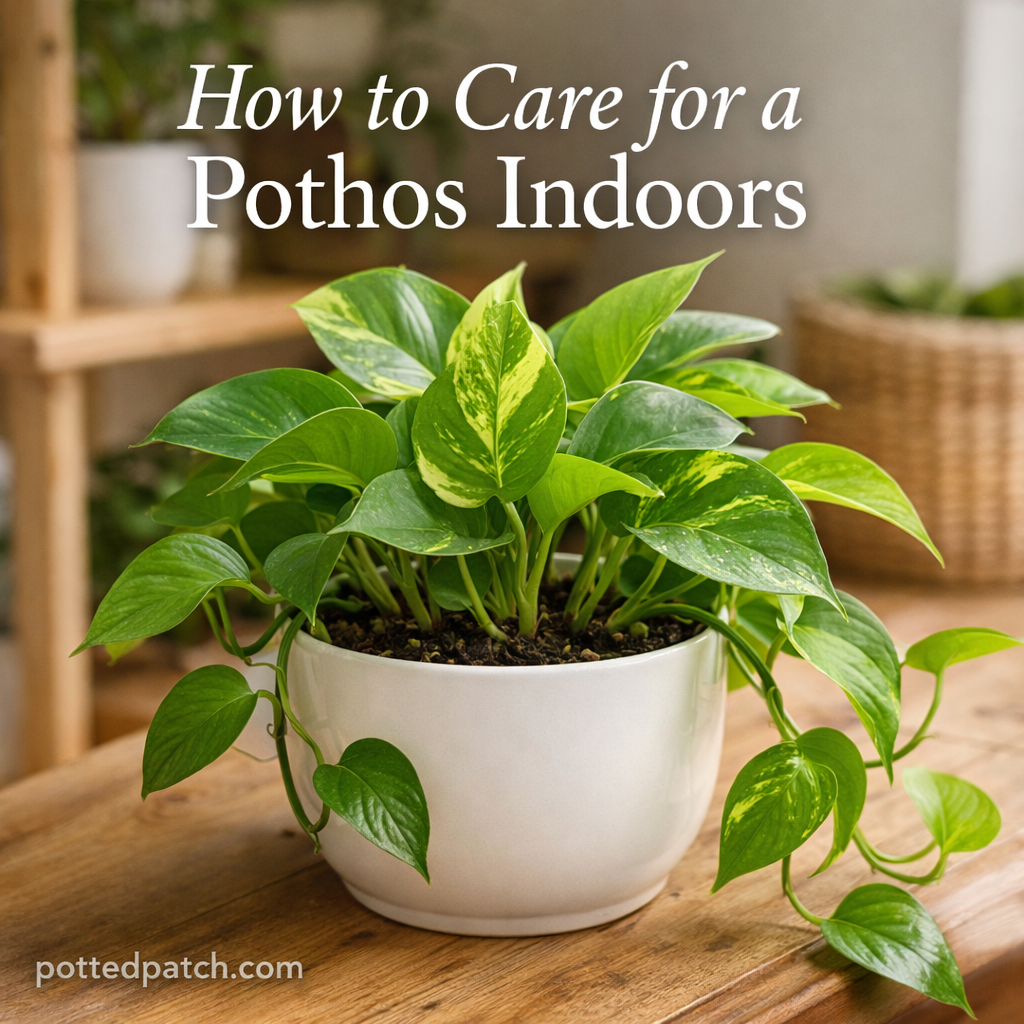
Pothos is one of the easiest and most forgiving houseplants you can grow. Known for its trailing vines and heart-shaped leaves, it adapts well to a wide range of indoor conditions and continues to thrive even with minimal attention. Whether you’re new to houseplants or looking for a low-maintenance addition to your home, pothos is a reliable choice.
This guide walks through everything you need to know to keep a pothos healthy indoors, from light and watering to pruning and troubleshooting common problems.
Understanding Pothos as a Houseplant
Pothos is a tropical vine that naturally grows beneath forest canopies. This background explains many of its indoor care preferences: indirect light, consistent but moderate watering, and good airflow.
Indoors, pothos is valued for:
- Fast growth with minimal effort
- Long trailing vines that work well on shelves and hanging planters
- Tolerance of imperfect care routines
- Airy, decorative foliage that fits almost any room
Best Light Conditions for Indoor Pothos
Pothos grows best in bright, indirect light, but it is highly adaptable.
Ideal light
- Bright rooms with filtered sunlight
- Near windows with sheer curtains
- A few feet back from south- or west-facing windows
Lower-light conditions
- Pothos can survive in low light
- Growth slows and leaves may become smaller
- Variegated varieties may lose some patterning
Light to avoid
- Direct midday sun
- Prolonged exposure to harsh window light
- Outdoor-level brightness through uncovered glass
If your pothos vines look stretched with large gaps between leaves, it’s usually asking for more light.
How Often to Water a Pothos
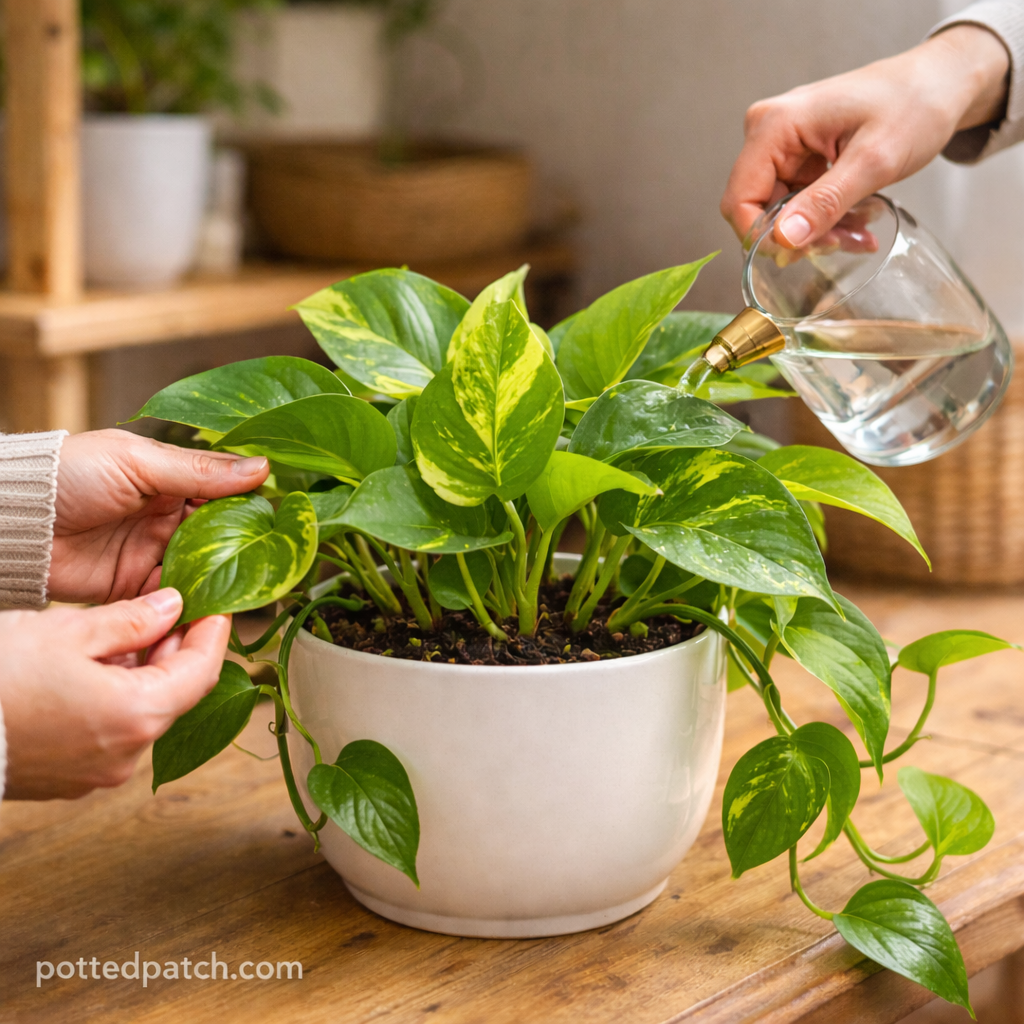
Watering is where most pothos problems begin, but the solution is simple: let the soil partially dry between waterings.
A reliable watering routine
- Check the top 2 inches of soil.
- Water only when this layer feels dry.
- Water thoroughly until excess drains from the bottom.
- Empty the saucer so roots don’t sit in water.
Signs of underwatering
- Limp or drooping leaves
- Curling foliage
- Soil pulling away from the pot edges
Signs of overwatering
- Yellowing leaves
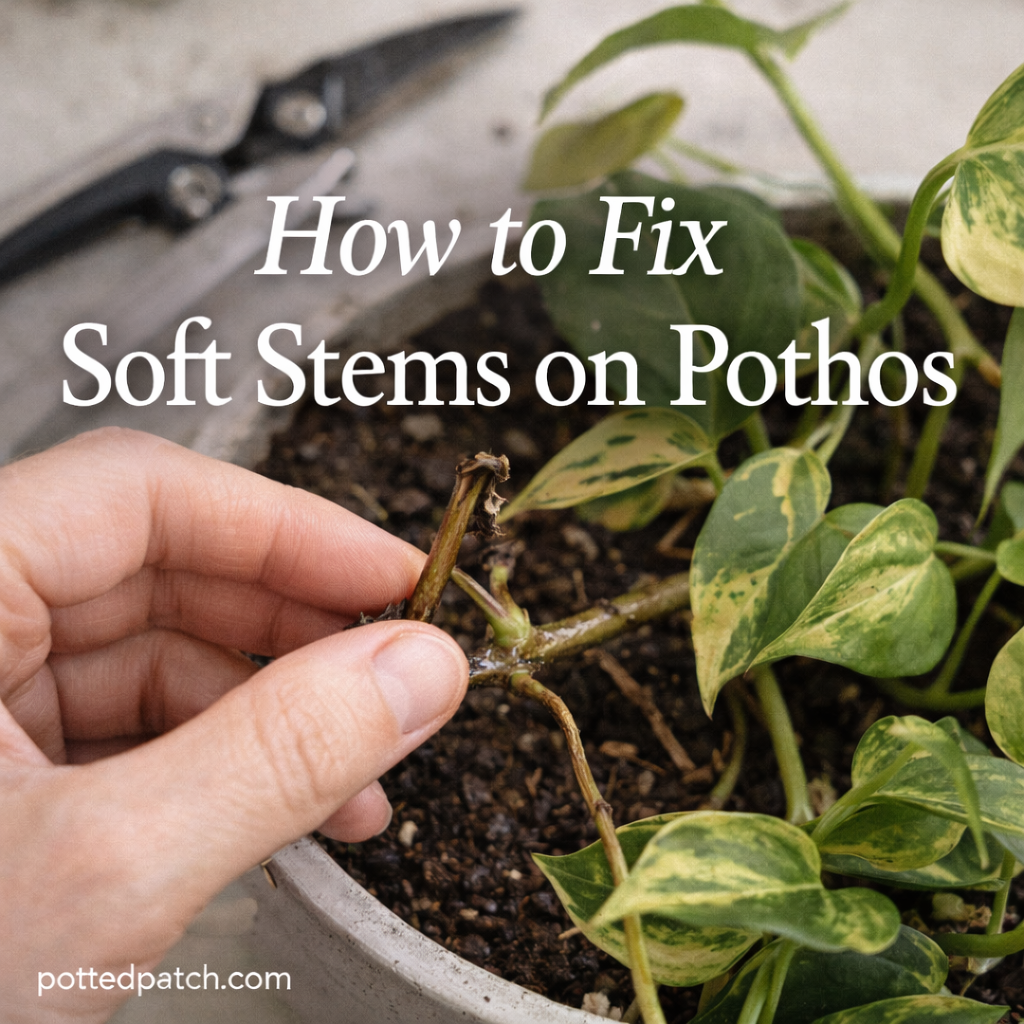
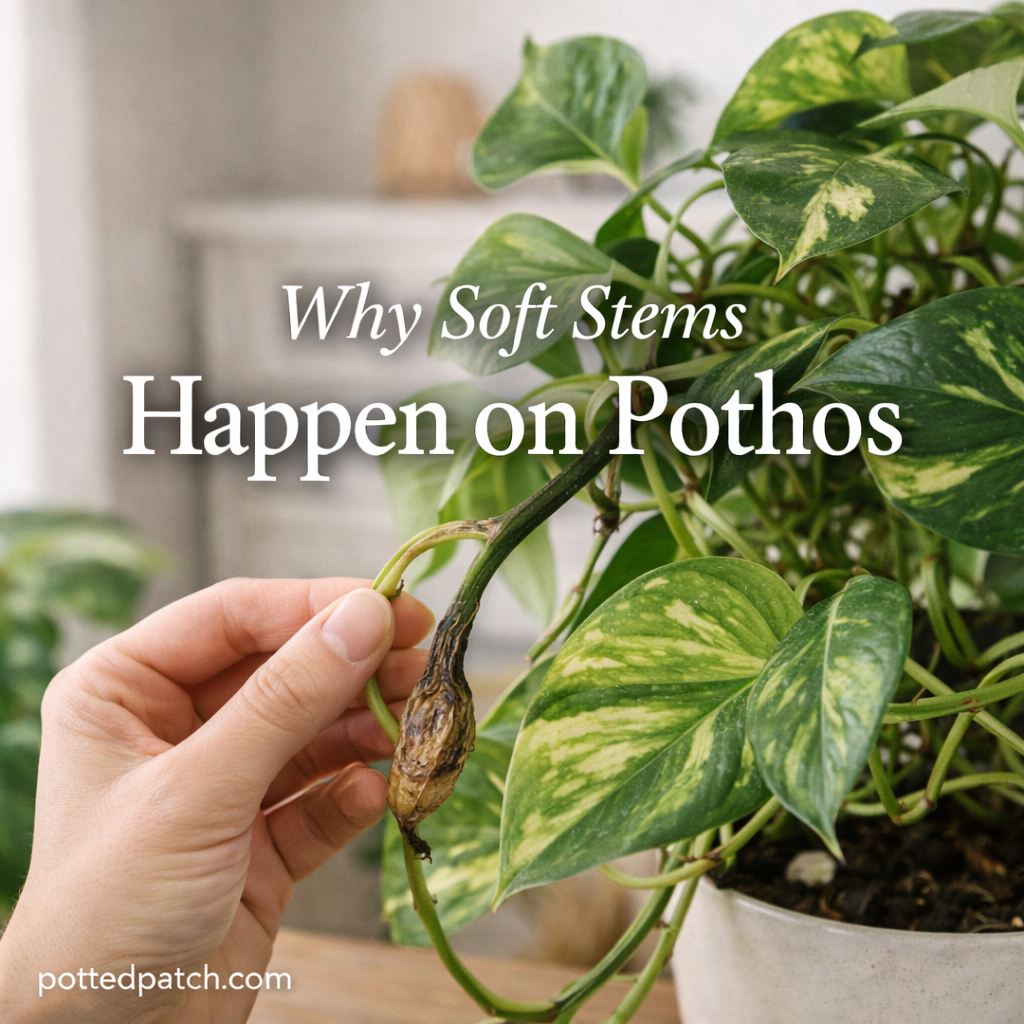
- Mushy stems near the soil line
- A sour or musty smell from the pot
When in doubt, waiting an extra day is safer than watering too soon.
Choosing the Right Soil and Pot
Healthy roots depend on proper drainage.
Best soil mix
- Standard indoor potting mix
- Light, airy texture
- Optional additions: perlite or orchid bark for extra drainage
Pot selection tips
- Always use a pot with drainage holes
- Avoid oversized pots that hold excess moisture
- Plastic and ceramic both work well if drainage is adequate
If water sits on top of the soil for more than a few seconds, the mix may be too dense.
Indoor Temperature and Humidity Needs
Pothos is comfortable in typical home conditions.
Temperature range
- Ideal: 65–85°F (18–29°C)
- Avoid temperatures below 55°F (13°C)
- Keep away from cold drafts and heating vents
Humidity preferences
- Average household humidity is sufficient
- Higher humidity encourages larger leaves
- Dry air may cause brown leaf tips
If your home is very dry, occasional misting or placing the plant near other plants can help slightly, though pothos is not picky.
Fertilizing a Pothos Indoors
Pothos does not require frequent feeding, but light fertilization supports steady growth.
Fertilizer schedule
- Spring and summer: once every 4–6 weeks
- Fall and winter: reduce or stop fertilizing
What to use
- Balanced liquid houseplant fertilizer
- Diluted to half strength
- Apply only to moist soil
Overfertilizing can cause leaf browning and salt buildup, so less is more.
Pruning and Training Pothos Vines
Pruning keeps pothos full and prevents leggy growth.
How to prune
- Use clean scissors or pruning shears
- Cut just above a leaf node
- Trim long vines to encourage branching
Training options
- Let vines trail naturally from shelves
- Wrap vines along walls or windows
- Train upward using a moss pole or trellis
Regular trimming helps maintain a compact, healthy shape.
Propagating Pothos at Home
Pothos is one of the easiest plants to propagate.
Water propagation
- Cut a vine below a node with at least one leaf.
- Place the node in water.
- Change water every few days.
- Roots form within 1–3 weeks.
- Plant in soil once roots are a few inches long.
Soil propagation
- Place cuttings directly into moist potting mix
- Keep soil lightly damp
- Roots develop in a few weeks
Propagation is a great way to thicken your plant or share cuttings with others.
Common Pothos Problems and Solutions
Even hardy plants can show stress signals. Here’s how to respond.
Yellow leaves
- Most often caused by overwatering
- Check soil moisture and drainage
- Remove affected leaves
Brown leaf tips
- Dry air or inconsistent watering
- Flush soil occasionally to remove fertilizer salts
Drooping vines
- Usually underwatering
- Water thoroughly and monitor recovery
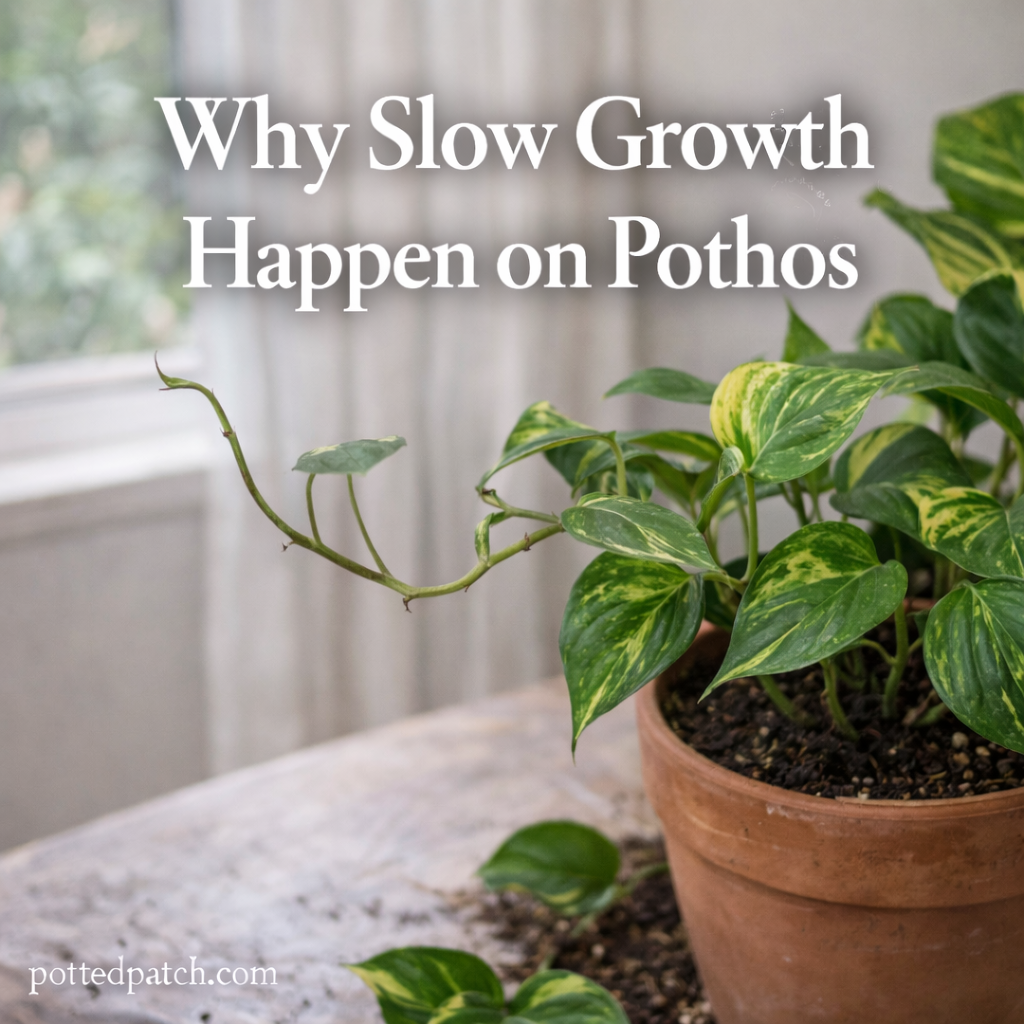
Slow growth
- Low light or lack of nutrients
- Move to brighter indirect light and fertilize lightly
Repotting a Pothos
Pothos doesn’t mind being slightly root-bound, but it benefits from repotting every 1–2 years.
When to repot
- Roots growing out of drainage holes
- Water running straight through the pot
- Noticeably slowed growth during active seasons
Repotting tips
- Choose a pot only 1–2 inches larger
- Refresh soil completely
- Water lightly after repotting
Repotting in spring or early summer allows for faster recovery.
Where Pothos Grows Best Indoors
Pothos is flexible, but some placements encourage better growth.
Ideal locations
- Living rooms with bright indirect light
- Bedrooms with filtered sunlight
- Offices with window light or strong ambient lighting
Areas to avoid
- Direct sun windowsills
- Cold entryways
- Bathrooms with very low light
With the right placement, pothos quickly becomes a focal point in any room.
Final Thoughts on Indoor Pothos Care
Pothos thrives when you keep things simple. Bright indirect light, moderate watering, and well-draining soil are all it needs to grow lush, trailing vines indoors. Its forgiving nature makes it ideal for beginners, while its versatility keeps it popular with experienced plant owners.
Once established, pothos rewards consistent care with steady growth and long-lasting greenery that elevates any indoor space.