
Snake plants are one of the easiest houseplants to live with—but long-term success still depends on a few smart maintenance habits. Proper container choice, soil care, watering rhythm, and occasional upkeep make the difference between a plant that merely survives and one that stays upright, glossy, and healthy for years.
This guide focuses specifically on maintaining a snake plant through good container and pot care, with simple routines you can follow year round.
Why Container Care Matters for Snake Plants
Snake plants store water in their leaves and rhizomes, which makes them sensitive to poor drainage and compacted soil. Most snake plant issues—yellowing leaves, soft bases, slow growth—can be traced back to pot-related problems.
Good container care helps:
- Prevent root and rhizome rot
- Regulate moisture levels
- Support stable, upright growth
- Reduce the need for frequent intervention
Choosing the Right Pot for a Snake Plant
The pot you choose sets the foundation for long-term maintenance.
Best Pot Features
- Drainage holes (non-negotiable)
- Slightly snug fit around the root system
- Sturdy material that won’t tip easily
Best Pot Materials
- Terracotta: excellent for moisture control
- Ceramic with drainage: stable and decorative
- Plastic: lightweight but requires extra care with watering
Avoid decorative pots without drainage unless used strictly as cache pots with removable liners.
Ideal Soil for Ongoing Maintenance
Snake plants thrive in loose, fast-draining soil that allows air to reach the roots.
Best Soil Mix Options
- Cactus or succulent soil
- Regular potting soil amended with perlite or coarse sand
- A mix that dries evenly without staying soggy
Avoid dense, moisture-retentive soils that compact over time.
Watering as Part of Maintenance
Consistent watering habits are central to snake plant maintenance.
General Watering Guidelines
- Water only when the soil is completely dry
- Reduce watering frequency during cooler months
- Always empty the saucer after watering
For most indoor environments:
- Spring & summer: every 2–3 weeks
- Fall & winter: every 4–6 weeks
If unsure, wait a few extra days before watering.
Checking Drainage and Soil Health
Over time, soil structure can break down and affect drainage.
Monthly Maintenance Check
- Ensure water drains freely from the pot
- Check for soil pulling away from pot edges (normal)
- Watch for slow drainage or persistent dampness
If water pools or drains very slowly, soil replacement may be needed.
Repotting Frequency and Timing
Snake plants prefer being slightly root-bound, so repotting is infrequent.
When to Repot
- Roots growing out of drainage holes
- Pot cracking or bulging
- Soil drying out unusually fast
Most snake plants need repotting every 2–4 years.
Repotting Best Practices
- Move up only one pot size
- Use fresh, well-draining soil
- Let the plant rest 5–7 days before watering
Spring and early summer are the best times to repot.
Supporting Upright Growth
Tall leaves can sometimes lean or fall over due to uneven growth or poor support.
Maintenance Tips
- Rotate the pot every few weeks
- Provide brighter indirect light
- Remove severely bent or damaged leaves at the base
A stable, heavier pot can also prevent tipping.
Cleaning and Routine Care
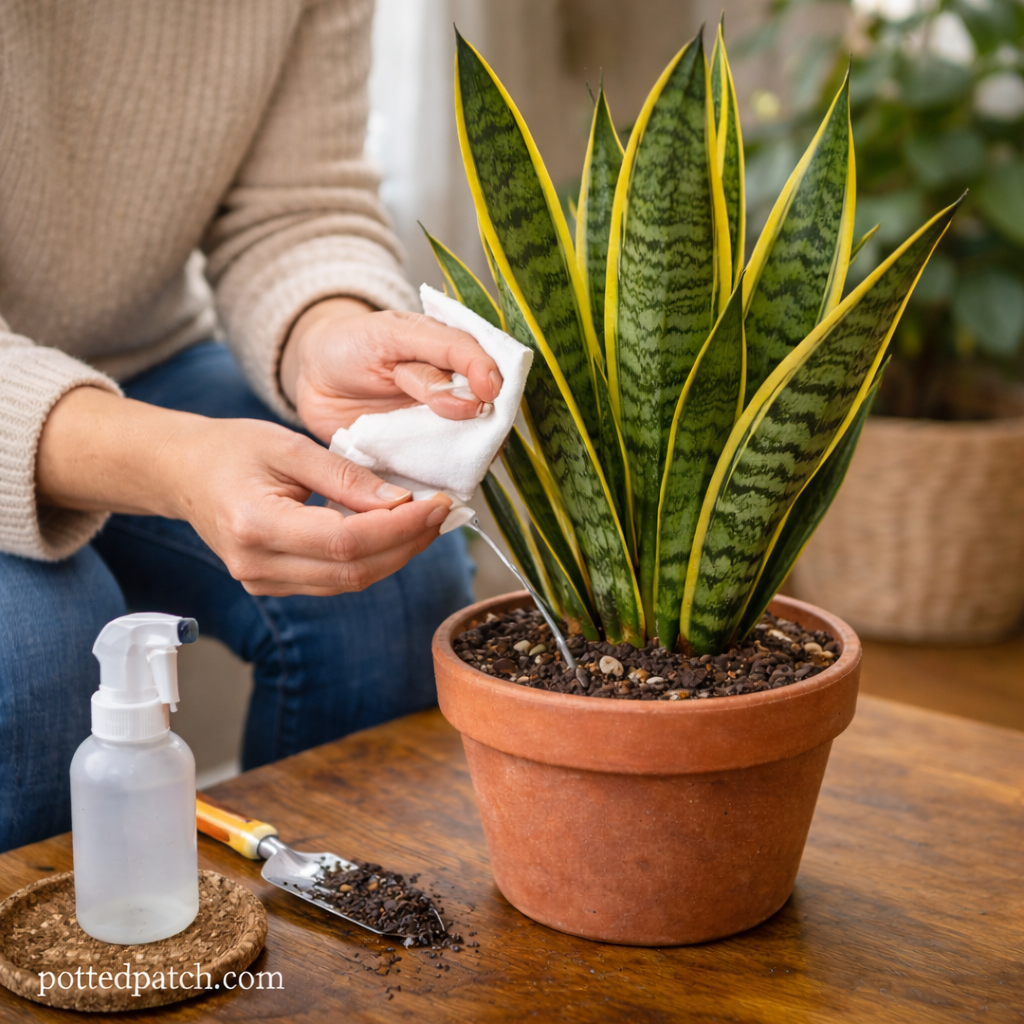
Dust buildup reduces light absorption and dulls the leaves.
Simple Cleaning Routine
- Wipe leaves with a damp cloth every few weeks
- Avoid leaf shine products
- Inspect for pests during cleaning
Healthy leaves should feel firm and look glossy.
Seasonal Maintenance Adjustments
Snake plants benefit from small seasonal changes.
Spring & Summer
- Resume light feeding if desired
- Monitor growth and rotate regularly
- Water slightly more often
Fall & Winter
- Stop fertilizing
- Increase time between waterings
- Keep away from cold drafts
Minimal care during winter helps prevent stress.
Common Container-Related Problems
Yellowing Leaves
Often caused by excess moisture or poor drainage.
Fix:
- Reduce watering
- Improve drainage
- Check soil condition
Soft or Mushy Base
Usually a sign of rot.
Fix:
- Remove affected sections
- Repot in dry, fresh soil
- Reduce watering frequency
Stunted Growth
Can result from compacted soil or lack of light.
Fix:
- Refresh soil if needed
- Improve light exposure
Final Thoughts
Maintaining a snake plant is less about frequent care and more about smart container choices and consistency. A well-draining pot, breathable soil, and patient watering routine are the core pillars of success.
With proper pot care, snake plants remain low-effort, long-lived houseplants that thrive quietly with minimal attention.