Indoor plants may seem sheltered from the outdoors, but temperature changes inside your home still have a major impact on their health. Sudden drops, heat spikes, drafts, and inconsistent conditions can stress plants, slow growth, and cause visible damage.
Understanding how temperature affects indoor plants helps you place them better, adjust care seasonally, and avoid common mistakes that lead to leaf drop, wilting, or stalled growth.
Why Temperature Matters for Indoor Plants
Plants rely on temperature to regulate:
- Water uptake
- Photosynthesis
- Growth rate
- Leaf and root development
When temperatures move outside a plant’s comfort zone, it goes into stress mode. Instead of growing, it focuses on survival.
Most common houseplants prefer a stable indoor range between 65–80°F (18–27°C).
Sudden Temperature Changes Are the Biggest Problem
Plants handle gradual changes much better than sudden shifts.
Rapid temperature changes can occur when:
- Heaters turn on at night
- Air conditioning runs intermittently
- Windows are opened in cold or hot weather
- Plants are moved frequently between rooms
This shock can cause plants to drop leaves quickly, even if overall care is good.
Effects of Cold Temperatures on Indoor Plants
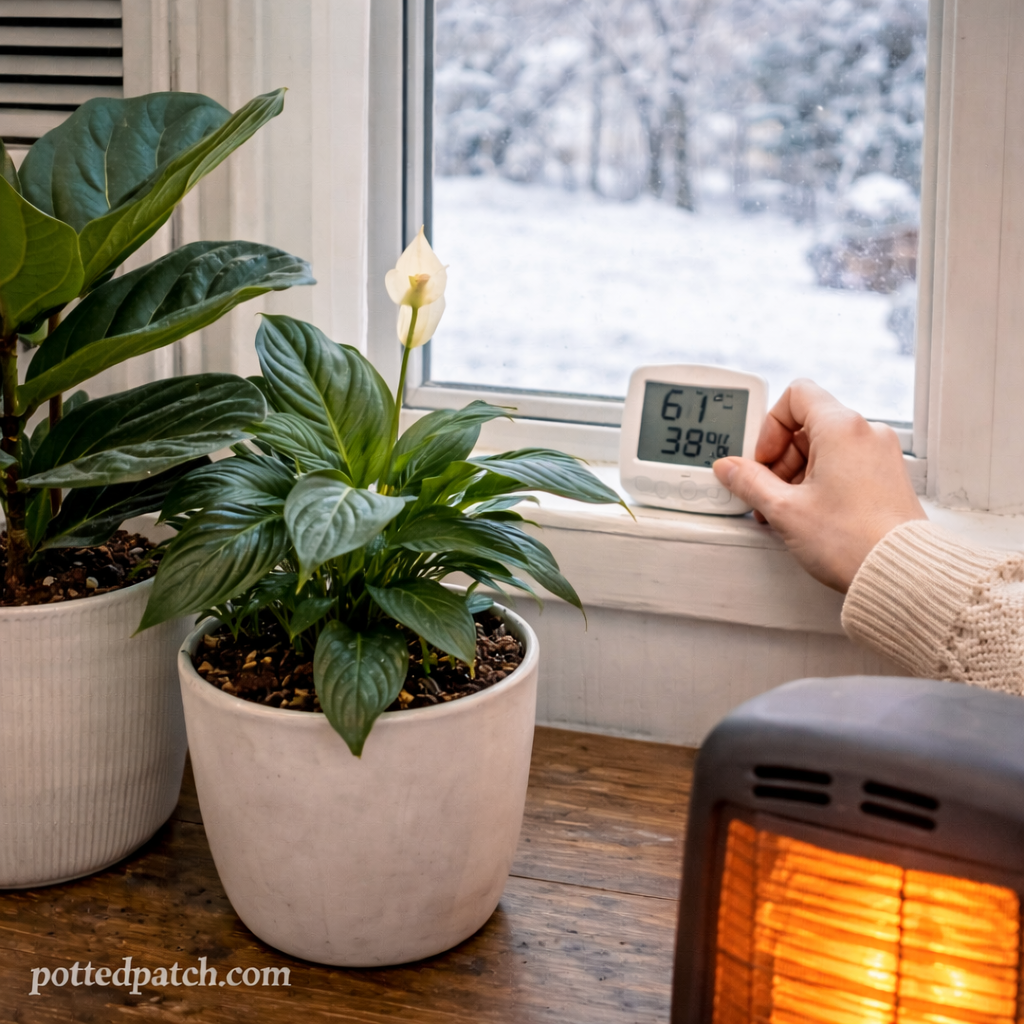
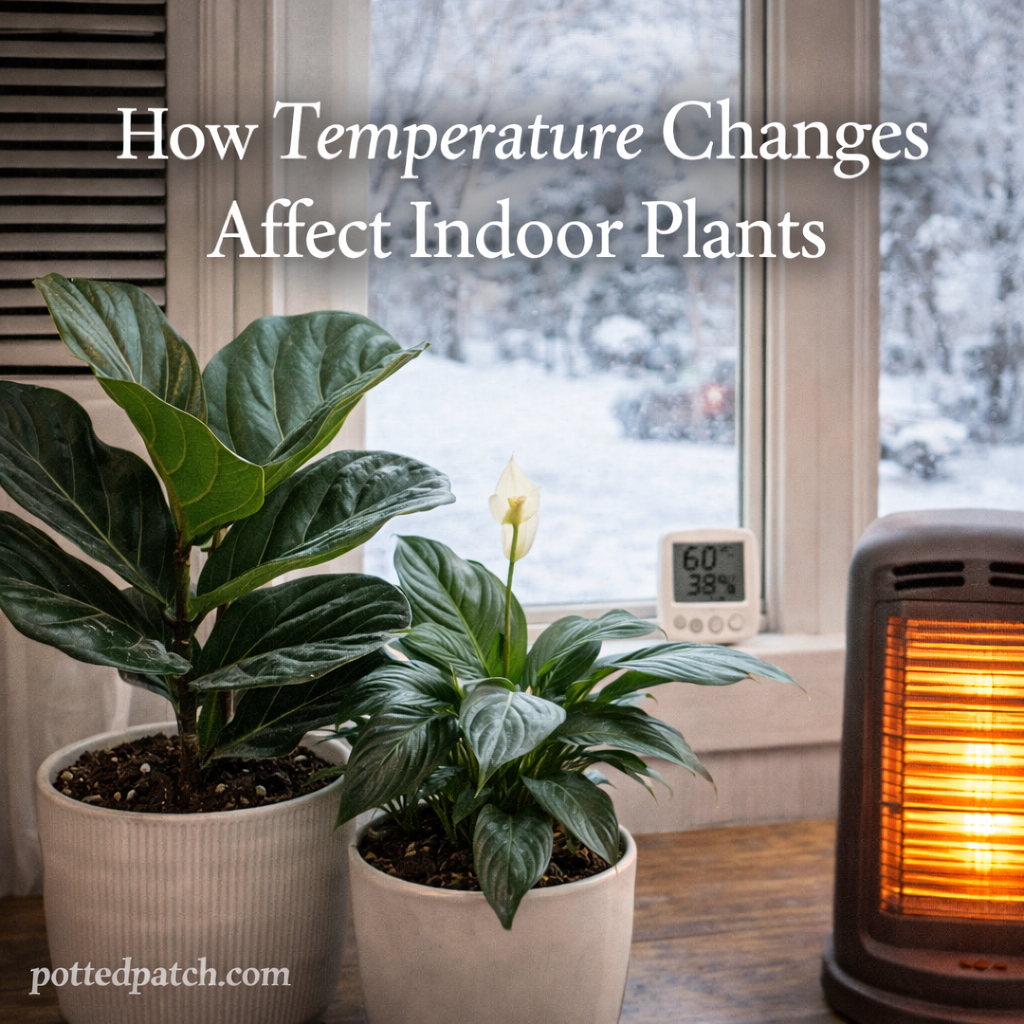
Cold stress is one of the most common indoor plant problems, especially in winter.
Signs of cold damage
- Yellowing leaves
- Sudden leaf drop
- Soft or mushy stems
- Dark or water-soaked spots on leaves
Many tropical plants begin to suffer below 60°F (15°C).
Common cold sources indoors
- Drafty windows
- Exterior doors
- Cold floors
- Unheated rooms
- Glass surfaces in winter
Even brief exposure can cause damage that appears days later.
Effects of Heat and Overheating
Excessive heat can be just as harmful as cold.
Signs of heat stress
- Wilting despite moist soil
- Crispy leaf edges
- Curling leaves
- Rapid soil drying
Heat stress often occurs when plants are placed:
- Too close to radiators or heaters
- Near fireplaces
- In direct afternoon sun through windows
- Under heat-producing appliances
High heat increases water loss, which can lead to dehydration even with regular watering.
Temperature Fluctuations Slow Growth
When temperatures swing up and down frequently, plants struggle to maintain consistent growth.
Effects include:
- Slower or halted new growth
- Smaller leaves
- Weak stems
- Delayed recovery from stress
Stable temperatures help plants allocate energy toward healthy growth instead of constant adjustment.
Nighttime Temperature Drops
Many homes cool down significantly at night, especially in winter.
While slight nighttime drops are normal, large drops can cause stress.
Most indoor plants tolerate nighttime temperatures:
- 5–10°F lower than daytime
- But not below their minimum threshold
Plants near windows are especially vulnerable overnight, even if daytime conditions seem fine.
How Seasonal Changes Affect Indoor Temperatures
Even if you don’t move your plants, seasons change the environment around them.
Winter challenges
- Cold drafts
- Dry air from heating systems
- Cooler window surfaces
Summer challenges
- Hot sun through windows
- Increased indoor heat
- Air conditioning blasts
Plants often need to be repositioned seasonally to maintain stable conditions.
Best Placement to Avoid Temperature Stress
Proper placement prevents most temperature-related problems.
Place plants:
- Away from heating and cooling vents
- A few feet back from windows in extreme seasons
- Out of direct airflow
- In rooms with consistent temperature
Avoid placing plants:
- On windowsills in winter
- Near doors that open frequently
- Directly under AC units or heaters
How to Help Plants Adjust Safely
If temperature changes are unavoidable, help plants adjust gradually.
Tips:
- Move plants slowly over several days
- Increase humidity during heating season
- Water appropriately for temperature changes
- Avoid repotting during extreme temperature shifts
Stability matters more than perfection.
Plants Most Sensitive to Temperature Changes
Some plants react more strongly than others.
Highly sensitive plants include:
- Calatheas
- Fiddle leaf figs
- Orchids
- Ferns
- Peace lilies
More tolerant plants include:
- Snake plants
- ZZ plants
- Pothos
- Philodendrons
Knowing your plant’s tolerance helps you choose better placement.
Final Thoughts
Temperature changes affect indoor plants more than most people realize. Drafts, heaters, air conditioning, and seasonal shifts can all create stress—even when watering and light are correct.
By focusing on stable placement and gradual adjustments, you can prevent temperature-related damage and help your plants grow more consistently year-round.