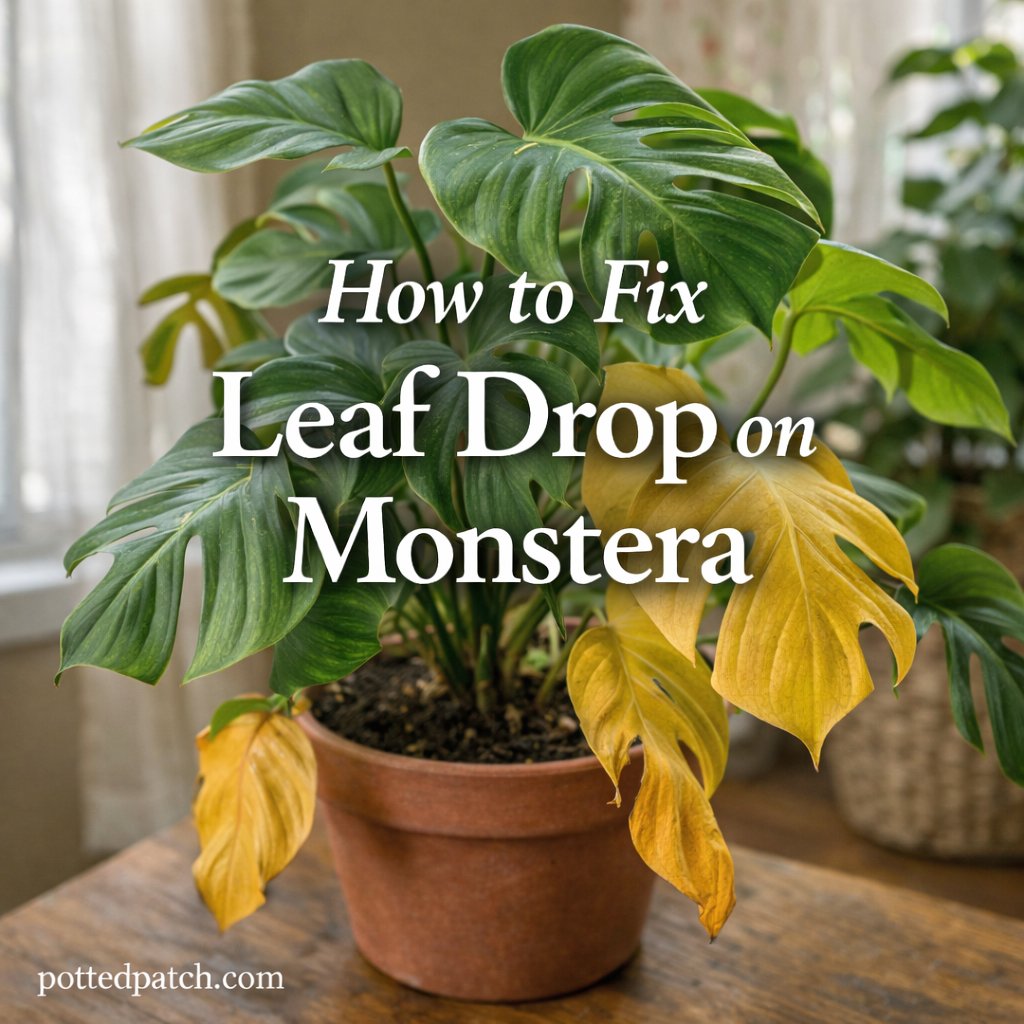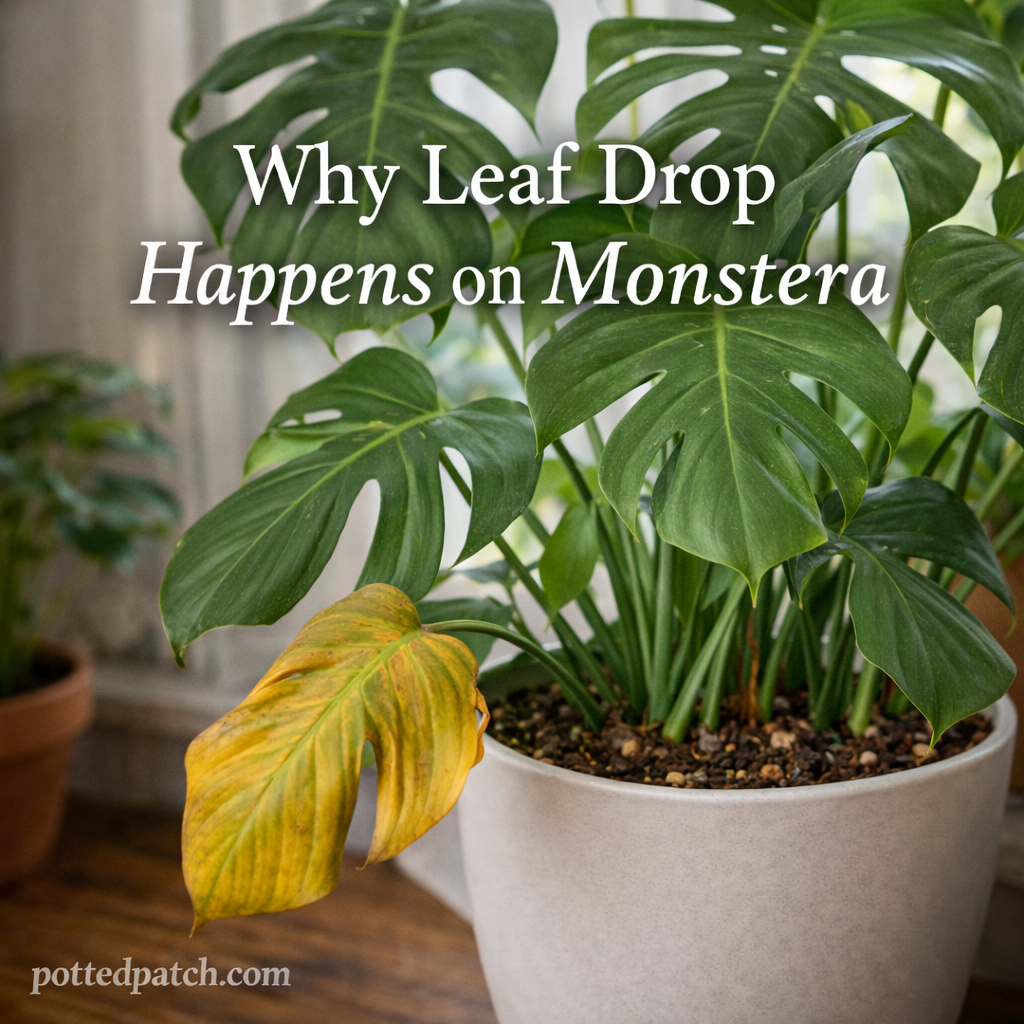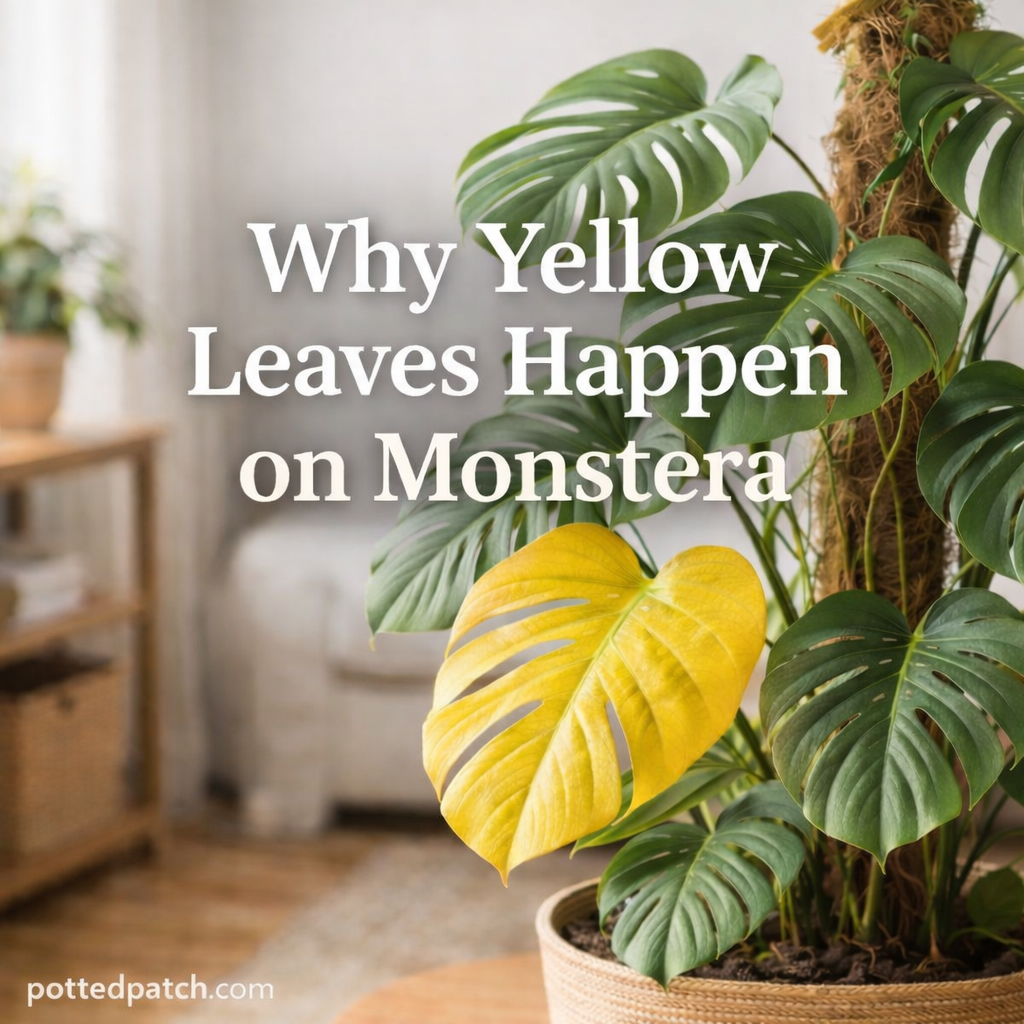
Yellow leaves on a Monstera are one of the most common plant problems—and one of the most misunderstood. A yellowing leaf doesn’t always mean something is seriously wrong, but it does mean the plant is reacting to its environment or care routine.
This guide breaks down why Monstera leaves turn yellow, how to identify the exact cause, and what to do to fix it without stressing the plant further.
Is Yellowing Normal on Monstera?
Not all yellow leaves are a problem.
Occasional yellowing of an older, lower leaf is part of the Monstera’s natural growth cycle. As the plant matures, it redirects energy to new growth, allowing older leaves to fade and drop.
Yellowing becomes a concern when:
- Multiple leaves turn yellow at once
- Newer leaves are affected
- Yellowing spreads quickly
- Leaves feel soft, limp, or spotted
In those cases, the cause is usually environmental or care-related.
Overwatering: The Most Common Cause
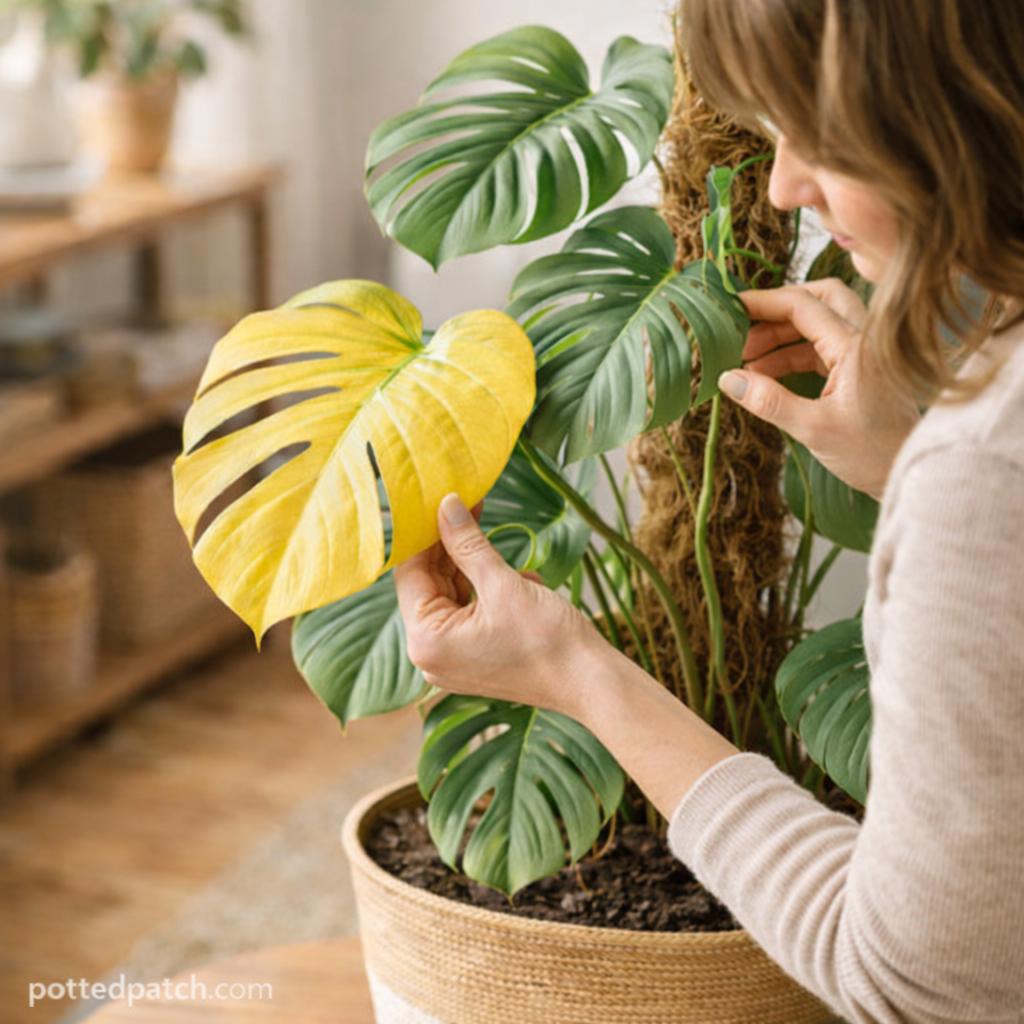
Why Overwatering Turns Leaves Yellow
Monsteras prefer evenly moist soil—but not constantly wet soil. When roots sit in waterlogged conditions, oxygen can’t reach them. This leads to stressed or rotting roots that can no longer support healthy foliage.
The first visible sign is usually yellow leaves.
How to Identify Overwatering
- Soil feels wet days after watering
- Pot feels heavy
- Leaves yellow from the base upward
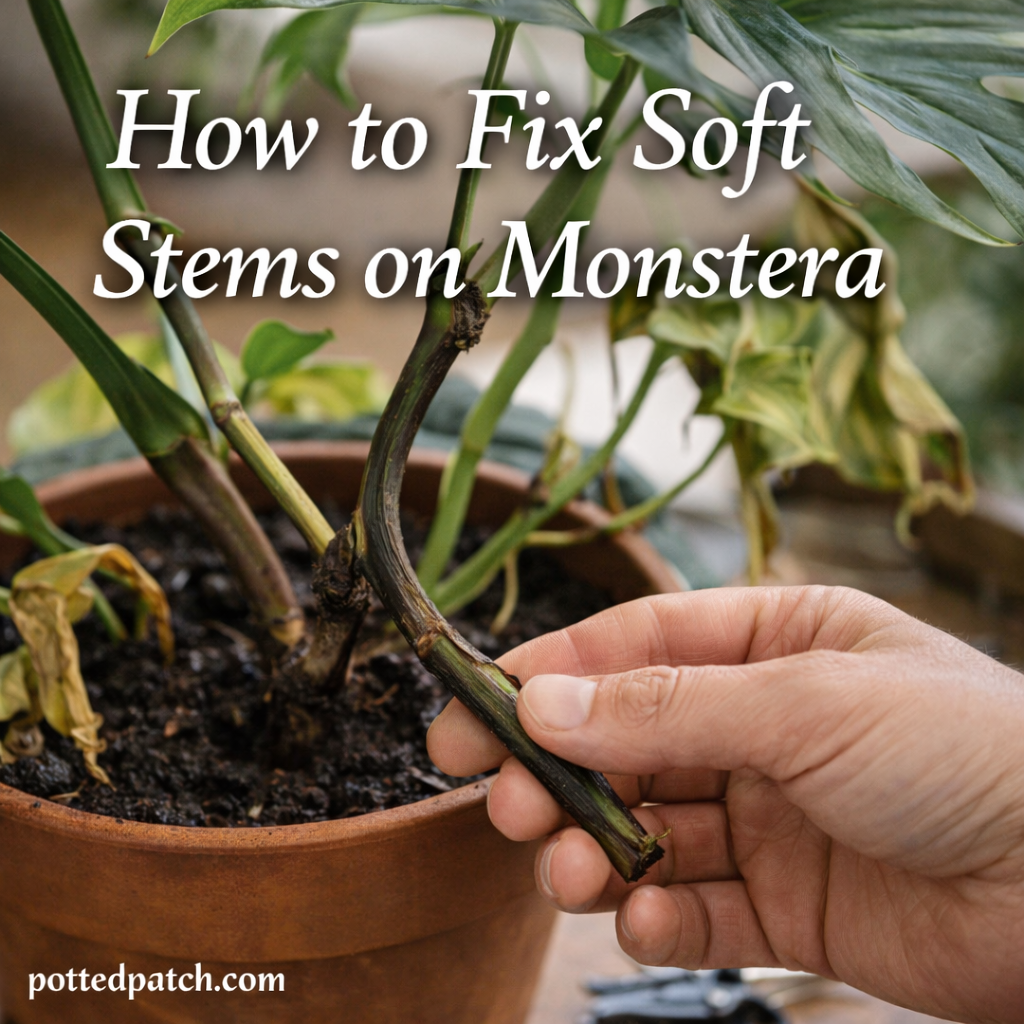
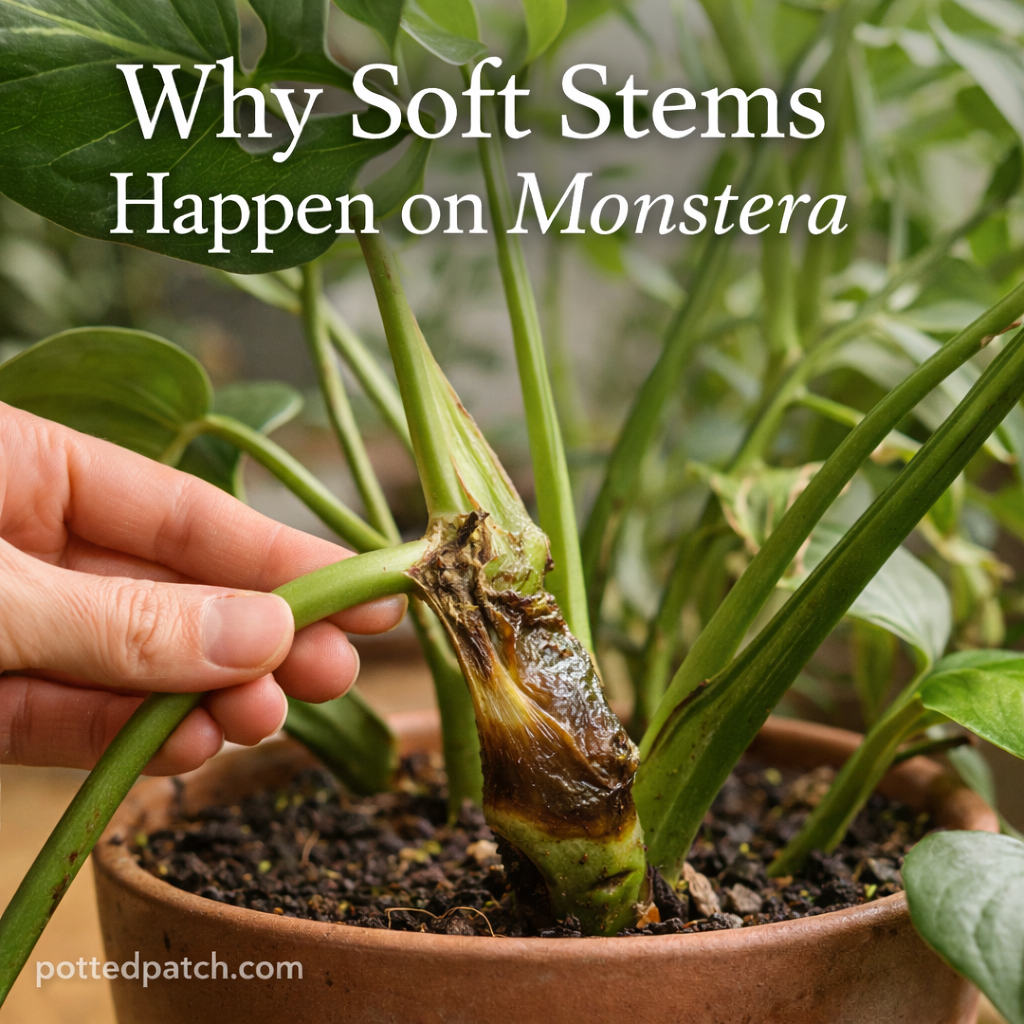
- Stems may feel soft
- Musty smell from soil
How to Fix It
- Stop watering until the top 2–3 inches of soil dry out
- Ensure the pot has proper drainage holes
- Empty saucers after watering
- Consider repotting if soil stays soggy
Underwatering and Inconsistent Watering
How Too Little Water Causes Yellow Leaves
While underwatering more commonly causes drooping or crispy leaves, prolonged dryness can also lead to yellowing as the plant sheds leaves to conserve energy.
Inconsistent watering—letting soil swing between very dry and very wet—can trigger the same response.
Signs This Is the Issue
- Soil pulls away from the pot edges
- Leaves droop before yellowing
- Leaf tips brown before the leaf turns yellow
- Plant perks up quickly after watering
The Fix
- Water thoroughly when the top few inches of soil are dry
- Stick to a consistent watering rhythm
- Avoid shallow watering
Poor Drainage or Wrong Soil Mix
Why Soil Matters
Even if you water correctly, dense or compacted soil can trap moisture around the roots. Monsteras need airflow in the root zone.
Warning Signs
- Water drains very slowly
- Soil stays wet for a week or more
- Repeated yellowing despite careful watering
Solution
- Repot using a chunky, well-draining mix
- Choose soil designed for tropical houseplants
- Add perlite, bark, or coconut coir for airflow
Low Light Stress
How Light Affects Leaf Color
Monsteras need bright, indirect light to maintain healthy green leaves. In low-light conditions, photosynthesis slows, and the plant may yellow leaves it can no longer support.
Clues Light Is the Problem
- Yellowing without soft or mushy texture
- Long gaps between new leaves
- Small leaves with no splits
- Plant leaning toward a window
What to Do
- Move the plant closer to a bright window
- Avoid dark corners or rooms with minimal daylight
- Rotate the plant regularly
Too Much Direct Sunlight
Sun Stress vs Overwatering Yellowing
Direct sun doesn’t usually cause uniform yellowing—it often causes patchy yellowing or bleaching, sometimes followed by brown spots.
Signs of Sun Damage
- Yellow patches on leaf surfaces
- Crispy or brown edges
- Leaves facing the window affected first
Fix
- Move the plant out of direct sun
- Use sheer curtains to diffuse light
- Trim severely damaged leaves
Nutrient Deficiency
When Lack of Nutrients Causes Yellowing
Monsteras grown indoors rely entirely on you for nutrients. Over time, soil nutrients deplete, leading to pale or yellow leaves.
Nitrogen deficiency is the most common cause.
Signs of Nutrient Issues
- Overall pale leaves
- Yellowing starting with older foliage
- Slow growth despite good light
How to Fix It
- Use a balanced liquid houseplant fertilizer
- Feed every 4–6 weeks during spring and summer
- Avoid fertilizing in winter
Over-Fertilizing and Salt Buildup
Why Too Much Fertilizer Is Harmful
Excess fertilizer causes salt buildup in the soil, damaging roots and blocking water absorption—leading to yellowing leaves.
Warning Signs
- White crust on soil surface
- Yellow leaves with brown tips
- Leaf edges curling or burning
Solution
- Flush soil with distilled water
- Pause fertilizing for several weeks
- Resume feeding at half strength
Temperature Stress and Drafts
How Temperature Impacts Leaves
Monsteras prefer stable temperatures. Cold drafts, AC vents, or sudden temperature drops can shock the plant, leading to yellowing.
Signs
- Yellowing without soil issues
- Leaves near windows or vents affected first
- Growth slows suddenly
Fix
- Keep plant away from drafts
- Maintain temperatures between 65–85°F
- Avoid placing near heaters or air conditioners
Low Humidity
Can Dry Air Cause Yellow Leaves?
Low humidity usually causes brown edges, but prolonged dryness can weaken leaves and contribute to yellowing—especially on larger, mature leaves.
Improve Humidity By
- Grouping plants together
- Using a humidifier
- Lightly misting occasionally
- Placing the pot on a pebble tray
Root Bound or Pot-Bound Monsteras
Why Root Crowding Leads to Yellow Leaves
When roots run out of space, they struggle to absorb water and nutrients efficiently.
Signs
- Roots circling the pot bottom
- Water runs straight through soil
- Frequent yellowing despite good care
Fix
- Repot into a container 1–2 inches larger
- Refresh soil during repotting
Pest-Related Yellowing
Pests That Cause Leaf Yellowing
- Spider mites
- Thrips
- Mealybugs
These pests damage leaf tissue and disrupt nutrient flow.
How to Spot Them
- Tiny specks or webbing
- Sticky residue
- Yellow stippling on leaves
Treatment
- Isolate the plant
- Wipe leaves with insecticidal soap
- Repeat treatment weekly until resolved
Should You Cut Off Yellow Monstera Leaves?
Yes—once a leaf is fully yellow, it will not turn green again.
Pruning helps the plant redirect energy to healthy growth.
Use clean scissors and cut the leaf stem close to the base without damaging the main stem.
How to Prevent Yellow Leaves in the Future
- Water only when soil partially dries
- Use well-draining soil and pots
- Provide bright, indirect light
- Feed lightly during the growing season
- Keep conditions stable and consistent
Monsteras thrive on predictability, not perfection.
Final Thoughts
Yellow leaves on a Monstera are not a failure—they’re feedback. Once you understand what your plant is responding to, the fix is usually simple.
By observing patterns, adjusting one variable at a time, and avoiding overcorrection, you’ll restore your Monstera’s health and keep its leaves lush, green, and thriving. 🌿