

Rotating a snake plant is one of the simplest care habits you can adopt—and one of the most overlooked. While snake plants are famously low-maintenance, they still respond to light direction. Without rotation, they can lean, grow unevenly, or develop lopsided leaves over time.
This guide explains why rotation matters, how often to do it, and the right way to rotate a snake plant without stressing it.
Why Rotating a Snake Plant Matters
Snake plants (Sansevieria / Dracaena trifasciata) grow toward light. Even though they tolerate low light, they still subtly adjust their growth direction based on where light comes from.
If a plant sits in the same position for months:
- Leaves may lean toward the window
- Growth becomes uneven on one side
- Taller leaves can start to arc or twist
Rotation helps maintain a balanced, upright shape.
How Often You Should Rotate a Snake Plant
Snake plants don’t need frequent rotation, but consistency helps.
Recommended rotation schedule:
- Every 2–4 weeks in bright or medium light
- Every 4–6 weeks in low light
- Pause or reduce rotation during winter if growth slows
Even a small turn makes a difference over time.
How Much to Rotate a Snake Plant
You don’t need to spin the pot dramatically.
Best practice:
- Rotate the pot 90 degrees (a quarter turn)
- Avoid 180-degree flips unless correcting severe leaning
- Keep rotation direction consistent
Gradual changes allow the plant to adjust naturally.
Step-by-Step: How to Rotate a Snake Plant Properly
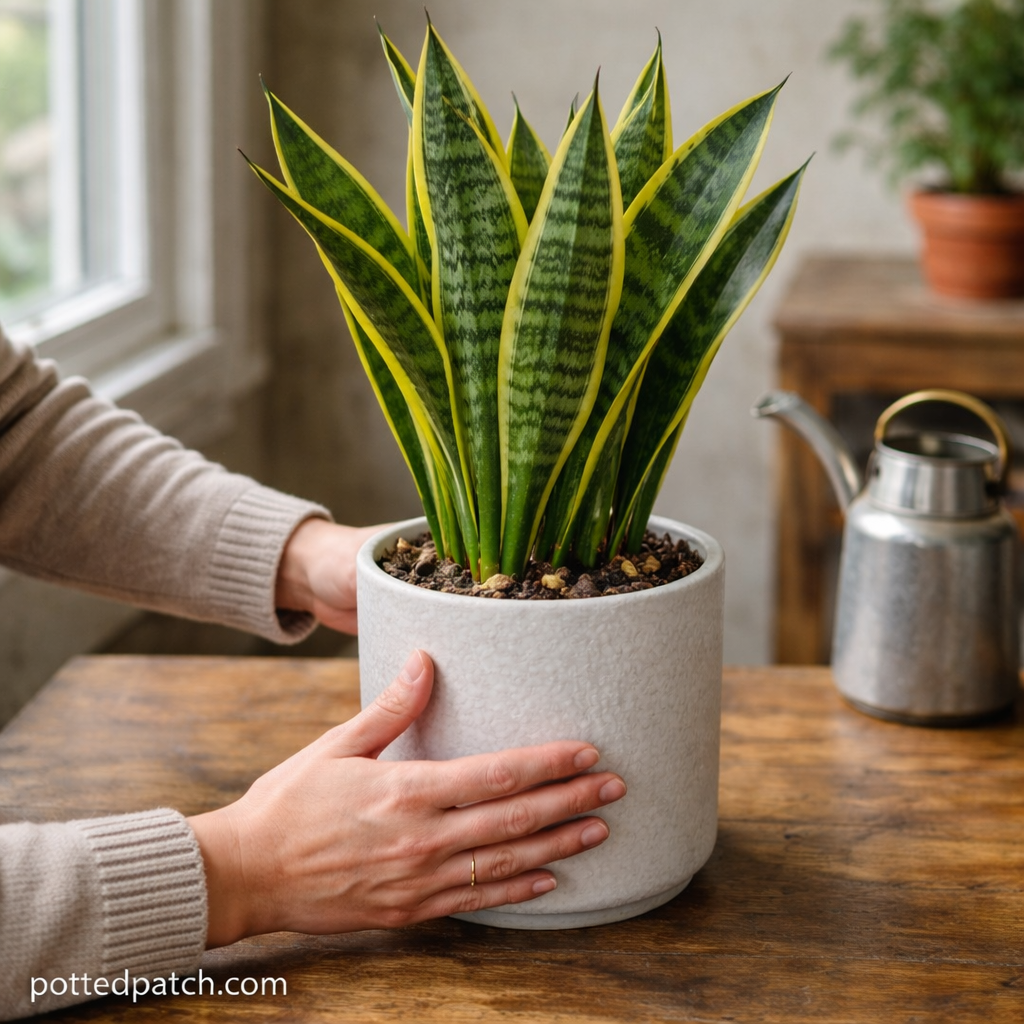
- Check the direction of light in the room
- Lift or slide the pot gently—avoid dragging heavy containers
- Rotate the pot about a quarter turn
- Place it back in the same spot
- Make a mental note or calendar reminder
That’s it—no pruning, watering, or fertilizing required.
Signs Your Snake Plant Needs Rotation
Your plant may benefit from rotation if you notice:
- Leaves leaning toward a window
- One side growing faster than the other
- The plant looking unbalanced or top-heavy
Rotation is preventative care, not just a fix.
Does Rotating Affect Growth Speed?
Rotation doesn’t increase growth speed, but it improves growth quality.
Benefits include:
- Straighter, more upright leaves
- Even distribution of light exposure
- Reduced risk of bending or tipping
Balanced growth makes snake plants look healthier and more architectural.
Common Rotation Mistakes to Avoid
Avoid these common errors:
- Rotating too frequently (daily or weekly)
- Moving the plant to a new location each time
- Rotating immediately after repotting
- Ignoring light direction entirely
Stability matters just as much as rotation.
Should You Rotate Snake Plants in Low Light?
Yes—but less often.
In low light:
- Growth is slower
- Leaning is less dramatic
- Rotation every 4–6 weeks is usually enough
If the plant isn’t growing at all, rotation can be minimal.
Rotation vs. Repotting: What’s the Difference?
Rotation:
- Corrects growth direction
- Maintains shape
- Requires no soil or pot change
Repotting:
- Addresses root space or soil issues
- Done every 2–3 years
- Best in spring or early summer
Both are useful, but serve different purposes.
Final Thoughts
Rotating a snake plant is a small habit with big visual payoff. By turning the pot slightly every few weeks, you encourage upright, even growth without any extra effort or risk.
For a plant that thrives on simplicity, rotation is one of the easiest ways to keep your snake plant looking its best.