
Snake plants are often labeled as “unkillable,” but many of them struggle due to well-intentioned care mistakes. Because they’re so tolerant, problems can develop quietly and only show up once damage is already underway. Understanding the most common snake plant care mistakes helps you avoid stress, slow growth, and long-term issues like root rot.
This guide breaks down the most frequent mistakes snake plant owners make—and how to fix them.
Overwatering
Overwatering is the number one reason snake plants decline.
Snake plants store water in their leaves and roots, which means they prefer dry soil between waterings.
Signs of overwatering include:
- Soft, mushy leaves
- Yellowing at the base
- Soil that stays wet for days
- Foul smell from the pot
How to fix it:
- Water only when the soil is completely dry
- Use pots with drainage holes
- Empty saucers after watering
When in doubt, wait longer before watering.
Using Pots Without Drainage
Drainage is essential for snake plants.
Without it:
- Excess water pools at the bottom
- Roots suffocate and rot
- Soil stays damp far too long
Even careful watering can cause problems if water has nowhere to escape.
Best practice:
- Always use pots with drainage holes
- If using decorative pots, place the plant in a nursery pot inside
Good drainage prevents most snake plant issues before they start.
Placing the Plant in Extremely Low Light
Snake plants tolerate low light, but tolerance is not the same as thriving.
Too little light can lead to:
- Slow or stalled growth
- Thin, weak leaves
- Dull leaf color
Ideal conditions:
- Bright, indirect light
- Can adapt to medium or low light gradually
Avoid placing snake plants in dark corners with no natural light at all.
Watering on a Schedule
Watering schedules often cause more harm than good.
Why schedules fail:
- Homes vary in humidity and temperature
- Soil dries at different rates
- Seasons change water needs
Instead of using a calendar:
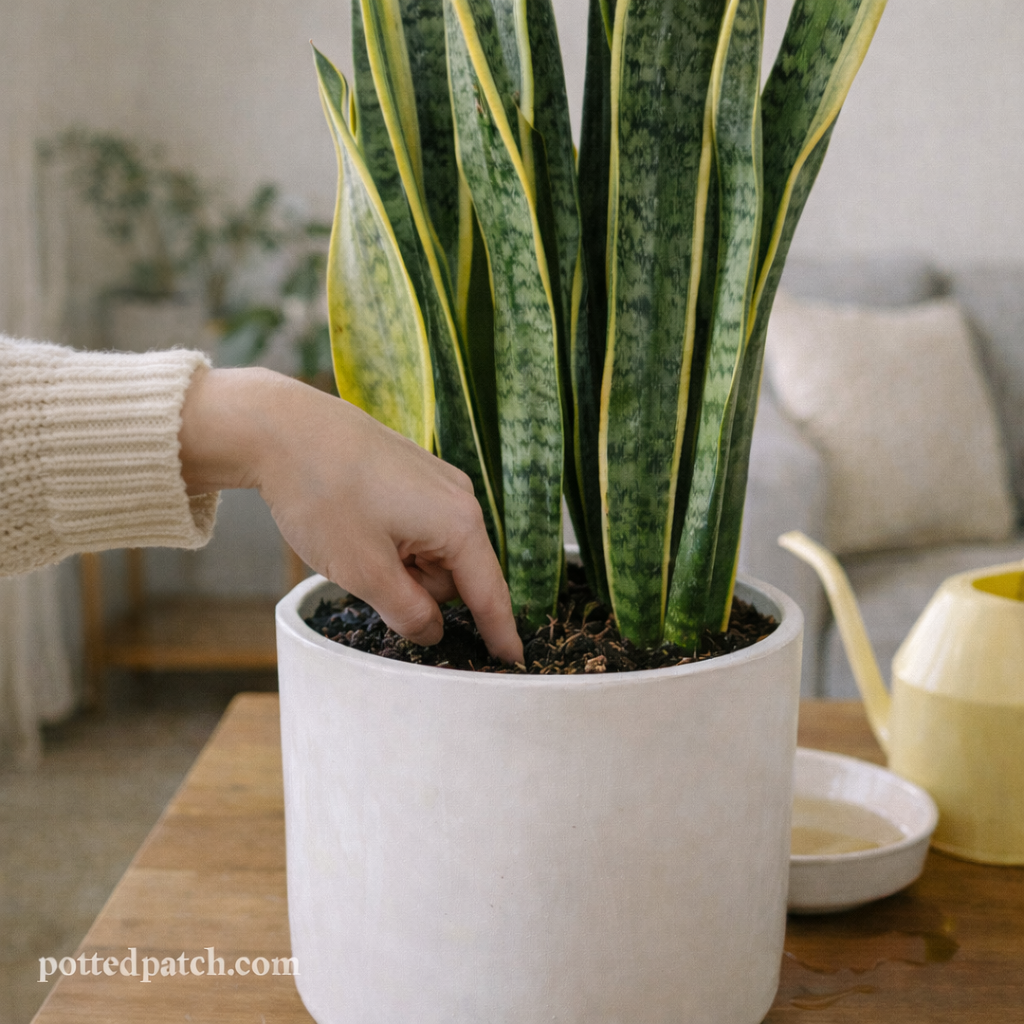
- Check soil moisture with your finger
- Look for dry, lightweight pots
- Observe leaf firmness
Snake plants prefer responsive care, not routine watering.
Using the Wrong Soil
Dense soil traps moisture around roots.
Poor soil choices include:
- Heavy garden soil
- Moisture-retaining mixes
- Old, compacted potting soil
Best soil options:
- Cactus or succulent mix
- Regular potting soil amended with perlite or sand
Fast-draining soil protects roots and improves long-term health.
Fertilizing Too Often
Snake plants are light feeders.
Over-fertilizing can cause:
- Brown leaf tips
- Salt buildup on soil
- Stunted growth
Correct approach:
- Fertilize only during spring and summer
- Use a diluted, balanced fertilizer
- Feed no more than 2–3 times per year
Skipping fertilizer entirely is safer than overdoing it.
Repotting Too Frequently
Snake plants prefer being slightly root-bound.
Repotting too often can:
- Stress roots
- Increase the risk of overwatering
- Slow growth
When repotting is actually needed:
- Roots are growing out of drainage holes
- The pot is cracking or bulging
- Water runs straight through the soil
Most snake plants only need repotting every 2–4 years.
Trimming Leaf Tips Instead of Removing Leaves
Cutting leaf tips for cosmetic reasons is a common mistake.
Why it’s a problem:
- Leaves won’t regrow from the cut
- The cut edge permanently browns
- The plant looks uneven over time
Better option:
- Remove damaged leaves entirely at the base
Clean removal looks better and keeps the plant healthy.
Watering Immediately After Repotting
Freshly repotted snake plants are vulnerable.
Watering too soon can:
- Soak disturbed roots
- Trigger rot
- Slow recovery
Best practice:
- Wait 5–7 days after repotting before watering
- Allow roots time to heal
Dry soil after repotting is safer than wet soil.
Ignoring Early Warning Signs
Snake plants show subtle signals before serious problems develop.
Early signs to watch for:
- Slight leaf softening
- Leaning or instability
- Changes in color or texture
Catching issues early makes correction much easier.
Making Too Many Changes at Once
When a snake plant looks unhealthy, it’s tempting to change everything.
This often causes:
- Additional stress
- Confusing results
- Delayed recovery
Better approach:
- Identify the most likely issue
- Change one factor at a time
- Wait and observe
Snake plants respond best to patience and consistency.
Final Thoughts
Most snake plant problems come from doing too much, not too little. Overwatering, poor drainage, frequent repotting, and unnecessary fertilizing are far more harmful than occasional neglect. When given simple conditions—good drainage, dry soil between waterings, and moderate light—snake plants thrive with minimal effort.
If your snake plant is struggling, simplify your care routine. Often, the best fix is to step back and let the plant do what it does best.