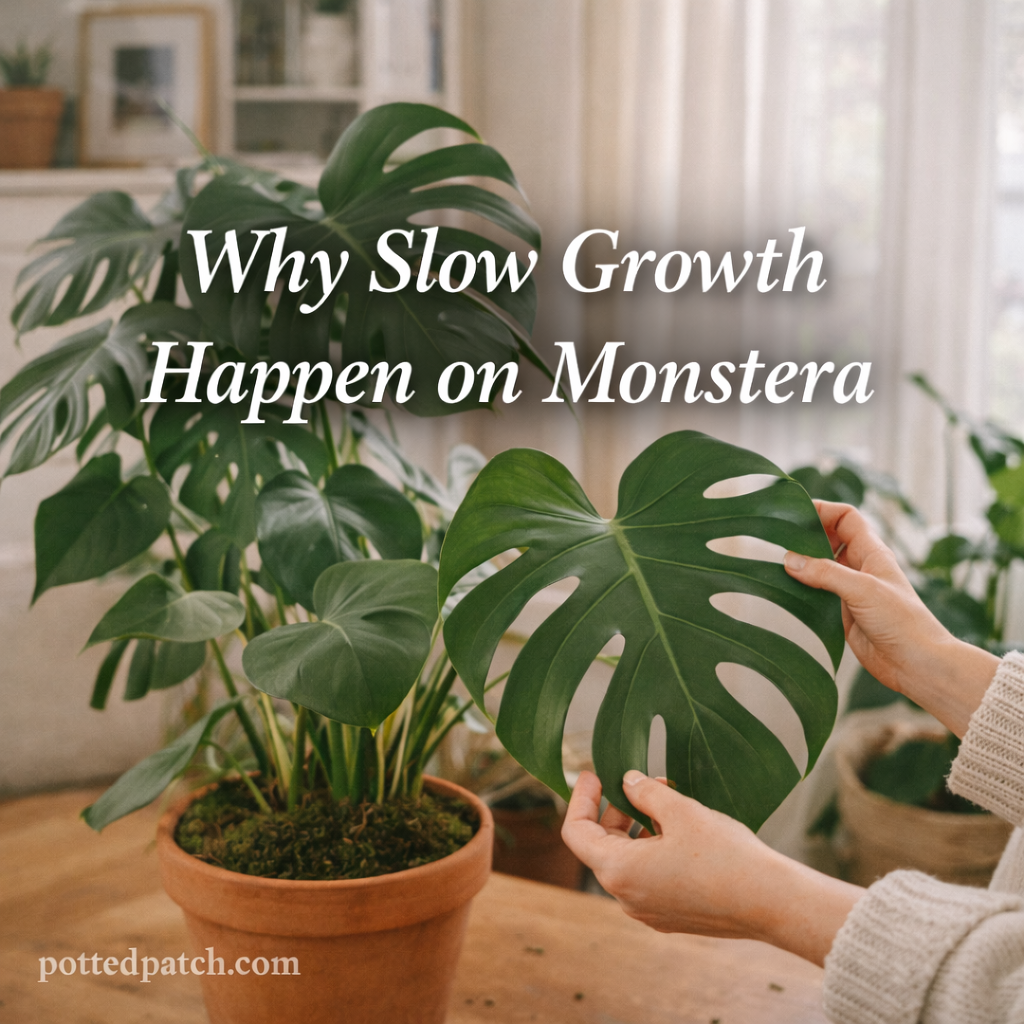
Monstera plants are known for their large, dramatic leaves and fast growth under the right conditions. So when growth suddenly slows—or stops altogether—it can be frustrating and confusing. Slow growth is usually a signal that something in the plant’s environment or care routine needs adjustment.
This guide breaks down the most common reasons Monstera plants grow slowly and explains how to fix each issue without overcorrecting.
What Is Normal Growth for Monstera?
Before assuming there’s a problem, it helps to know what’s normal.
Monstera growth patterns:
- Active growth in spring and summer
- Little to no growth in fall and winter
- New leaves may take weeks to unfurl
A healthy Monstera won’t push out new leaves constantly year-round. Seasonal slowdowns are expected.
Insufficient Light
Light is the most common reason for slow Monstera growth.
Monsteras need:
- Bright, indirect light
- Several hours of consistent daily light
In low light, the plant prioritizes survival over growth.
Signs light is the issue:
- Long gaps between new leaves
- Smaller leaves with fewer or no splits
- Leaning toward windows
Fix: Move your Monstera closer to a bright window with filtered light. Avoid deep shade and harsh direct sun.
Root-Bound or Crowded Roots
Monsteras grow quickly below the soil when conditions are right.
When roots run out of space:
- Growth slows or stops
- Water runs straight through the pot
- The plant may look healthy but stagnant
Fix: Check the roots. If they’re circling the pot or tightly packed, repot into a container 1–2 inches larger.
Lack of Nutrients
Monsteras are moderate feeders.
Slow growth can happen when:
- The plant hasn’t been fertilized for months
- Soil nutrients are depleted
- Growth season feeding is skipped
Signs include:
- Pale new leaves
- Smaller leaves than usual
Fix: Use a balanced houseplant fertilizer during spring and summer, diluted to half strength, every 4–6 weeks.
Improper Watering
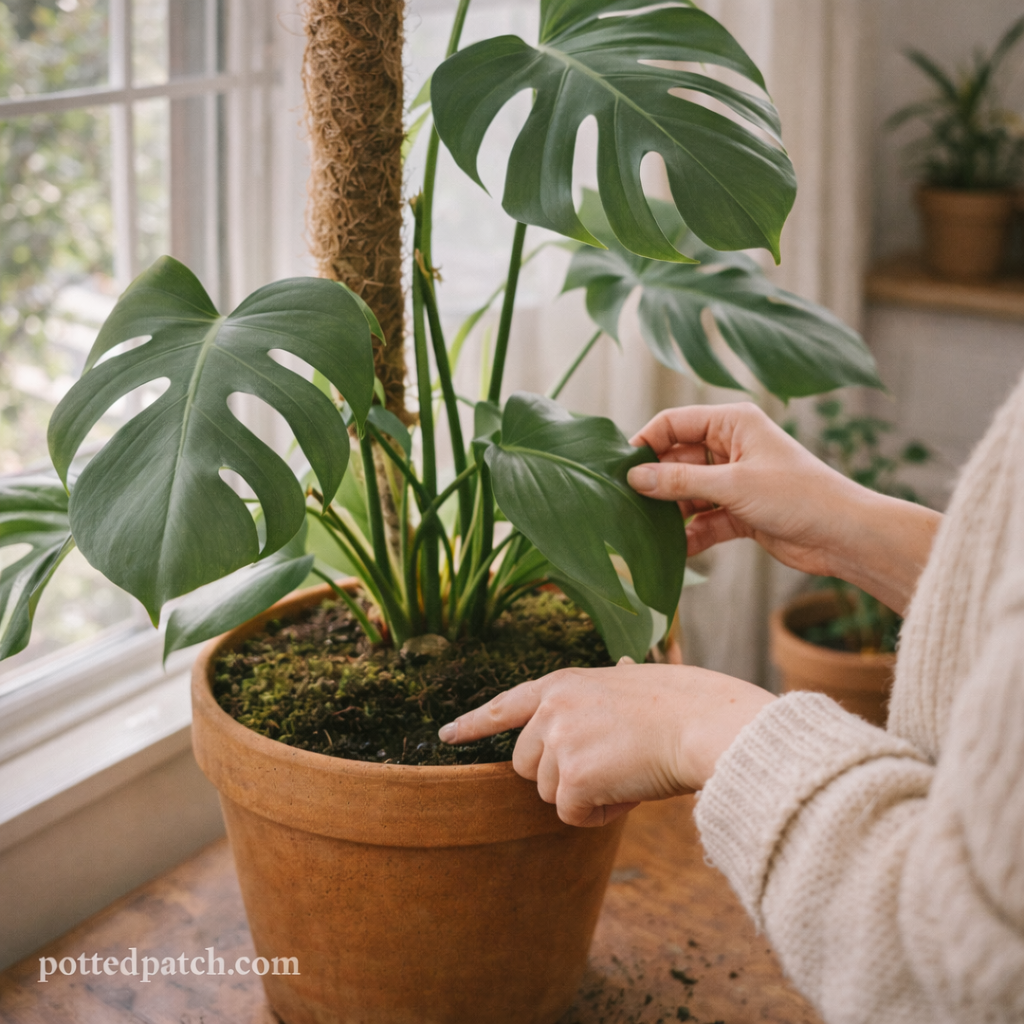
Both underwatering and overwatering can reduce growth.
Underwatering
When water is inconsistent:
- Roots dry out
- Growth slows to conserve energy
Signs:
- Drooping leaves
- Dry soil pulling away from the pot
Overwatering
Too much water leads to:
- Oxygen-starved roots
- Early root rot
- Stalled growth
Signs:
- Constantly wet soil
- Yellowing lower leaves
Fix: Water thoroughly only when the top few inches of soil are dry, and always use a pot with drainage.
Poor Soil Drainage
Even with correct watering, dense soil can suffocate roots.
Monsteras need:
- Loose, well-aerated soil
- Good drainage
Heavy soil holds moisture too long and slows root function.
Fix: Use a chunky mix with components like perlite, orchid bark, or coco coir to improve airflow.
Temperature Stress
Monsteras prefer stable, warm environments.
Slow growth can occur when:
- Temperatures drop below 65°F (18°C)
- The plant is near cold windows or drafts
- Heat vents cause temperature swings
Fix: Keep your Monstera in a consistent room temperature away from drafts and extreme heat or cold.
Low Humidity
While Monsteras tolerate average indoor humidity, very dry air can slow growth.
Low humidity may cause:
- Slower leaf development
- Crispy edges on new leaves
Fix: Increase humidity with a humidifier, grouping plants together, or placing the plant in a naturally humid room.
No Support for Climbing
Monsteras are natural climbers.
Without support:
- Energy goes into horizontal growth
- Leaf size and growth rate may slow
Fix: Add a moss pole or support stake. Climbing often encourages larger leaves and faster growth.
Recently Repotted or Stressed Plants
Stress temporarily halts growth.
Common stressors:
- Recent repotting
- Sudden light changes
- Transport or relocation
Fix: Give the plant time. Avoid fertilizing or making multiple changes at once. Growth usually resumes after adjustment.
Pest Issues
Even mild pest infestations can reduce growth.
Common pests:
- Spider mites
- Thrips
- Mealybugs
Signs:
- Speckled leaves
- Sticky residue
- Distorted new growth
Fix: Inspect leaves regularly and treat early with insecticidal soap or neem oil.
Why Slow Growth Isn’t Always a Problem
Slow growth doesn’t always mean poor health.
In many cases:
- The plant is conserving energy
- Conditions are adequate but not optimal
- Seasonal dormancy is in effect
Healthy leaves and firm stems are good signs—even without new growth.
How to Encourage Faster, Healthy Growth
To support better growth:
- Provide bright, indirect light
- Water consistently with good drainage
- Feed lightly during the growing season
- Maintain stable temperatures
- Add climbing support
Focus on steady improvement, not quick fixes.
Final Thoughts
Slow growth in Monstera plants is almost always tied to light, roots, water, or seasonal changes. By adjusting one factor at a time and giving the plant space to respond, growth usually resumes naturally.
Monsteras reward patience. When their basic needs are met, new leaves—and those iconic splits—will come.