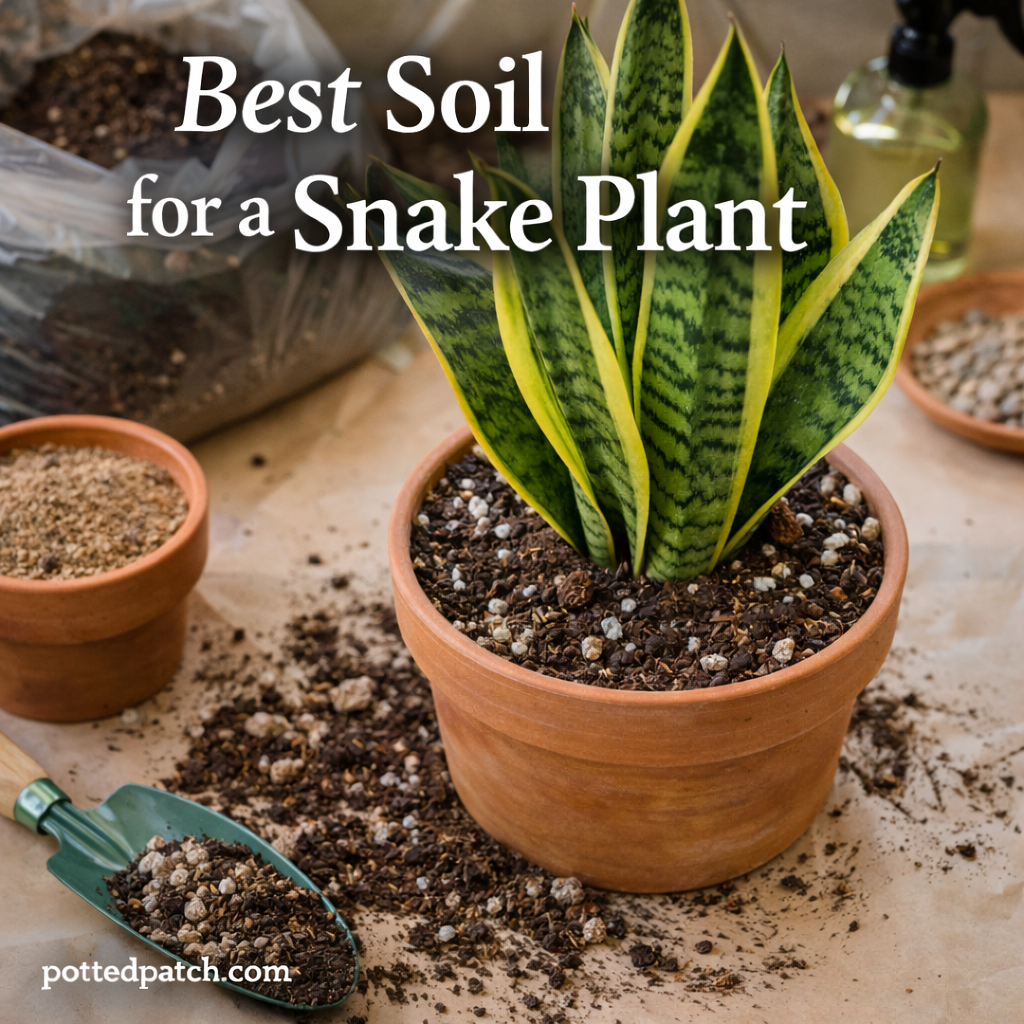
Snake plants are known for being tough, adaptable, and beginner-friendly—but the soil you use still plays a major role in how well they grow long term. The wrong soil can lead to slow growth, root rot, and stressed plants, even if everything else seems right.
This guide breaks down the best soil for a snake plant, why it matters, and how to choose or mix the right option for healthy roots and steady growth.
Why Soil Choice Matters for Snake Plants
Snake plants store water in their thick leaves and rhizomes. Because of this, they’re far more sensitive to excess moisture than to brief dryness.
Poor soil can cause:
- Water to sit around the roots
- Compacted root systems
- Increased risk of root rot
- Weak or unstable growth
The goal is not nutrient-rich soil—it’s fast drainage and airflow.
The Ideal Soil Characteristics for Snake Plants
The best soil for a snake plant shares a few key traits.
Look for soil that is:
- Fast-draining
- Loose and airy
- Resistant to compaction
- Lightly structured, not dense
- Able to dry out between waterings
Snake plants prefer soil that dries quickly rather than staying moist.
Best Ready-Made Soil Options
If you want a simple, store-bought solution, these soil types work well.
Cactus or Succulent Potting Mix
This is the easiest and most reliable option.
Why it works:
- Designed for fast drainage
- Low moisture retention
- Prevents soggy roots
Most cactus or succulent mixes are suitable straight out of the bag for snake plants.
Regular Potting Soil (With Modifications)
Standard potting soil alone is usually too dense, but it can be improved.
If using regular potting soil:
- Add perlite or pumice
- Avoid moisture-retaining blends
- Skip mixes labeled “water control”
Without amendments, regular potting soil holds too much water for snake plants.
Best DIY Soil Mix for Snake Plants
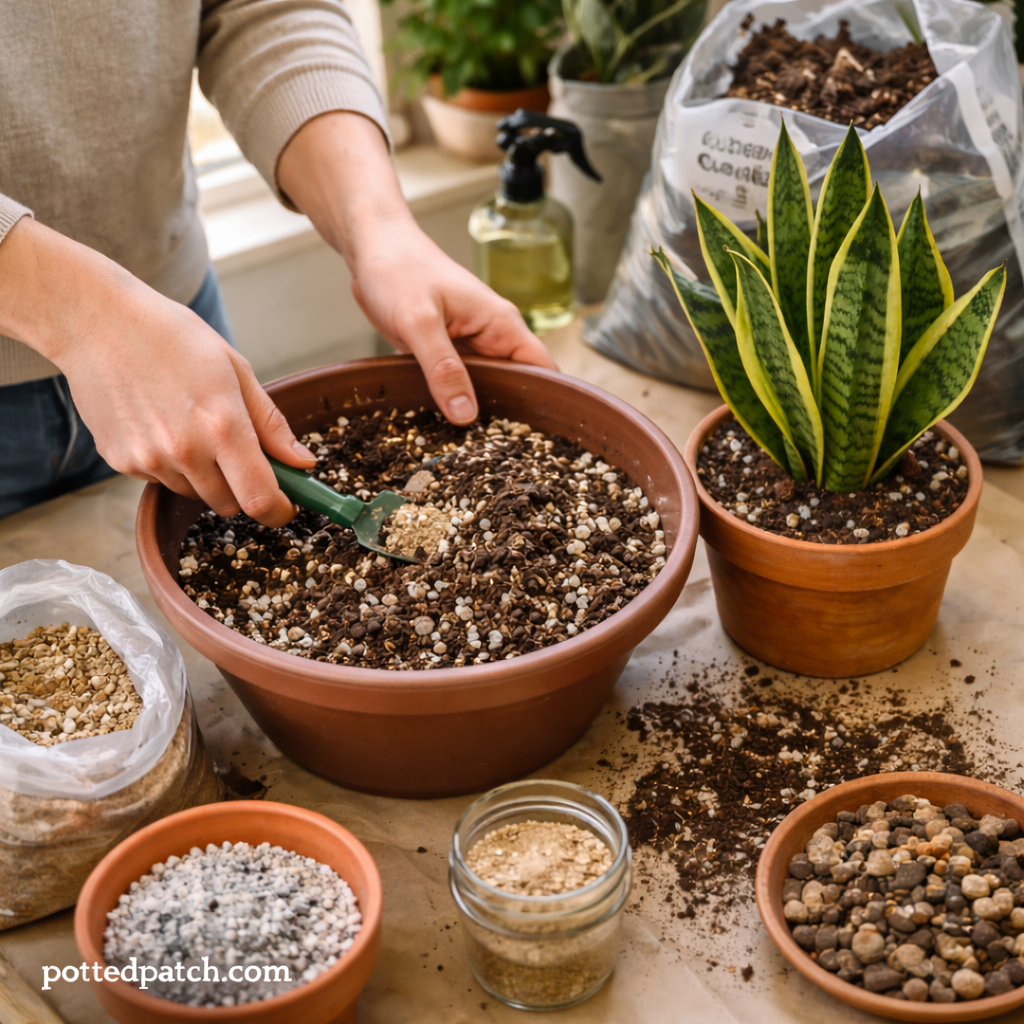
If you prefer mixing your own soil, this simple blend works extremely well.
Recommended DIY Mix
- 2 parts cactus or succulent mix
- 1 part perlite or pumice
Optional additions:
- A small amount of coarse sand for extra drainage
- A pinch of orchid bark for airflow
This mix balances drainage with enough structure to support upright growth.
Soil Ingredients Explained
Understanding common soil components helps you adjust mixes confidently.
Perlite or Pumice
- Improves drainage
- Prevents compaction
- Increases airflow around roots
Essential for snake plant soil health.
Sand (Coarse Only)
- Improves drainage
- Adds weight and stability
Avoid fine or play sand, which can compact soil.
Peat Moss or Coco Coir
- Retains moisture
- Adds softness
Use sparingly—too much keeps soil wet for too long.
Soil Types to Avoid for Snake Plants
Some soils cause more harm than good.
Avoid:
- Heavy garden soil
- Moisture-control potting mixes
- Pure peat-based blends
- Soils without drainage additives
If soil feels dense, muddy, or stays wet for days, it’s not a good fit.
How Often Soil Should Be Replaced
Snake plants don’t need frequent soil changes, but old soil can compact over time.
General guidelines:
- Replace soil every 2–3 years
- Refresh soil when repotting
- Replace immediately if soil smells sour or stays wet
Fresh soil improves drainage and root health, even if the plant looks fine.
Pot Drainage Matters as Much as Soil
Even the best soil won’t help if the pot traps water.
Always use:
- Pots with drainage holes
- Containers that allow excess water to escape
- Saucers that are emptied after watering
Soil and drainage work together—one can’t compensate for the other.
How to Tell If Your Soil Is Working
Good snake plant soil produces clear signals.
Healthy signs:
- Soil dries within a few days after watering
- Roots are firm and pale, not mushy
- Leaves stay upright and firm
- No musty smell from the pot
If soil stays wet for a week or more, adjustments are needed.
Common Soil Mistakes Snake Plant Owners Make
Avoid these frequent missteps:
- Using regular potting soil alone
- Choosing “moisture-retaining” mixes
- Packing soil too tightly
- Overwatering even with good soil
Great soil reduces risk, but watering habits still matter.
Final Thoughts
The best soil for a snake plant is simple, fast-draining, and lightly structured. You don’t need expensive blends or complex recipes—just soil that lets roots breathe and dry out between waterings.
When soil is right, snake plants become even more forgiving, stable, and long-lasting, making them one of the easiest houseplants to care for indoors.