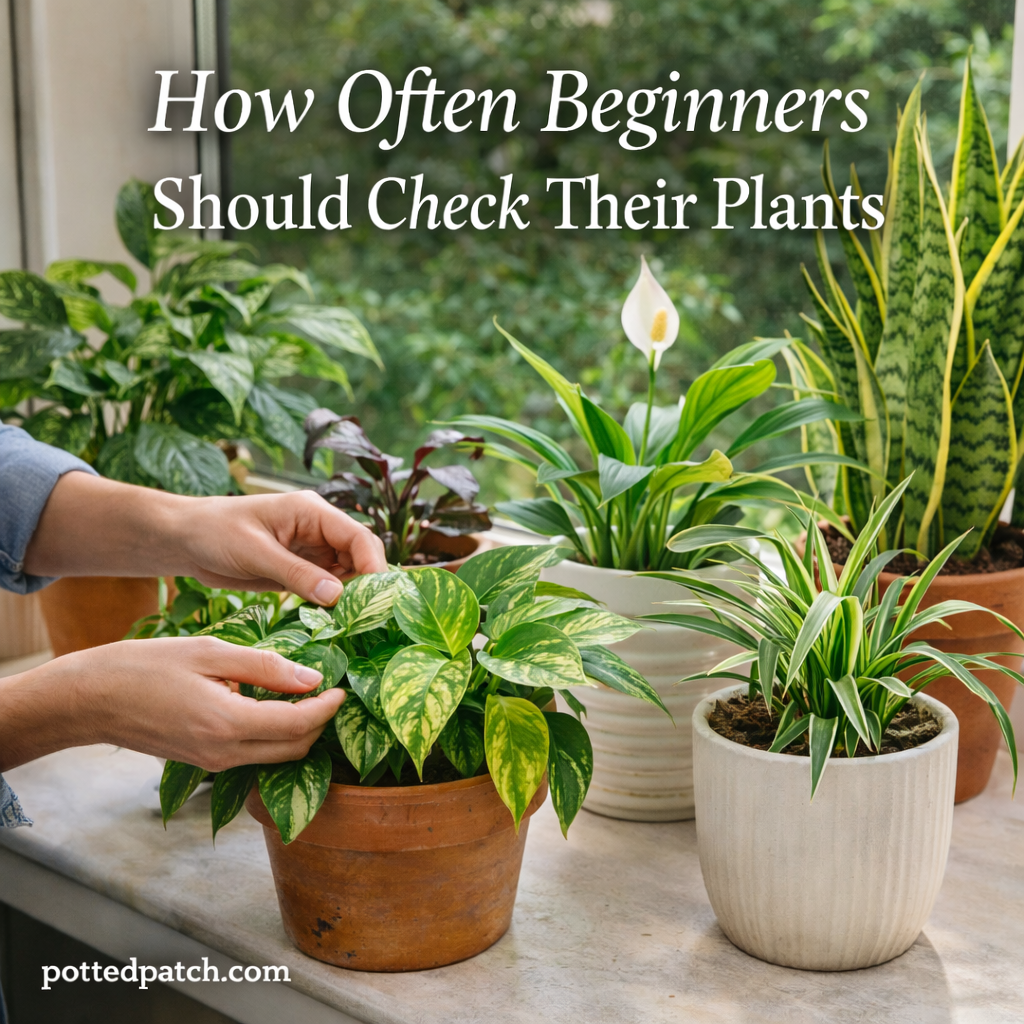
One of the biggest questions new plant owners ask is deceptively simple: How often should I check my plants? Check too rarely, and small problems turn into big ones. Check too often, and beginners risk overwatering, overhandling, and stressing otherwise healthy plants.
This beginner-friendly guide explains how often you should check your plants, what “checking” actually means, and how to build a low-stress routine that keeps plants healthy without hovering over them.
What “Checking Your Plants” Really Means
Checking your plants does not mean watering, repotting, or adjusting something every time you look at them.
A proper plant check is about observation first, action second.
When you check a plant, you’re looking for:
- Changes in leaf color or texture
- Soil moisture level
- Signs of pests or disease
- Overall posture and growth
- Environmental stress (light, drafts, heat)
Most checks take less than a minute per plant.
How Often Beginners Should Check Their Plants
Daily Visual Check (30–60 Seconds)
A quick daily glance helps you notice changes early without interfering with growth.
What to do:
- Look at leaves for drooping, yellowing, or curling
- Notice if the plant looks upright and stable
- Check for obvious pests or damage
No touching, no watering—just looking.
This builds awareness and confidence without risk.
Touch-and-Soil Check Once or Twice a Week
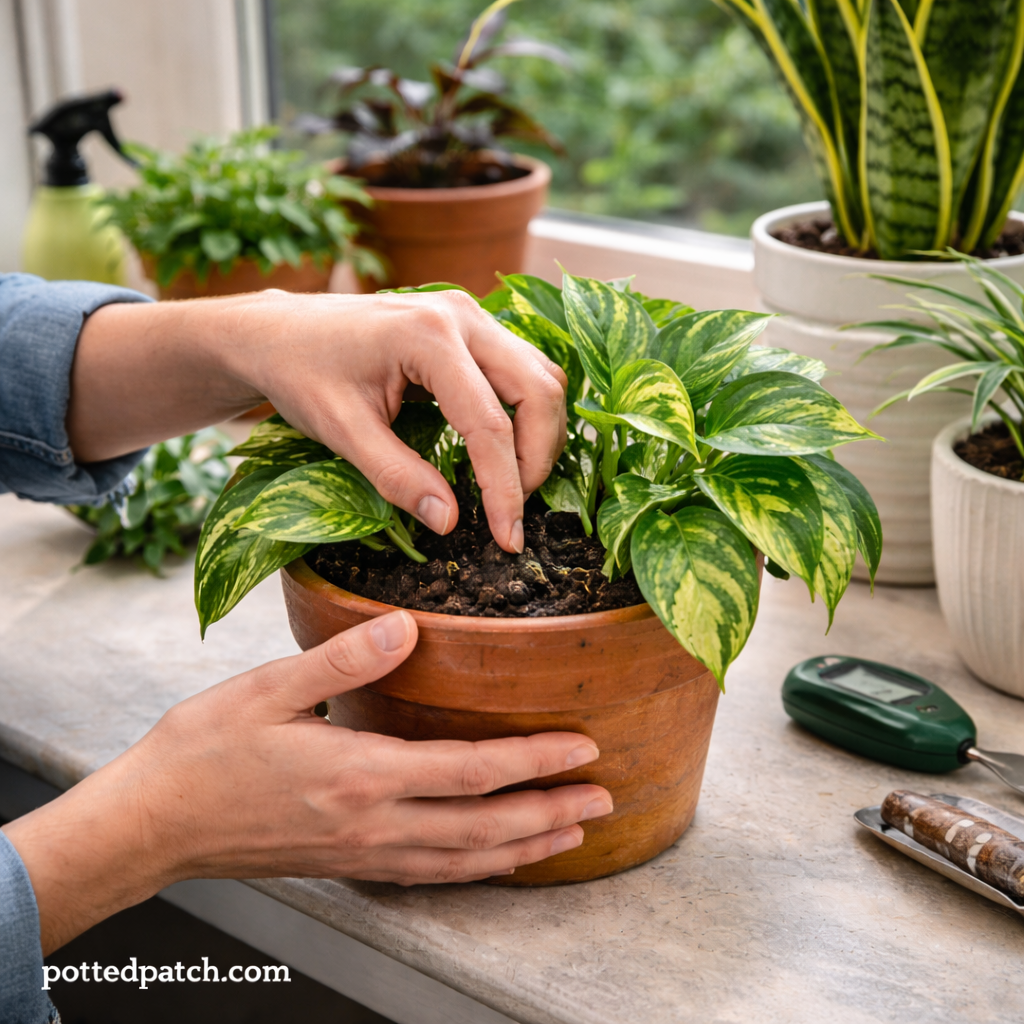
This is when beginners should interact more closely with their plants.
What to check:
- Soil moisture with a finger (top 1–2 inches)
- Pot weight compared to last time
- Leaf firmness (soft vs. firm)
- Any slow changes since the last check
This is the best time to decide whether watering is actually needed.
Watering Check Only When Soil Signals It
Watering should never be on a fixed schedule for beginners.
Instead, water only when the soil tells you to.
Signs it may be time to water:
- Topsoil feels dry to the touch
- Pot feels noticeably lighter
- Leaves begin slight, gentle drooping (not limp or yellow)
Many beginner plant problems come from watering during every check instead of checking before watering.
Weekly vs. Biweekly Checks by Plant Type
Not all plants need the same attention.
Low-Maintenance Plants
Examples: snake plants, pothos, ZZ plants, succulents
Recommended check frequency:
- Daily visual glance
- Soil check every 7–10 days
These plants prefer being left alone and recover well from minor neglect.
Medium-Care Plants
Examples: peace lilies, philodendrons, calatheas
Recommended check frequency:
- Daily visual glance
- Soil and leaf check every 5–7 days
These plants show stress earlier and benefit from consistent observation.
Fast-Drying or Small-Pot Plants
Examples: herbs, small nursery pots, hanging plants
Recommended check frequency:
- Visual check daily
- Soil check every 3–5 days
Smaller containers dry out faster and need closer monitoring.
What Beginners Should Avoid When Checking Plants
Checking too often can actually cause harm if it leads to constant interference.
Avoid these common mistakes:
- Watering “just in case”
- Poking roots or digging into soil repeatedly
- Rotating pots daily
- Moving plants to new spots frequently
- Repotting without clear signs of need
Plants grow best with stability, not constant adjustment.
How to Build a Simple Plant-Check Routine
A predictable routine helps beginners stay consistent without stress.
Example Beginner Routine
- Morning or evening: quick visual check while passing by
- One set day per week: soil and leaf check for all plants
- Water only plants that actually need it
Grouping checks instead of reacting randomly keeps care calm and intentional.
Signs You’re Checking Too Often
If you notice these patterns, it may be time to step back.
- Soil never fully dries between waterings
- Leaves look swollen or translucent
- Fungus gnats appear frequently
- You feel anxious about missing something
Healthy plants don’t need daily fixing—they need consistent observation.
Signs You’re Not Checking Often Enough
On the flip side, infrequent checks can allow problems to snowball.
Watch for:
- Sudden leaf drop
- Severely dry, pulling-away soil
- Widespread yellowing
- Pest infestations that seem to appear overnight
Most plant issues develop gradually and are easier to correct when caught early.
Beginner Tip: Let the Plant Teach You
Every plant has its own rhythm.
As you check your plants over time, you’ll start to notice patterns:
- How long soil takes to dry
- How leaves react to thirst or light changes
- How fast each plant grows
This awareness is more valuable than any fixed schedule.
Final Thoughts
For beginners, the goal isn’t constant care—it’s consistent observation.
A quick daily look, a weekly hands-on check, and soil-led watering decisions are enough to keep most houseplants thriving. By checking often without acting unnecessarily, beginners build confidence, prevent problems early, and avoid the most common plant-care mistakes.
Your plants don’t need perfection. They just need you to pay attention.