Snake plants are famously low-maintenance, but even the toughest houseplants have limits. One of the most common long-term issues snake plant owners run into is a root bound plant—when the roots outgrow the pot and have nowhere left to go.
The good news is that root bound problems are easy to prevent once you know what to watch for and how to manage pot size, timing, and growth habits. This guide walks you through everything you need to know to keep your snake plant healthy, stable, and stress-free.
What Does “Root Bound” Mean in Snake Plants?
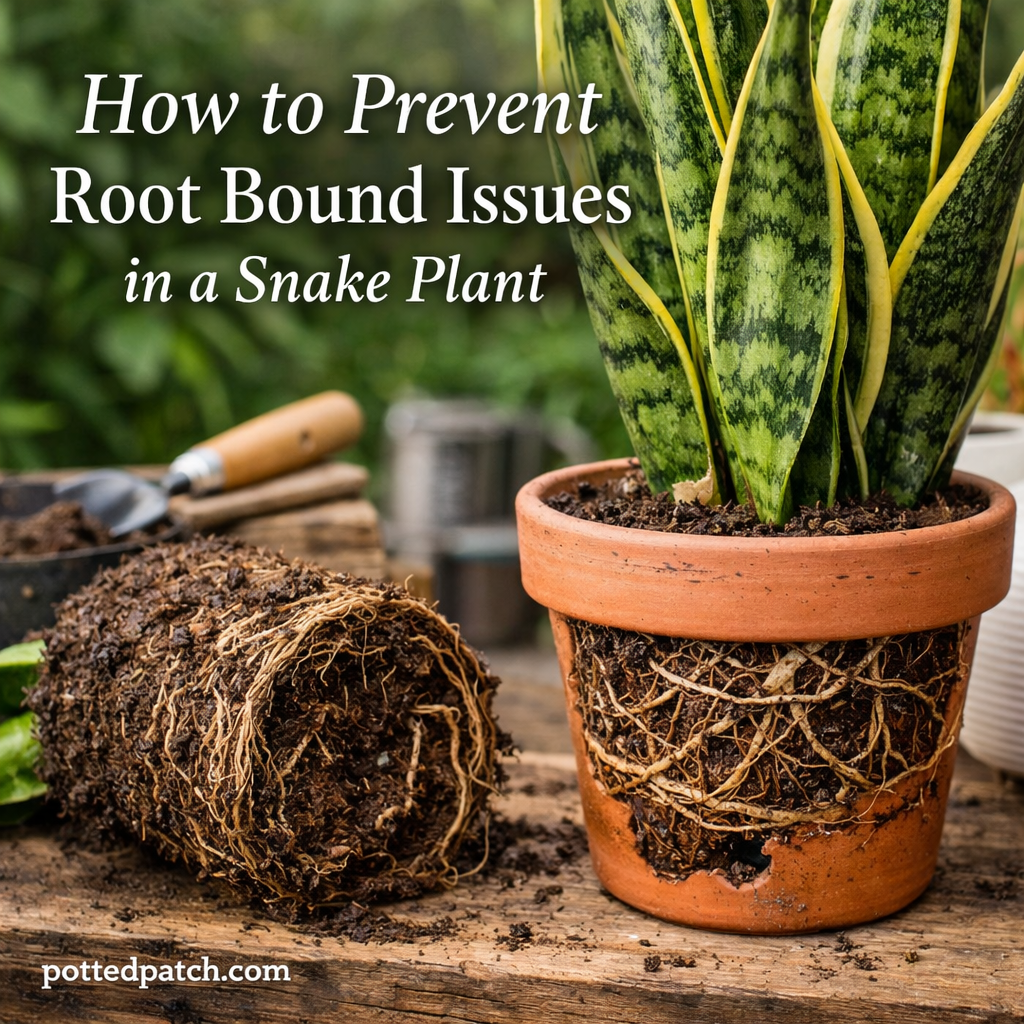
A snake plant becomes root bound when its underground rhizomes and roots fill nearly all available space inside the pot. Instead of expanding outward into fresh soil, the roots begin circling the container or pressing tightly against the pot walls.
While snake plants tolerate snug conditions better than many houseplants, staying root bound for too long can slow growth and cause secondary issues like watering problems or pot breakage.
Why Snake Plants Are Prone to Becoming Root Bound
Snake plants grow differently from many common houseplants, which makes root binding more likely over time.
Key reasons include:
- Thick, spreading rhizomes that push outward as the plant matures
- Slow but steady growth that often goes unnoticed
- A preference for slightly tight pots, which leads many owners to delay repotting too long
- Strong roots capable of cracking plastic or clay pots
Because growth happens mostly below the soil surface, it’s easy to miss the warning signs until the plant is already stressed.
Early Signs Your Snake Plant Is Becoming Root Bound
Catching root binding early makes prevention much easier. Watch for these common signals.
Above-Soil Signs
- Growth has slowed or stopped despite good light
- Leaves lean outward or the plant feels unstable
- New leaves emerge smaller than older ones
- The pot tips easily when touched
Below-Soil Signs
- Roots visible through drainage holes
- Soil dries out unusually fast after watering
- Rhizomes pushing against the soil surface
- Cracked or bulging pots
If you notice more than one of these signs, your snake plant is likely outgrowing its container.
Choosing the Right Pot Size From the Start
Proper pot sizing is the single most important step in preventing root bound issues.
Ideal Pot Size Rule
- Choose a pot that is 1–2 inches wider in diameter than the root ball
- Avoid oversized pots, which increase the risk of overwatering
- Prioritize width over depth, since snake plants spread horizontally
A pot that’s too large can be just as problematic as one that’s too small, so gradual upgrades work best.
How Often Snake Plants Actually Need Repotting
Snake plants don’t need frequent repotting, but they do need occasional upgrades.
Typical repotting timelines:
- Young plants: every 2–3 years
- Mature plants: every 3–5 years
- Fast-growing or crowded plants: as soon as roots appear at drainage holes
Rather than following a strict schedule, let the plant’s growth patterns guide you.
Best Soil to Prevent Root Congestion
The right soil helps roots spread evenly instead of compacting into a dense mass.
Ideal Soil Characteristics
- Fast-draining
- Loose and airy
- Resistant to compaction
Recommended Mix
- Cactus or succulent potting mix
- Optional additions: perlite or coarse sand for extra drainage
Avoid heavy, peat-dense soils that trap moisture and encourage tight root clumping.
Pot Type Matters More Than You Think
Different pots influence how roots behave over time.
Best Pot Choices
- Terracotta: allows airflow and slows root circling
- Ceramic with drainage holes: stable and breathable
- Heavy pots: prevent tipping as the plant grows
Pots to Be Careful With
- Thin plastic: easily cracked by strong rhizomes
- Decorative pots without drainage
- Very narrow or tapered containers
Always prioritize drainage over aesthetics when preventing root issues.
How to Repot Without Encouraging Root Binding
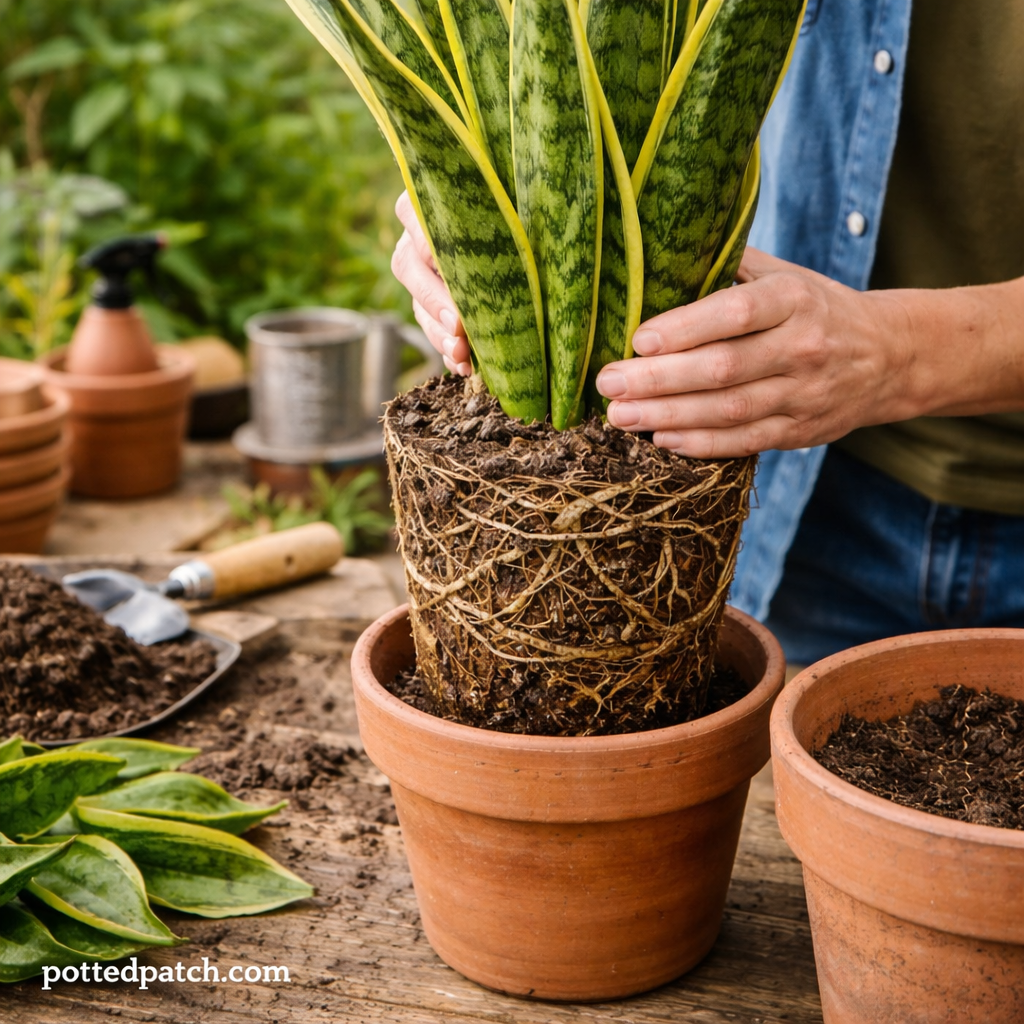
When repotting, technique matters just as much as timing.
Step-by-Step Repotting Tips
- Remove the plant gently and inspect the roots
- Loosen circling roots slightly with your fingers
- Trim only dead or damaged roots if necessary
- Place the plant at the same depth as before
- Fill with fresh soil, pressing lightly but not compacting
Avoid forcing the plant into a pot that’s only marginally larger—give the roots room to spread naturally.
Dividing Snake Plants to Prevent Overcrowding
Division is an excellent long-term strategy for preventing root bound problems.
When Division Makes Sense
- Multiple dense leaf clusters in one pot
- Rhizomes pressing hard against the container
- Plant becoming too large for its space
Benefits of Division
- Relieves root pressure
- Encourages healthier growth
- Creates new plants at no cost
Each division should have its own roots and at least one healthy leaf cluster.
Watering Habits That Reduce Root Stress
Improper watering can worsen root binding symptoms.
Smart Watering Practices
- Water only when soil is mostly dry
- Avoid shallow, frequent watering
- Let excess water drain completely
Consistent overwatering in a tight pot can cause roots to swell and tangle, increasing stress and disease risk.
Seasonal Timing for Repotting Snake Plants
Repotting at the right time minimizes shock and encourages faster recovery.
Best Time to Repot
- Spring through early summer
Times to Avoid
- Late fall and winter
- During active flowering or stress periods
Repotting during active growth allows roots to quickly adapt to new space.
Common Mistakes That Lead to Root Bound Problems
Avoid these common missteps that often cause long-term issues.
- Keeping the plant in the same pot “because it looks fine”
- Jumping to a pot that’s too large
- Using dense, water-retentive soil
- Ignoring drainage holes
- Waiting until the pot cracks before repotting
Preventive care is always easier than correcting advanced root congestion.
How Root Bound Issues Affect Long-Term Health
Left unaddressed, root binding can lead to:
- Stunted growth
- Poor water absorption
- Increased risk of root rot
- Leaf drooping or yellowing
- Structural instability
While snake plants are resilient, chronic root stress slowly weakens even the toughest specimens.
Long-Term Prevention Checklist
Use this simple checklist to keep root bound issues from developing.
- Check roots every 1–2 years
- Repot gradually, not dramatically
- Use breathable pots with drainage
- Refresh soil during repotting
- Divide large plants when needed
A few minutes of routine monitoring can save years of slow decline.
Final Thoughts
Snake plants thrive on neglect—but not forever. Preventing root bound issues is less about frequent repotting and more about smart timing, proper pot selection, and understanding how the plant grows underground.
By giving your snake plant just enough space to expand without overdoing it, you’ll encourage stronger roots, steadier growth, and a healthier plant that can thrive for decades.