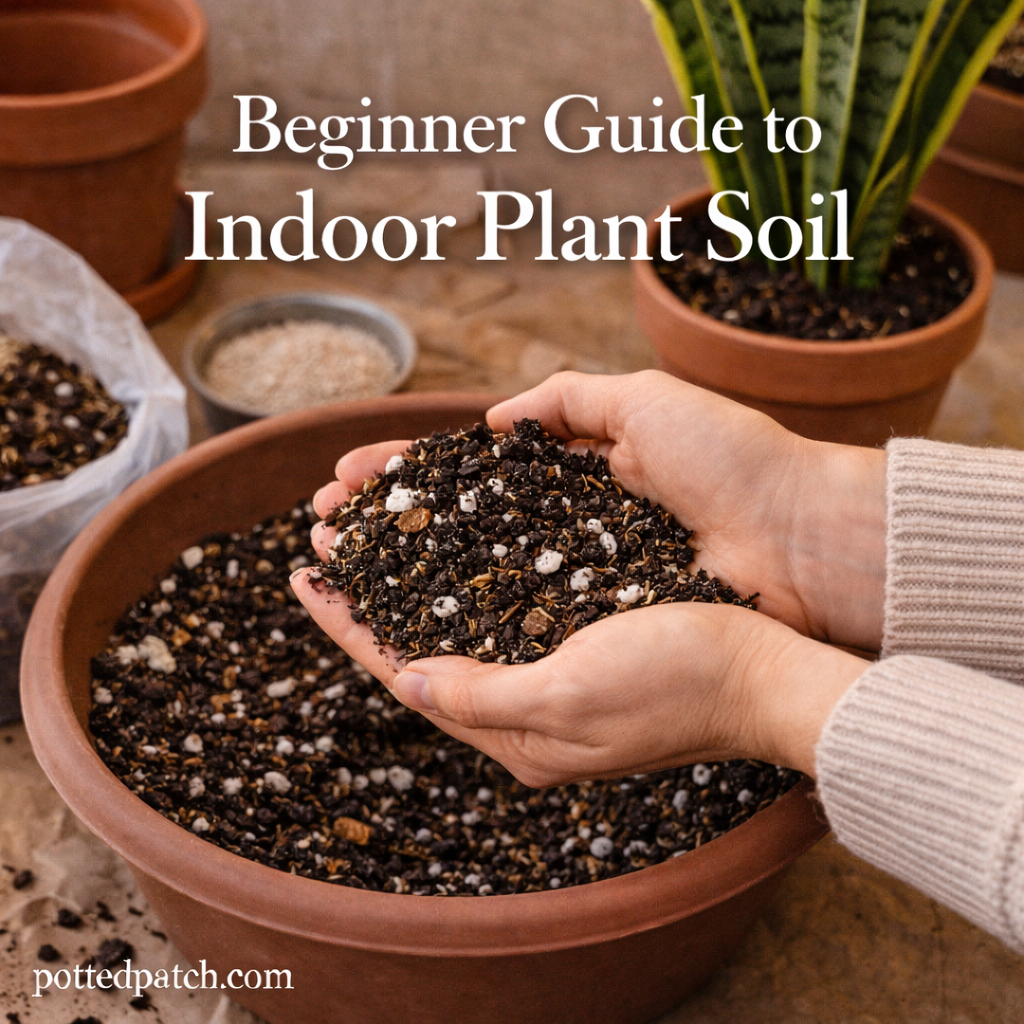
Indoor plant soil is one of the most misunderstood parts of plant care. Many beginners assume “dirt is dirt,” but the type of soil you use directly affects watering, root health, growth speed, and long-term plant success.
This beginner-friendly guide explains what indoor plant soil really is, how it works, and how to choose the right soil for your plants without overcomplicating things.
What Is Indoor Plant Soil?
Indoor plant soil isn’t the same as outdoor garden soil. It’s a controlled growing medium designed to balance three critical needs:
- Moisture retention
- Drainage
- Airflow to roots
Good soil holds enough water for roots to absorb while allowing excess moisture to drain away and oxygen to circulate.
Why Regular Garden Soil Is a Bad Choice Indoors
Using soil from outside is one of the most common beginner mistakes.
Garden soil:
- Compacts easily in pots
- Drains poorly
- Can contain pests, fungi, and weed seeds
- Restricts airflow to roots
Indoor plants need lighter, more structured soil mixes specifically designed for containers.
The Three Main Functions of Good Indoor Soil
Water Retention
Soil should hold moisture long enough for roots to absorb it, but not stay wet for days.
Too much retention leads to:
- Root rot
- Fungus gnats
- Yellowing leaves
Too little retention causes:
- Frequent wilting
- Dry, stressed roots
- Stunted growth
Drainage
Drainage prevents water from pooling around roots.
Good drainage:
- Allows excess water to exit the pot
- Prevents soggy soil conditions
- Supports healthy root systems
Drainage depends on both soil mix and pot design.
Airflow
Roots need oxygen just as much as water.
Well-aerated soil:
- Keeps roots firm and healthy
- Reduces rot risk
- Encourages stronger growth
Compact soil suffocates roots over time.
Common Ingredients in Indoor Plant Soil
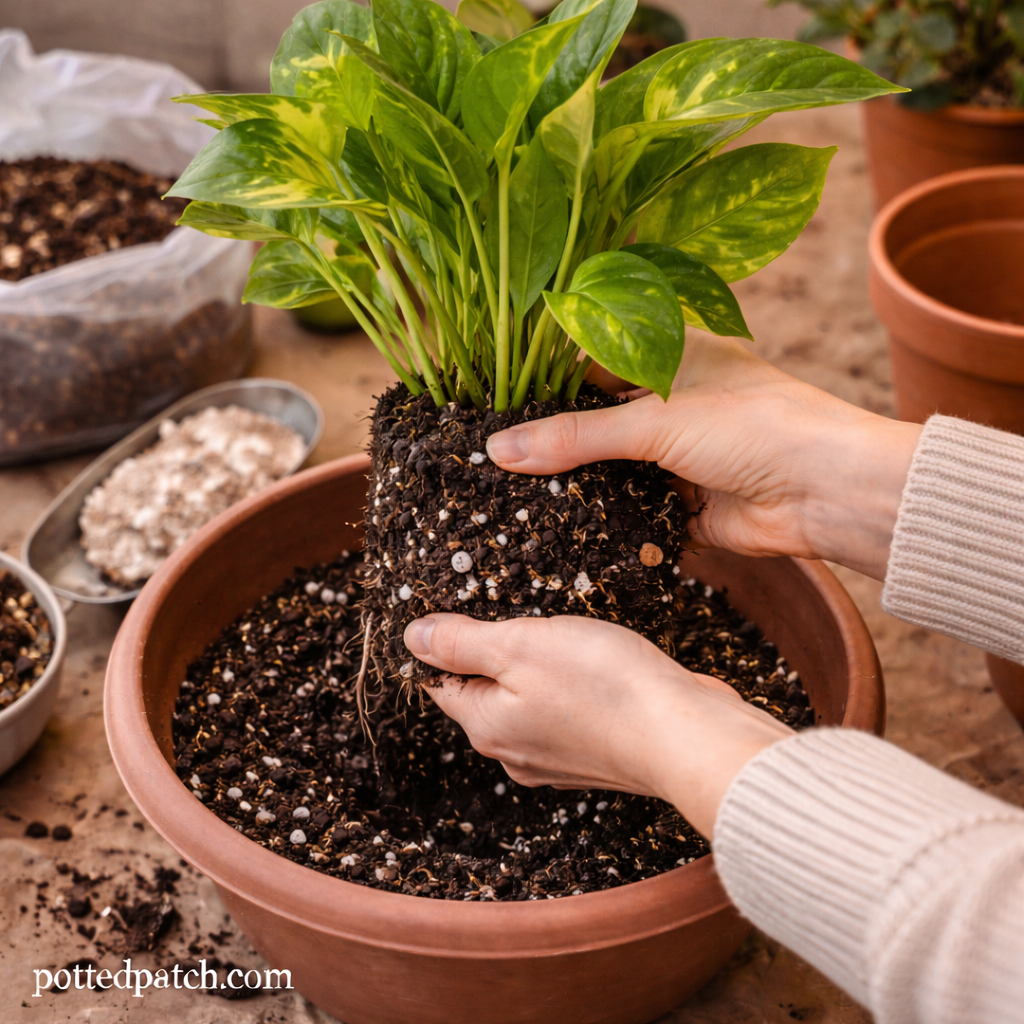
Most indoor potting mixes are made from a blend of materials, each with a specific purpose.
Potting Soil or Base Mix
This forms the foundation of most blends.
Provides:
- Structure
- Basic nutrients
- Moisture retention
Often made from peat moss or coco coir.
Perlite or Pumice
These white or light-colored particles improve drainage.
Benefits:
- Prevent soil compaction
- Increase airflow
- Help excess water escape
Essential for most houseplants.
Orchid Bark or Pine Bark
Chunky materials that improve structure.
Why they’re useful:
- Create air pockets
- Help soil dry evenly
- Reduce waterlogging
Common in mixes for tropical plants.
Sand (Coarse Only)
Used in small amounts for drainage.
Important note:
- Fine sand compacts soil
- Only coarse sand is suitable for pots
Often used for succulents and cacti.
One Soil Does Not Fit All Plants
Different plants have different soil preferences.
Plants That Like Faster-Draining Soil
Examples:
- Snake plants
- Succulents
- Cacti
- ZZ plants
These prefer soil that dries quickly and doesn’t hold excess moisture.
Plants That Like Balanced Moisture
Examples:
- Pothos
- Philodendron
- Monstera
- Peace lily
They prefer soil that holds some moisture but still drains well.
Plants That Like Higher Moisture
Examples:
- Ferns
- Calatheas
- Prayer plants
These benefit from soil that stays lightly moist without becoming soggy.
Should Beginners Buy or Mix Soil?
For most beginners, buying a quality indoor potting mix is the easiest and safest option.
Choose a mix labeled:
- “Indoor plants”
- “Houseplants”
- “Container plants”
You can improve store-bought soil by adding perlite or bark if drainage needs adjusting.
Mixing your own soil is helpful once you understand your plants’ preferences.
The Role of Pots in Soil Performance
Even perfect soil can fail in the wrong pot.
Always use:
- Pots with drainage holes
- A saucer to catch excess water
- A size appropriate for the plant
No soil can compensate for a pot that traps water.
Common Beginner Soil Mistakes
- Using outdoor garden soil
- Choosing moisture-control mixes for all plants
- Packing soil too tightly
- Reusing old, compacted soil
- Ignoring drainage holes
Most plant problems blamed on watering actually start with soil issues.
How Often Should Soil Be Replaced?
Over time, soil breaks down and compacts.
General guideline:
- Replace soil every 1–2 years
- Refresh soil when repotting
- Replace immediately if moldy or pest-infested
Fresh soil improves drainage and nutrient availability.
Final Thoughts
Understanding indoor plant soil doesn’t require chemistry or complicated recipes. Focus on balance: moisture, drainage, and airflow. Once the soil is right, watering becomes easier, roots stay healthy, and plants grow with far fewer problems.
Good soil is the foundation of successful indoor plant care.