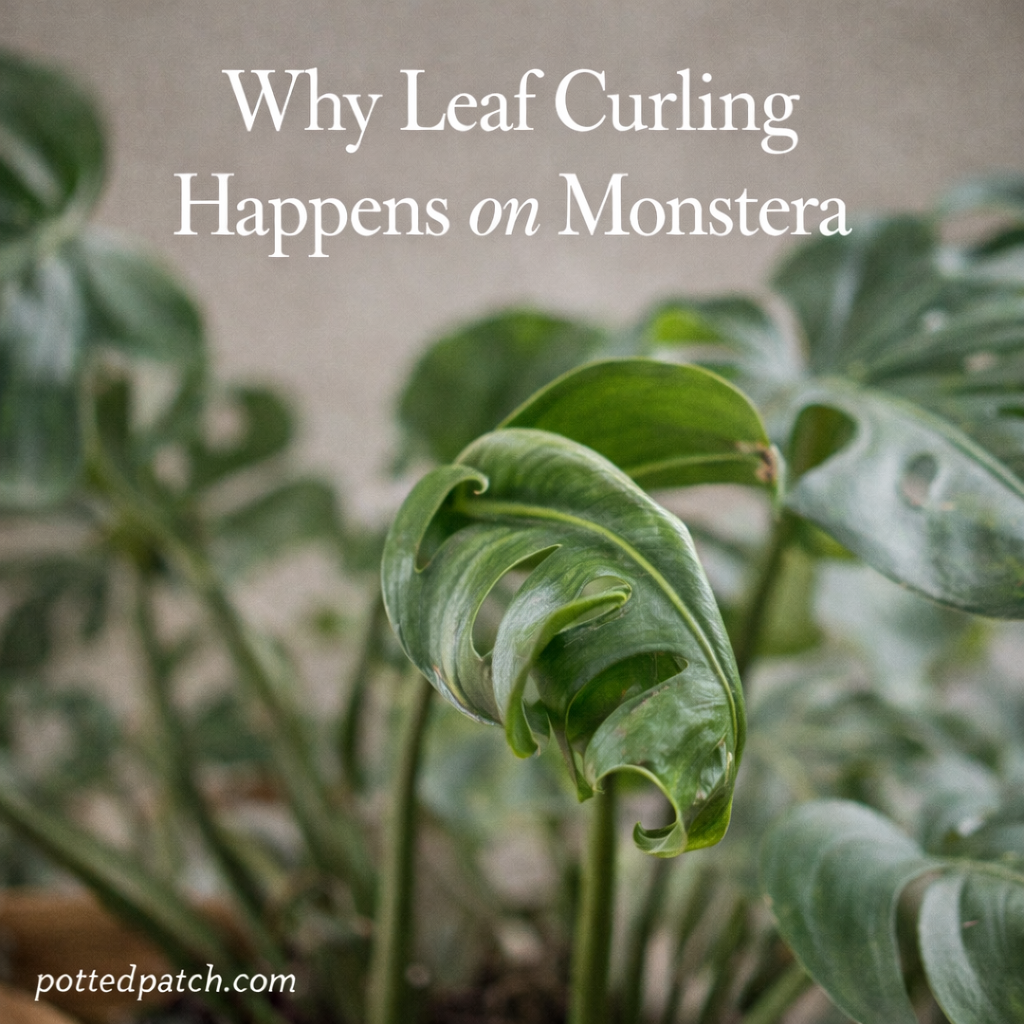
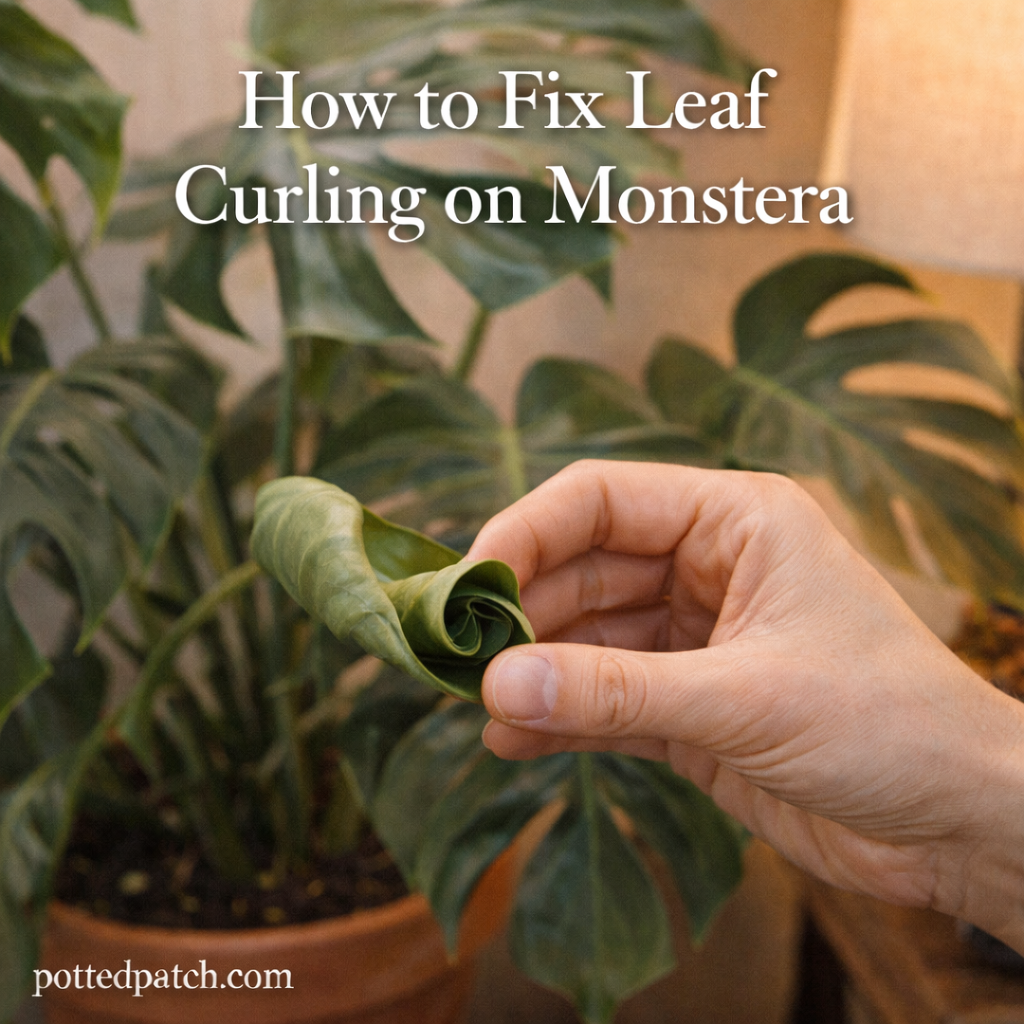
Leaf curling is one of the most common warning signs a monstera gives when something is off. While the plant is generally forgiving, curled leaves usually mean it’s reacting to stress—often related to water, light, or environment.
This guide explains the most common causes of leaf curling on monstera plants, how to identify the exact issue, and what to do to fix it before lasting damage occurs.
Why Monstera Leaves Curl
Monstera leaves curl to reduce surface area and conserve resources. This response helps the plant cope with unfavorable conditions, but it’s also your cue to step in.
Leaf curling is usually reversible once the underlying problem is corrected.
Most Common Causes of Leaf Curling on Monstera
Underwatering
This is the most frequent cause.
Signs it’s underwatering:
- Leaves curl inward or upward
- Soil is dry several inches down
- Pot feels very light
- Leaf edges may feel thin or papery
How to fix it:
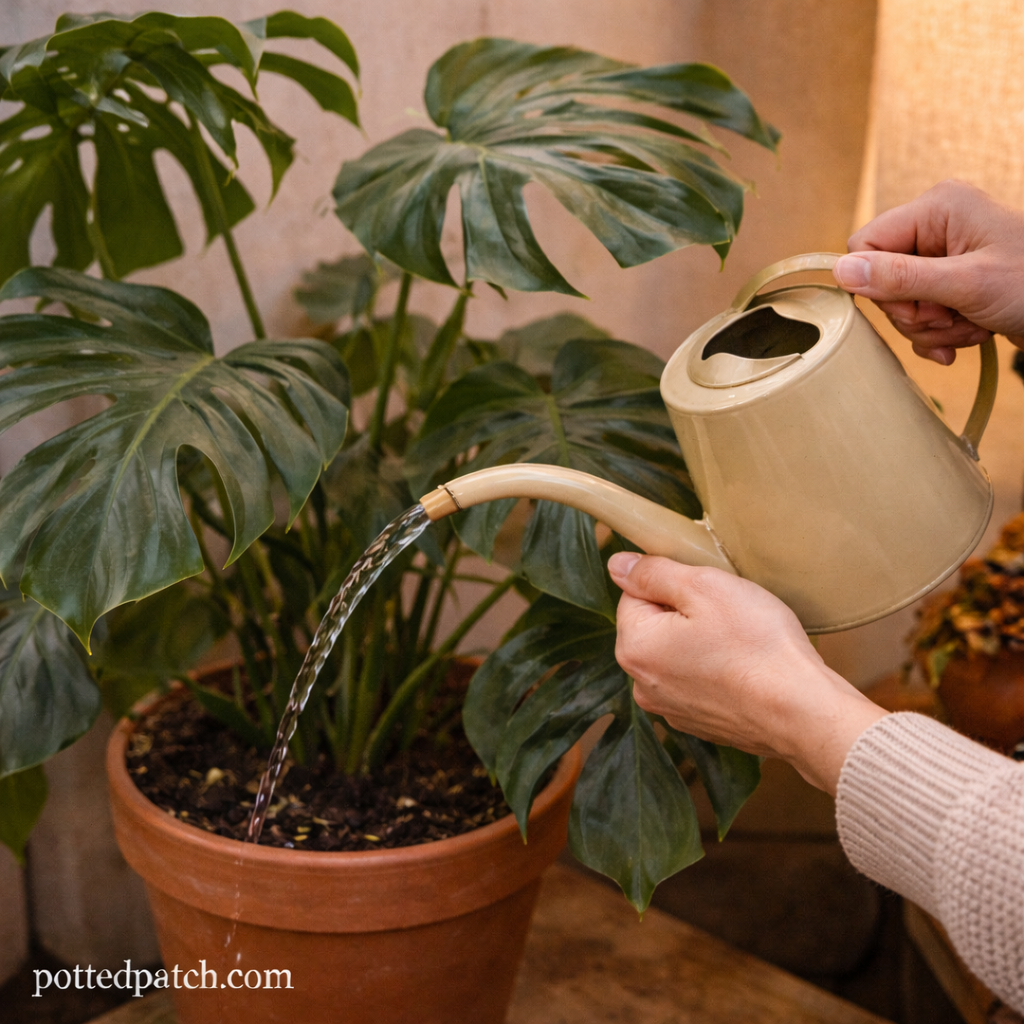
- Water thoroughly until excess drains out
- Allow water to fully soak the root ball
- Resume watering when the top 2–3 inches of soil are dry
Consistent watering is more important than watering more often.
Overwatering
Too much water can also cause curling, though the texture feels different.
Signs of overwatering:
- Leaves curl downward
- Soil stays wet for long periods
- Yellowing or soft leaves
- Mushy stems near the base
How to fix it:
- Stop watering until soil partially dries
- Ensure the pot has drainage holes
- Switch to a faster-draining soil mix if needed
- Remove severely damaged roots if rot is present
Overwatered monsteras often curl before leaves turn yellow.
Low Humidity
Monsteras are tropical plants that prefer moderate to high humidity.
Signs of low humidity:
- Curling combined with brown edges
- Dry indoor air, especially in winter
- Leaves feel stiff or brittle
How to fix it:
- Group plants together
- Use a humidifier nearby
- Place the plant away from heating vents
- Increase humidity gradually rather than suddenly
Misting offers short-term relief but isn’t a long-term solution.
Too Much Direct Light
Monsteras prefer bright, indirect light.
Signs of light stress:
- Curling with pale or scorched patches
- Leaves turning away from the window
- Curling mainly on sun-facing leaves
How to fix it:
- Move the plant a few feet away from direct sun
- Use sheer curtains to diffuse light
- Rotate the plant weekly for even exposure
Sudden increases in light are more stressful than gradual changes.
Temperature Stress
Extreme or fluctuating temperatures can trigger curling.
Watch for:
- Curling near cold windows
- Curling after heat waves
- Drafts from doors or vents
Ideal range:
- 65–85°F (18–29°C)
Keep monsteras away from cold glass, air conditioners, and heaters.
Root Bound Conditions
If roots outgrow the pot, water absorption becomes uneven.
Signs:
- Leaves curl despite regular watering
- Roots circling the drainage holes
- Plant dries out very quickly
How to fix it:
- Repot into a container 1–2 inches larger
- Loosen roots gently before replanting
- Use fresh, well-draining soil
Repotting often resolves chronic curling issues.
How Long Does It Take for Leaves to Uncurl?
Existing curled leaves may not fully flatten, but new growth should emerge normal once conditions improve.
Timeline:
- 1–2 weeks: stress stops worsening
- 2–4 weeks: new leaves appear healthy
- Ongoing: plant stabilizes with consistent care
Focus on new growth rather than fixing old leaves.
Should You Prune Curled Leaves?
Pruning is optional.
Keep curled leaves if:
- They’re still green
- Photosynthesis is ongoing
Remove leaves if:
- They’re badly damaged or yellowing
- Curling is combined with rot
- You want to redirect energy to new growth
Always use clean, sharp tools.
Quick Fix Checklist
If your monstera leaves are curling:
- Check soil moisture first
- Adjust watering consistency
- Improve humidity if air is dry
- Reduce direct sun exposure
- Stabilize temperature
- Inspect roots and pot size
Correcting just one factor is often enough.
Final Thoughts
Leaf curling on monstera is a communication tool, not a death sentence. By identifying whether the issue is water, light, humidity, or environment-related, you can usually fix the problem quickly and prevent future stress.
Once conditions are balanced, monsteras reward you with large, flat, healthy leaves and steady growth.