
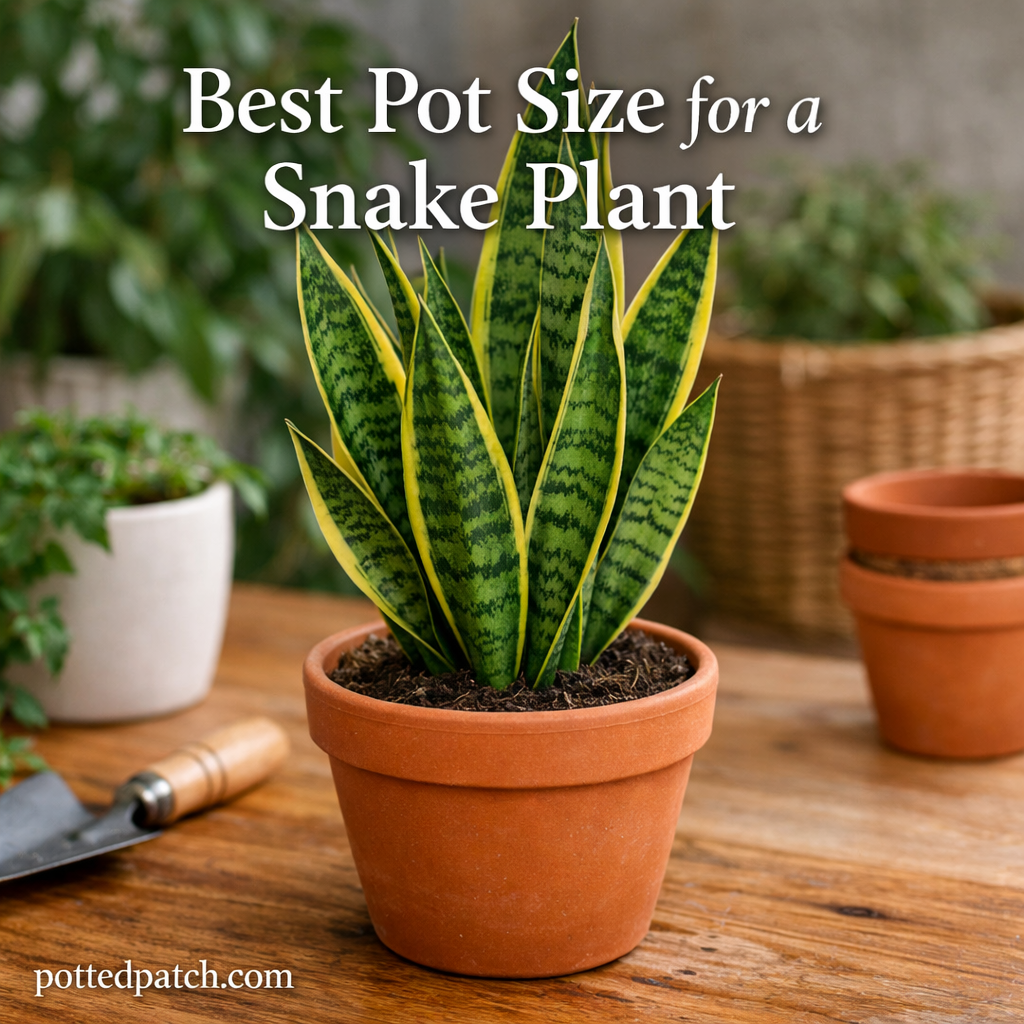
Snake plants are famously low-maintenance, but pot size is one detail that quietly determines whether your plant thrives or struggles. Too large, and you risk root rot. Too small, and growth stalls. This guide breaks down the ideal pot size for snake plants at every stage, explains how roots behave, and shows you when (and how) to size up correctly.
Why Pot Size Matters for Snake Plants
Snake plants prefer tight, controlled conditions. In nature, they grow in compact soil pockets where moisture drains quickly. A pot that’s too big holds excess water, which snake plant roots dislike.
Choosing the right pot size helps:
- Prevent overwatering and root rot
- Encourage steady, upright growth
- Reduce pest and fungus risk
- Support healthy root development
Best Pot Size by Snake Plant Size
Small Snake Plants (6–12 inches tall)
These are usually young plants or recent divisions.
Recommended pot size:
- 4–6 inch diameter pot
- Drainage holes required
Why this works:
- Roots stay snug and stable
- Soil dries evenly
- Faster root establishment
Avoid starting small plants in oversized pots “to grow into.” This often slows growth instead of helping it.
Medium Snake Plants (12–24 inches tall)
This is the most common size for indoor snake plants.
Recommended pot size:
- 6–8 inch diameter pot
What to look for:
- Roots reaching the pot’s edge
- Slight resistance when removing the plant
- Soil drying within 7–10 days
If your snake plant is upright, stable, and pushing new leaves, the pot size is likely right.
Large or Mature Snake Plants (24+ inches tall)
Mature snake plants can become top-heavy, but still prefer modest pot upgrades.
Recommended pot size:
- 8–10 inch diameter pot
- Heavier material (ceramic or terracotta) for stability
Bigger isn’t better here. Even large snake plants rarely need pots larger than 10–12 inches unless they’re heavily clustered.
How Snake Plant Roots Grow
Snake plants have rhizomes—thick, horizontal root structures that spread outward rather than deep.
This means:
- Width matters more than depth
- Shallow pots can work well
- Extra vertical soil space often stays unused
A pot that’s wider than it is tall is often ideal.
When to Repot a Snake Plant
Snake plants don’t need frequent repotting. Many are happy for 2–4 years in the same pot.
Signs it’s time to size up:
- Roots pushing through drainage holes
- Cracked or bulging plastic pots
- Plant tipping over easily
- Growth has slowed despite good light
If none of these are happening, leave it alone. Snake plants like being slightly root-bound.
How Much Bigger Should the New Pot Be?
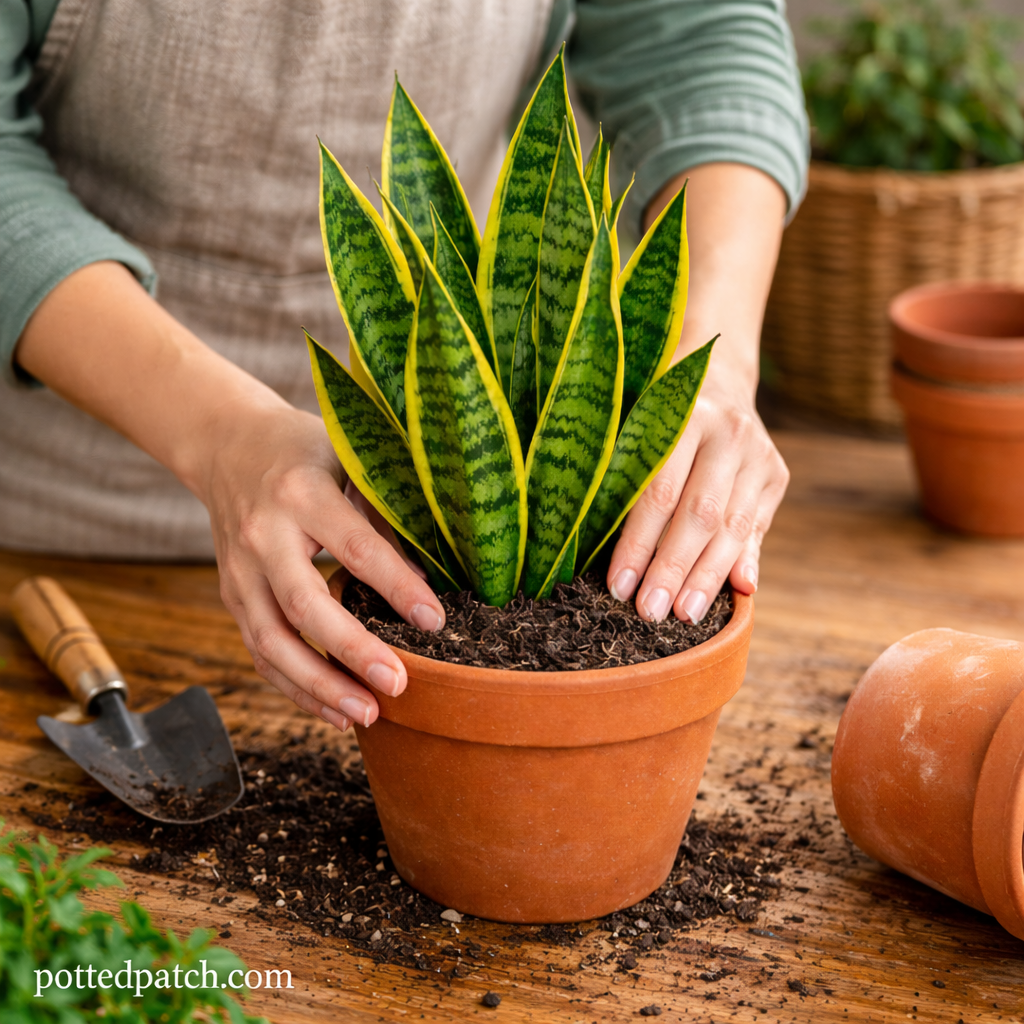
The golden rule:
- Increase pot diameter by 1–2 inches only
For example:
- 6-inch pot → 8-inch pot
- 8-inch pot → 10-inch pot
Jumping up too many sizes increases moisture retention and raises the risk of root rot.
Best Pot Shape and Material
Pot Shape
Ideal:
- Wide, shallow to medium depth
- Stable base
Avoid:
- Very tall, narrow pots
- Decorative pots without drainage
Pot Material
Terracotta:
- Excellent airflow
- Helps soil dry faster
- Great for humid homes
Ceramic:
- Heavier and more stable
- Retains moisture slightly longer
Plastic:
- Lightweight and affordable
- Holds moisture longer (water less often)
Choose based on your watering habits and indoor humidity.
Common Pot Size Mistakes to Avoid
- Using a pot that’s too large “just in case”
- Repotting too often
- Skipping drainage holes
- Choosing depth over width
- Assuming slow growth means a bigger pot is needed
Snake plants grow slowly by nature. Pot size isn’t usually the problem.
Quick Pot Size Reference Guide
- Small plant: 4–6 inches
- Medium plant: 6–8 inches
- Large plant: 8–10 inches
- Repot only every 2–4 years
- Size up by no more than 2 inches
Final Thoughts
The best pot size for a snake plant is smaller than most people expect. These plants thrive when slightly snug, well-drained, and left alone. If you focus on modest pot upgrades and good drainage, your snake plant will reward you with strong roots, upright leaves, and long-term health. 🌱