Monsteras are hardy, fast-growing houseplants—but keeping them healthy year round requires more than occasional watering. Seasonal changes in light, temperature, and humidity can affect growth, leaf quality, and overall plant health if care isn’t adjusted thoughtfully.
This guide breaks down how to keep a Monstera thriving through every season with simple, consistent care habits.
Understand Your Monstera’s Natural Growth Cycle
Monsteras grow actively during spring and summer and slow down in fall and winter. This natural rhythm affects how much water, light, and nutrients your plant needs.
What This Means for Care
- Faster growth in warm, bright months
- Slower growth and lower water needs in colder months
- Less tolerance for overwatering during dormancy
Working with this cycle—not against it—is the foundation of year-round health.
Provide Consistent, Bright Indirect Light
Light is the single most important factor for a healthy Monstera.
Ideal Light Conditions
- Bright, indirect light near a window
- Filtered sunlight through sheer curtains
- East- or south-facing rooms with distance from glass
Signs of Light Issues
- Small leaves or no fenestrations indicate low light
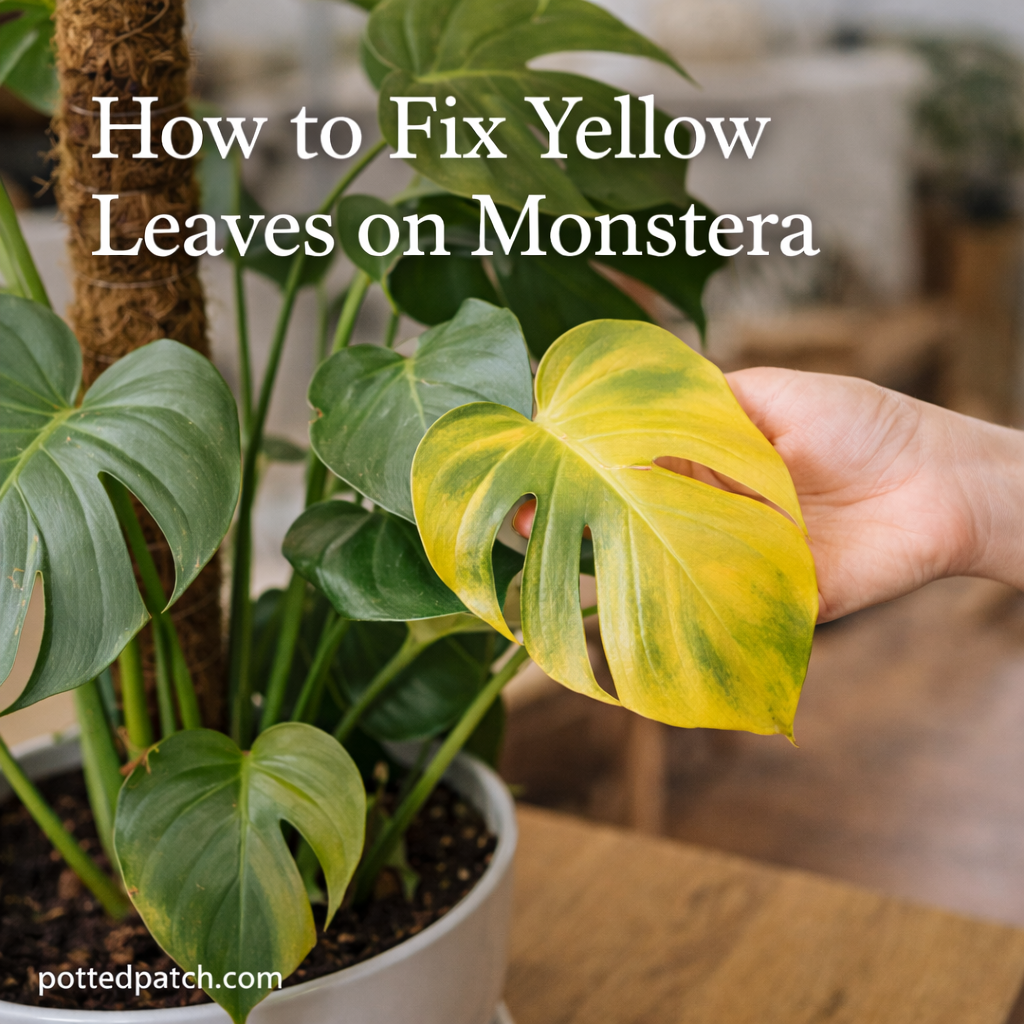
- Yellow or scorched leaves suggest too much direct sun
Rotate the plant every few weeks to encourage even growth.
Water Based on Season, Not Schedule
Monsteras prefer evenly moist soil—but never soggy roots.
Spring and Summer
- Water when the top 1–2 inches of soil are dry
- Expect more frequent watering during active growth
Fall and Winter
- Allow soil to dry slightly deeper between waterings
- Reduce frequency as growth slows
Always empty saucers and avoid watering on a fixed calendar.
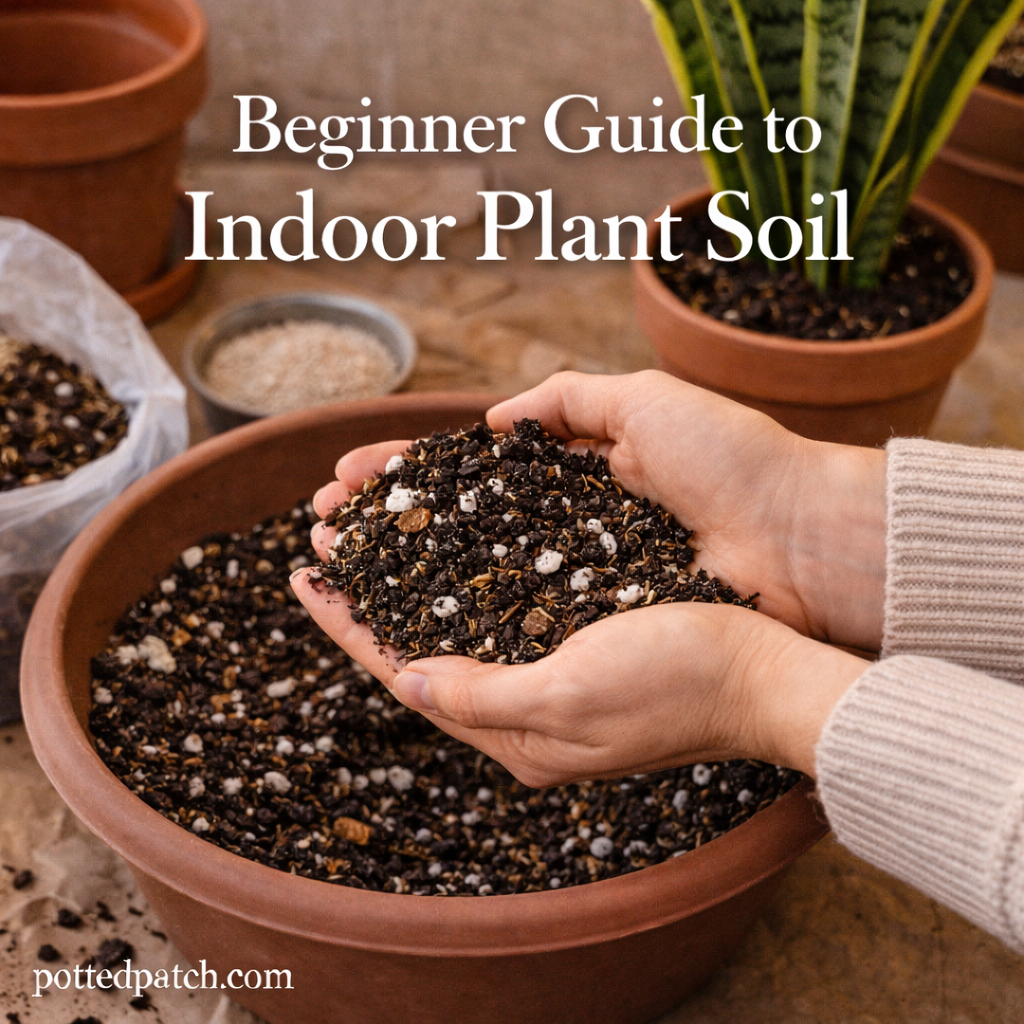
Use Well-Draining Soil Year Round
Healthy roots depend on proper airflow and drainage.
Best Soil Characteristics
- Light, airy texture
- Good drainage with moisture retention
- Components like bark, perlite, or coco coir
Dense soil traps water and leads to root problems, especially in winter.
Maintain Comfortable Indoor Temperatures
Monsteras thrive in stable indoor conditions.
Ideal Temperature Range
- 65–85°F (18–29°C)
- Avoid sudden temperature drops
- Keep away from cold windows and drafts
Short exposure to cold air can cause leaf damage that doesn’t recover.
Support Humidity Without Overdoing It
Monsteras enjoy moderate humidity but adapt well to most homes.
Helpful Humidity Tips
- Group plants together
- Use pebble trays
- Increase humidity during dry winter months if needed
Crispy leaf edges may indicate air that’s too dry, especially in heated rooms.
Fertilize Only During Active Growth
Feeding supports healthy leaves—but timing matters.
Fertilizing Guidelines
- Fertilize every 4–6 weeks in spring and summer
- Use a balanced, diluted fertilizer
- Pause feeding in fall and winter
Overfertilizing during dormancy stresses roots and slows recovery.
Clean and Inspect Leaves Regularly
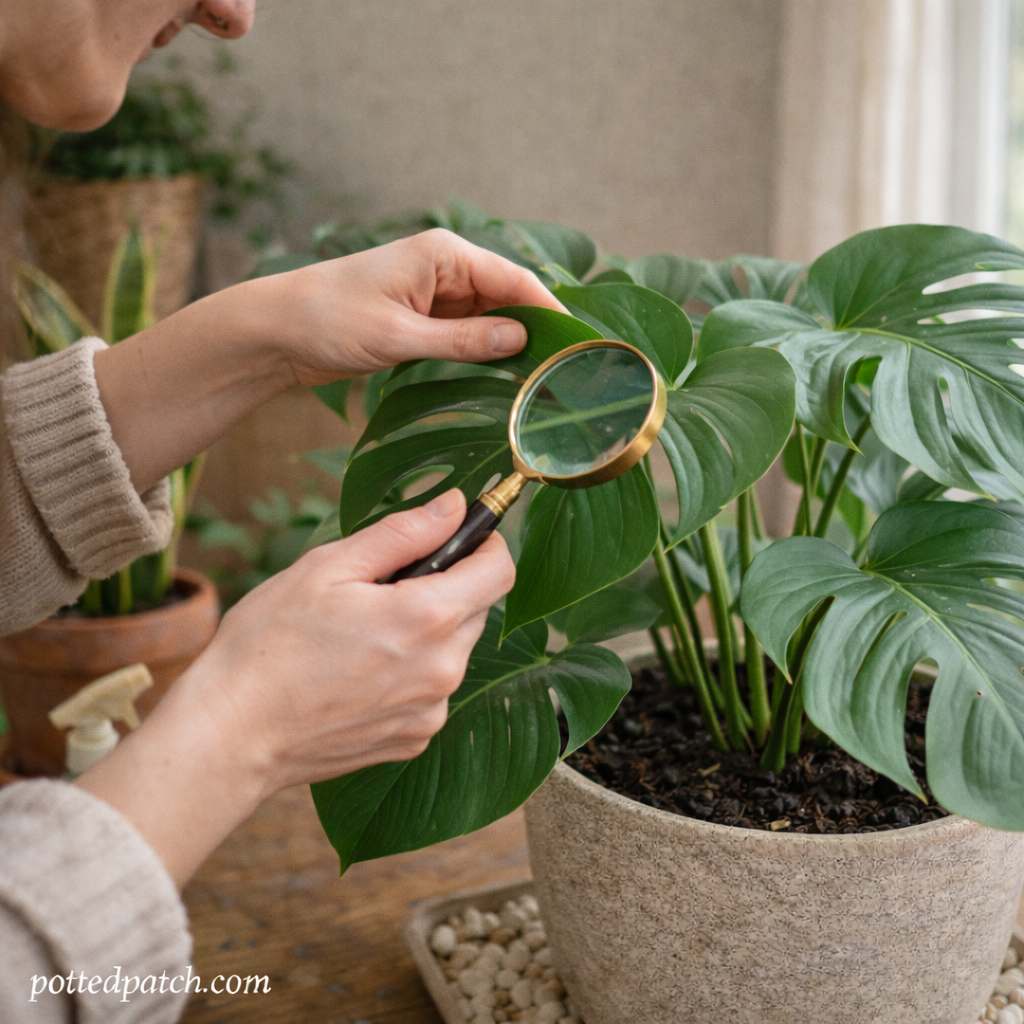
Large Monstera leaves collect dust, which reduces photosynthesis.
Simple Maintenance
- Wipe leaves with a damp cloth monthly
- Check undersides for pests
- Remove damaged or yellowing leaves
Clean leaves absorb more light and stay healthier long term.
Repot Only When Necessary
Monsteras don’t need frequent repotting.
Signs It’s Time to Repot
- Roots growing out of drainage holes
- Soil drying out very quickly
- Plant becoming top-heavy or unstable
Most Monsteras need repotting every 1–2 years, ideally in spring.
Adjust Care as Seasons Change
Year-round success comes from small adjustments.
Seasonal Reminders
- Increase light exposure in winter
- Reduce watering during cooler months
- Resume feeding gradually in spring
- Monitor humidity when heating or cooling systems run
Observing your plant is more reliable than following rigid rules.
Final Thoughts
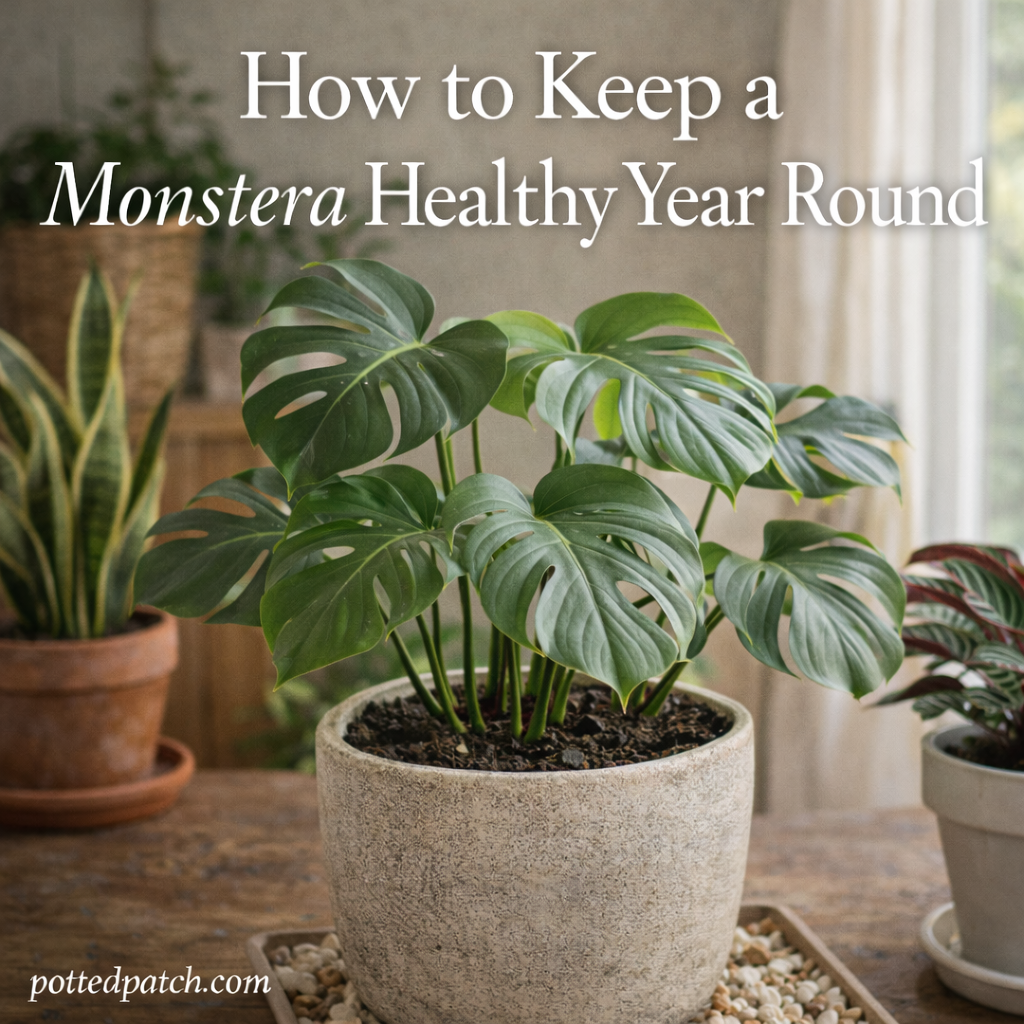
Keeping a Monstera healthy year round isn’t about perfection—it’s about consistency and awareness. With proper light, seasonal watering adjustments, stable temperatures, and occasional maintenance, Monsteras remain strong, lush, and resilient in every season.
A calm, adaptable approach keeps this iconic plant thriving long term.