
Boston ferns are known for their lush, arching fronds and vibrant green color. But keeping them healthy year round requires a little seasonal awareness.
These plants thrive when their environment stays consistent. Light, moisture, humidity, and temperature all work together to support steady growth.
Here’s how to keep a Boston fern healthy throughout every season.
Provide Consistent Bright, Indirect Light
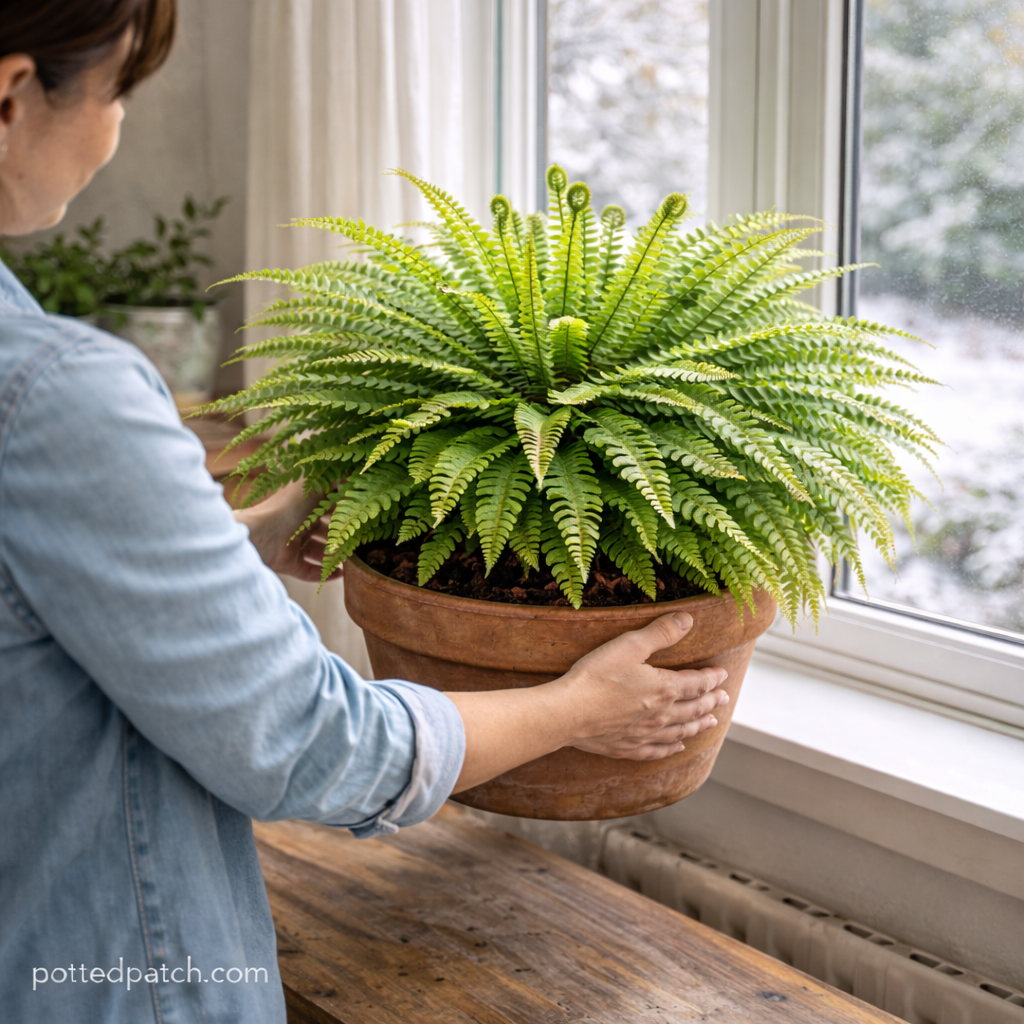
Light is one of the most important factors for year-round health.
Boston ferns prefer:
- Bright, indirect light
- Filtered morning sun
- Protection from harsh afternoon rays
Place your fern:
- 1–3 feet from an east-facing window
- Near a bright north-facing window
- Behind sheer curtains if near stronger light
During winter, move the plant slightly closer to the window if light levels drop.
Avoid sudden changes in placement, as Boston ferns dislike environmental shifts.
Maintain Even Soil Moisture
Boston ferns prefer consistently moist soil—but never soggy.
To maintain balance:
- Water when the top inch feels slightly dry
- Allow excess water to drain completely
- Never let the soil dry out fully
In warmer months, watering may be more frequent. In winter, reduce watering slightly while still keeping soil lightly moist.
Consistency prevents stress and leaf drop.
Increase Humidity, Especially in Winter
Dry air is one of the biggest threats to Boston ferns.
Low humidity can cause:
- Brown leaf tips
- Shedding fronds
- Dull, brittle foliage
Ways to Boost Humidity
- Use a humidifier nearby
- Place the pot on a pebble tray
- Group plants together
- Keep away from heating vents
Winter heating systems often lower humidity dramatically, so extra attention during colder months makes a big difference.
Feed During the Growing Season
Boston ferns benefit from light feeding during active growth.
Fertilize:
- In spring and summer
- Every 4–6 weeks
- With a balanced liquid fertilizer diluted to half strength
Avoid heavy feeding in fall and winter when growth slows naturally.
Over-fertilizing can cause leaf burn and salt buildup.
Repot When Necessary
Healthy roots support healthy fronds.
Repot every 1–2 years, or when:
- Roots circle the pot
- Soil dries unusually fast
- Growth slows
Choose a container 1–2 inches larger with fresh, well-draining soil.
Avoid oversized pots, which retain too much moisture.
Prune to Maintain Shape
Regular pruning keeps your fern looking full and tidy.
Remove:
- Yellowing fronds
- Brown stems
- Thin, weak growth
Trimming near the base encourages denser growth from the center of the plant.
Protect From Temperature Swings
Boston ferns prefer temperatures between:
60°F and 75°F
Avoid placing them near:
- Air conditioning vents
- Drafty doors or windows
- Radiators or heating units
Stable temperatures prevent stress and leaf drop.
Monitor for Pests
Though generally hardy, Boston ferns can attract:
- Spider mites
- Mealybugs
- Aphids
Inspect fronds regularly, especially during dry seasons.
If pests appear:
- Rinse leaves with water
- Wipe gently with a damp cloth
- Use insecticidal soap if necessary
Early detection prevents major infestations.
Seasonal Care Quick Guide
Spring & Summer
- Increase watering frequency
- Fertilize lightly
- Monitor rapid growth
Fall
- Gradually reduce feeding
- Maintain steady watering
Winter
- Increase humidity
- Move closer to light
- Avoid overwatering
Small seasonal adjustments keep your Boston fern thriving all year.
Final Thoughts
Keeping a Boston fern healthy year round comes down to balance and consistency.
Bright indirect light, steady moisture, high humidity, and moderate temperatures create the ideal environment for lush, cascading growth.
When you adapt care slightly with the seasons, your Boston fern will remain vibrant and full—no matter the time of year.