

Boston ferns are prized for their full, arching fronds and vibrant green color. But if your plant looks thin, slow-growing, or sparse, it may need a few adjustments to kickstart fresh growth.
The good news? Boston ferns respond quickly when their core needs are met.
Here’s exactly how to encourage new growth on a Boston fern and keep it lush year-round.
1. Provide Bright, Indirect Light
Light is the foundation of healthy growth.
Boston ferns thrive in bright, indirect light. Without enough light, they produce fewer fronds and appear thin.
Ideal Placement
- 1–3 feet from an east-facing window
- Near a bright north-facing window
- Behind sheer curtains if placed near stronger light
Avoid direct afternoon sun, which can scorch leaves and slow recovery.
If natural light is limited, use a grow light for 10–12 hours daily.
2. Maintain Consistent Moisture
Boston ferns prefer evenly moist soil.
If the soil dries out completely, growth stalls. If it stays soggy, roots suffer.
Watering Tips for New Growth
- Check soil regularly
- Water when the top inch feels slightly dry
- Allow excess water to drain completely
Consistency helps the plant focus energy on producing new fronds.
3. Increase Humidity
Humidity plays a major role in frond production.
Low humidity often leads to:
- Brown tips
- Leaf drop
- Slow growth
Boosting Humidity
- Use a humidifier nearby
- Place the pot on a pebble tray
- Group plants together
- Keep away from heating vents
Higher humidity supports soft, fresh new fronds.
4. Prune to Stimulate Fuller Growth
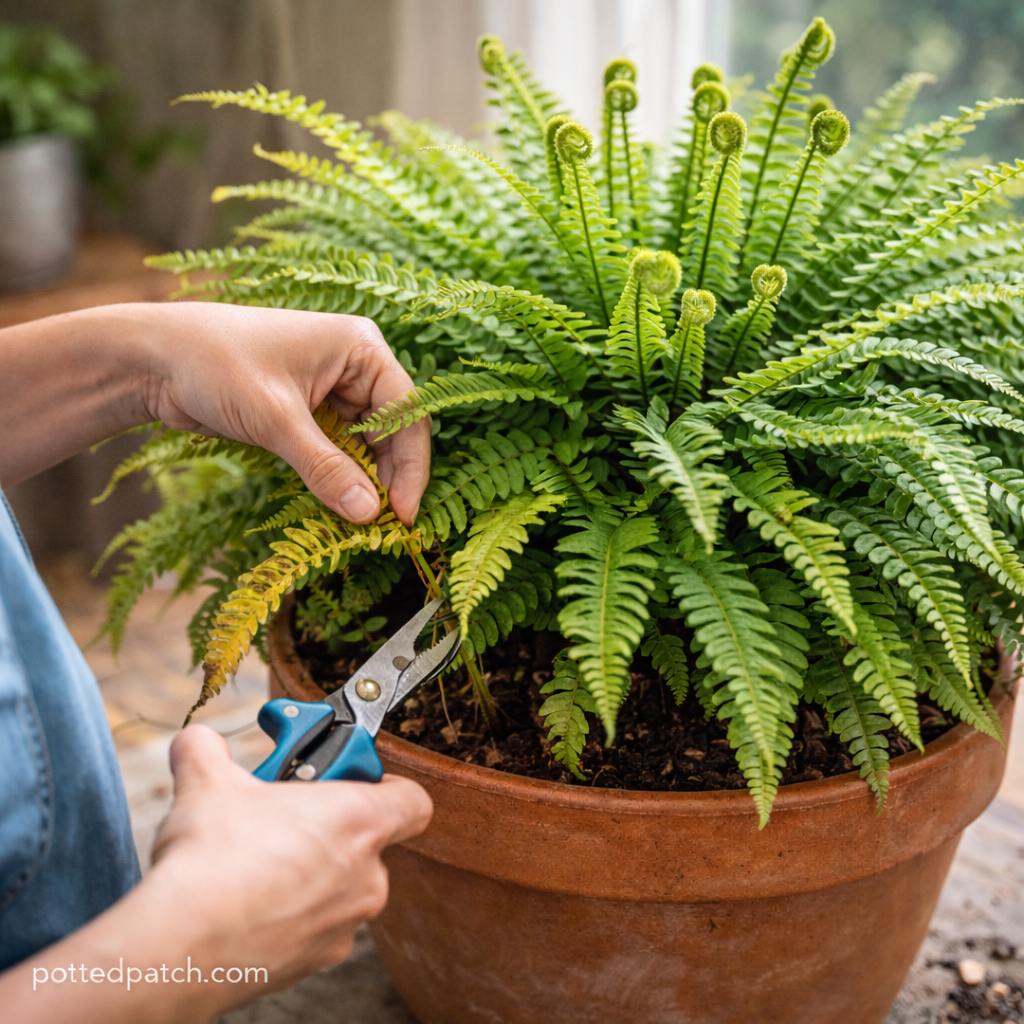
Pruning encourages the plant to redirect energy into new shoots.
Remove:
- Yellowing fronds
- Brown stems
- Thin or damaged growth
Trim near the base using clean scissors.
This improves airflow and promotes denser growth from the center.
5. Feed During the Growing Season
Boston ferns benefit from light feeding in spring and summer.
Use:
- A balanced liquid houseplant fertilizer
- Diluted to half strength
- Every 4–6 weeks
Avoid over-fertilizing, which can burn roots and slow growth instead of speeding it up.
Stop feeding in fall and winter when growth naturally slows.
6. Repot If Root-Bound
Crowded roots restrict growth.
If you notice:
- Roots circling the pot
- Soil drying too quickly
- Reduced frond size
It may be time to repot.
Choose a pot 1–2 inches larger with fresh, well-draining soil to give roots room to expand.
7. Keep Temperatures Stable
Boston ferns prefer temperatures between:
60°F and 75°F
Sudden temperature swings can shock the plant and delay new growth.
Avoid:
- Drafty windows
- Air conditioning vents
- Cold night exposure
Stable conditions encourage steady development.
8. Be Patient and Consistent
New fronds typically emerge from the center of the plant as tightly coiled “fiddleheads.”
When conditions are right, you’ll notice:
- Brighter green growth
- Upright, fresh fronds
- Fuller plant shape
Growth may take a few weeks after adjustments, but consistency brings visible results.
Final Thoughts
Encouraging new growth on a Boston fern isn’t about doing one big thing—it’s about creating balance.
Bright indirect light, steady moisture, proper humidity, and light feeding during active growth all work together to produce lush, cascading fronds.
If your fern looks sparse, review the basics first. Small improvements in light or humidity often trigger dramatic new growth.
With the right environment, your Boston fern will reward you with vibrant, healthy foliage year after year.