
Boston ferns are classic, elegant houseplants known for their soft, arching fronds and lush green appearance. While they’re beautiful, they do require consistent care to thrive indoors.
If you understand their light, watering, humidity, and soil needs, a Boston fern can become one of the most rewarding plants in your home.
Understanding Boston Fern Needs
Boston ferns (Nephrolepis exaltata) are tropical plants that naturally grow in humid forests. Indoors, they need conditions that mimic that environment:
- Bright, indirect light
- Consistent moisture
- High humidity
- Well-draining soil
- Stable temperatures
When these needs are met, Boston ferns grow full and vibrant.
Light Requirements
Boston ferns prefer bright, indirect light.
Ideal placement:
- Near an east-facing window
- A few feet away from a bright south-facing window
- In filtered light behind sheer curtains
Avoid:
- Harsh direct sunlight (can scorch leaves)
- Deep shade (leads to sparse, pale fronds)
If fronds turn yellow or thin out, lighting may need adjustment.
Watering Properly
Boston ferns like consistently moist soil — but not soggy conditions.
How to Water
- Check the top inch of soil
- Water when it feels slightly dry
- Keep soil evenly moist
Do not allow the plant to fully dry out. Dry soil can quickly cause:
- Crispy fronds
- Leaf drop
- Browning tips
At the same time, avoid letting the pot sit in standing water.
Humidity Is Critical
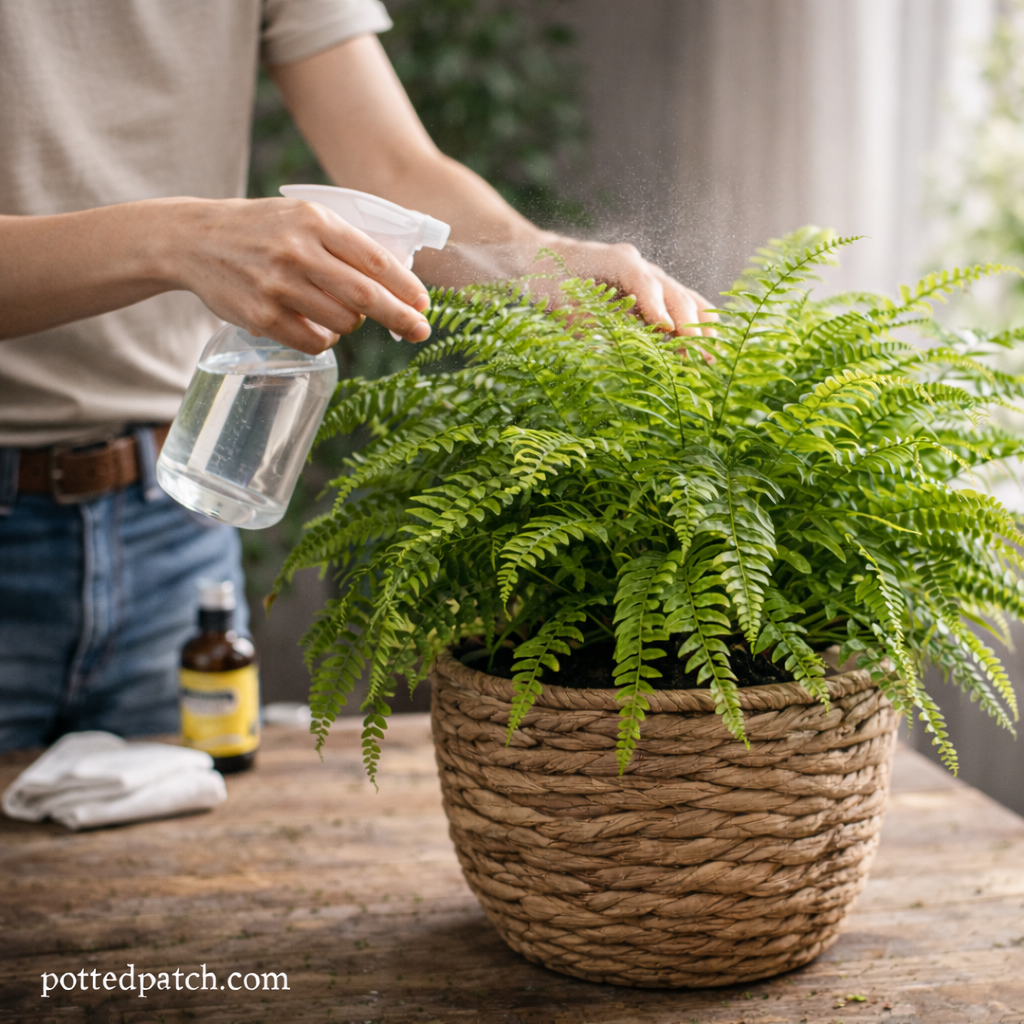
Humidity is the most important factor for Boston fern success.
They prefer 50–70% humidity.
Low humidity leads to:
- Brown tips
- Shedding leaves
- Dry, brittle fronds
Ways to Increase Humidity
- Use a humidifier
- Place on a pebble tray
- Group plants together
- Keep away from heating vents
Bathrooms with natural light are often ideal locations.
Best Soil for Boston Ferns
Use a light, well-draining potting mix that retains moisture.
Look for:
- Peat-based indoor potting soil
- Added perlite for drainage
- Organic matter for nutrients
Avoid heavy garden soil. Good drainage prevents root rot while allowing steady moisture retention.
Ideal Temperature Range
Boston ferns prefer:
- 65–75°F
- Stable indoor conditions
- No cold drafts
Temperatures below 55°F can stress the plant. Avoid placing near exterior doors or drafty windows.
Fertilizing Schedule
Boston ferns benefit from light feeding during active growth.
Feeding Guidelines
- Use diluted liquid houseplant fertilizer
- Feed once a month in spring and summer
- Avoid fertilizing in fall and winter
Overfertilizing can cause leaf burn and yellowing.
Pruning and Maintenance
Regular grooming keeps the plant full and healthy.
Trim:
- Brown fronds
- Yellowing leaves
- Sparse outer growth
Do not cut healthy green fronds unnecessarily.
Wipe away dust gently if needed, but avoid harsh handling.
Common Problems and Solutions
Brown Leaf Tips
Usually caused by:
- Low humidity
- Dry soil
- Hard tap water
Yellowing Fronds
Often linked to:
- Overwatering
- Poor drainage
- Too much direct sunlight
Leaf Drop
Can occur due to:
- Sudden temperature changes
- Underwatering
- Low humidity
Addressing the root cause quickly helps the plant recover.
Repotting Tips
Boston ferns prefer being slightly root-bound but should be repotted every 1–2 years.
Repot when:
- Roots fill the pot
- Growth slows significantly
- Soil compacts
Choose a pot only slightly larger than the current one.
Quick Care Checklist
To keep your Boston fern thriving indoors:
- Bright, indirect light
- Consistently moist soil
- High humidity
- Well-draining potting mix
- Monthly feeding in growing season
- Stable indoor temperatures
Consistency is key.
Final Thoughts
Boston ferns may seem delicate, but once you master moisture and humidity, they become surprisingly resilient.
With steady watering, bright filtered light, and adequate humidity, your Boston fern will stay lush, full, and vibrant indoors year round.