Areca palms bring a soft, tropical feel to any indoor space. But keeping them healthy year round requires more than occasional watering. Seasonal shifts in light, temperature, and humidity can impact growth, leaf color, and overall plant health.
With consistent care and small seasonal adjustments, your Areca palm can stay lush and vibrant throughout the entire year.
Understand Seasonal Growth Cycles
Areca palms naturally grow more actively in spring and summer. During fall and winter, growth slows down.
This means:
- More watering and feeding in warm months
- Less watering and no fertilizer in colder months
- Extra attention to humidity in winter
Adjusting care to match the season prevents stress and keeps the plant balanced.
Provide Consistent Bright, Indirect Light
Light is essential year round.
Place your Areca palm:
- Near a bright east- or south-facing window
- In filtered sunlight
- Away from harsh direct afternoon rays
During winter, daylight hours decrease. If your space becomes dim, consider moving the plant closer to a window.
Low light leads to:
- Pale or yellowing leaves
- Slower growth
- Thin, weak fronds
Maintaining strong light prevents decline.
Maintain a Stable Watering Routine
Watering needs change slightly throughout the year.
Spring and Summer
- Water when top 1–2 inches of soil are dry
- Keep soil evenly moist, not soggy
Fall and Winter
- Allow soil to dry slightly more between waterings
- Reduce frequency as growth slows
Always use a pot with drainage holes and empty the saucer after watering.
Consistency is more important than volume.
Use Well-Draining Soil
Healthy roots are the foundation of year-round health.
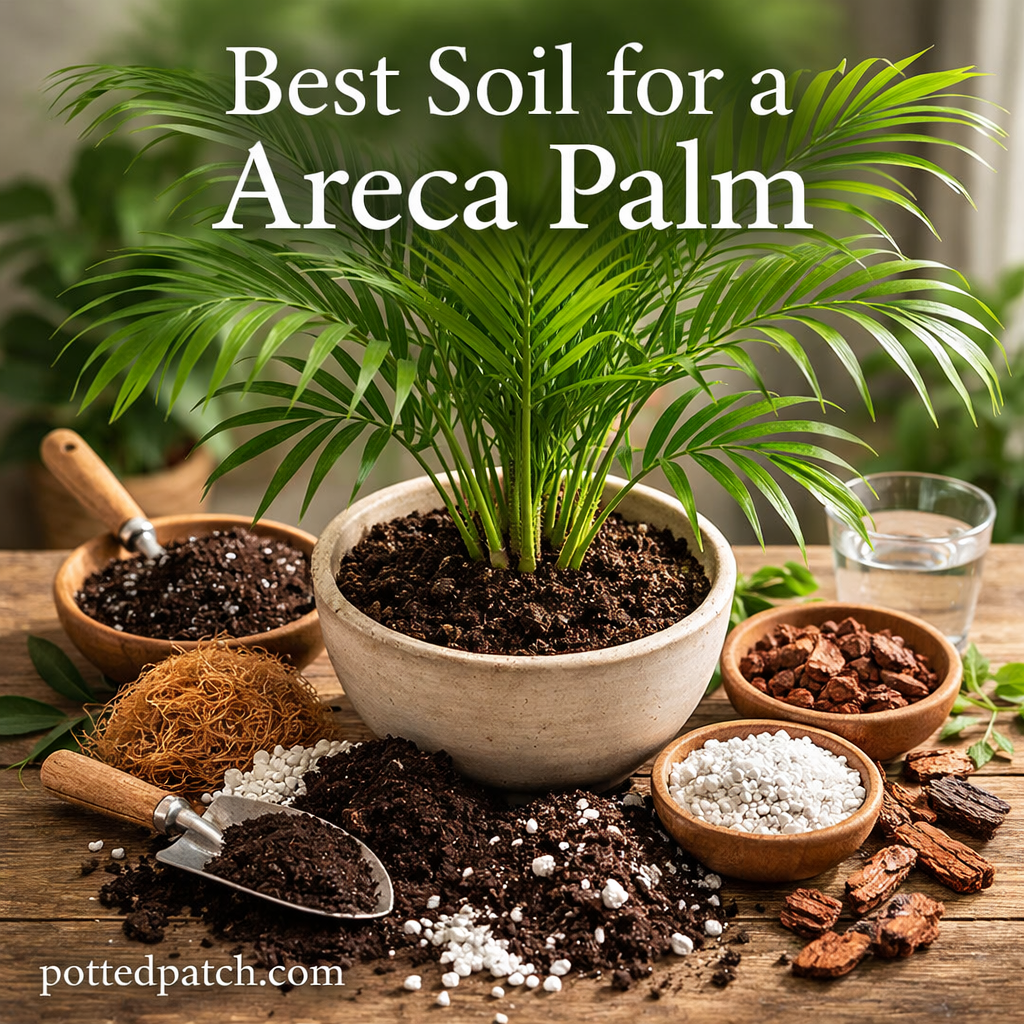
Choose a soil mix that includes:
- High-quality indoor potting soil
- Perlite or pumice
- Pine bark
Avoid heavy, compacted soil. Poor drainage is one of the main causes of yellow leaves and root rot.
Repot every 2–3 years or when roots become crowded.
Keep Humidity Levels Moderate
Areca palms prefer moderate humidity, ideally between 40–60%.
Dry air — especially in winter — causes:
- Brown leaf tips
- Curling fronds
- Slower growth
To improve humidity:
- Use a humidifier
- Group plants together
- Keep away from heating vents
- Place on a pebble tray
Humidity is often the missing piece in winter care.
Feed Properly During Growing Season
Fertilize only during active growth.
Feeding Schedule
- Use a balanced liquid fertilizer
- Feed once per month in spring and summer
- Stop fertilizing in fall and winter
Overfertilizing can cause leaf burn and salt buildup. Less is more.
Flush the soil occasionally with water to remove excess salts.
Maintain Ideal Temperatures
Areca palms prefer:
- 65–75°F
- Stable indoor conditions
- No cold drafts
Avoid placing near:
- Air conditioning vents
- Exterior doors
- Cold windows in winter
Sudden temperature drops can shock the plant and cause leaf damage.
Clean and Inspect Regularly
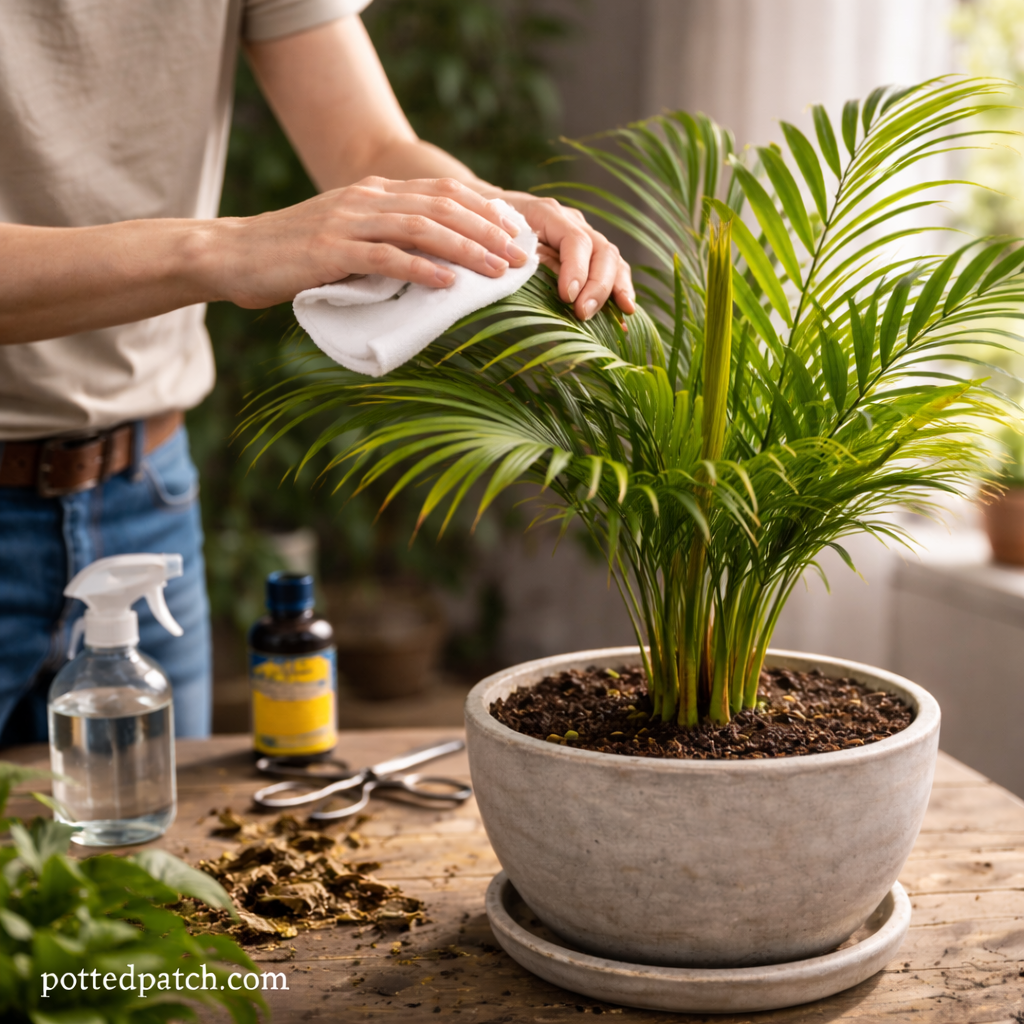
Year-round maintenance keeps problems from escalating.
Every few weeks:
- Wipe leaves to remove dust
- Check for pests like spider mites
- Trim fully brown fronds
Healthy leaves absorb more light and support better growth.
Watch for Early Warning Signs
Catching issues early makes correction easier.
Yellow Leaves
Often caused by:
- Overwatering
- Poor drainage
- Low light
Brown Tips
Usually linked to:
- Low humidity
- Inconsistent watering
- Mineral buildup in soil
Adjust care as soon as symptoms appear.
Year-Round Care Checklist
To keep your Areca palm thriving:
- Bright, indirect light
- Well-draining soil
- Consistent watering
- Moderate humidity
- Monthly feeding in growing season
- Stable temperatures
- Routine leaf cleaning
Small, consistent habits create long-term health.
Final Thoughts
Keeping an Areca palm healthy year round isn’t complicated — it’s about balance.
When light, water, humidity, and temperature remain steady, your palm stays full, green, and resilient through every season.
With thoughtful adjustments and routine care, your Areca palm can remain a vibrant focal point in your home all year long.