

Areca Palms are known for their feathery fronds and tropical feel. But if there’s one thing that determines whether they thrive or struggle indoors, it’s watering.
Too much water leads to root rot. Too little causes browning tips and drooping leaves.
So how often should you water an Areca Palm? The answer depends on light, season, and indoor conditions — but there are clear guidelines you can follow.
General Watering Rule
Water your Areca Palm when the top 1–2 inches of soil feel dry.
For most homes, that means:
- Spring & Summer: Every 5–7 days
- Fall: Every 7–10 days
- Winter: Every 10–14 days
These are averages. Always check the soil before watering rather than following a strict calendar.
How to Check If It Needs Water
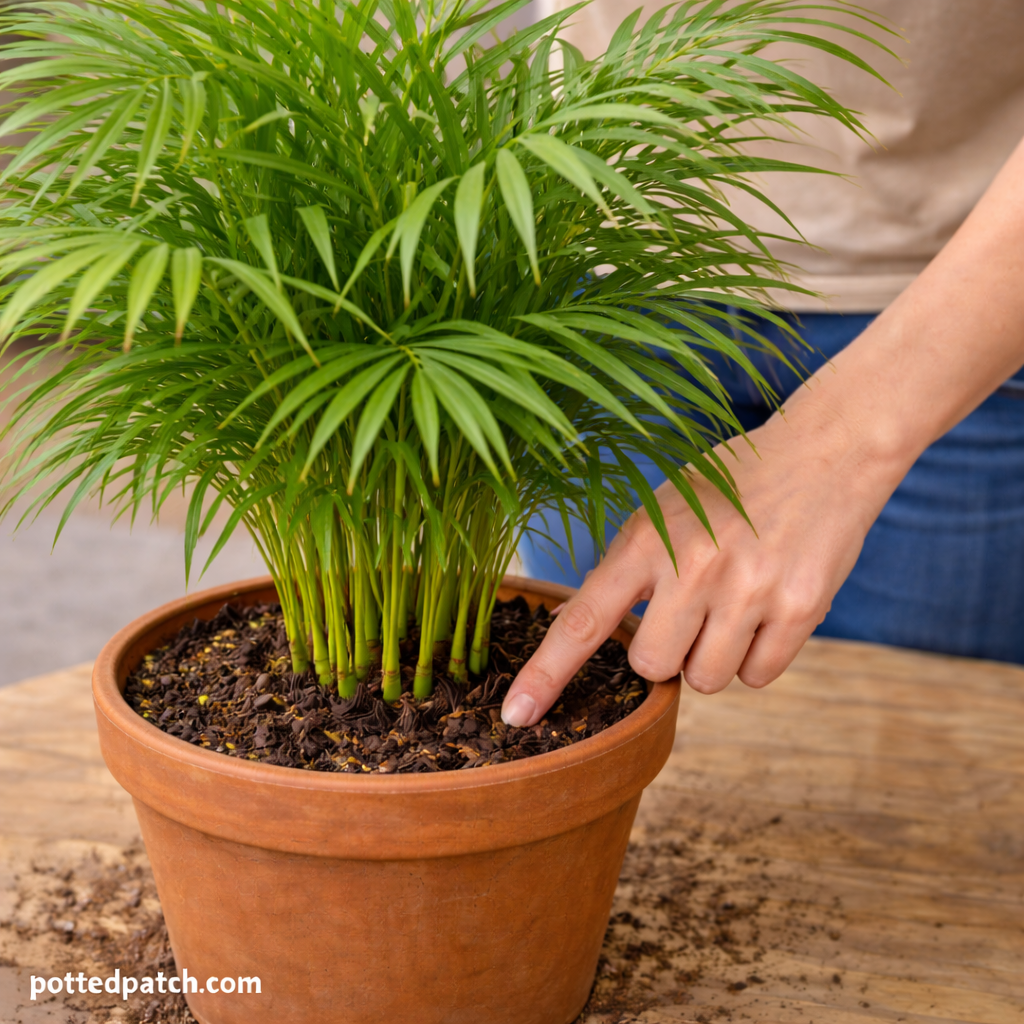
Use one of these simple methods:
Finger Test
Insert your finger about 2 inches into the soil. If it feels dry at that depth, it’s time to water.
Lift the Pot
If the pot feels noticeably lighter than usual, the soil has likely dried out.
Moisture Meter
If you prefer tools, a moisture meter can give a quick reading. Aim for the “moist,” not “wet,” range.
How to Water Properly
When you do water:
- Water thoroughly until it drains from the bottom.
- Let excess water fully drain.
- Empty the saucer underneath.
Never let the pot sit in standing water.
Areca Palms like evenly moist soil — not soggy soil.
Signs You’re Overwatering
Overwatering is the most common mistake.
Watch for:
- Yellowing lower leaves
- Mushy stems
- Soil staying wet for more than a week
- Fungus gnats
If you suspect overwatering:
- Allow soil to dry more between waterings
- Improve drainage
- Check that the pot has drainage holes
Signs You’re Underwatering
While they dislike soggy soil, Areca Palms also don’t like to dry out completely.
Signs of underwatering include:
- Brown leaf tips
- Crispy edges
- Drooping fronds
- Soil pulling away from the pot edges
If this happens, increase watering frequency slightly and ensure even moisture.
Seasonal Adjustments
Spring & Summer (Active Growth)
- Soil dries faster
- Increase watering frequency
- Monitor weekly
Fall & Winter (Slower Growth)
- Reduce watering
- Check soil more carefully
- Avoid fertilizing heavily
Overwatering during winter is especially risky due to slower evaporation.
The Importance of Proper Soil
Watering frequency also depends on soil quality.
Use a well-draining mix that includes:
- Indoor potting soil
- Perlite
- Coco coir or peat moss
Heavy, compacted soil holds excess moisture and increases root rot risk.
Humidity and Watering
Areca Palms enjoy moderate humidity.
Dry indoor air may cause brown tips even if watering is correct.
To help:
- Mist occasionally
- Use a humidifier
- Group plants together
Humidity supports leaf health but does not replace proper watering.
Quick Watering Checklist
- Check top 1–2 inches of soil before watering
- Water deeply, not lightly
- Ensure proper drainage
- Adjust frequency seasonally
- Never let the pot sit in water
Consistency is key.
Final Thoughts
There’s no exact calendar schedule for watering an Areca Palm. Instead, focus on soil moisture and seasonal changes.
In most homes, watering every 5–10 days during the growing season and less frequently in winter keeps the plant healthy.
Balanced watering, good drainage, and proper light will keep your Areca Palm lush and vibrant year round.