Parlor Palms are popular because they tolerate lower light better than many houseplants. But “low light tolerant” doesn’t mean they thrive in dark corners.
If you want fuller growth, deeper green fronds, and steady health, understanding the right light conditions makes all the difference.
Here’s exactly what kind of light a Parlor Palm needs indoors.
The Ideal Light: Bright, Indirect Light
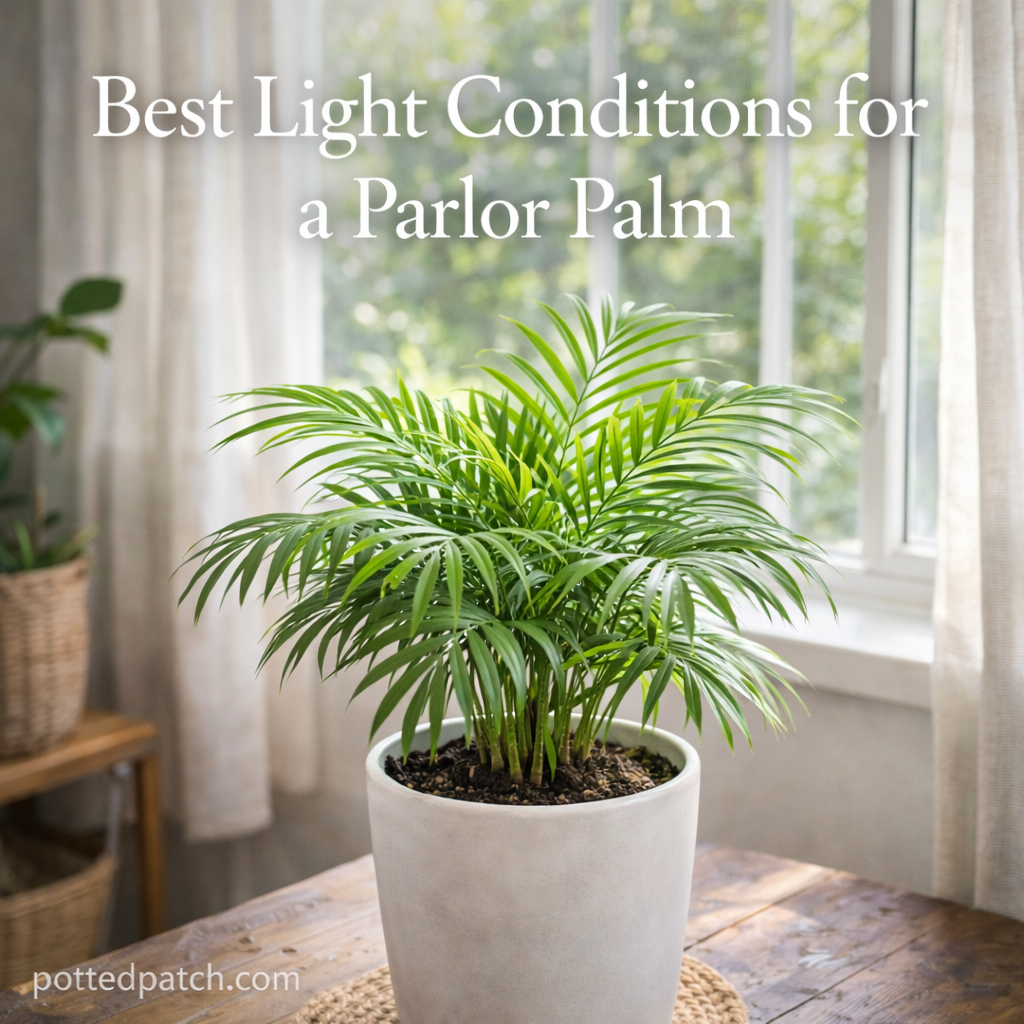
Parlor Palms grow best in bright, indirect light.
This means:
- Plenty of ambient daylight
- No harsh direct sun hitting the leaves
- Light that is filtered or diffused
Think of the light near a window with sheer curtains or light reflected off a bright wall.
Bright indirect light encourages:
- Rich green color
- Strong, upright fronds
- Steady (though slow) growth
Can a Parlor Palm Tolerate Low Light?
Yes — and that’s one of its biggest advantages.
Parlor Palms can survive in low-light rooms, offices, and shaded areas. However:
- Growth will slow significantly
- Fronds may become thinner
- The plant may stretch toward the light
Low light keeps the plant alive, but moderate brightness keeps it thriving.
If possible, aim for medium to bright indirect light rather than true low light.
Best Window Placement
East-Facing Window
Ideal placement.
- Gentle morning sun
- Bright but not harsh
- Consistent daily light
North-Facing Window
Also suitable.
- Soft, indirect light all day
- Good for steady, slow growth
South or West-Facing Window
Can work if positioned properly.
- Place the plant a few feet back
- Use sheer curtains
- Avoid direct afternoon sun
Direct sunlight can scorch the delicate fronds, causing yellow or brown patches.
Signs Your Parlor Palm Needs More Light
- Pale or faded green leaves
- Very slow or stalled growth
- Long, stretched stems
- Leaning toward the window
If you notice these signs, move the plant slightly closer to a brighter area.
Small adjustments can make a big difference.
Signs of Too Much Light
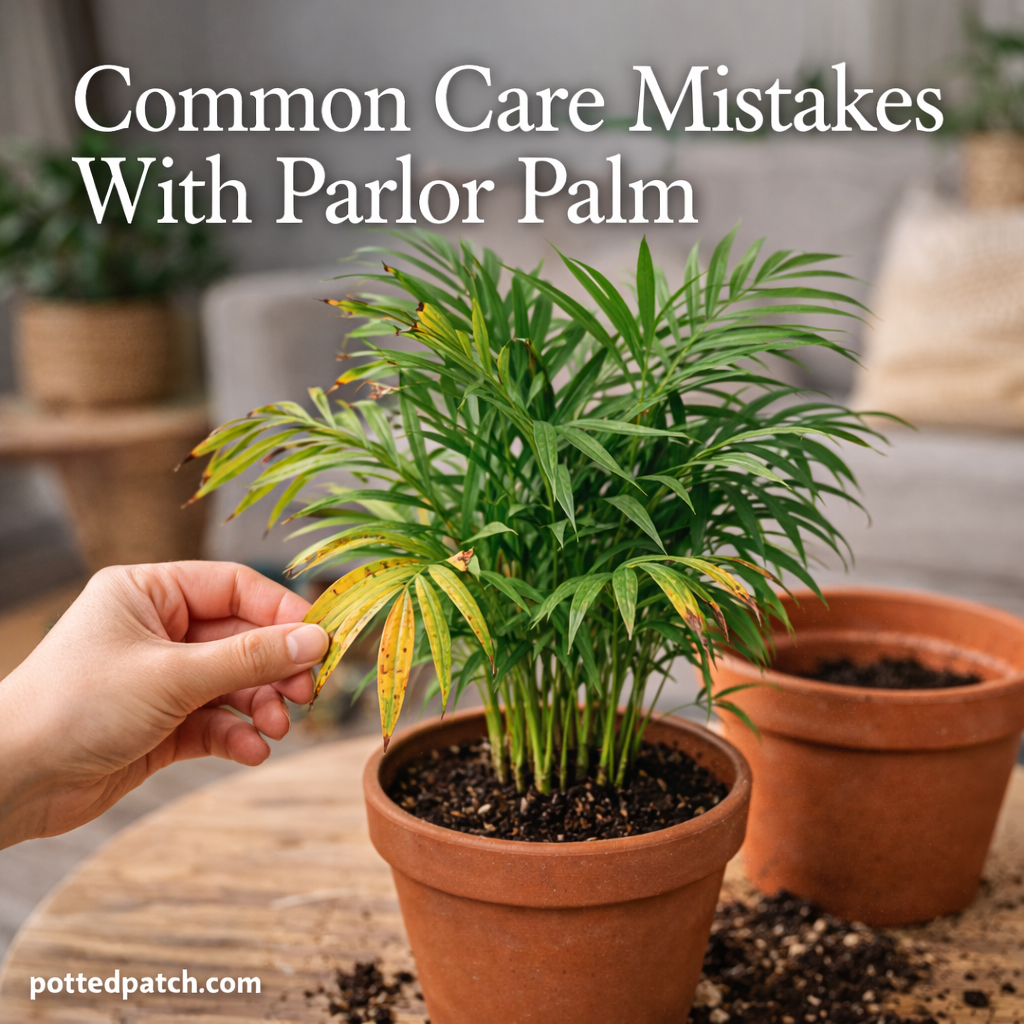
- Yellowing fronds
- Brown, crispy patches
- Leaf scorch spots
If this happens:
- Move the plant farther from the window
- Add a sheer curtain
- Rotate it away from direct sun exposure
Parlor Palms prefer gentle light over intense exposure.
Can You Use Artificial Light?
Yes.
Parlor Palms respond well to:
- Bright LED grow lights
- Fluorescent lighting
- Indirect room lighting
Place grow lights 12–24 inches above the plant and keep them on for 10–12 hours daily.
This works especially well in darker homes or during winter months.
Rotating for Even Growth
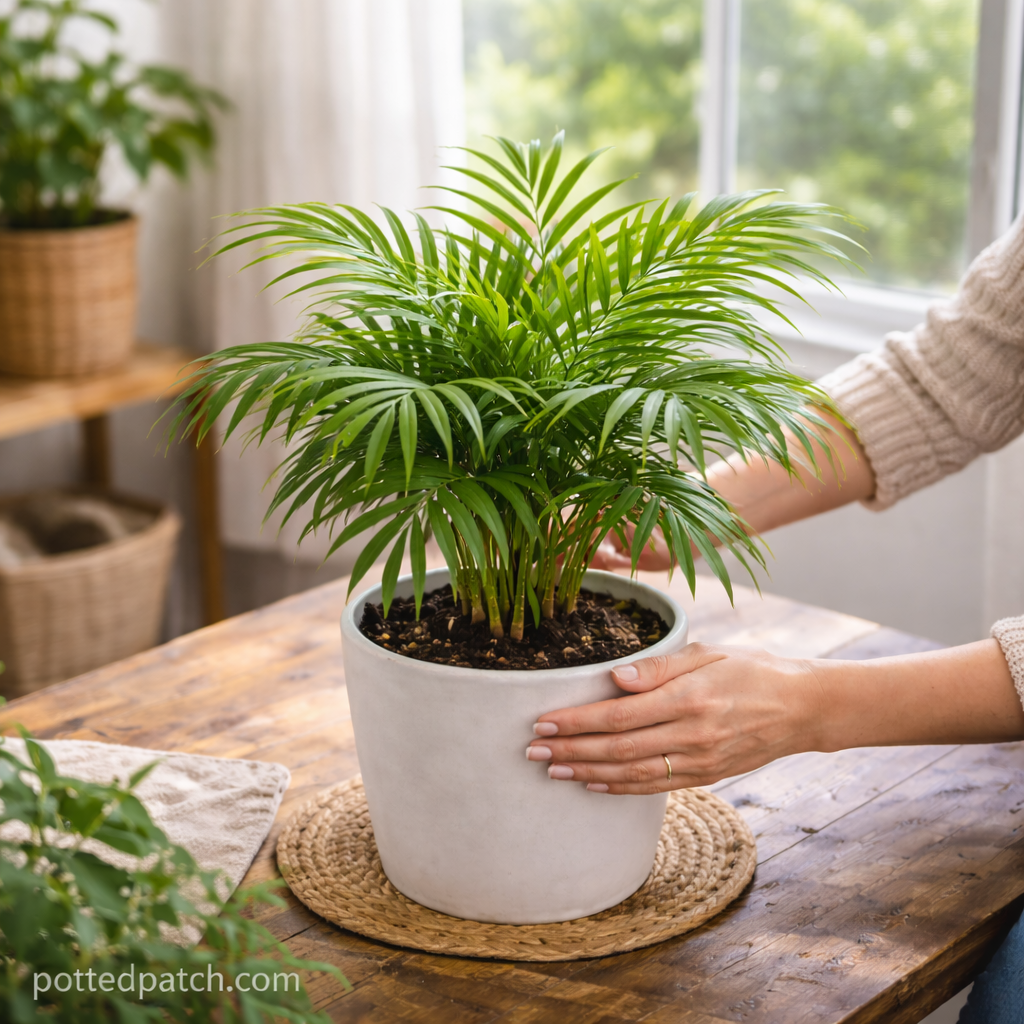
Parlor Palms naturally grow toward light sources.
To prevent leaning:
- Rotate the pot every 1–2 weeks
- Keep lighting consistent
This encourages balanced, symmetrical growth.
Seasonal Light Adjustments
Spring and Summer
Light intensity increases.
- Monitor for signs of leaf scorch
- Adjust distance from windows if needed
Fall and Winter
Daylight decreases.
- Move the plant closer to bright windows
- Supplement with artificial light if necessary
Light adjustments are often more important than watering changes.
Final Thoughts
The best light conditions for a Parlor Palm are bright, indirect light with protection from harsh sun.
While it tolerates lower light, moderate brightness encourages healthier growth and stronger fronds.
If you provide gentle, consistent lighting and rotate the plant regularly, your Parlor Palm will maintain its elegant shape and deep green color year round.