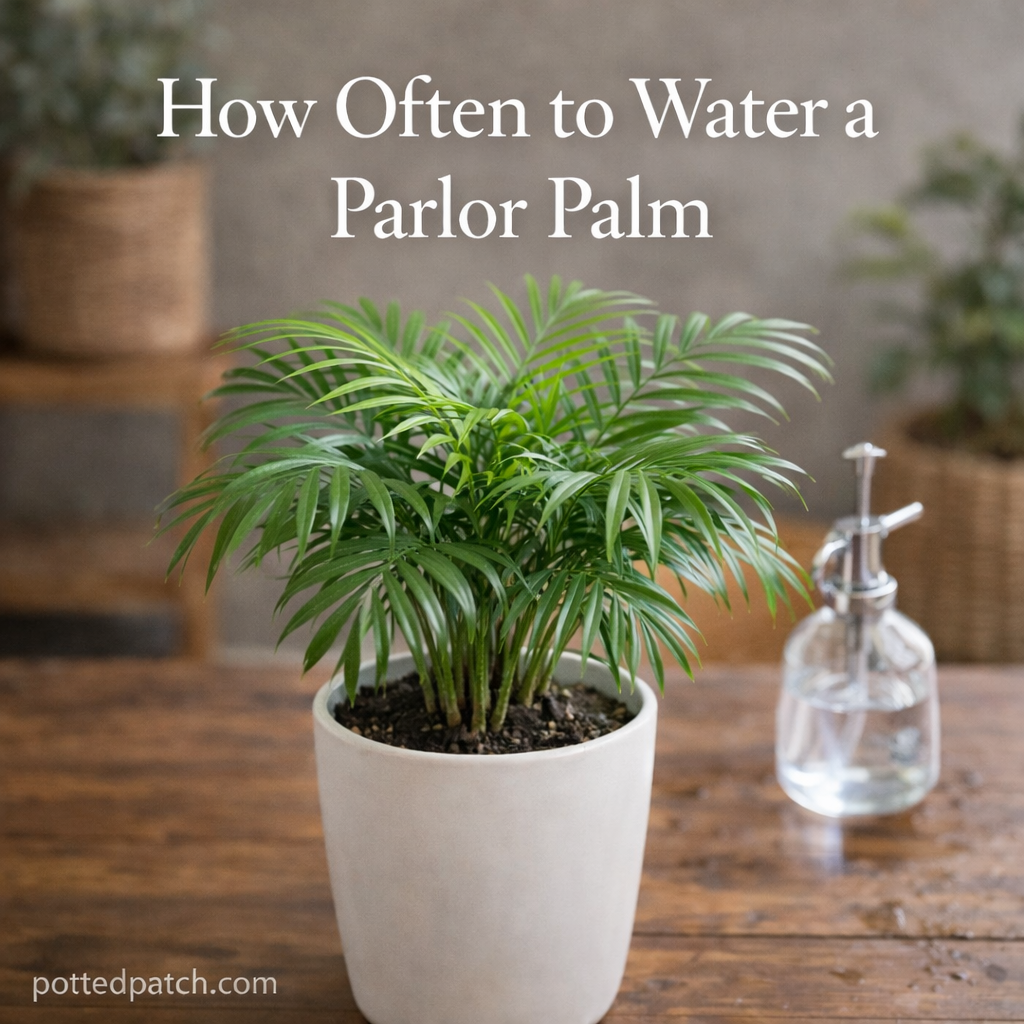
Watering is the most important part of Parlor Palm care — and the most common place people go wrong.
Parlor Palms prefer slightly moist soil, but they do not tolerate soggy conditions. The key is balance. Water too often and roots can rot. Water too little and fronds turn brown and dry.
Here’s exactly how often to water a Parlor Palm indoors and how to adjust throughout the year.
The Short Answer
Water your Parlor Palm when the top 1–2 inches of soil feel dry.
For most indoor homes, this usually means:
- Every 7–10 days in spring and summer
- Every 10–14 days in fall and winter
But timing varies depending on light, temperature, and humidity.
Always check the soil before watering instead of following a strict schedule.
How to Check If Your Parlor Palm Needs Water
The best method is the finger test.
- Insert your finger 1–2 inches into the soil.
- If it feels dry, it’s time to water.
- If it feels damp, wait a few more days.
You can also lift the pot slightly. A dry pot feels noticeably lighter than a recently watered one.
Avoid watering on a calendar — indoor conditions change week to week.
How to Water Properly
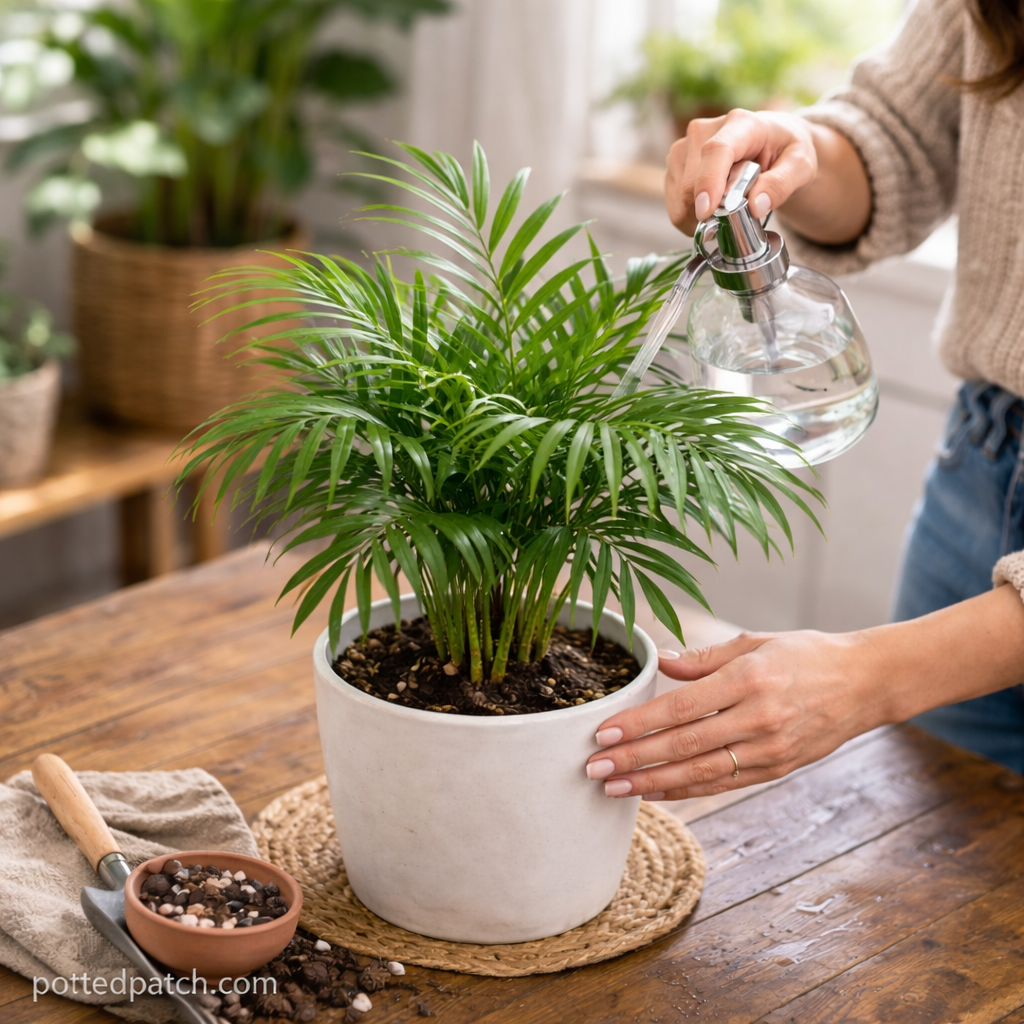
When watering, do it thoroughly.
- Pour water evenly over the soil surface.
- Allow excess water to drain from the bottom.
- Empty the saucer after 10–15 minutes.
Never let your Parlor Palm sit in standing water.
Deep watering encourages healthy root growth. Frequent small sips can lead to shallow roots and stress.
Seasonal Watering Guide
Spring and Summer
This is active growth season.
- Soil dries faster.
- The plant uses more moisture.
- You may need to water weekly.
Monitor more closely during hot weather.
Fall
Growth slows down.
- Reduce watering slightly.
- Let soil dry a bit deeper between waterings.
Winter
Parlor Palms grow very slowly in winter.
- Water less often.
- Check soil carefully before adding moisture.
Overwatering during winter is the most common cause of root rot.
Signs You’re Overwatering
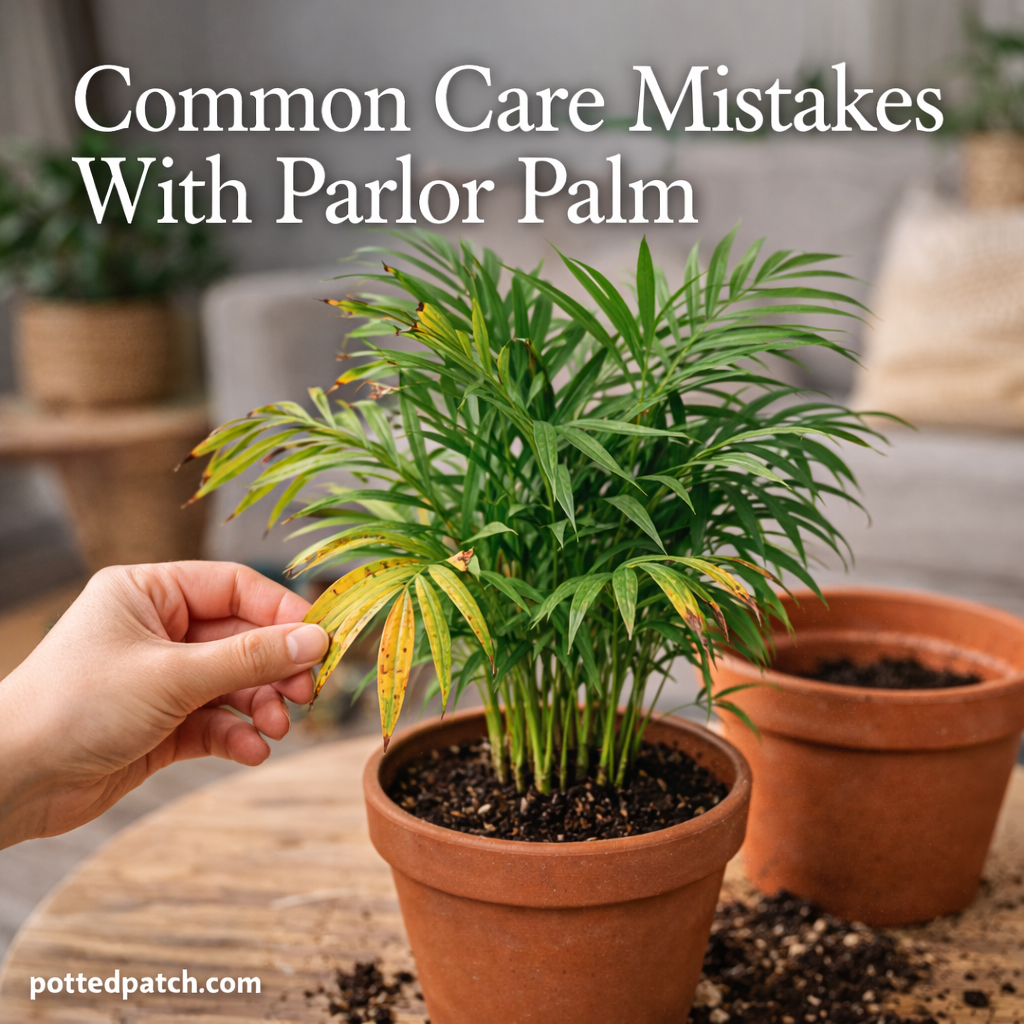
- Yellowing leaves
- Mushy stems
- Soil that stays wet for days
- Fungus gnats around the pot
- Sour smell from soil
If you notice these signs, allow the soil to dry more thoroughly before watering again.
Signs You’re Underwatering
- Brown, crispy leaf tips
- Drooping fronds
- Soil pulling away from the edges of the pot
Underwatering is usually easier to fix than overwatering — simply adjust your schedule and monitor closely.
Does Humidity Affect Watering?
Yes.
In dry indoor air:
- Soil dries faster.
- Leaf tips may brown more easily.
If you increase humidity with a humidifier or pebble tray, watering frequency may decrease slightly.
Always rely on soil moisture — not guesswork.
What Type of Water Is Best?
Parlor Palms prefer filtered or room-temperature water.
If your tap water is heavily chlorinated or leaves white mineral buildup on the soil, consider:
- Letting water sit out overnight
- Using filtered water occasionally
Mineral buildup can cause leaf tip browning over time.
Common Watering Mistakes to Avoid
- Watering on a strict weekly schedule
- Leaving water sitting in the saucer
- Using pots without drainage holes
- Watering lightly instead of thoroughly
- Ignoring seasonal changes
Avoiding these mistakes keeps your Parlor Palm healthy and stress-free.
Final Thoughts
So, how often should you water a Parlor Palm?
When the top 1–2 inches of soil are dry — no sooner.
Focus on checking the soil, watering deeply, and adjusting for the season. With consistent monitoring and proper drainage, your Parlor Palm will maintain lush green fronds and steady growth indoors.