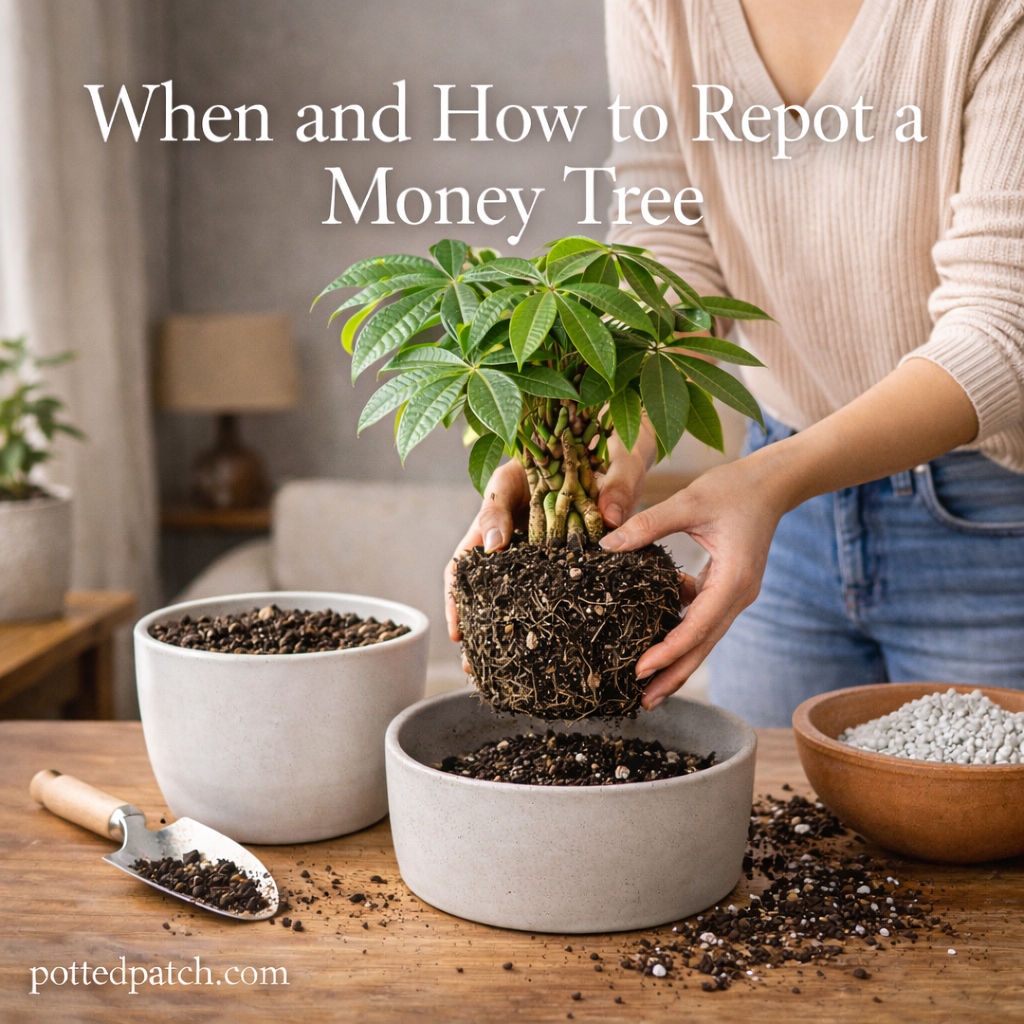
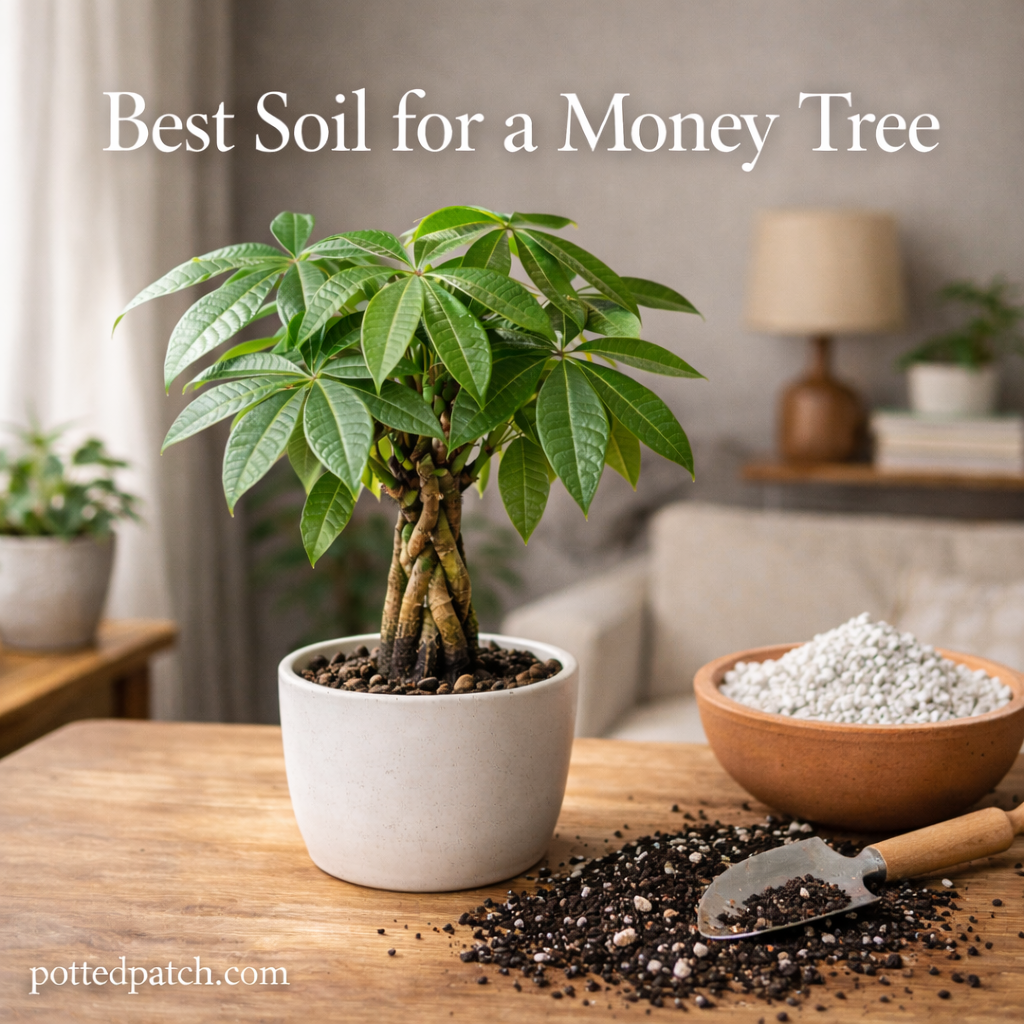
Choosing the right soil is one of the most important steps in keeping a Money Tree healthy indoors. While watering and light often get the most attention, soil is what determines how well roots breathe, drain, and absorb nutrients.
If your Money Tree has yellowing leaves, slow growth, or signs of root rot, the soil mix may be the issue.
This guide explains exactly what type of soil a Money Tree needs and how to create the ideal mix for long-term success.
What Kind of Soil Does a Money Tree Need?
Money Trees prefer well-draining, airy soil.
In their natural environment, they grow in loose, nutrient-rich soil that drains quickly but still retains some moisture.
The ideal soil should:
- Drain excess water easily
- Retain light moisture (not soggy)
- Allow air to reach the roots
- Prevent compaction over time
Heavy, dense soil is the most common mistake.
Best Store-Bought Soil Options
A standard indoor houseplant potting mix works well as a base.
Look for:
- Indoor potting soil labeled for tropical plants
- Mixes that include peat moss or coco coir
- Soil that already contains perlite for drainage
Avoid garden soil or outdoor topsoil. These are too dense and can introduce pests or fungi indoors.
How to Make the Perfect Money Tree Soil Mix
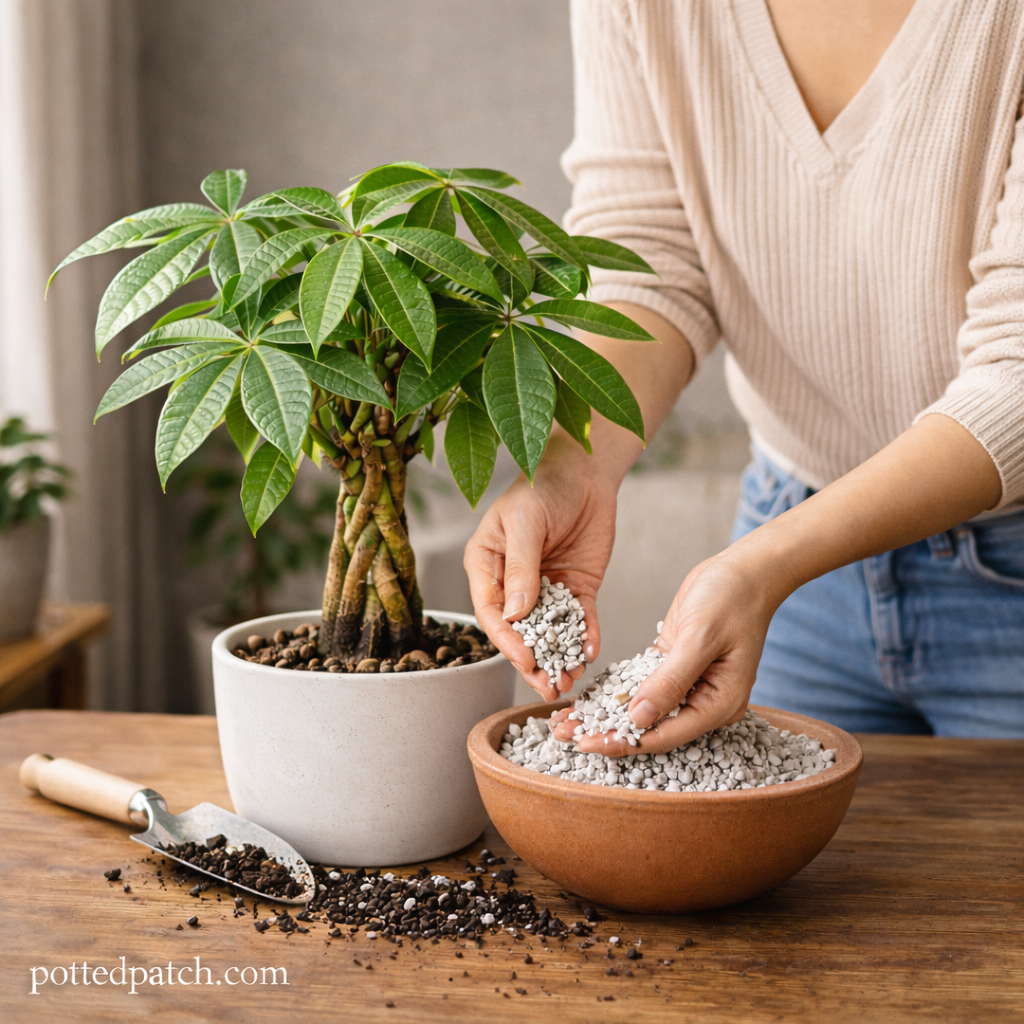
For even better drainage, you can customize your own blend.
Recommended DIY mix
- 2 parts indoor potting mix
- 1 part perlite
- Optional: 1 part orchid bark for added airflow
This combination improves drainage and reduces the risk of root rot.
The goal is a light, fluffy texture — not compacted or muddy.
Why Drainage Is So Important
Money Trees are sensitive to overwatering.
If soil holds too much water:
- Roots can suffocate
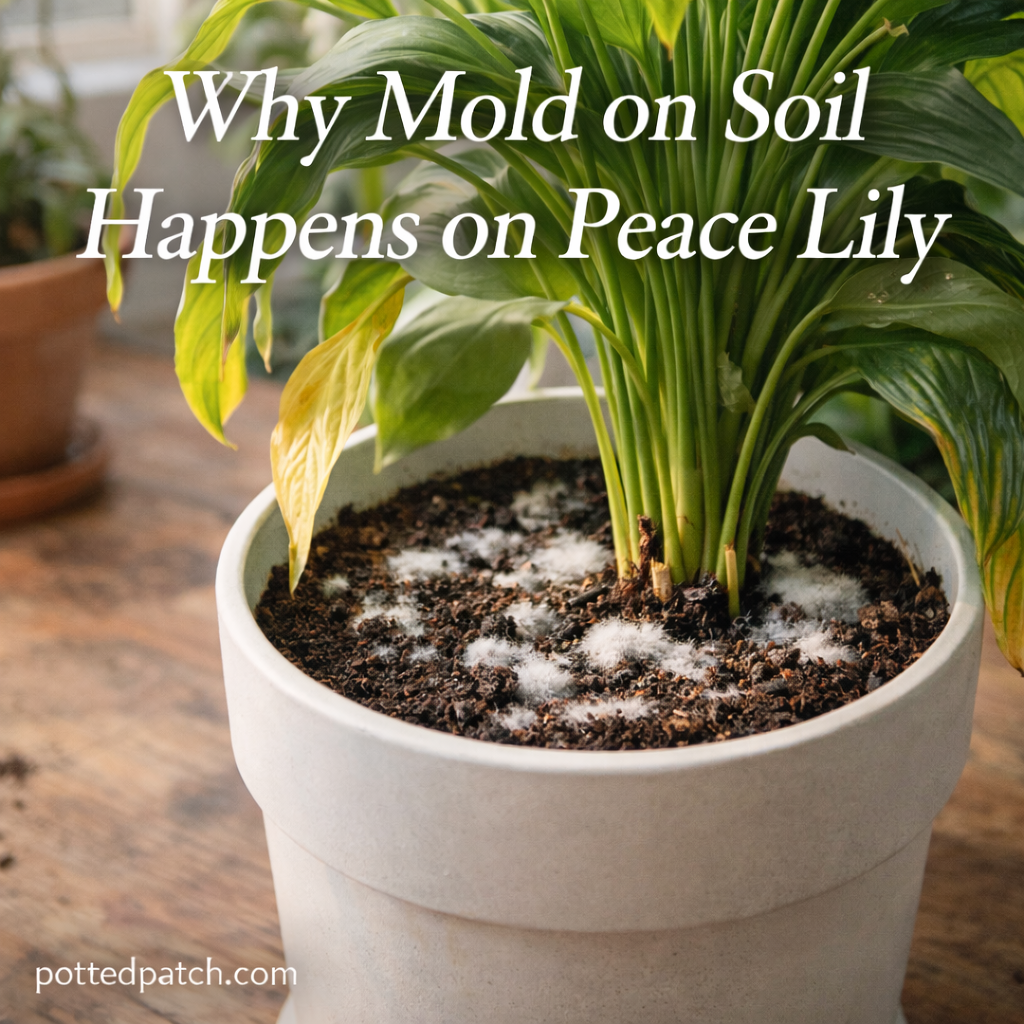
- Fungal growth may develop
- Root rot can occur
Always pair well-draining soil with a pot that has drainage holes.
Good soil + proper drainage = healthy roots.
Signs Your Soil Isn’t Right
Watch for these warning signs:
- Water sits on top of soil before soaking in
- Soil stays wet for more than 10–14 days
- Foul or musty smell from pot
- Leaves yellowing despite careful watering
If you notice these issues, repot into a lighter, better-draining mix.
When to Replace the Soil
Even good soil breaks down over time.
Repot every 2–3 years, or sooner if:
- Soil becomes compacted
- Water drains too slowly
- Growth slows significantly
- Roots outgrow the container
Spring is the best time to repot.
Choosing the Right Pot
Soil and pot work together.
Select a container that:
- Has at least one drainage hole
- Is only 1–2 inches larger than the root ball
- Allows airflow around the root zone
Avoid oversized pots — they hold excess moisture and increase rot risk.
Should You Add Fertilizer to the Soil?
Most potting mixes already contain starter nutrients.
After a few months, you can fertilize during spring and summer using:
- A balanced liquid houseplant fertilizer
- Diluted to half strength
- Applied once per month
Do not fertilize newly repotted plants immediately. Allow them to adjust first.
Common Soil Mistakes to Avoid
- Using heavy garden soil
- Skipping drainage holes
- Overpacking soil tightly around roots
- Ignoring compacted, old soil
- Choosing a pot that’s too large
Loose, breathable soil is the foundation of healthy growth.
Final Thoughts
The best soil for a Money Tree is light, well-draining, and airy.
Start with a quality indoor potting mix, improve it with perlite if needed, and always use a pot with drainage holes. When the roots can breathe and excess water drains properly, your Money Tree will grow stronger and more resilient.
Healthy roots mean healthy leaves — and great soil makes all the difference.