Chinese Evergreen, scientifically known as Aglaonema, is known for being low-maintenance. But even easy plants can struggle if the soil isn’t right.
The best soil for a Chinese Evergreen is well-draining, airy, and moisture-retentive without staying soggy. Getting this balance correct prevents root rot and encourages steady, healthy growth.
Here’s exactly what to use and why it matters.
What Type of Soil Does Chinese Evergreen Need?
Chinese Evergreen prefers soil that:
- Drains excess water quickly
- Retains light moisture
- Allows airflow around the roots
- Doesn’t compact easily
Standard heavy garden soil is not suitable for indoor pots. It holds too much water and suffocates the roots.
The Ideal Soil Mix Recipe
You can either buy a high-quality indoor potting mix or create your own blend.
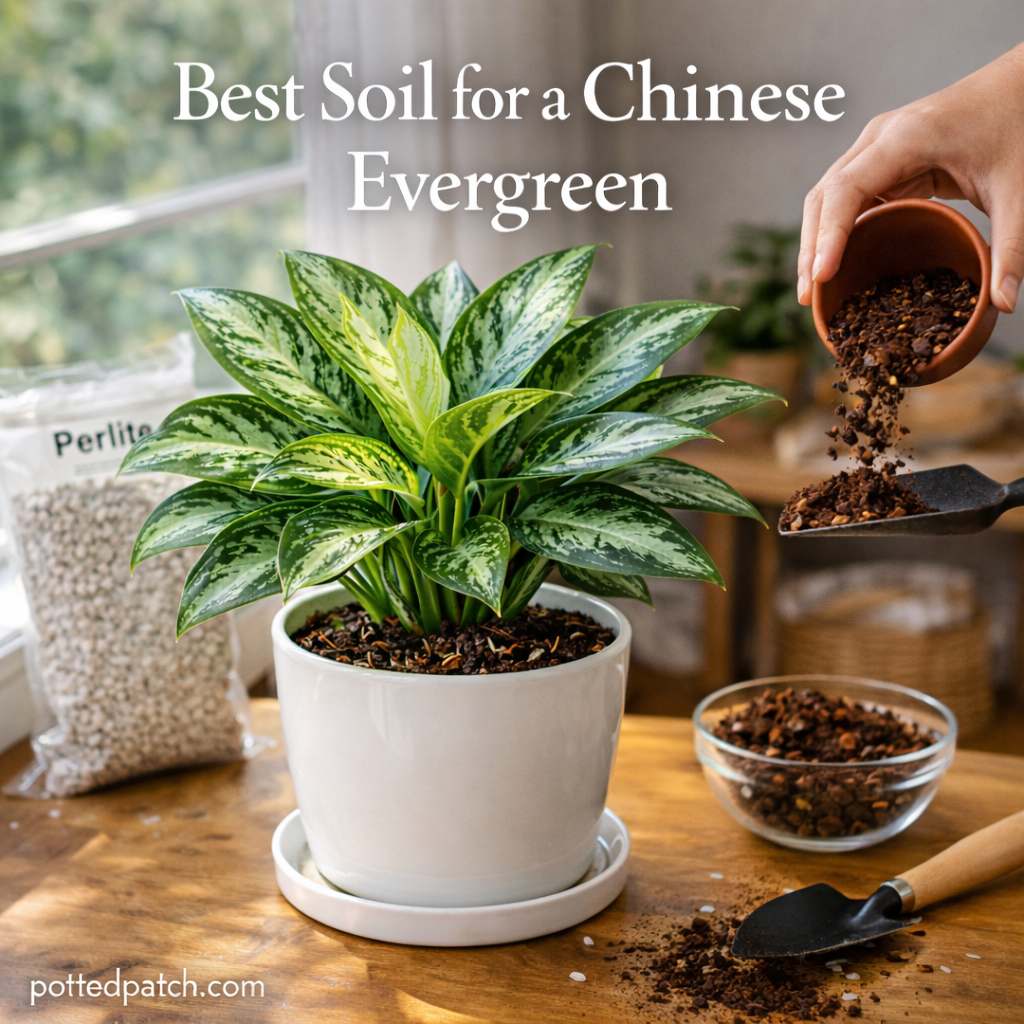
Simple DIY Soil Mix
- 2 parts indoor potting soil
- 1 part perlite
- 1 part orchid bark (optional but recommended)
This combination provides:
- Moisture retention (potting soil)
- Drainage (perlite)
- Aeration (orchid bark)
It creates the perfect balance for Chinese Evergreen roots.
Can You Use Regular Potting Soil?
Yes — but it’s best to amend it.
Plain potting soil alone may:
- Stay wet too long
- Compact over time
- Increase risk of root rot
Mixing in perlite improves drainage significantly and is highly recommended.
Why Drainage Is So Important
Overwatering is the most common problem with Chinese Evergreen.
If soil stays soggy:
- Roots can suffocate
- Fungal growth may develop
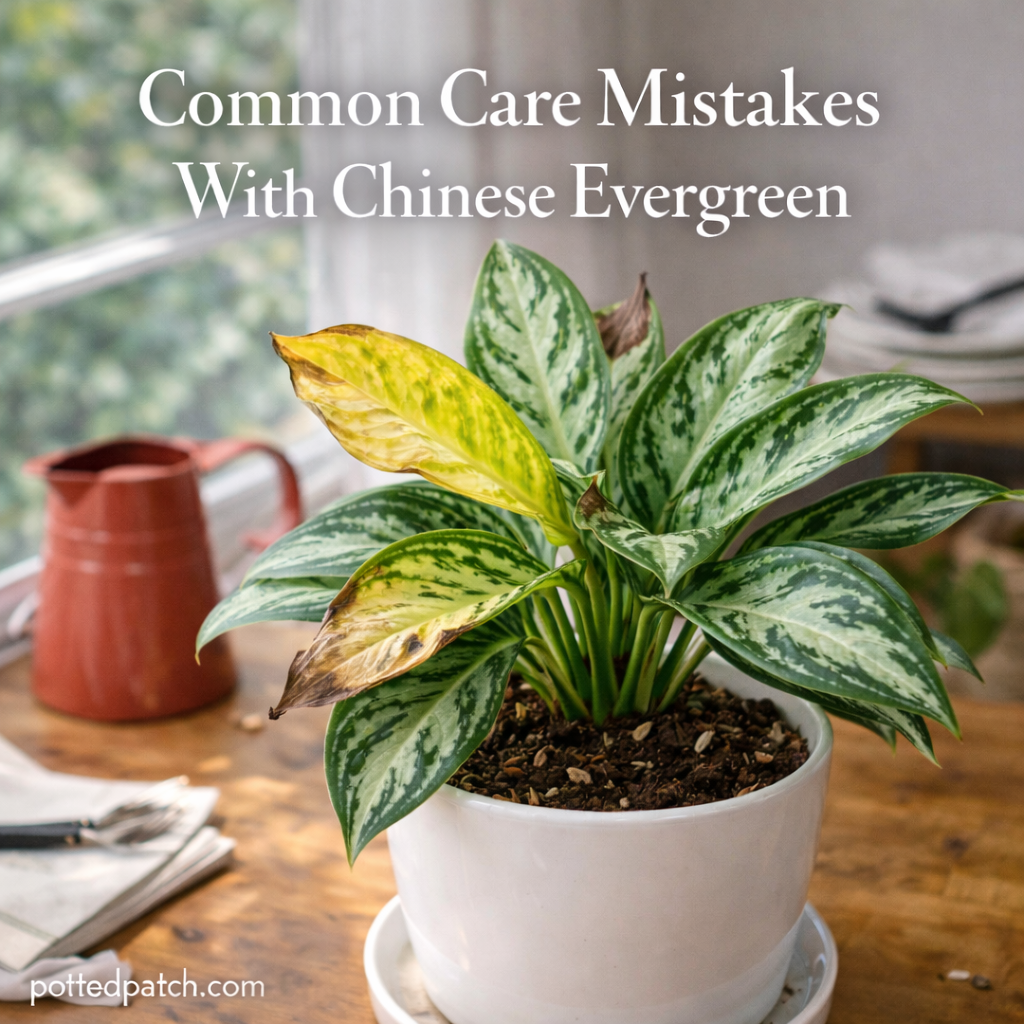
- Leaves may turn yellow
Well-draining soil allows water to flow through while still keeping the roots lightly moist.
Always use a pot with drainage holes.
Signs Your Soil Isn’t Right
Your plant will show signs if the soil mix needs improvement.
Soil Too Dense
- Water sits on top before soaking in
- Soil feels heavy and compact
- Leaves turn yellow
Soil Too Fast-Draining
- Soil dries within 1–2 days
- Leaves droop frequently
- Plant requires constant watering
Adjust the mix depending on what you observe.
Repotting and Soil Refreshing
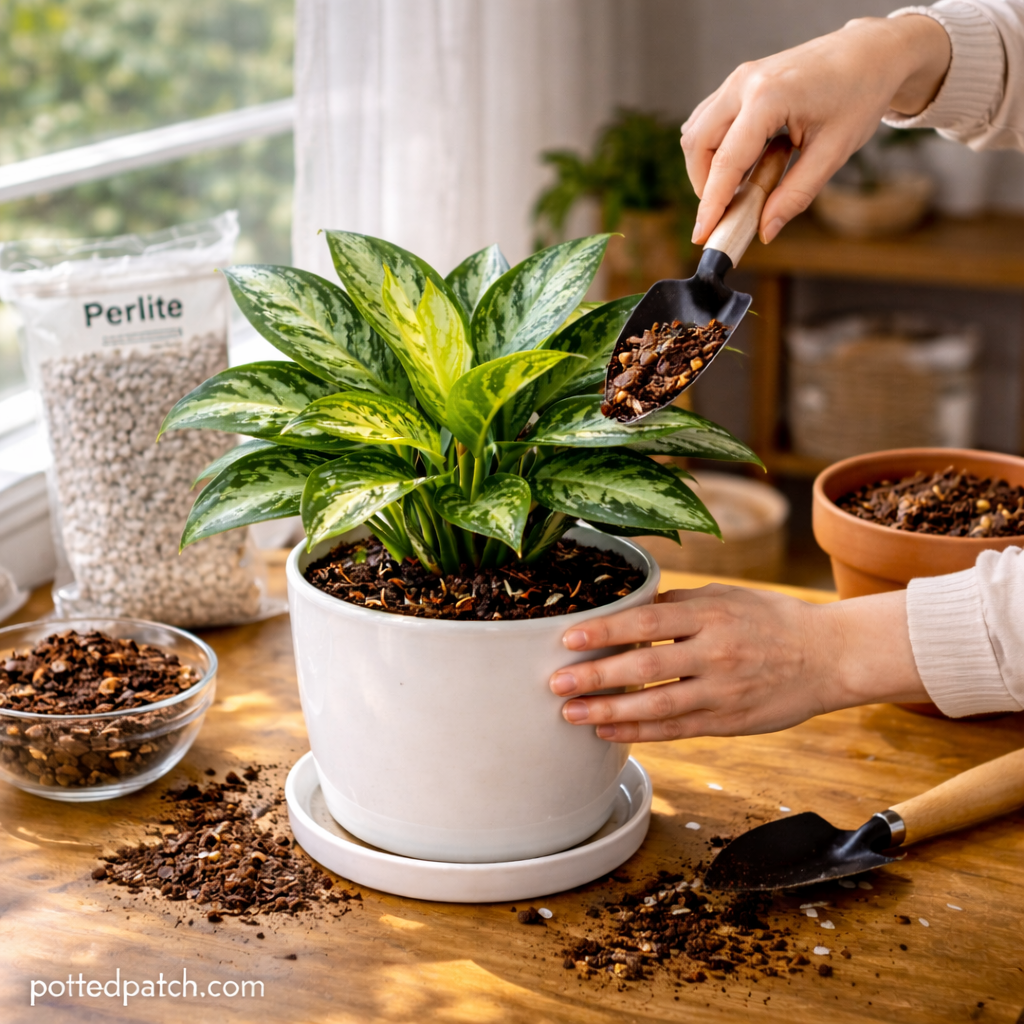
Chinese Evergreen benefits from repotting every 2–3 years.
When repotting:
- Choose a pot only 1–2 inches larger.
- Gently loosen compacted roots.
- Replace old soil with fresh, well-draining mix.
Fresh soil replenishes nutrients and improves structure.
Do You Need Special Tropical Soil?
Not necessarily.
While labeled “tropical plant soil” can work well, it’s often just standard potting mix with added drainage components.
Focus more on texture and drainage than marketing labels.
Soil pH Preference
Chinese Evergreen prefers slightly acidic to neutral soil.
Ideal pH range:
- 6.0 to 7.0
Most quality indoor potting mixes already fall within this range.
Quick Soil Summary
For healthy Chinese Evergreen growth:
- Use well-draining indoor potting mix
- Add perlite for drainage
- Add orchid bark for airflow (optional)
- Avoid heavy garden soil
- Always use drainage holes
The right soil prevents overwatering issues and keeps your Chinese Evergreen thriving indoors for years.