Chinese Evergreen is one of the most forgiving and stylish houseplants you can grow. Known botanically as Aglaonema, this tropical beauty is prized for its patterned leaves, low-light tolerance, and easygoing nature.
If you’re looking for a plant that thrives in apartments, offices, and low-light corners, Chinese Evergreen is an excellent choice. Here’s exactly how to keep it healthy year-round.
Why Chinese Evergreen Is Perfect for Indoors
Chinese Evergreen is native to tropical and subtropical regions of Asia, where it grows under dense forest canopies. That natural environment explains why it adapts so well to indoor conditions.
It tolerates:
- Low to medium light
- Inconsistent watering
- Average indoor humidity
- Standard room temperatures
It’s especially popular for bedrooms, offices, and north-facing rooms.
Light Requirements
Chinese Evergreen thrives in low to medium indirect light.
Best Lighting Conditions
- Bright, indirect light for fastest growth
- Medium light for steady, healthy foliage
- Low light for survival (growth slows significantly)
Avoid direct sunlight. Harsh sun can scorch the leaves and fade the variegation.
Varieties with darker green leaves tolerate lower light better than silver or pink varieties.
Tip: If leaves lose color or become leggy, move the plant slightly closer to a light source.
How Often to Water
Chinese Evergreen prefers evenly moist soil but hates sitting in soggy conditions.
Watering Guide
- Check the top 1–2 inches of soil.
- Water when that layer feels dry.
- Empty the drainage tray after watering.
Overwatering is the most common mistake.
Signs of overwatering:
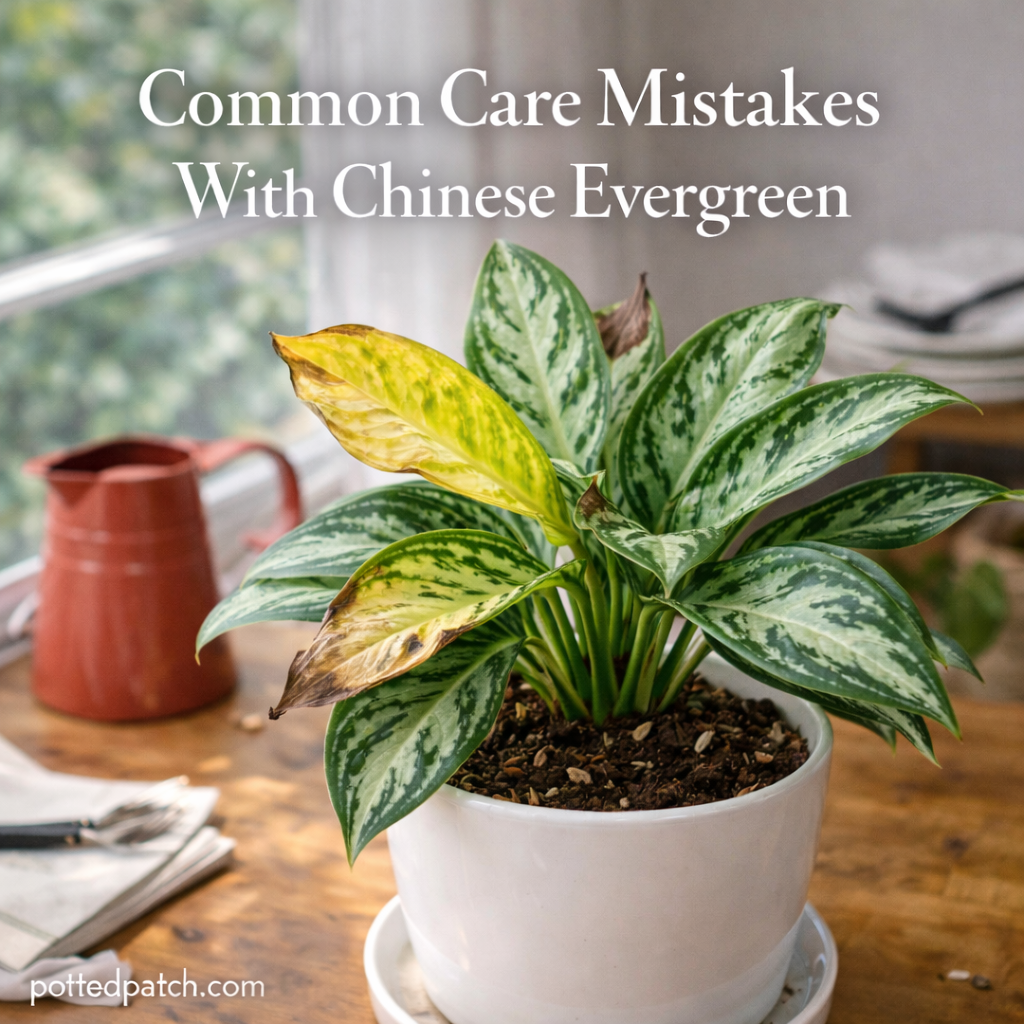
- Yellowing leaves
- Mushy stems
- Persistent wet soil
Signs of underwatering:
- Drooping leaves
- Dry, crispy edges
It’s better to underwater slightly than to overwater.
Soil and Potting Mix
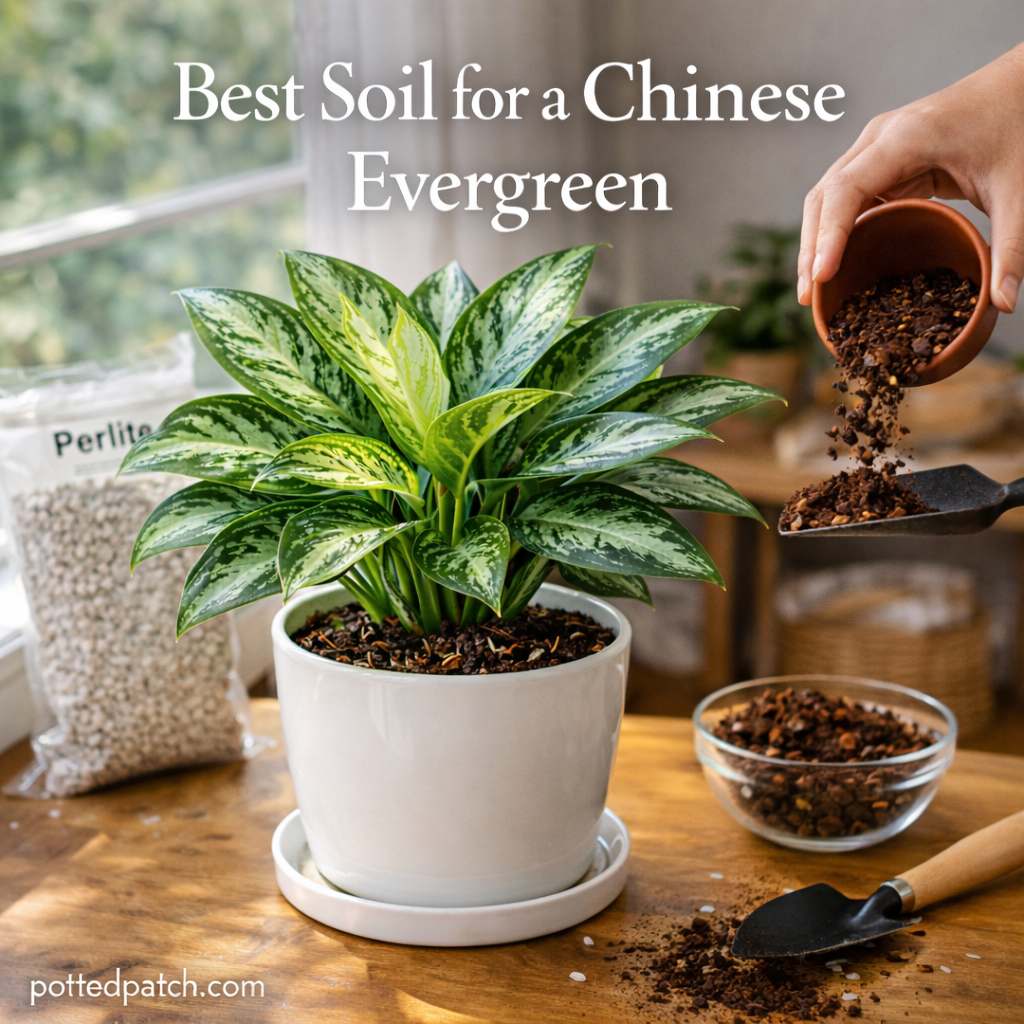
Use a well-draining indoor potting mix.
A good mix includes:
- Standard houseplant soil
- Perlite for drainage
- Orchid bark (optional) for aeration
Always use a pot with drainage holes.
Repot every 2–3 years or when roots begin circling the pot.
Temperature and Humidity
Chinese Evergreen prefers warm, stable indoor temperatures.
Ideal range:
- 65–80°F (18–27°C)
Avoid:
- Cold drafts
- Sudden temperature changes
- Placement near heating vents
It tolerates average indoor humidity but benefits from:
- Occasional misting
- A pebble tray
- Grouping with other plants
If leaf tips turn brown, low humidity may be the cause.
Fertilizing Schedule
Feed during active growing months (spring and summer).
- Use a balanced liquid houseplant fertilizer
- Dilute to half strength
- Fertilize once a month
Do not fertilize in fall and winter when growth slows.
Over-fertilizing can cause salt buildup and leaf damage.
Pruning and Maintenance
Chinese Evergreen doesn’t require heavy pruning.
You can:
- Remove yellow or damaged leaves
- Trim leggy stems to encourage bushier growth
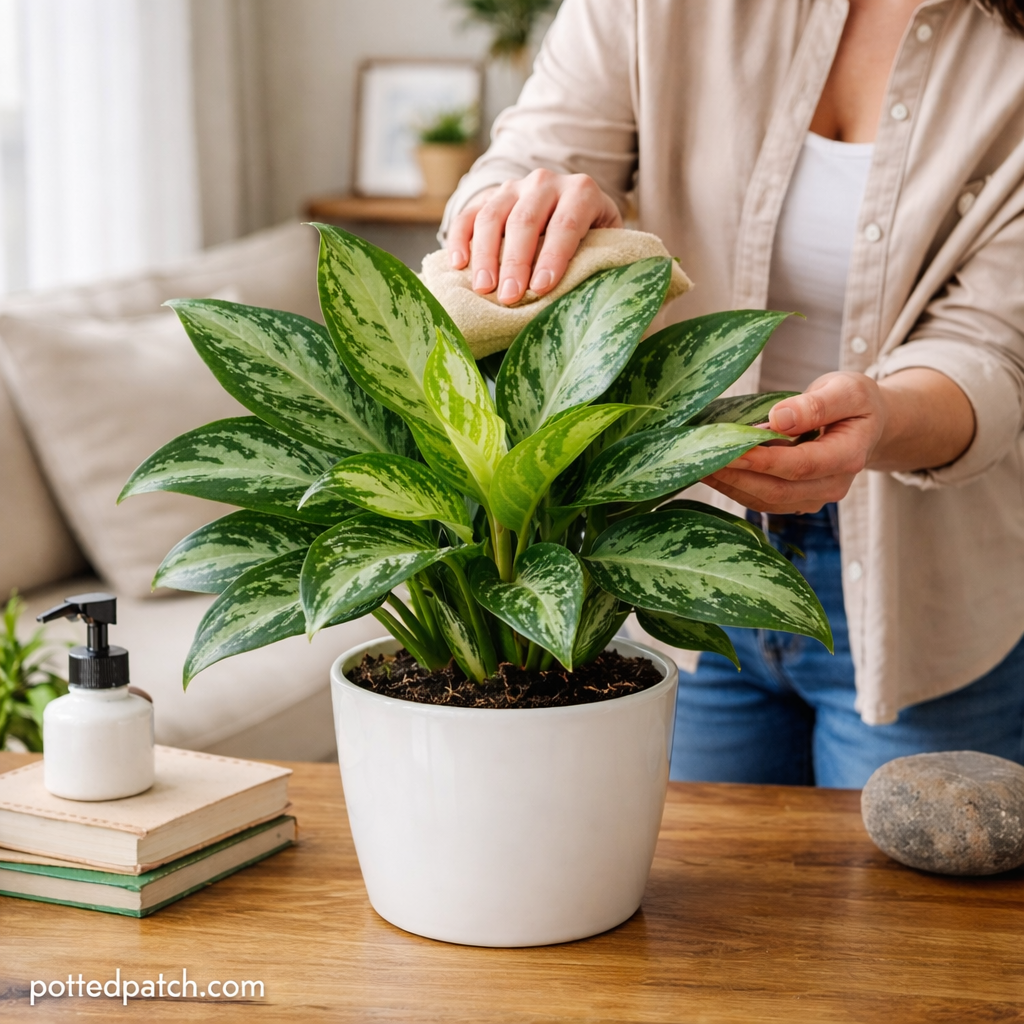
- Wipe leaves with a damp cloth to remove dust
Clean leaves absorb light more efficiently and look more vibrant.
Common Problems and How to Fix Them
Yellow Leaves
Often caused by overwatering.
Solution: Allow soil to dry more between waterings and check drainage.
Brown Leaf Tips
Usually from low humidity or inconsistent watering.
Solution: Increase humidity and adjust watering schedule.
Leggy Growth
Caused by insufficient light.
Solution: Move plant closer to indirect light.
Pests
Watch for:
- Spider mites
- Mealybugs
- Scale
Treat with neem oil or insecticidal soap if needed.
Is Chinese Evergreen Toxic?
Yes. Chinese Evergreen contains compounds that can be harmful if ingested.
Keep away from:
- Cats
- Dogs
- Small children
If you have pets, place the plant on a shelf or in a room they cannot access.
How to Propagate Chinese Evergreen
Propagation is simple and rewarding.
Method 1: Stem Cuttings
- Cut a healthy stem with several leaves.
- Place in water or moist soil.
- Keep in warm, indirect light.
Roots typically develop within a few weeks.
Method 2: Division
When repotting, gently separate root clusters and plant in separate pots.
Division is the fastest way to create new plants.
Final Care Summary
To keep your Chinese Evergreen thriving indoors:
- Provide indirect light
- Water only when the top soil dries
- Use well-draining soil
- Keep temperatures warm and stable
- Fertilize lightly in spring and summer
With minimal effort, this plant can stay lush and beautiful for years.
If you’re new to houseplants, Chinese Evergreen is one of the most beginner-friendly options you can choose.