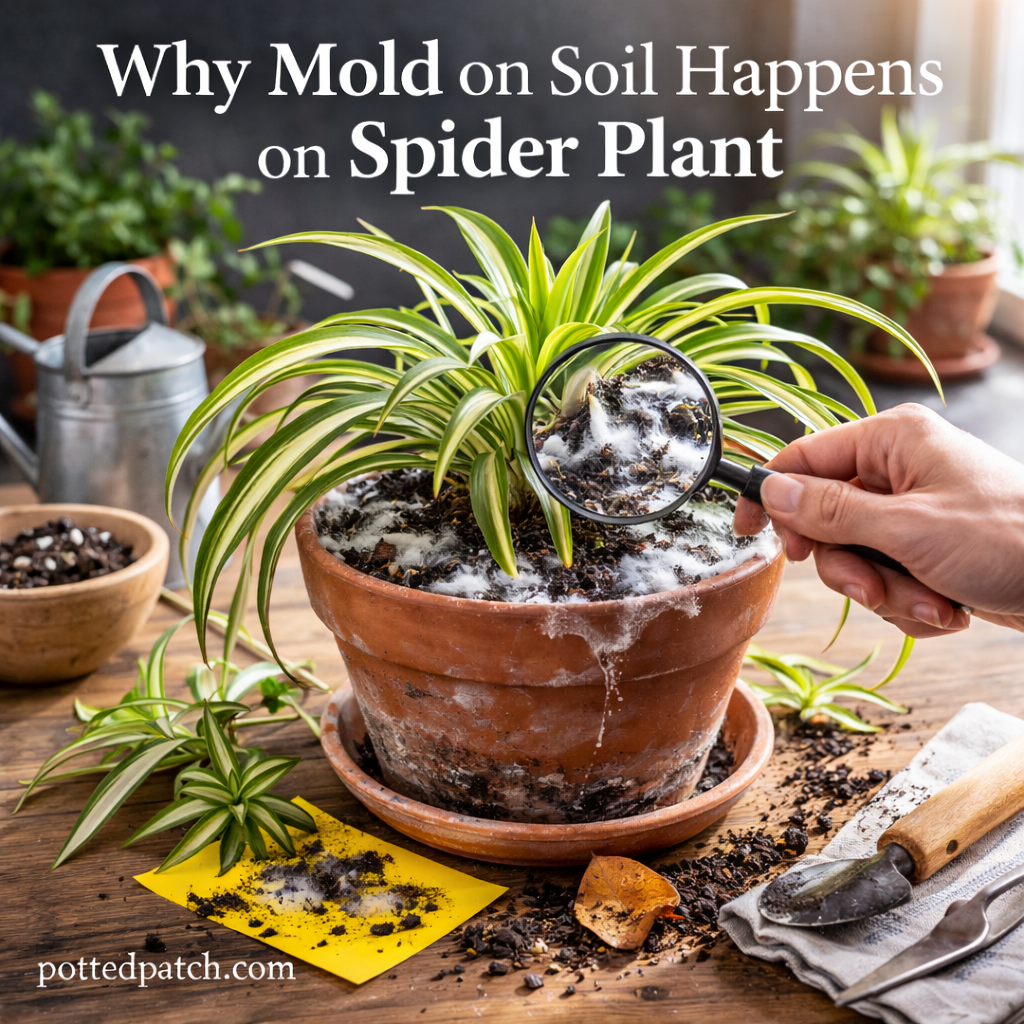
Seeing white, fuzzy mold on the soil of your spider plant can be unsettling. The good news? In most cases, it’s a surface-level issue — not a death sentence for your plant.
Mold on soil usually signals excess moisture and poor airflow. Fix the environment, and the problem typically disappears.
Here’s why mold happens and how to stop it.
Is Mold on Spider Plant Soil Dangerous?
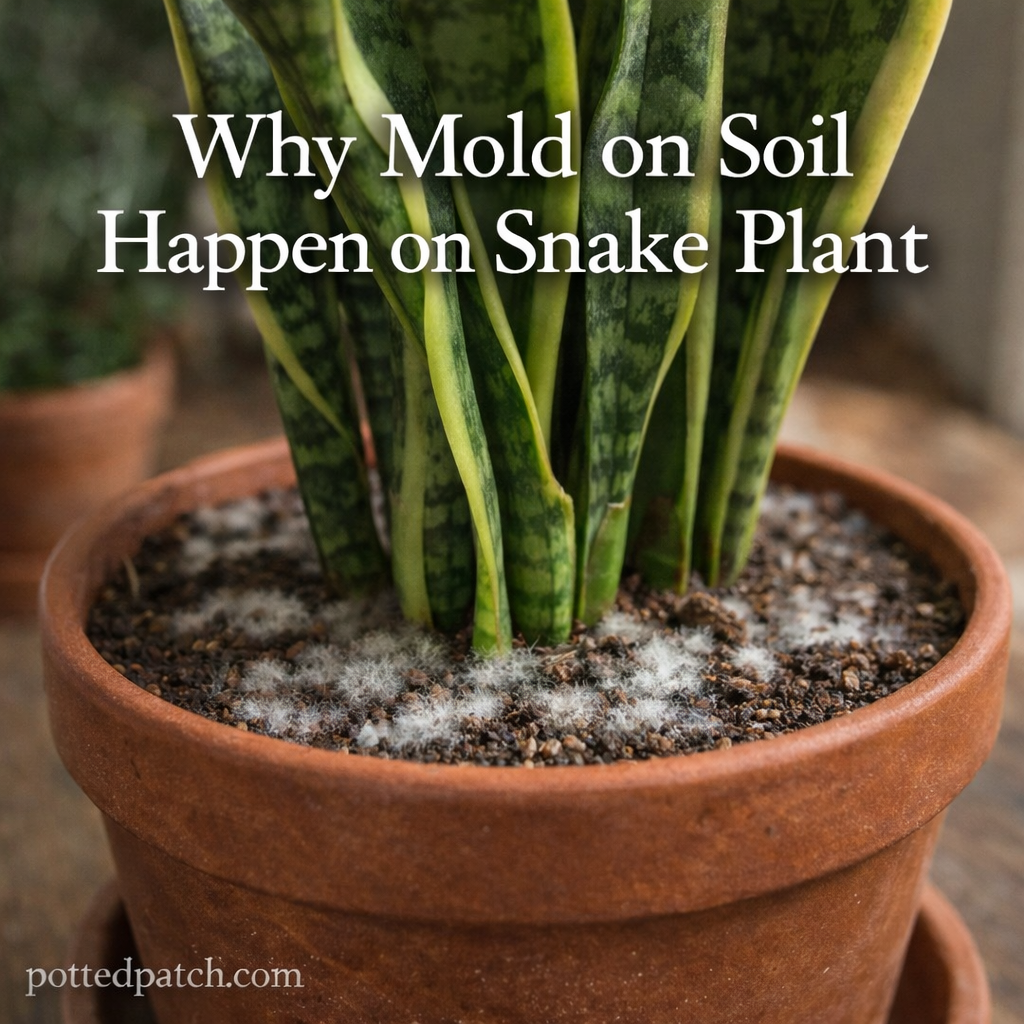
Most soil mold is a harmless saprophytic fungus. It feeds on decaying organic matter in damp conditions.
It typically appears as:
- White fuzzy patches
- Gray web-like growth
- Thin cottony coating on the soil surface
While it doesn’t usually harm the plant directly, it’s a sign that conditions are too wet.
And overly wet soil can eventually lead to root rot.
1. Overwatering
The most common cause of mold is overwatering.
When soil stays damp for long periods:
- Fungal spores multiply
- Organic matter begins breaking down
- Surface mold spreads
Spider plants prefer to dry slightly between waterings. Constant moisture creates the perfect mold environment.
Fix:
- Allow the top 1–2 inches of soil to dry before watering.
- Reduce watering frequency.
- Always empty the drainage saucer.
2. Poor Drainage
Even moderate watering can cause mold if drainage is poor.
Common issues include:
- Pots without drainage holes
- Heavy, compacted soil
- Soil that retains too much moisture
If water cannot escape properly, mold becomes more likely.
Fix:
- Repot into well-draining soil.
- Add perlite to improve airflow.
- Use containers with drainage holes.
3. Low Air Circulation
Stagnant air encourages fungal growth.
Mold is more common when:
- Plants are in dark corners
- Airflow is limited
- Rooms are consistently humid
Spider plants prefer bright, indirect light and moderate airflow.
Fix:
- Move the plant to a brighter area.
- Avoid cramped, enclosed spaces.
- Improve ventilation in the room.
4. Organic Debris on Soil Surface
Dead leaves or plant debris sitting on top of the soil provide food for mold.
If fallen leaves aren’t removed, mold may form around them.
Fix:
- Remove dead leaves promptly.
- Gently scrape off moldy topsoil if needed.
- Replace with fresh, dry potting mix.
Clean soil reduces fungal growth.
5. Using Poor-Quality Potting Mix
Some low-quality soils contain excessive organic matter that holds moisture.
If mold keeps returning despite proper watering, the soil mix may be the issue.
Ideal spider plant soil:
- Light
- Airy
- Fast-draining
- Mixed with perlite or coarse material
Switching soil often solves recurring mold problems.
How to Remove Mold Safely
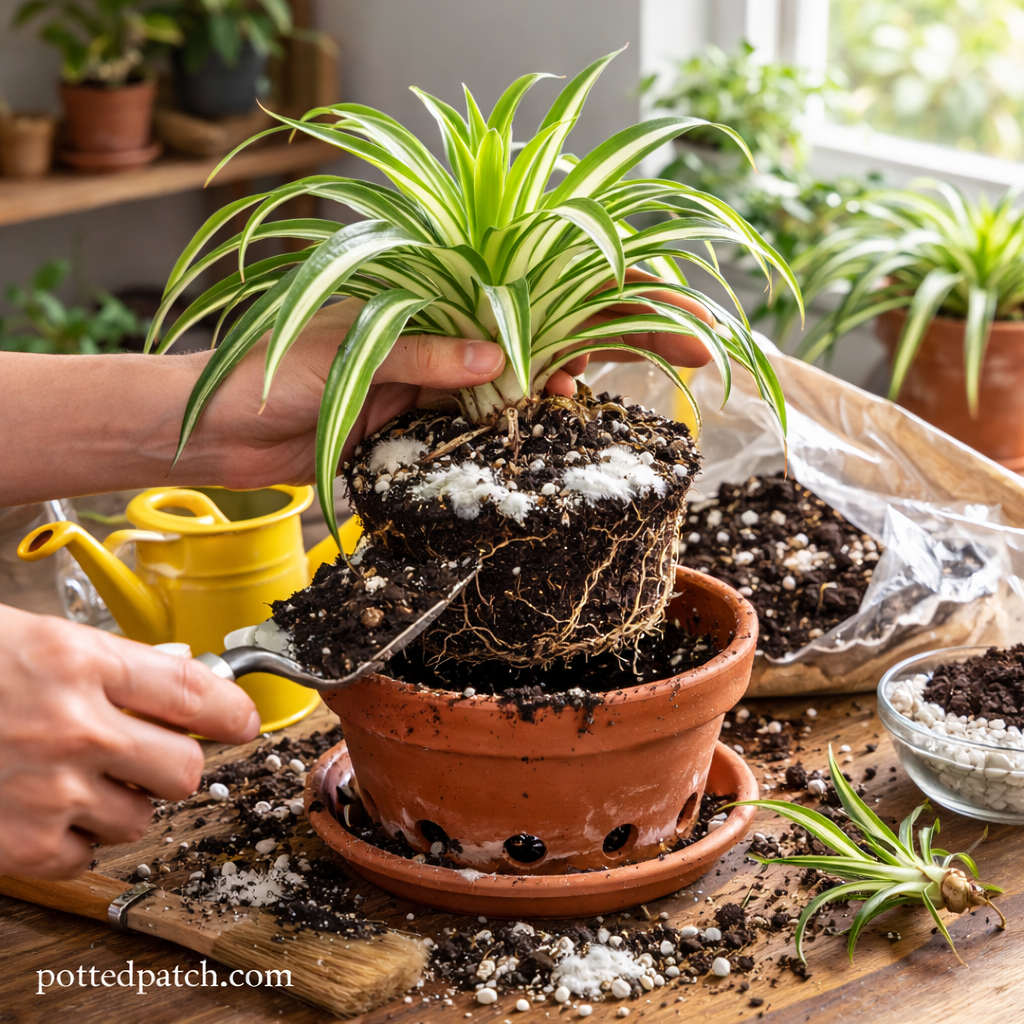
If mold has already formed:
- Remove the top 1–2 inches of affected soil.
- Replace with fresh, dry potting mix.
- Allow the plant to dry more thoroughly between waterings.
For stubborn cases:
- Sprinkle a light layer of cinnamon on the surface (natural antifungal).
- Increase light and airflow.
Avoid using harsh chemicals indoors.
When Mold Becomes a Bigger Problem
If you notice:
- Persistent musty odor
- Fungus gnats
- Yellowing leaves
- Soft stems
The issue may extend below the surface.
Inspect roots for signs of rot and repot if necessary.
How to Prevent Mold in the Future
Follow these prevention tips:
- Water only when soil is partially dry.
- Use well-draining soil.
- Keep plant in bright, indirect light.
- Remove debris from soil surface.
- Ensure good air circulation.
Consistency keeps fungal growth under control.
Final Thoughts
Mold on spider plant soil is usually a symptom — not the main problem.
It signals excess moisture, poor drainage, or low airflow. Once you correct those conditions, mold typically disappears.
Spider plants are resilient. With proper watering and breathable soil, you can keep both roots and soil healthy.