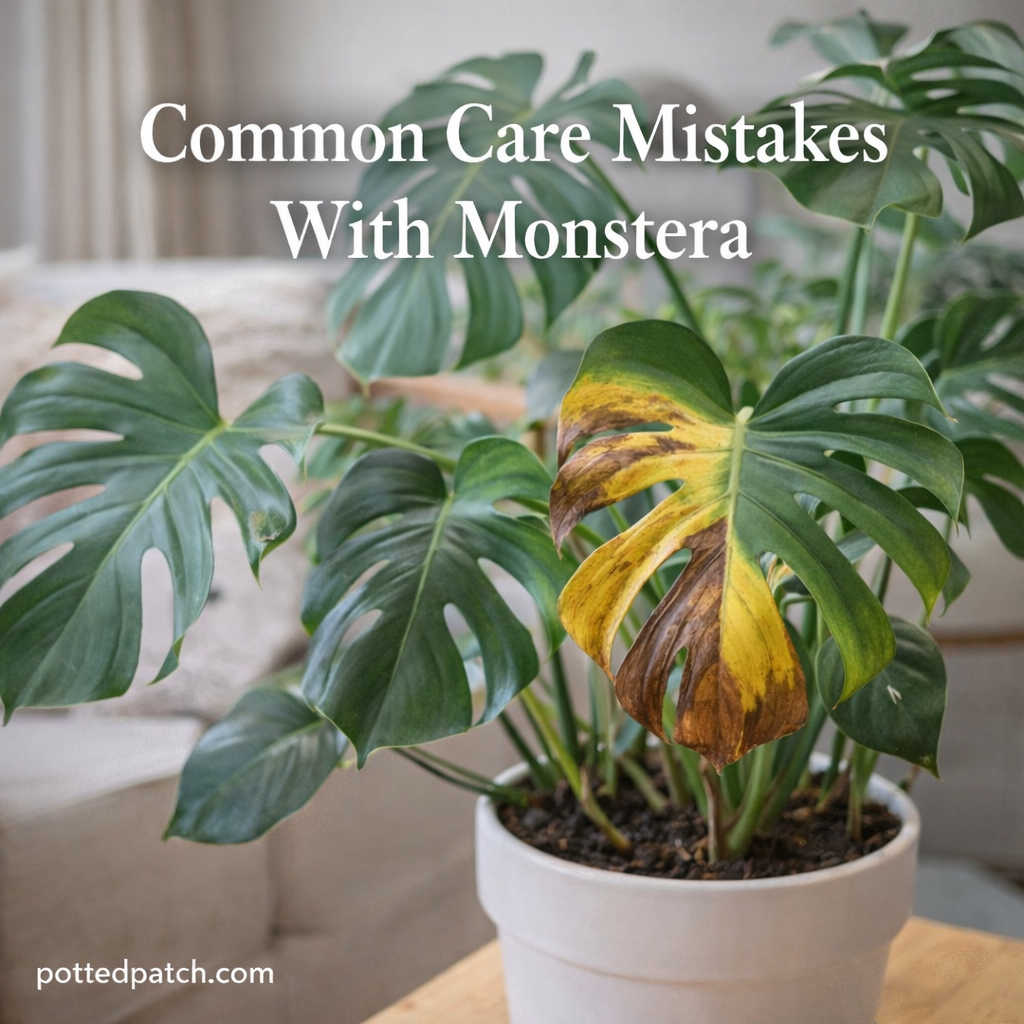
Monsteras are often labeled as easy-care houseplants, but many common problems come from small mistakes that add up over time. Yellow leaves, drooping growth, slow development, or lack of fenestrations usually aren’t random—they’re signs the plant’s needs aren’t quite being met.
This guide covers the most common Monstera care mistakes and explains how to fix them, so your plant can grow strong, healthy, and balanced indoors.
Overwatering the Plant
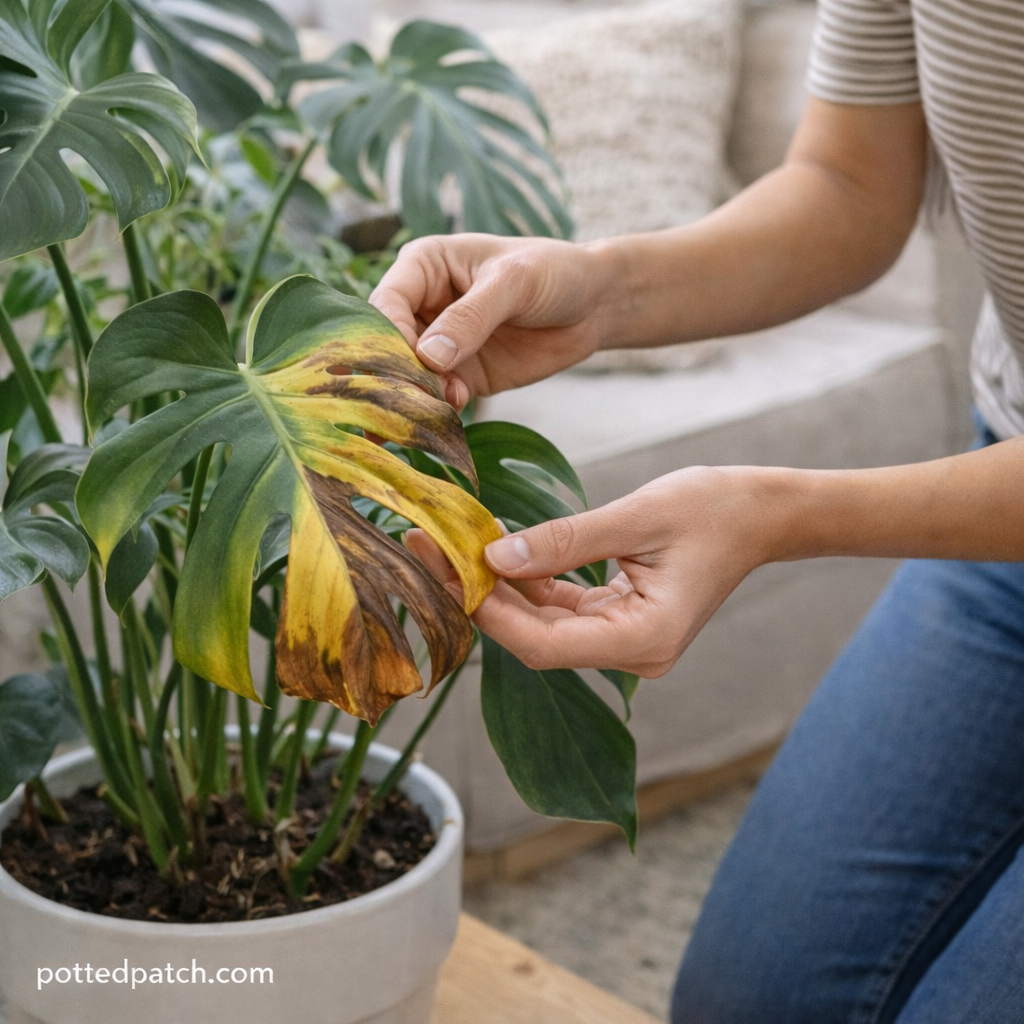
Overwatering is the most common Monstera mistake, especially for beginners.
Monsteras prefer evenly moist soil, not constantly wet soil. When roots sit in water too long, they begin to rot, leading to yellow leaves and drooping stems.
Signs of overwatering include:
- Yellowing lower leaves
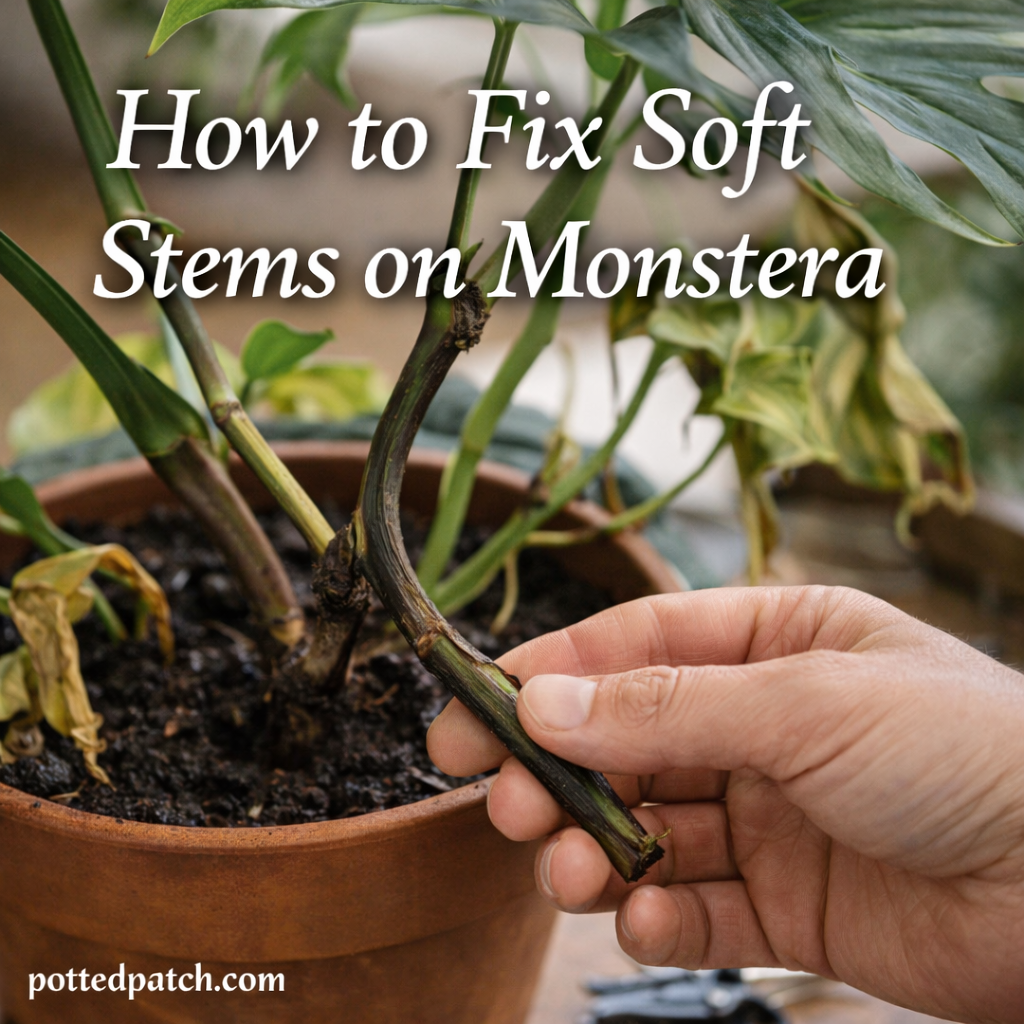
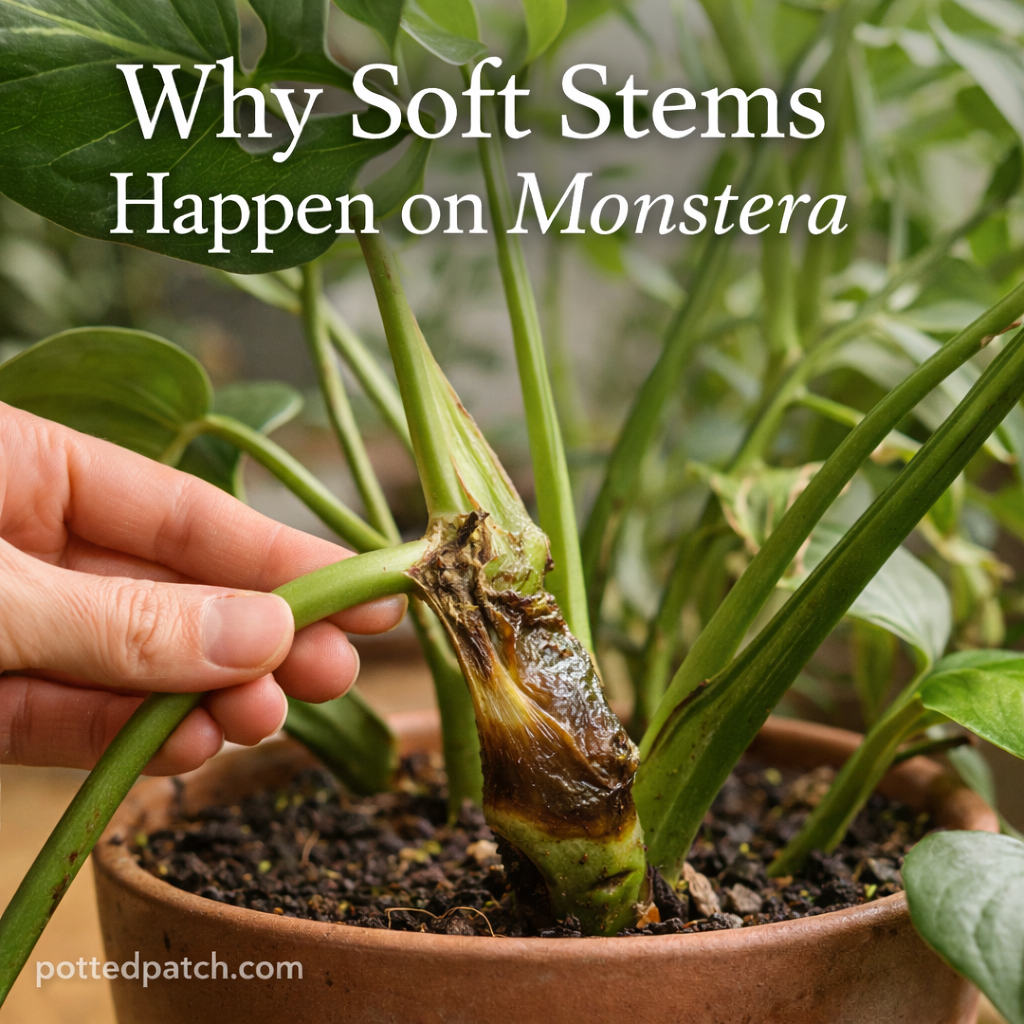
- Mushy stems or roots
- Soil that stays wet for days
To avoid this, always let the top few inches of soil dry out before watering again and make sure excess water can drain freely.
Using a Pot Without Drainage
A beautiful pot without drainage holes can quietly kill a Monstera.
Without proper drainage:
- Water pools at the bottom of the pot
- Roots can’t access oxygen
- Root rot develops quickly
Always use a pot with drainage holes, or place your Monstera in a nursery pot inside a decorative cover pot and empty excess water after watering.
Placing Monstera in Low Light
Monsteras tolerate lower light, but they don’t thrive in it.
When light is too low, you may notice:
- Smaller leaves
- Long, leggy stems
- Fewer or no leaf splits
Monsteras grow best in bright, indirect light. Place them near a window where sunlight is filtered, not harsh or direct.
Exposing the Plant to Direct Sunlight
Too much sun can be just as harmful as too little.
Direct sunlight can cause:
- Scorched or brown leaf patches
- Faded leaf color
- Crispy leaf edges
If your Monstera sits near a sunny window, sheer curtains or moving it slightly back from the glass can protect the leaves.
Ignoring Humidity Needs
Monsteras are tropical plants and appreciate moderate humidity.
Low humidity may lead to:
- Browning leaf edges
- Slower growth
- Leaves that unfurl poorly
While Monsteras adapt well to normal indoor humidity, occasional misting or placing the plant near other plants can help maintain healthier growth.
Not Providing Support
Monsteras are natural climbers, not floor plants.
Without support, they can:
- Grow sideways or sprawl
- Develop weak stems
- Lose their upright shape
Using a moss pole or stake helps guide upward growth and encourages larger, more mature leaves over time.
Fertilizing Too Much—or Not at All
Improper feeding is another common issue.
Overfertilizing can cause:
- Burned leaf tips
- Salt buildup in soil
Underfertilizing can result in:
- Slow growth
- Pale leaves
During the growing season, feeding lightly every few weeks with a balanced houseplant fertilizer is usually enough.
Repotting Too Often
Monsteras don’t need frequent repotting.
Repotting too often can:
- Stress the roots
- Disrupt growth
- Cause transplant shock
Only repot when roots clearly outgrow the pot or begin circling the bottom. Most Monsteras are happy being repotted every 1–2 years.
Ignoring Early Warning Signs
Small changes often signal bigger issues ahead.
Don’t ignore:
- Gradual yellowing
- Curling or drooping leaves
- Sudden growth slowdown
Catching problems early makes them much easier to fix and prevents long-term damage.
Focus on Balance, Not Perfection
Monsteras are resilient plants, but they still need the right balance of light, water, and space to thrive.
Avoiding these common mistakes doesn’t require strict schedules or complicated routines—just consistent observation and small adjustments as your plant grows.
With proper care, your Monstera can become one of the most striking and rewarding plants in your indoor space.