

Dracaenas are steady, reliable growers — but they’re not fast. If your plant seems stuck, sparse, or slow to produce new leaves, don’t worry.
In most cases, growth can be stimulated with a few simple adjustments.
Here’s how to encourage healthy new growth on your dracaena.
1. Improve Lighting (Most Important Step)
Light is the biggest growth trigger.
Dracaenas thrive in bright, indirect light. While they tolerate medium light, low light significantly slows growth.
Ideal placement:
- Near an east-facing window
- A few feet back from a south- or west-facing window
- Bright room with filtered sunlight
Avoid harsh direct sun, which can scorch leaves.
If growth has stalled, upgrading light conditions often makes the biggest difference.
2. Adjust Your Watering Routine
Inconsistent watering stresses the plant and slows growth.
Dracaenas prefer soil that dries slightly between waterings.
Best practice:
- Water when the top 1–2 inches of soil are dry
- Avoid letting soil stay soggy
- Ensure proper drainage
Overwatering slows growth by damaging roots. Underwatering can cause leaf drop and stalled development.
Balanced watering promotes steady new leaf production.
3. Feed During the Growing Season
Dracaenas are light feeders — but they still need nutrients.
During spring and summer:
- Use a diluted liquid houseplant fertilizer
- Feed once every 4–6 weeks
- Avoid over-fertilizing
Too much fertilizer burns roots and does the opposite of what you want.
Skip feeding during fall and winter dormancy.
4. Refresh the Soil
Old, compacted soil can restrict root expansion.
If growth has slowed dramatically:
- Check if roots are crowded
- Repot every 1–2 years
- Use well-draining soil with perlite
Fresh soil improves oxygen flow and nutrient availability.
5. Prune to Stimulate Branching
Pruning is a powerful way to trigger new growth.
When you cut a dracaena stem, the plant often produces new shoots below the cut.
How to prune:
- Use clean, sharp pruning shears.
- Cut the stem at your desired height.
- New growth typically emerges just below the cut site.
This technique encourages fuller, bushier growth instead of a single tall cane.
Bonus: You can propagate the cutting.
6. Maintain Warm, Stable Temperatures
Dracaenas grow best between 65–80°F.
Cold drafts or fluctuating temperatures slow development.
Avoid placing the plant near:
- Air vents
- Exterior doors
- Drafty windows
Stable warmth supports consistent growth.
7. Increase Humidity Slightly
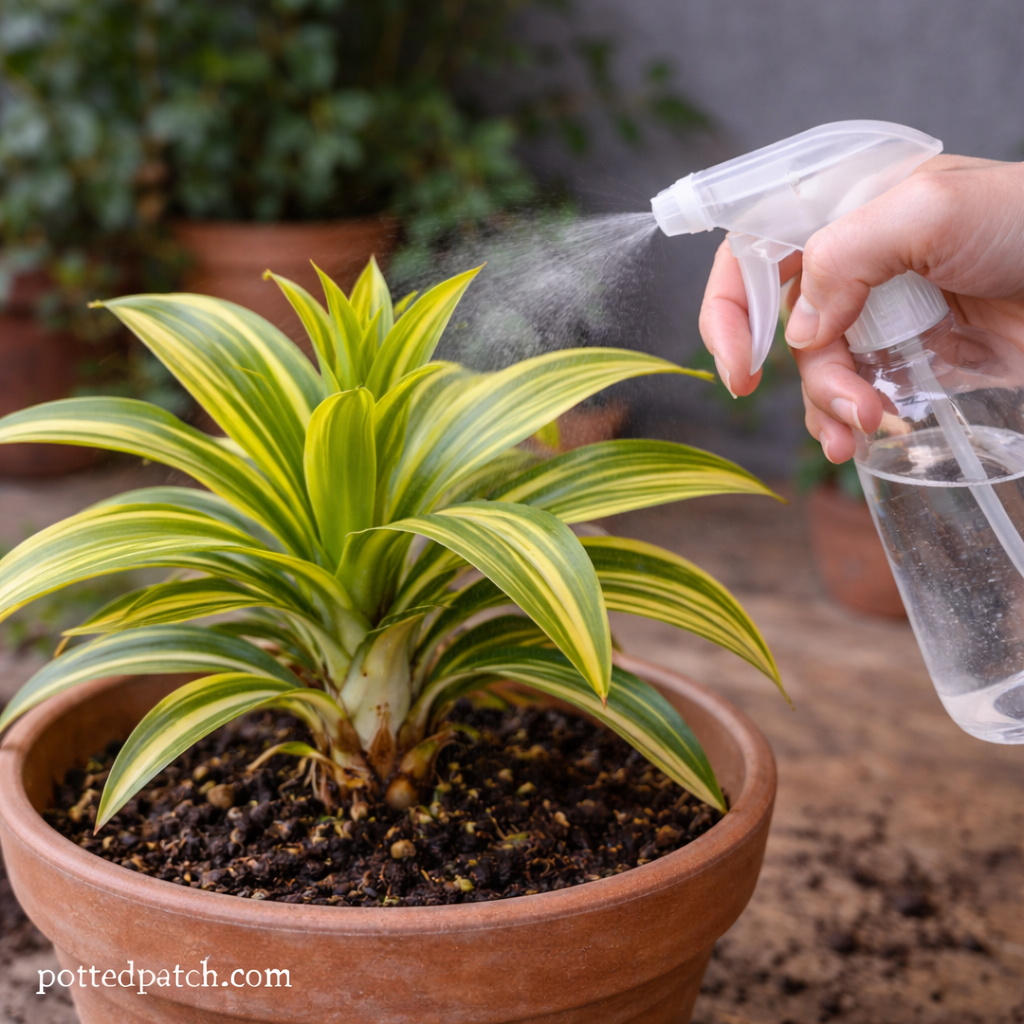
While dracaenas tolerate average indoor humidity, slightly higher humidity can encourage healthier foliage.
You can:
- Group plants together
- Use a humidity tray
- Keep away from dry heating vents
You don’t need tropical humidity — just avoid extremely dry air.
8. Be Patient
Dracaenas are not rapid growers like pothos or philodendrons.
Even under perfect conditions, growth may appear gradual.
Look for:
- New leaves emerging from the crown
- Thicker stems
- Brighter, more vibrant foliage
Small improvements signal that your adjustments are working.
Signs Growth Is Improving
After optimizing care, expect to see:
- New leaves within 4–8 weeks during growing season
- Stronger stem structure
- More consistent leaf size
If nothing changes after several months, reassess light first.
Light is almost always the limiting factor.
Quick Growth Boost Checklist
To encourage new growth:
- Bright, indirect light
- Consistent but moderate watering
- Light feeding in spring and summer
- Occasional pruning
- Warm, stable temperatures
- Fresh, well-draining soil
Simple adjustments create steady results.
Final Thoughts
Encouraging new growth on a dracaena is less about doing more — and more about doing the basics consistently.
Improve lighting, water properly, feed lightly during the growing season, and consider strategic pruning.
With patience and stable care, your dracaena will reward you with steady, healthy new growth.