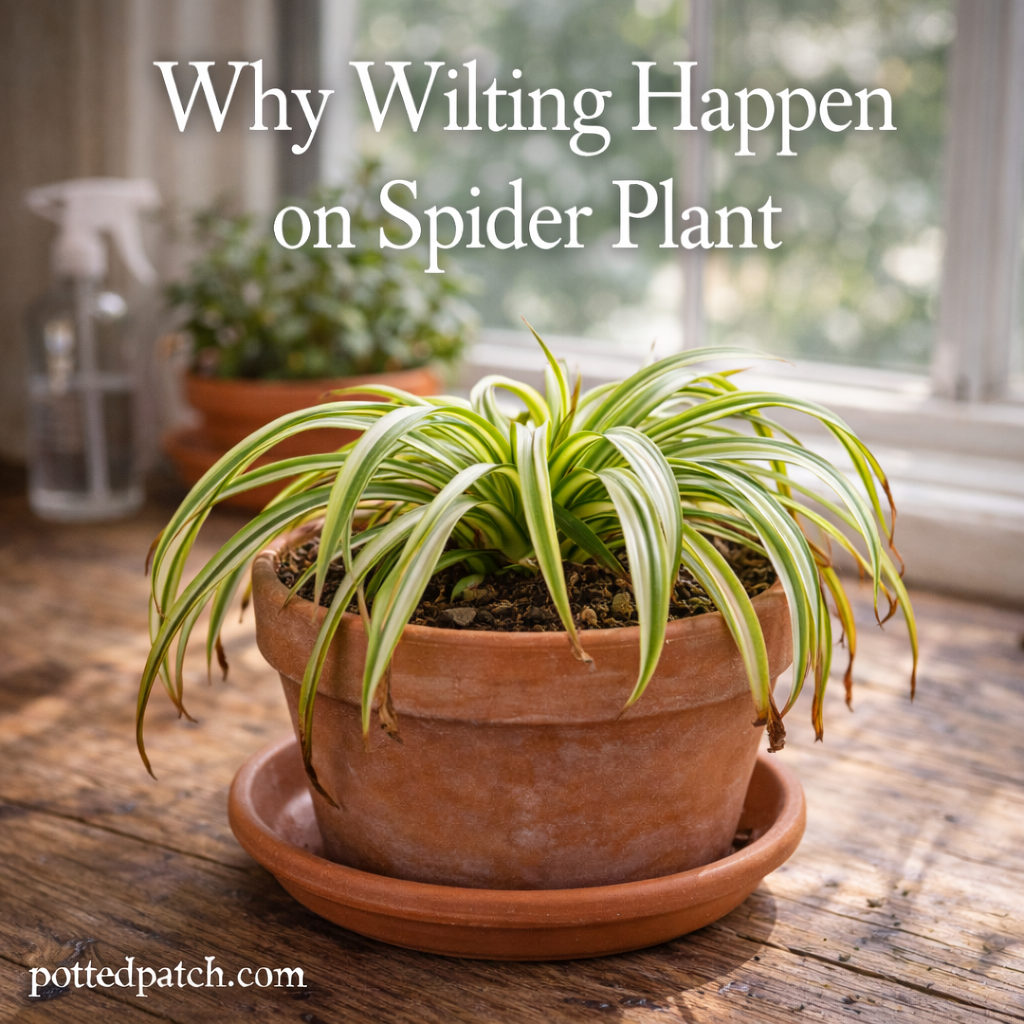
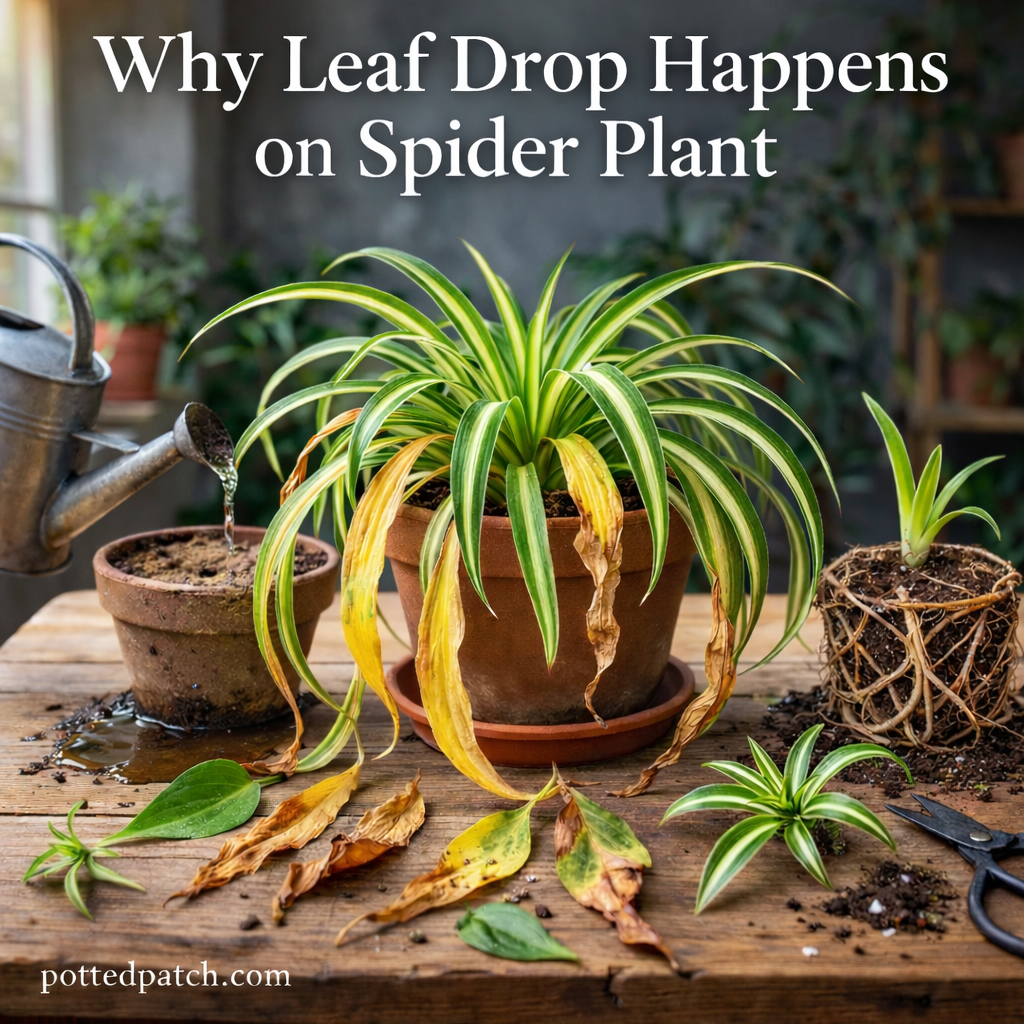
Spider plants are known for being resilient, beginner-friendly houseplants. So when leaves start dropping, it can feel confusing and frustrating.
The good news? Leaf drop on a spider plant is almost always fixable.
In this guide, we’ll break down exactly why leaf drop happens, what it means, and how to correct it quickly so your plant can bounce back.
Is Leaf Drop Normal on a Spider Plant?
Some leaf drop is completely normal.
Older leaves at the base of the plant naturally yellow and fall off as part of the growth cycle. If it’s just one or two older leaves every now and then, there’s no reason to worry.
But if you’re noticing:
- Multiple leaves falling at once
- Healthy green leaves dropping
- Sudden thinning
- Drooping followed by detachment
Then your spider plant is signaling stress.
Let’s look at the most common causes.
1. Overwatering (Most Common Cause)
Overwatering is the number one reason spider plants lose leaves.
Spider plants store water in their thick, tuber-like roots. When the soil stays wet too long, roots begin to suffocate and rot.
Signs of overwatering:
- Yellowing leaves before they drop
- Soft or mushy base
- Soil that feels constantly damp
- A sour or musty smell
How to fix it:
- Let the soil dry out almost completely before watering again.
- Make sure the pot has drainage holes.
- Empty the saucer after watering.
- If root rot is advanced, repot into fresh, well-draining soil.
Spider plants prefer to dry out slightly between waterings.
2. Underwatering
While they tolerate some dryness, spider plants don’t like being bone dry for long periods.
If the soil becomes completely dry and stays that way, leaves can wilt, crisp, and eventually fall off.
Signs of underwatering:
- Brown, crispy tips
- Soil pulling away from the edges of the pot
- Leaves curling inward
- Limp foliage
How to fix it:
- Water thoroughly until it drains from the bottom.
- Create a consistent watering routine.
- Check soil weekly instead of watering on a strict schedule.
Consistency is key.
3. Sudden Environmental Changes
Spider plants dislike abrupt changes.
If you recently:
- Moved it to a new room
- Repotted it
- Changed light exposure
- Turned on heating or AC
- Brought it home from a store
It may respond with temporary leaf drop.
This is called transplant or environmental shock.
What to do:
- Keep conditions stable.
- Avoid moving it repeatedly.
- Give it 2–3 weeks to adjust.
Most plants recover once they acclimate.
4. Lighting Problems
Spider plants prefer bright, indirect light.
Too little light can cause weak growth and leaf shedding. Too much direct sun can scorch leaves, leading to damage and drop.
Ideal lighting:
- Bright, indirect sunlight
- Near an east or north-facing window
- A few feet back from a south or west window
If light is the issue, gradual adjustment works best. Don’t move it from low light straight into harsh sun.
5. Temperature Stress
Spider plants thrive in average indoor temperatures between 65–80°F.
Leaf drop can occur if the plant experiences:
- Cold drafts
- Temperatures below 50°F
- Hot air from vents
- Sudden fluctuations
Keep the plant away from windows in winter and away from direct heat sources.
6. Root Bound Conditions
Spider plants grow fast and develop thick root systems.
If the plant becomes severely root bound, it can struggle to absorb water properly, leading to stress and leaf drop.
Signs it’s root bound:
- Roots circling the bottom of the pot
- Water running straight through without soaking in
- Slowed growth
- Leaves thinning out
Fix:
Repot into a container 1–2 inches larger with fresh, well-draining soil.
Spider plants actually prefer being slightly snug, but extremely tight roots can cause problems.
7. Fertilizer Buildup
Too much fertilizer can burn roots and lead to leaf shedding.
Spider plants are light feeders. Overfeeding causes salt buildup in the soil, which stresses the plant.
Signs of fertilizer stress:
- Brown tips
- Crusty white residue on soil surface
- Sudden leaf drop after feeding
Solution:
- Flush the soil thoroughly with distilled or filtered water.
- Reduce feeding to once a month during spring and summer.
- Skip fertilizing in fall and winter.
How to Stop Leaf Drop Quickly
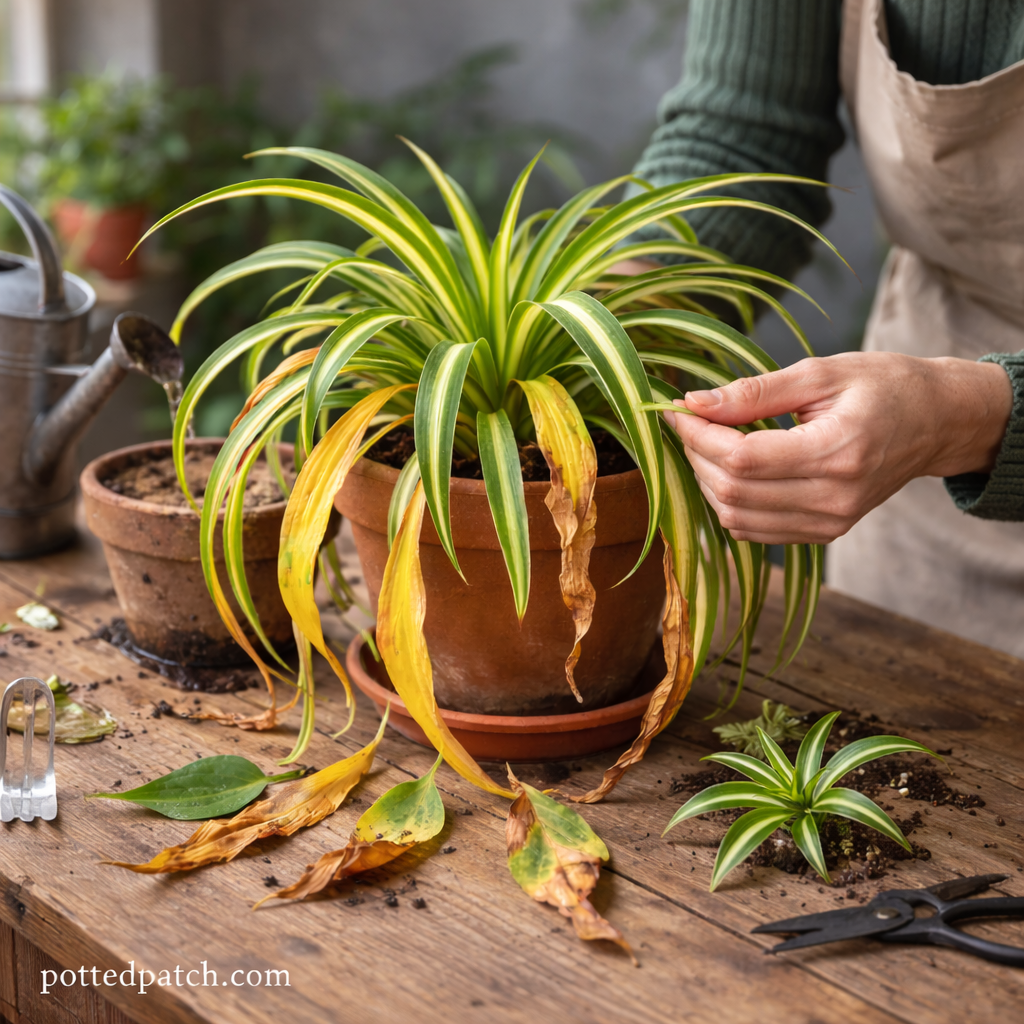
If your spider plant is actively dropping leaves, follow this checklist:
- Check soil moisture immediately.
- Inspect roots if watering seems normal.
- Evaluate light exposure.
- Stabilize temperature.
- Pause fertilizing.
Most spider plants recover within a few weeks once the stressor is corrected.
When Leaf Drop Is Serious
Leaf drop becomes concerning if:
- More than 30–40% of foliage falls quickly
- The base of the plant feels mushy
- There’s a strong odor from the soil
- Leaves are dropping while still green and firm
In those cases, root rot is likely and requires immediate repotting.
Final Thoughts
Leaf drop on a spider plant is almost always a care issue — not a death sentence.
In most cases, the cause is either:
- Overwatering
- Inconsistent watering
- Sudden environmental changes
Once you correct the issue and provide stable conditions, spider plants are remarkably forgiving and bounce back quickly.
Pay attention to the pattern of leaf drop. Your plant is communicating — you just need to adjust accordingly.