Dracaena plants are popular for a reason — they’re stylish, adaptable, and relatively low maintenance. But if your dracaena looks pale, leggy, or isn’t growing much, light is usually the issue.
Understanding the best light conditions can mean the difference between a thriving plant and one that simply survives.
Let’s break down exactly what your dracaena needs.
What Type of Light Does a Dracaena Prefer?
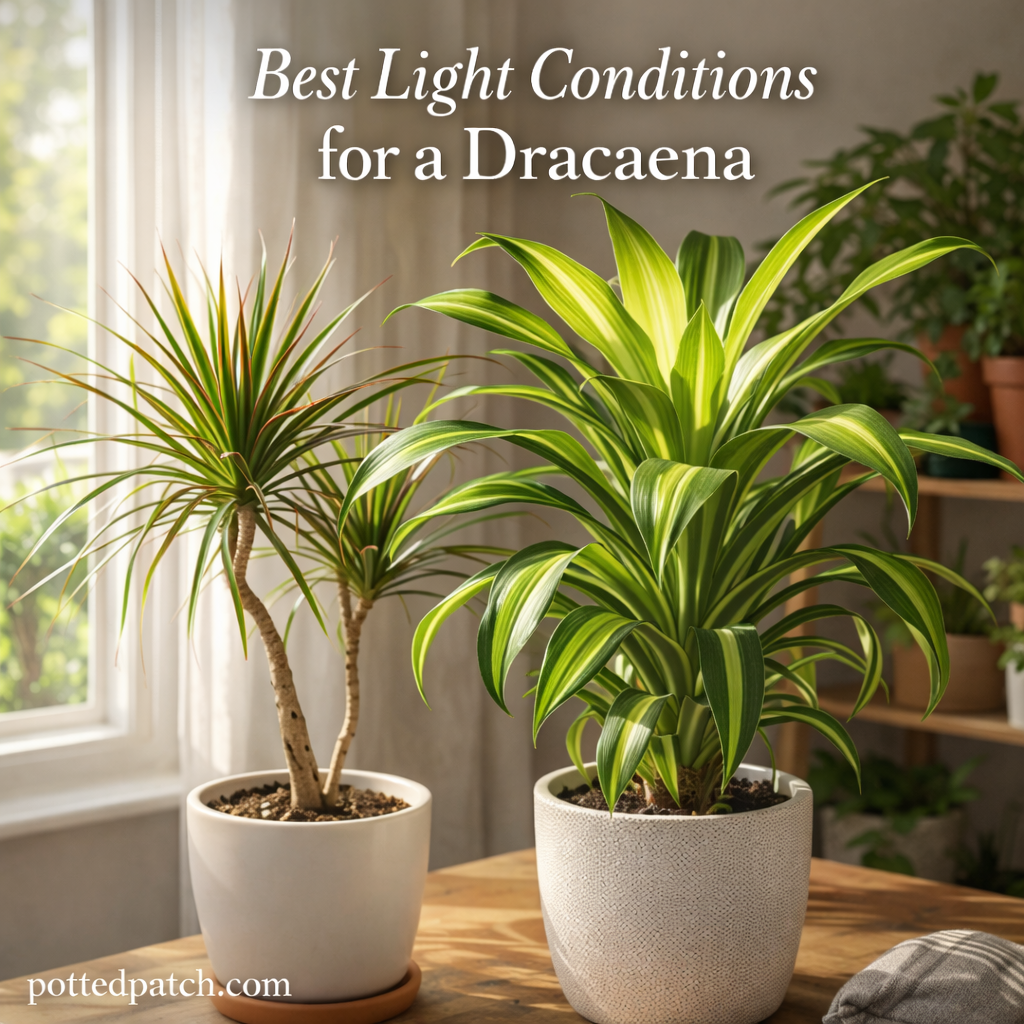
Most dracaena varieties — including Dracaena marginata and Dracaena fragrans — prefer:
Bright, indirect light.
That means:
- Plenty of natural light
- No harsh direct sun hitting the leaves
- A bright room with filtered light
Think of the light near an east-facing window or a few feet back from a south- or west-facing window.
Can Dracaena Survive in Low Light?
Yes — but there’s a difference between surviving and thriving.
In low light:
- Growth slows significantly
- Leaves may lose vibrancy
- Variegated varieties may fade
- Stems can become thin and stretched
If your plant is in a dim corner, expect slower development.
If possible, move it to a brighter location for stronger growth.
Is Direct Sunlight Bad for Dracaena?
Yes, especially strong afternoon sun.
Direct sunlight can cause:
- Brown leaf tips
- Bleached patches
- Crispy edges
Morning sun (from an east-facing window) is usually safe, but intense midday or afternoon sun should be filtered with sheer curtains.
How to Find the Perfect Spot in Your Home
Use this simple placement guide:
Best spots:
- Near an east-facing window
- 3–6 feet from a south-facing window
- Bright rooms with consistent natural light
Avoid:
- Dark hallways
- Windowless bathrooms
- Directly in front of strong west-facing sun
If your home lacks natural light, a grow light can work well.
Signs Your Dracaena Needs More Light
Watch for these signals:
- Drooping or leaning toward the window
- Small new leaves
- Stalled growth
- Loss of variegation
Rotate your plant every few weeks to promote even growth.
Signs It’s Getting Too Much Light
Too much sun often shows up as:
- Brown or crispy leaf edges
- Yellow patches
- Drying soil extremely fast
If this happens, move the plant slightly farther from the light source.
Seasonal Light Adjustments
Light intensity changes throughout the year.
During winter:
- Move your dracaena closer to windows
- Growth naturally slows
During summer:
- Ensure harsh sun is filtered
- Monitor for leaf burn
Small seasonal adjustments keep your plant balanced year-round.
Do Different Dracaena Varieties Need Different Light?
Generally, care is similar across varieties, but:
- Dark green types tolerate lower light better
- Variegated types need brighter light to maintain color
If your variegated dracaena is losing its stripes, increase light slightly.
Final Thoughts
The best light for a dracaena is bright, indirect light.
They’re adaptable, but proper lighting dramatically improves leaf color, growth rate, and overall health.
If your plant looks “just okay,” light is often the first thing to adjust.
Find that sweet spot — not too dark, not too sunny — and your dracaena will reward you with steady, healthy growth.