

Dracaena plants are popular for their elegant, upright growth and low-maintenance reputation. But when it comes to watering, many plant owners either give too much or too little — and both can cause problems.
If you’ve ever wondered how often to water a dracaena, the answer depends on light, temperature, season, and soil conditions.
This guide will help you understand exactly when and how to water your dracaena for healthy, long-lasting growth.
The Short Answer
Most indoor dracaena plants need watering every 10–14 days.
However, this is just a general guideline.
The real rule is:
Water when the top 1–2 inches of soil feel dry.
Never water on a strict schedule without checking the soil first.
Why Dracaenas Are Sensitive to Overwatering
Dracaenas store some moisture in their thick stems and roots. Because of this, they tolerate slight drying better than constant moisture.
Too much water can lead to:
- Yellow leaves
- Soft stems
- Root rot
- Brown leaf tips
- Musty-smelling soil
Overwatering is the most common cause of dracaena decline.
How to Check If Your Dracaena Needs Water
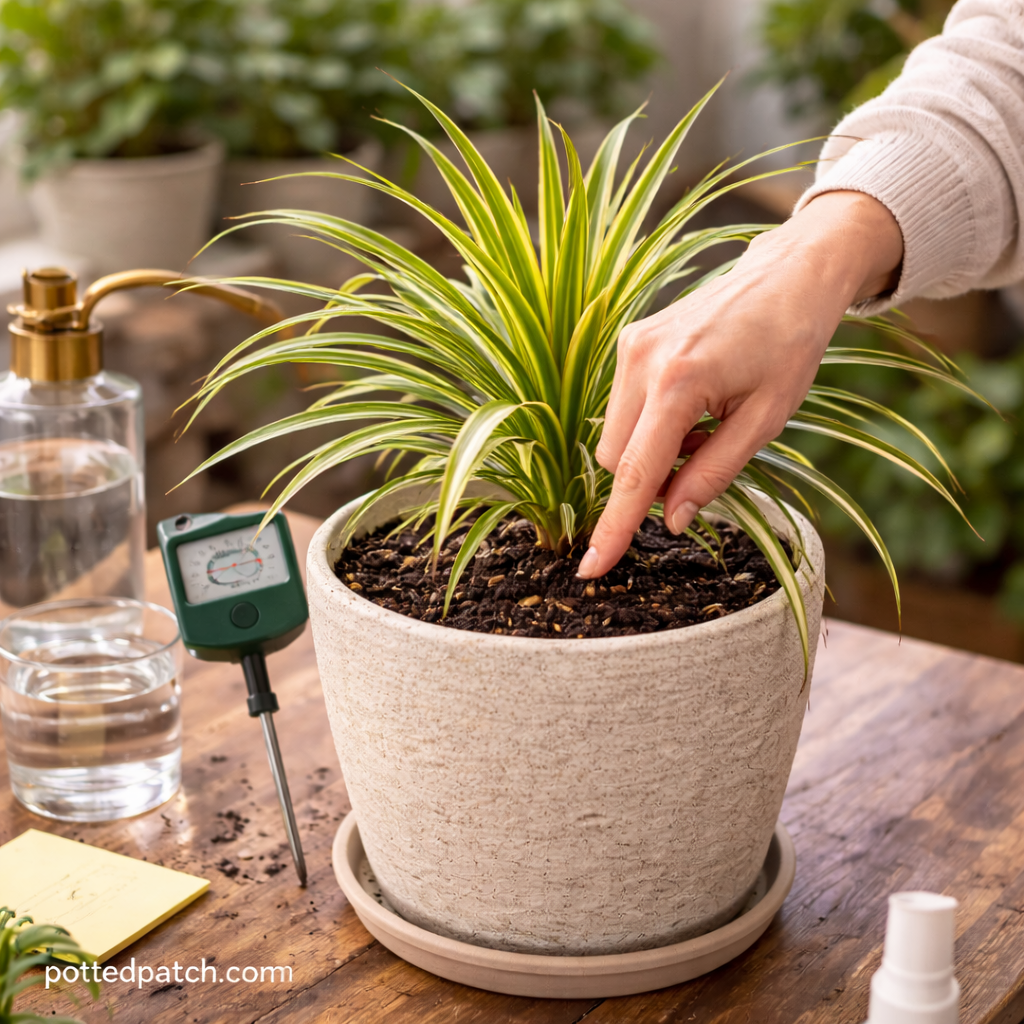
1. The Finger Test
Insert your finger 1–2 inches into the soil.
- Dry? It’s time to water.
- Still moist? Wait a few more days.
2. The Pot Weight Test
Lift the pot.
- Light pot = dry soil
- Heavy pot = still moist
3. Use a Moisture Meter (Optional)
A moisture meter can help beginners, but always confirm with a finger test.
Seasonal Watering Differences
Spring and Summer
- Water approximately every 7–10 days
- Growth is active
- Soil dries faster
Fall and Winter
- Water approximately every 2–3 weeks
- Growth slows
- Soil stays moist longer
Dracaenas need significantly less water in winter.
How to Water a Dracaena Properly
When it’s time to water:
- Water thoroughly until it drains from the bottom.
- Let excess water drain fully.
- Empty the saucer after 10–15 minutes.
Never let your dracaena sit in standing water.
Even one or two waterlogged episodes can stress the roots.
Signs You’re Watering Too Often
- Yellowing lower leaves
- Soft or droopy foliage
- Mushy base
- Foul smell from soil
If this happens, reduce watering frequency and check drainage immediately.
Signs You’re Not Watering Enough
- Brown, crispy leaf tips
- Drooping leaves
- Soil pulling away from pot edges
If the plant looks dull and dry, increase watering slightly.
The Importance of Drainage
Even perfect watering frequency won’t help if drainage is poor.
Make sure:
- Your pot has drainage holes
- Soil is well-draining
- You add perlite or pumice if needed
Compact, heavy soil holds too much moisture.
Water Quality Matters
Dracaenas can be sensitive to fluoride and salt buildup found in tap water.
If you notice persistent brown tips:
- Use distilled or filtered water
- Let tap water sit overnight before using
- Flush soil occasionally with clean water
This helps prevent mineral accumulation.
Common Watering Mistakes to Avoid
- Watering on a fixed schedule
- Using pots without drainage holes
- Letting water collect in saucers
- Watering lightly instead of thoroughly
- Ignoring seasonal changes
Consistency and observation are more important than routine.
Final Thoughts
So, how often should you water a dracaena?
In most indoor conditions:
- Every 10–14 days
- Less in winter
- More in bright light
But always check the soil before watering.
Dracaenas prefer slightly dry conditions over wet ones. When you balance moisture properly, your plant will reward you with healthy leaves, steady growth, and long-term resilience.