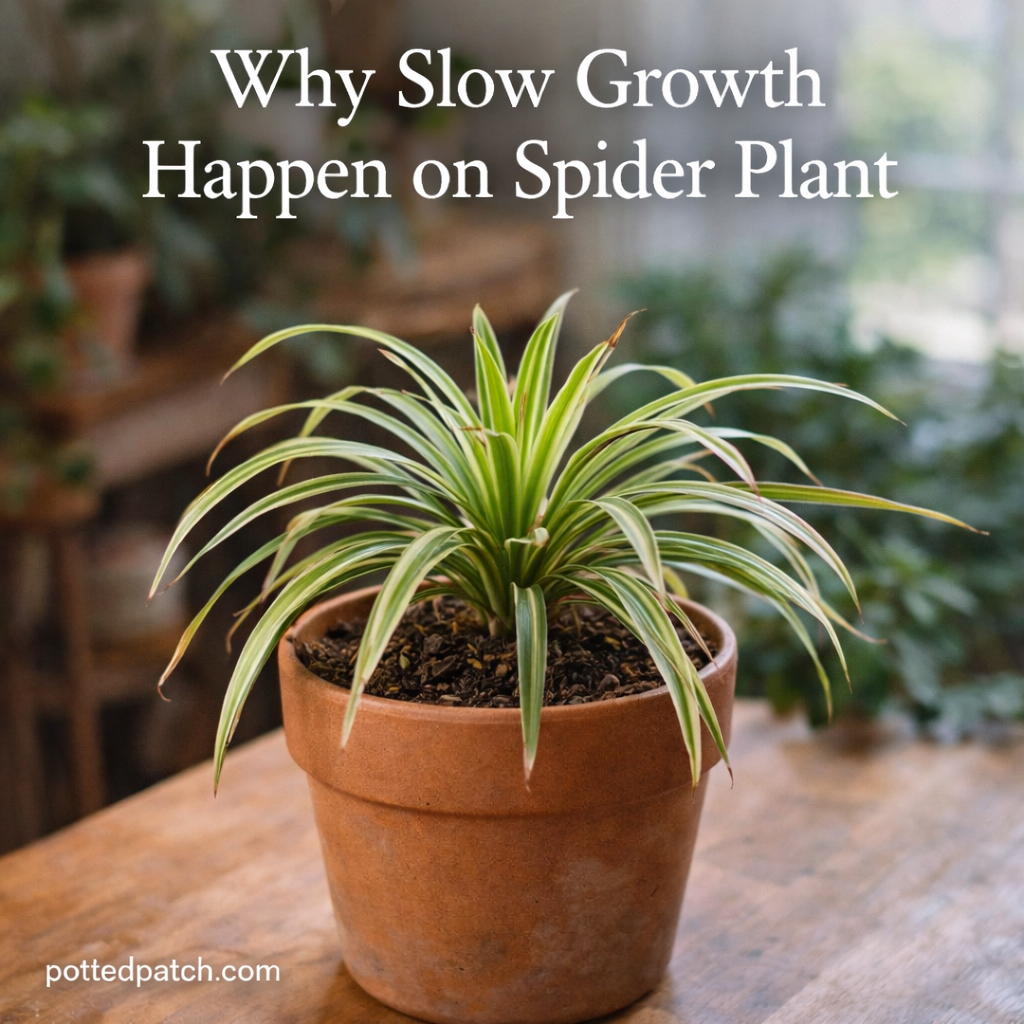
Spider plants are known for being fast, forgiving growers. When healthy, they produce vibrant arching leaves and plenty of baby plantlets.
So if your spider plant seems stuck — not growing, not producing new leaves, and not sending out runners — something is off.
The good news? Slow growth is usually easy to diagnose and fix.
This guide explains why slow growth happens on spider plants and what you can do to restore healthy development.
1. Not Enough Light
Light is the most common reason for slow growth.
Spider plants tolerate lower light, but they don’t thrive in it.
Signs Light Is Too Low
- Pale or faded leaves
- Long, stretched growth
- No baby plantlets
- Very slow leaf production
Fix
- Move to bright, indirect light
- Place near an east-facing window
- Position a few feet away from a south or west window
Avoid direct sunlight, which can scorch leaves.
More light = more growth.
2. Overwatering
Spider plants prefer slightly drying out between waterings.
If soil stays wet too long, roots can suffocate, slowing growth dramatically.
Signs of Overwatering
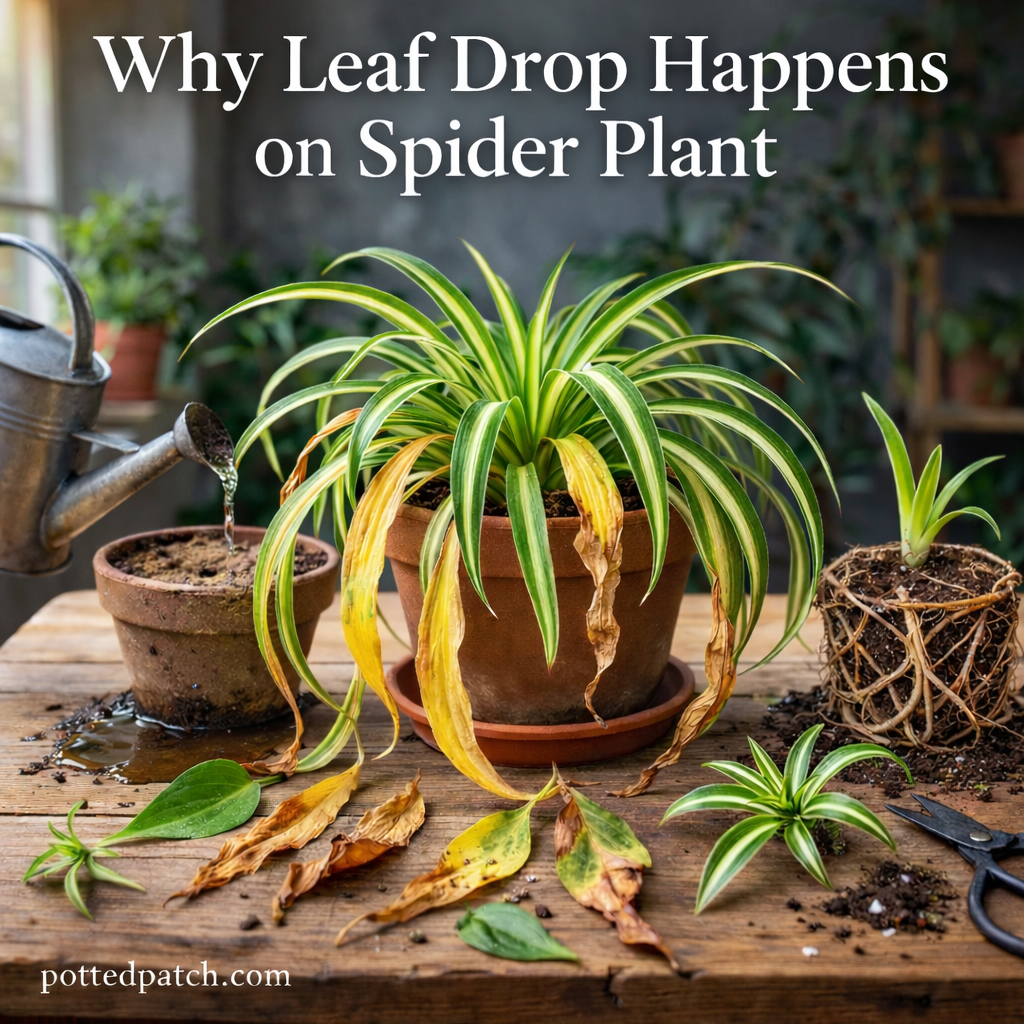
- Yellow leaves
- Soft stems
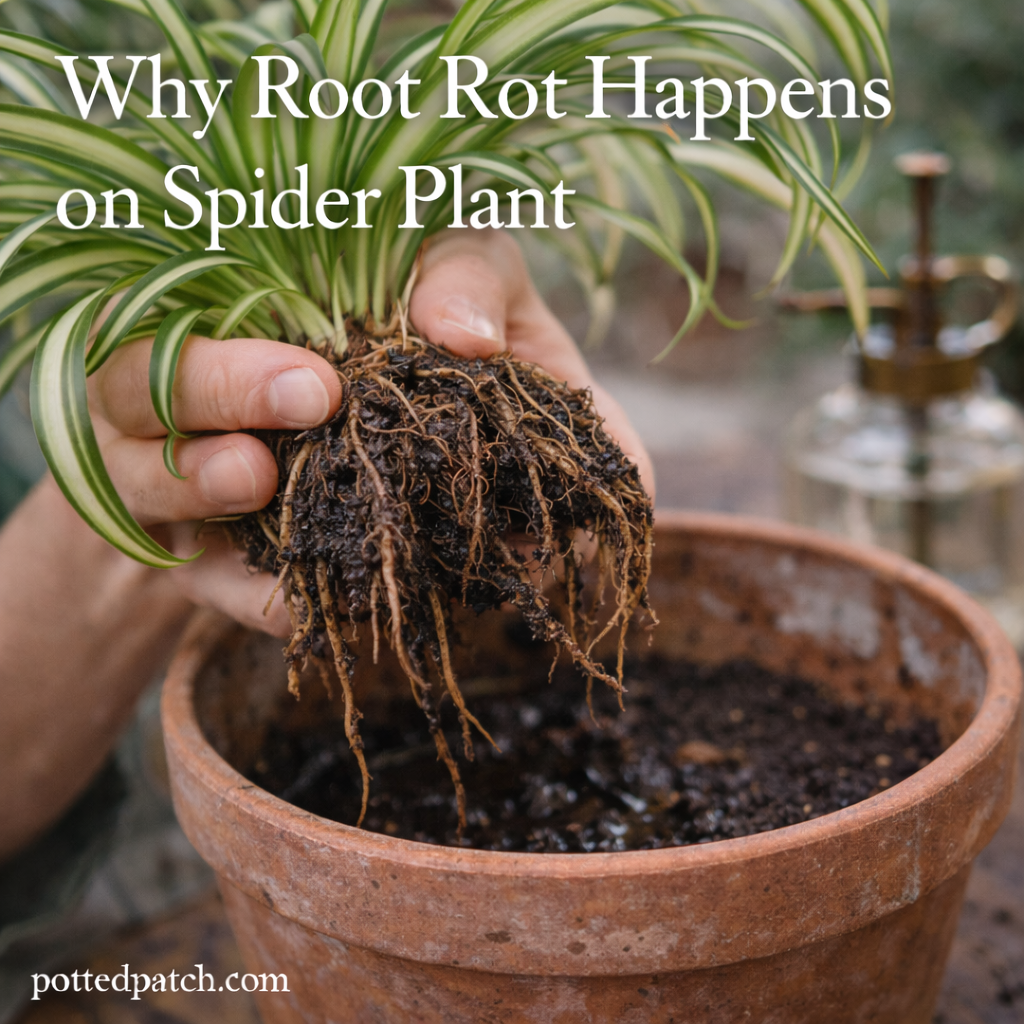
- Mushy roots
- Musty-smelling soil
Fix
- Let the top 1–2 inches dry before watering
- Use pots with drainage holes
- Switch to well-draining soil if needed
Healthy roots equal healthy growth.
3. Underwatering
On the flip side, chronic underwatering also slows growth.
When a spider plant is too dry, it shifts into survival mode rather than growing.
Signs of Underwatering
- Crispy brown tips
- Drooping leaves
- Soil pulling away from pot edges
Fix
- Water thoroughly when the top layer feels dry
- Avoid letting the plant dry out completely
Consistency is key.
4. Root Bound Conditions
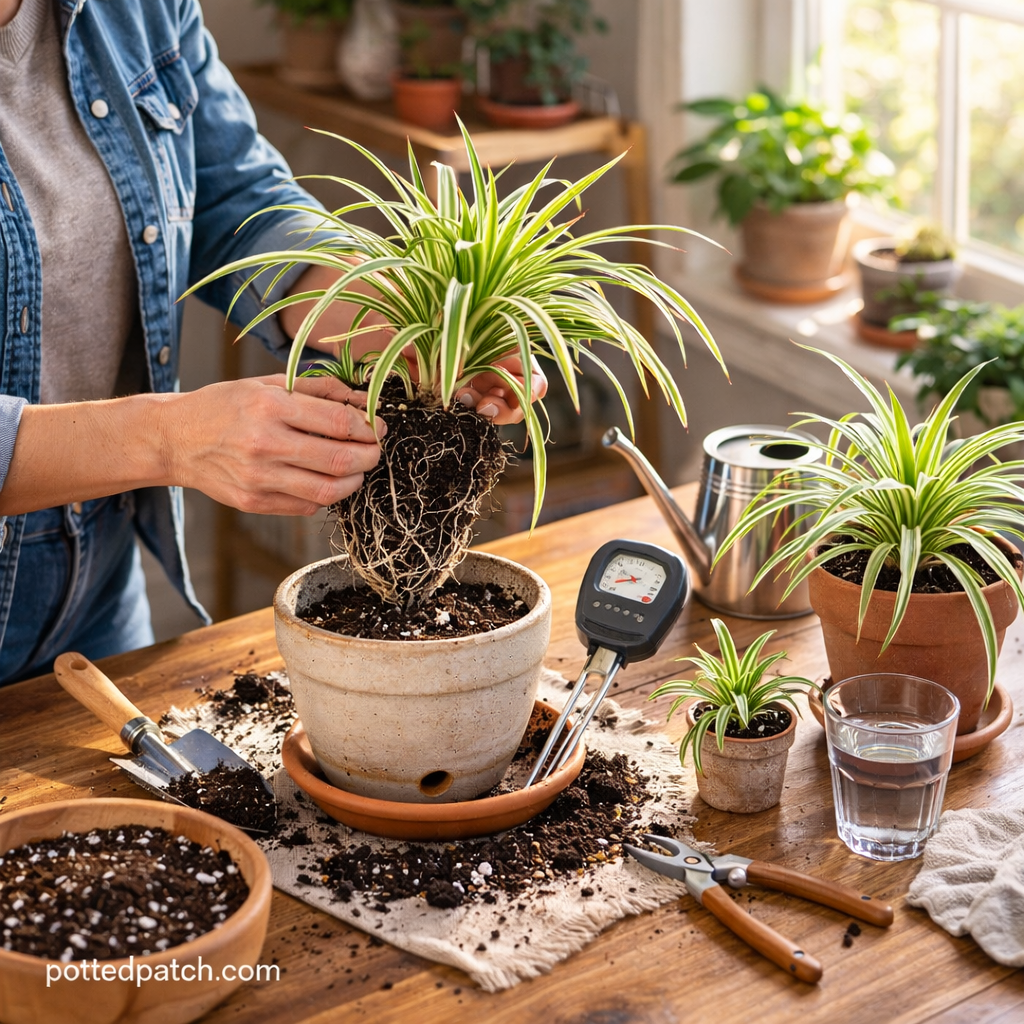
Spider plants like being slightly snug in their pots — but extremely root-bound plants can slow down.
Signs It’s Root Bound
- Roots circling tightly
- Water runs straight through
- Growth has stalled
Fix
Repot into a container only 1–2 inches larger with fresh potting mix.
Do this in spring for best results.
5. Nutrient Deficiency
Spider plants are not heavy feeders, but they still need nutrients during active growth.
If soil has been unchanged for years, nutrients may be depleted.
Fix
- Feed once a month during spring and summer
- Use a balanced liquid houseplant fertilizer
- Dilute to half strength
Avoid fertilizing in winter.
6. Seasonal Slowdown
Spider plants naturally grow slower in fall and winter.
Shorter days and cooler temperatures reduce growth.
If your plant looks healthy but isn’t growing much during winter, this may be completely normal.
Growth usually resumes in spring.
7. Temperature Stress
Spider plants prefer temperatures between 65–80°F.
If exposed to:
- Cold drafts
- Air conditioning vents
- Sudden temperature swings
Growth may slow or stall.
Keep conditions stable for consistent development.
8. Poor Soil Drainage
Heavy or compacted soil reduces oxygen to roots.
Without proper airflow, growth declines.
Fix
Use:
- Indoor potting mix
- Added perlite or pumice
- A container with drainage holes
Healthy soil structure supports strong root systems.
9. Fluoride or Salt Buildup
Spider plants can be sensitive to tap water chemicals.
Salt buildup can stress roots and slow growth.
Signs
- Brown leaf tips
- White crust on soil surface
Fix
- Use distilled or filtered water
- Flush soil occasionally with clean water
- Avoid overfertilizing
How to Encourage Faster Growth
If you want your spider plant to grow more vigorously:
- Provide bright, indirect light
- Water consistently
- Fertilize monthly in growing season
- Repot if root-bound
- Keep temperatures stable
Healthy spider plants can produce multiple baby plantlets per season when conditions are right.
When to Be Patient
Sometimes slow growth simply means your plant is adjusting.
If you recently:
- Repotted
- Moved it to a new location
- Treated root issues
It may take a few weeks to rebound.
As long as leaves look healthy and firm, your plant is likely fine.
Final Thoughts
Slow growth on a spider plant is usually a signal — not a disaster.
In most cases, it comes down to:
- Light
- Watering habits
- Root health
- Seasonal changes
Adjust those factors, and your spider plant should return to steady, healthy growth.
A thriving spider plant rewards you with full foliage, strong roots, and plenty of baby plantlets over time.