
Dracaena plants are among the easiest and most stylish indoor plants you can grow. With their upright growth habit, bold leaves, and tolerance for less-than-perfect conditions, they’re ideal for homes, apartments, and offices.
But while they’re low maintenance, they’re not no-maintenance.
This complete guide explains how to care for a dracaena indoors so it stays healthy, vibrant, and growing year round.
Understanding Dracaena Basics
Dracaenas are tropical plants native to Africa and parts of Asia. Popular varieties include:
- Dracaena marginata (Dragon Tree)
- Dracaena fragrans (Corn Plant)
- Dracaena deremensis
- Dracaena reflexa
They’re known for:
- Tolerance of lower light
- Upright, architectural shape
- Moderate watering needs
- Slow to moderate growth
When cared for properly, they can live for many years indoors.
Light Requirements
Dracaena plants prefer bright, indirect light.
They can tolerate lower light conditions, but growth will slow and leaf color may fade.
Ideal Placement
- Near an east-facing window
- A few feet away from a south or west window
- In bright rooms with filtered light
Avoid direct sunlight, which can scorch leaves and cause brown patches.
If leaves become pale or stretched, your plant likely needs more light.
Watering Schedule
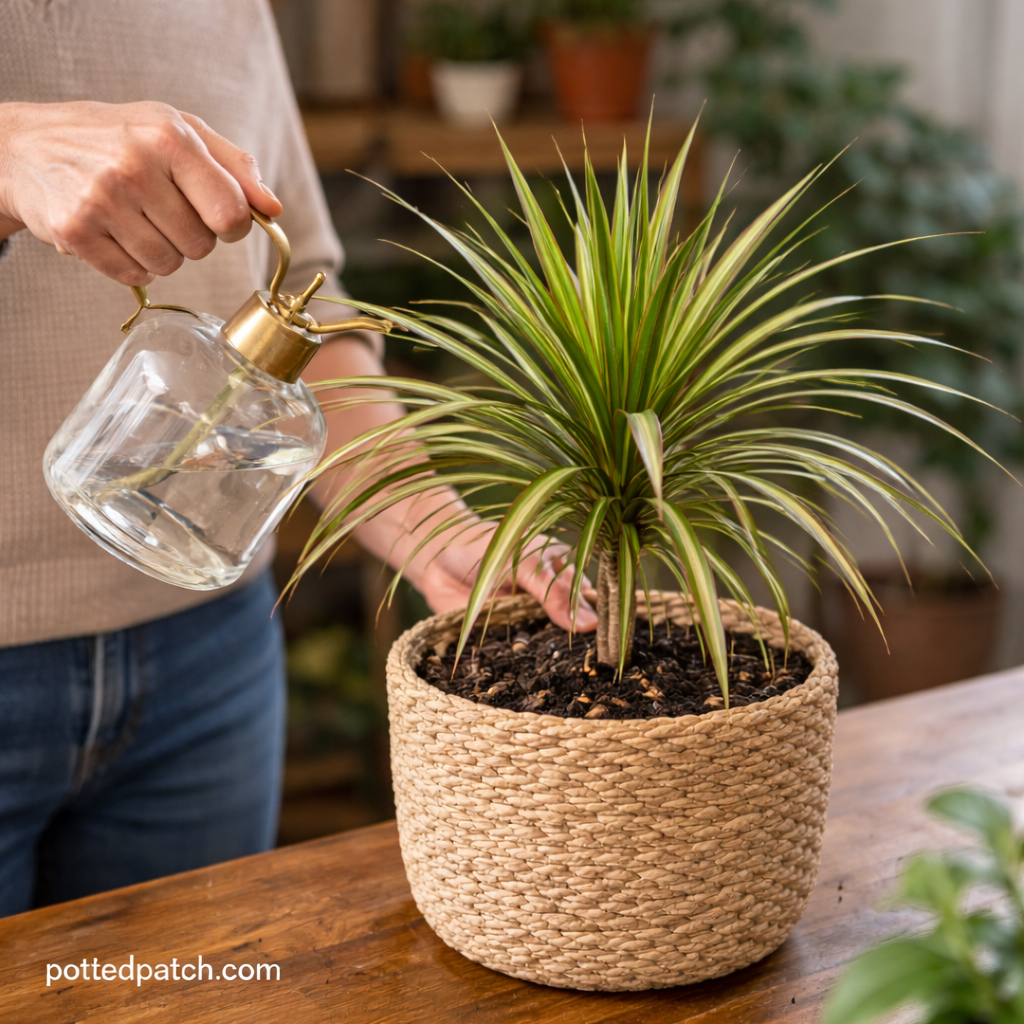
Overwatering is the most common issue with dracaena plants.
They prefer soil that dries slightly between waterings.
How to Water Properly
- Check the top 1–2 inches of soil.
- Water only when it feels dry.
- Water thoroughly until it drains out.
- Empty the saucer after 10–15 minutes.
Dracaenas are sensitive to excess moisture, so never let them sit in standing water.
Tip: Watch for Fluoride Sensitivity
Dracaenas can be sensitive to fluoride and salts found in tap water.
If you notice brown leaf tips, try:
- Using distilled water
- Letting tap water sit overnight before using
- Flushing soil occasionally to remove salt buildup
Soil and Drainage
Dracaenas need well-draining soil to prevent root rot.
Use:
- Standard indoor potting mix
- Add perlite or pumice for extra drainage
- Always use pots with drainage holes
Heavy or compacted soil increases the risk of root problems.
Temperature and Humidity
Dracaenas prefer normal indoor temperatures:
- 65–80°F is ideal
Keep them away from:
- Cold drafts
- Air conditioning vents
- Heating vents
They tolerate average household humidity but appreciate slightly higher levels.
If tips are browning, consider:
- A pebble tray
- Occasional misting
- A humidifier nearby
Fertilizing
Dracaenas are light feeders.
Feeding Schedule
- Spring through summer: Feed once a month
- Fall and winter: Pause or reduce feeding
Use a balanced liquid houseplant fertilizer diluted to half strength.
Overfertilizing can cause leaf tip burn.
Pruning and Maintenance
Pruning helps maintain shape and encourages branching.
What to Trim
- Yellow or damaged leaves
- Leggy stems
- Brown leaf tips (trim just the tip, not into green tissue)
You can also cut back tall stems to control height. New growth will emerge below the cut.
Repotting
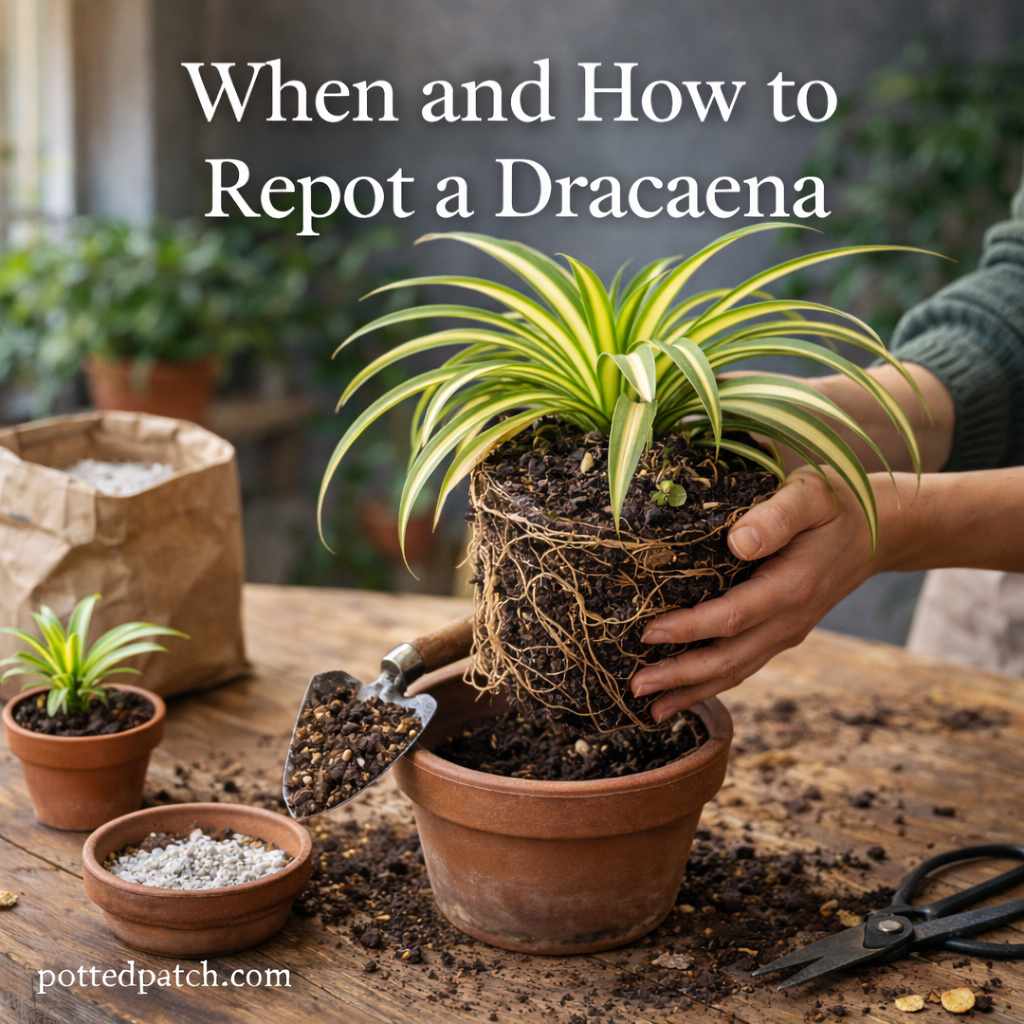
Dracaenas don’t need frequent repotting.
Repot every 2–3 years or when:
- Roots grow out of drainage holes
- Water runs straight through the pot
- Growth has slowed significantly
Choose a pot only 1–2 inches larger than the current one.
Common Problems and Fixes
Brown Leaf Tips
- Low humidity
- Fluoride or salt buildup
- Overfertilizing
Yellow Leaves
- Overwatering
- Poor drainage
Drooping Leaves
- Underwatering
- Sudden temperature change
Soft, Mushy Base
- Root rot from overwatering
Most issues are solved by adjusting watering habits.
Seasonal Care Tips
Spring & Summer
- Increase watering slightly
- Begin monthly feeding
- Rotate plant for even growth
Fall & Winter
- Reduce watering
- Stop fertilizing
- Protect from cold drafts
Dracaenas grow slower in winter, so less water is needed.
Final Thoughts
Dracaena plants are excellent indoor companions because they’re adaptable, attractive, and forgiving.
To keep your dracaena healthy indoors:
- Provide bright, indirect light
- Let soil dry slightly between waterings
- Avoid overwatering
- Use well-draining soil
- Fertilize lightly during growing season
With steady care and proper watering habits, your dracaena can thrive indoors for years and become a beautiful focal point in your space.