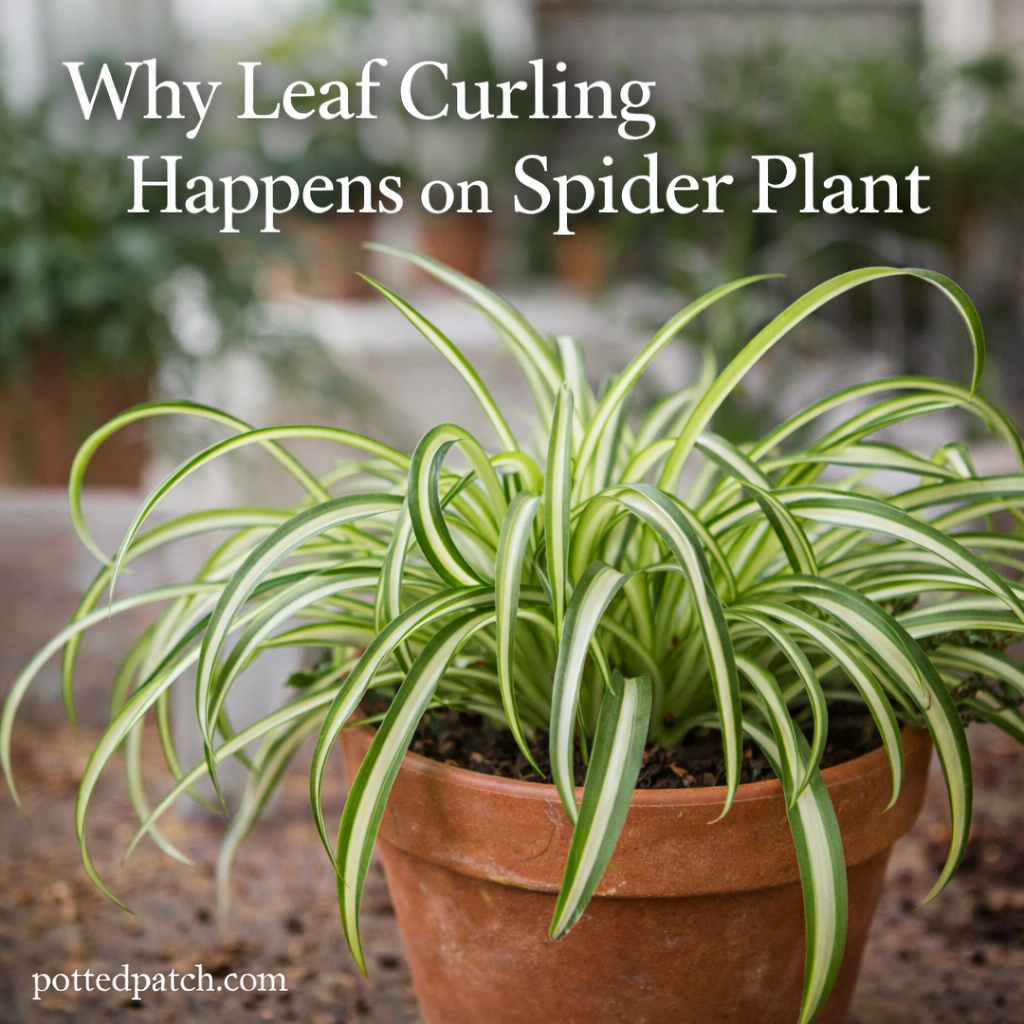
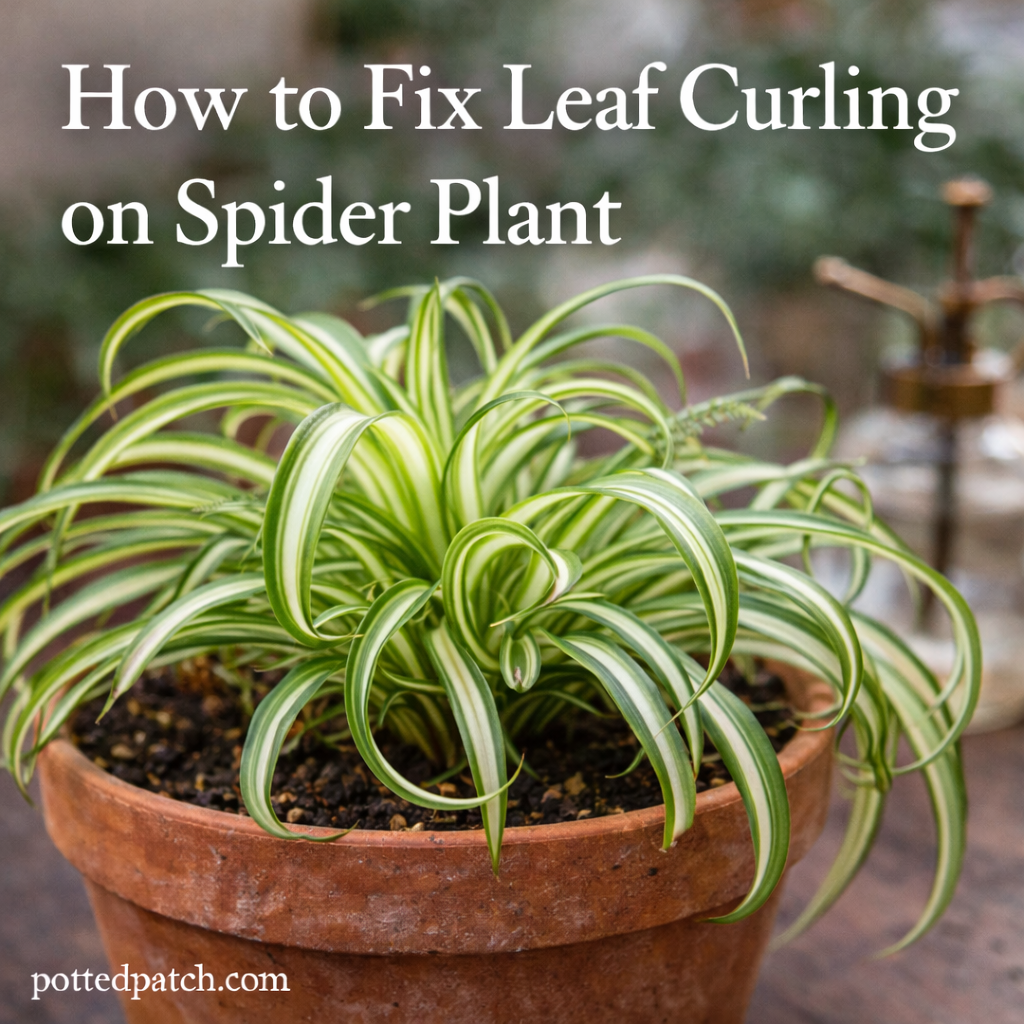
Spider plants are known for their graceful, arching green-and-white leaves. When those leaves begin curling inward, twisting, or crisping at the tips, it’s a sign something in the environment needs adjustment.
The good news? Leaf curling on a spider plant is usually easy to fix once you identify the cause.
This guide walks you through exactly how to diagnose and correct curling leaves so your plant can return to smooth, healthy growth.
Step 1: Check Soil Moisture First
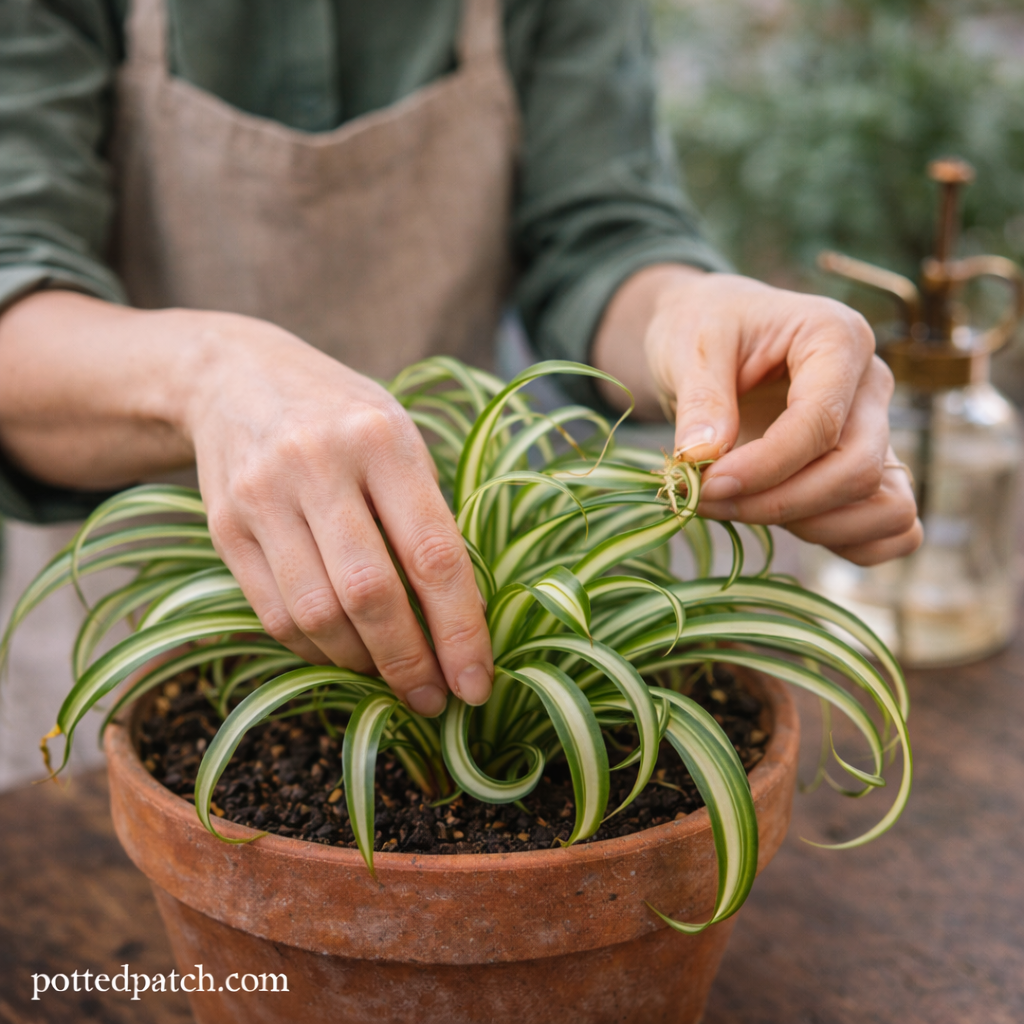
Watering issues are the most common reason for curling leaves.
If the Soil Is Bone Dry
Underwatering causes leaves to curl inward to conserve moisture.
Fix:
- Water thoroughly until excess drains out.
- Let the top 1–2 inches dry before watering again.
- Maintain consistent watering moving forward.
Avoid letting the soil dry out completely for extended periods.
If the Soil Is Soggy
Overwatering stresses the roots, which can also lead to curling.
Fix:
- Allow soil to partially dry before the next watering.
- Ensure your pot has drainage holes.
- Improve soil drainage with added perlite.
- Repot if roots show signs of rot.
Spider plants prefer evenly moist soil — not dry, not swampy.
Step 2: Improve Humidity
Dry indoor air is another major cause of leaf curling, especially in winter.
Signs Humidity Is Too Low
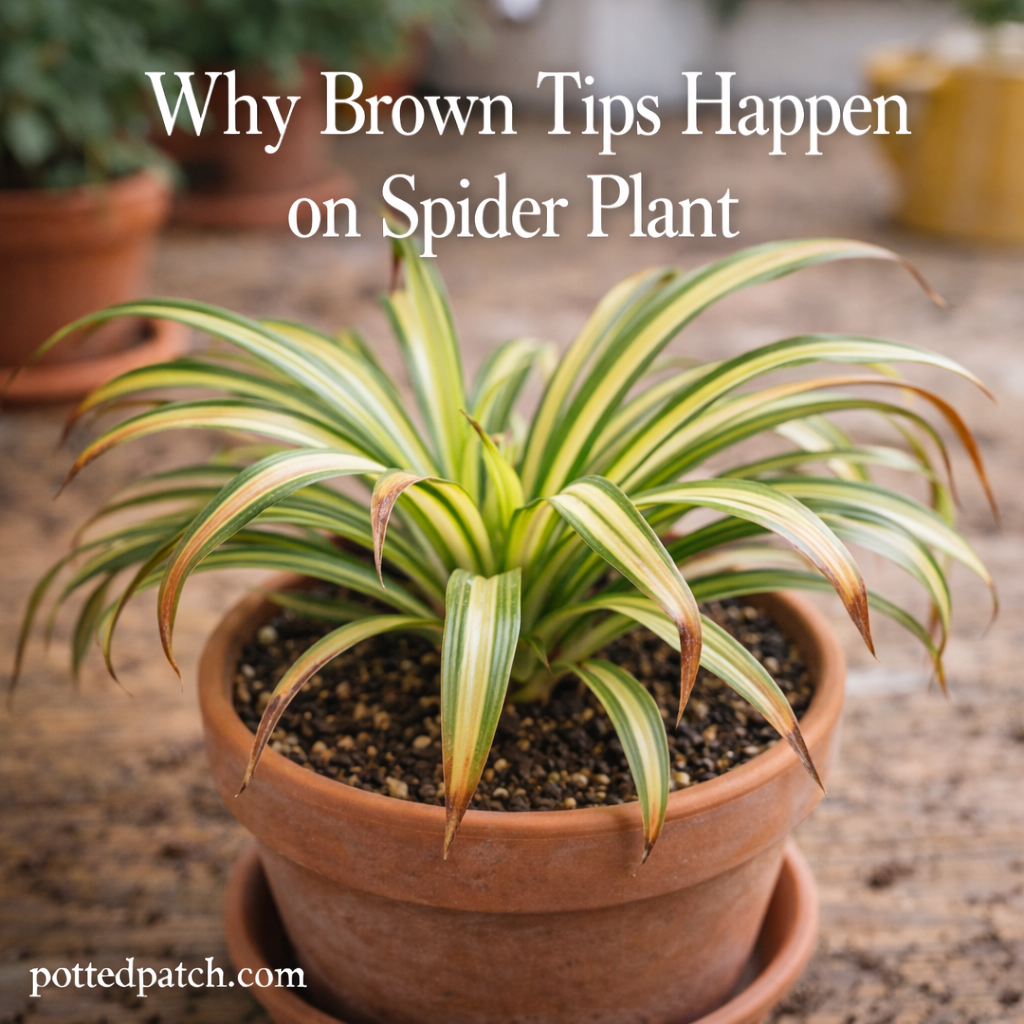
- Brown, curled tips
- Crispy edges
- Curling mostly at the ends
Fix:
- Use a humidifier nearby.
- Group plants together.
- Place a pebble tray under the pot.
- Keep away from heating or air vents.
Moderate humidity helps keep leaves supple.
Step 3: Flush Out Mineral Buildup
Spider plants are sensitive to fluoride and salt buildup from tap water.
Over time, minerals accumulate in soil and damage leaf tips, causing curling and browning.
How to Fix Mineral Buildup
- Flush the soil thoroughly with distilled or filtered water.
- Allow excess water to drain completely.
- Consider repotting if buildup is severe.
- Switch to distilled or rainwater for regular watering.
If you notice a white crust on the soil surface, flushing is especially important.
Step 4: Adjust Light Exposure
Too much direct sun can scorch leaves and trigger curling.
Spider plants prefer bright, indirect light.
Fix Lighting Problems
- Move plant slightly away from direct sunlight.
- Use sheer curtains to diffuse strong light.
- Avoid placing in deep shade for long periods.
Balanced light encourages even, upright growth.
Step 5: Check for Pests
Although less common, spider mites can cause curling and distortion.
Signs of Spider Mites
- Fine webbing
- Speckled leaves
- Dusty appearance
Fix:
- Wipe leaves with a damp cloth.
- Rinse under lukewarm water.
- Use insecticidal soap if needed.
Address pest issues early to prevent spreading.
Can Curled Leaves Recover?
Mild curling often improves once conditions are corrected.
However:
- Severely crispy tips may not straighten.
- Damaged sections can be trimmed for appearance.
- New growth should emerge healthy once the issue is resolved.
Focus on improving overall care rather than trying to “reshape” existing leaves.
Quick Troubleshooting Checklist
If you want a fast action plan:
- Check soil moisture.
- Improve humidity.
- Flush soil if needed.
- Adjust light placement.
- Inspect for pests.
Most plants show improvement within 1–2 weeks.
Preventing Leaf Curling in the Future
To keep your spider plant healthy:
- Water consistently
- Use well-draining soil
- Avoid harsh direct sun
- Use filtered or distilled water
- Repot every 1–2 years
Spider plants are resilient. Once their environment stabilizes, they quickly return to their graceful, cascading shape.
Final Thoughts
Leaf curling on a spider plant is usually a minor environmental imbalance — not a serious disease. By correcting watering, humidity, lighting, or mineral buildup issues, you can restore healthy growth and prevent future problems.
Small adjustments often make a big difference.