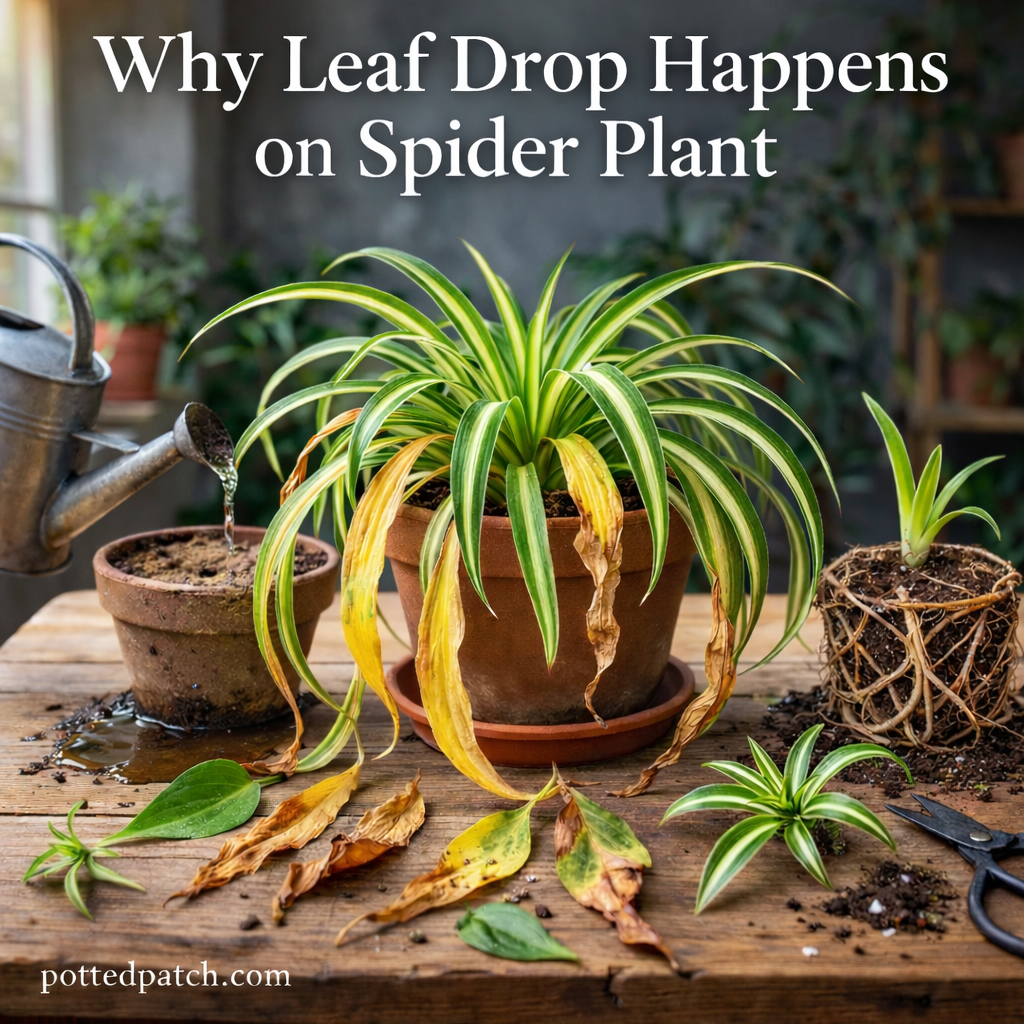
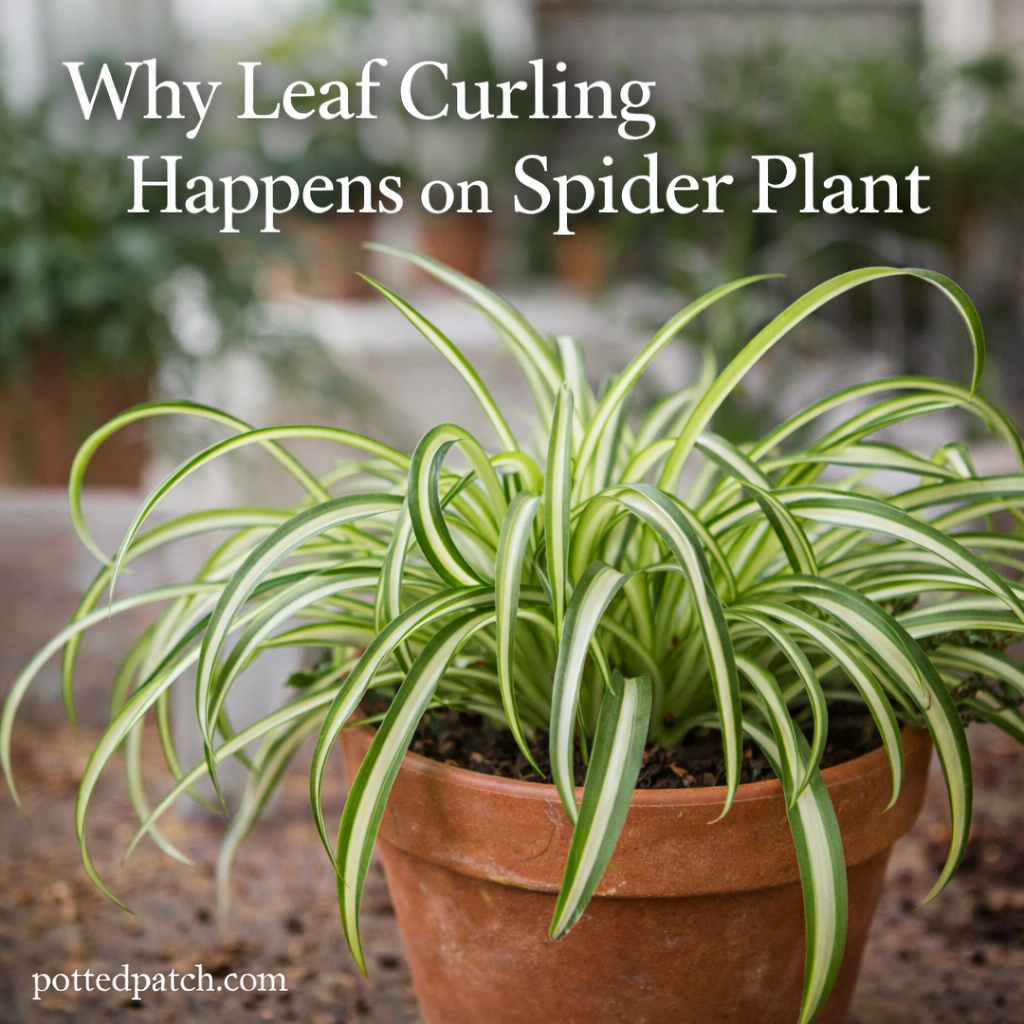
Spider plants are known for their long, arching green-and-white leaves. When those leaves begin curling inward, twisting, or folding, it’s a clear sign something isn’t quite right.
Leaf curling on a spider plant is usually caused by environmental stress — and the good news is that most causes are easy to fix.
In this guide, you’ll learn why spider plant leaves curl, how to identify the exact problem, and what to do to restore healthy, smooth growth.
What Does Leaf Curling Look Like?
Leaf curling can appear as:
- Leaves folding inward lengthwise
- Tips curling downward or upward
- Twisting or spiraling growth
- Dry, crispy edges along curled sections
Sometimes curling happens alongside browning or yellowing. Other times, the leaves are still green but visibly distorted.
The pattern helps identify the cause.
1. Underwatering
The most common cause of leaf curling is inconsistent watering.
When a spider plant becomes too dry, it tries to conserve moisture. The leaves curl inward to reduce surface area and limit water loss.
Signs It’s Underwatered
- Soil completely dry
- Lightweight pot
- Slightly crispy leaf edges
- Drooping combined with curling
How to Fix It
- Water thoroughly until excess drains out.
- Allow the top 1–2 inches to dry before watering again.
- Maintain a consistent schedule.
Avoid letting the soil go bone dry repeatedly.
2. Low Humidity
Spider plants prefer moderate humidity. Dry indoor air — especially during winter — can cause leaf tips to curl and crisp.
Signs of Low Humidity
- Brown, curled tips
- Curling primarily at leaf ends
- Otherwise healthy green color
How to Fix It
- Increase humidity with a humidifier
- Group plants together
- Place a pebble tray under the pot
- Keep away from heating vents
3. Fluoride or Salt Buildup
Spider plants are sensitive to chemicals found in tap water.
Fluoride and mineral salts can accumulate in soil, leading to tip burn and curling.
Signs of Chemical Sensitivity
- Brown, dry leaf tips
- Curling near the ends
- White crust on soil surface
How to Fix It
- Use distilled or filtered water
- Flush soil thoroughly every few months
- Repot with fresh soil if buildup is severe
4. Overwatering
Too much water can also stress the plant.
When roots sit in soggy soil, they struggle to absorb nutrients and oxygen, leading to curling or distorted leaves.
Signs of Overwatering
- Yellowing leaves
- Soft stems
- Soil that stays wet for days
- Mushy roots
Solution
- Allow soil to partially dry
- Improve drainage
- Repot if necessary
5. Too Much Direct Sunlight
Spider plants prefer bright, indirect light.
Direct sun can scorch leaves, causing them to curl as protection against light stress.
Signs of Light Stress
- Faded or bleached patches
- Crispy edges
- Curling on side facing the window
Move the plant slightly away from direct sun exposure.
6. Pest Damage
Though less common, pests like spider mites can cause curling.
Signs of Pests
- Tiny webbing
- Speckled leaves
- Fine dust-like residue
Wipe leaves with a damp cloth and treat with insecticidal soap if needed.
How to Diagnose the Exact Cause
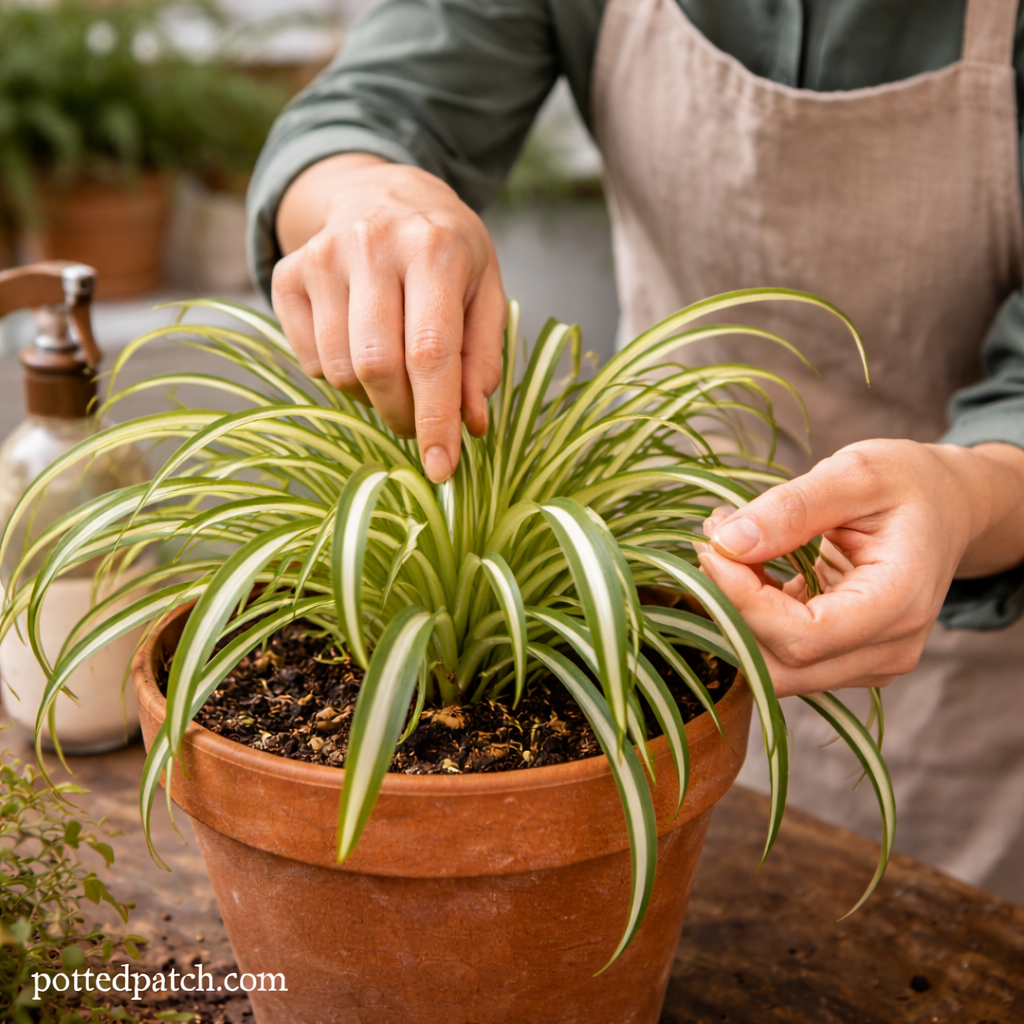
Use this quick checklist:
- Check soil moisture.
- Inspect leaf tips for browning.
- Examine light exposure.
- Look for white salt crust on soil.
- Inspect for pests.
Correcting the right issue leads to visible improvement within 1–2 weeks.
Can Curled Leaves Straighten Out?
Mild curling from watering or humidity issues often improves.
However, severely damaged or crispy leaves may not return to their original shape. New growth will reflect healthier conditions once the problem is corrected.
You can trim damaged tips for appearance, but avoid removing too much healthy foliage at once.
Preventing Future Leaf Curling
To keep your spider plant’s leaves smooth and arching:
- Water consistently
- Use filtered or distilled water
- Provide bright, indirect light
- Maintain moderate humidity
- Repot every 1–2 years
Healthy spider plants are resilient and recover quickly when given stable care.
Final Thoughts
Leaf curling on a spider plant is usually a small environmental imbalance — not a serious disease. Most often, it’s related to watering, humidity, or mineral buildup.
Check the basics first. With a few simple adjustments, your spider plant should return to its graceful, cascading form.