

Ferns are known for their soft, feathery fronds — but those delicate leaves are sensitive to light.
Too much sun can scorch them.
Too little light can cause weak, sparse growth.
So what are the best light conditions for a fern indoors?
Here’s exactly how to position and manage light so your fern stays lush and healthy.
Do Ferns Need Direct Sunlight?
No.
Most indoor ferns prefer bright, indirect light.
In their natural habitat, ferns grow under tree canopies where sunlight is filtered and gentle.
Direct sun — especially afternoon sun — can cause:
- Brown or crispy leaf edges
- Faded color
- Dry, brittle fronds
Filtered light is ideal.
What Is Bright, Indirect Light?
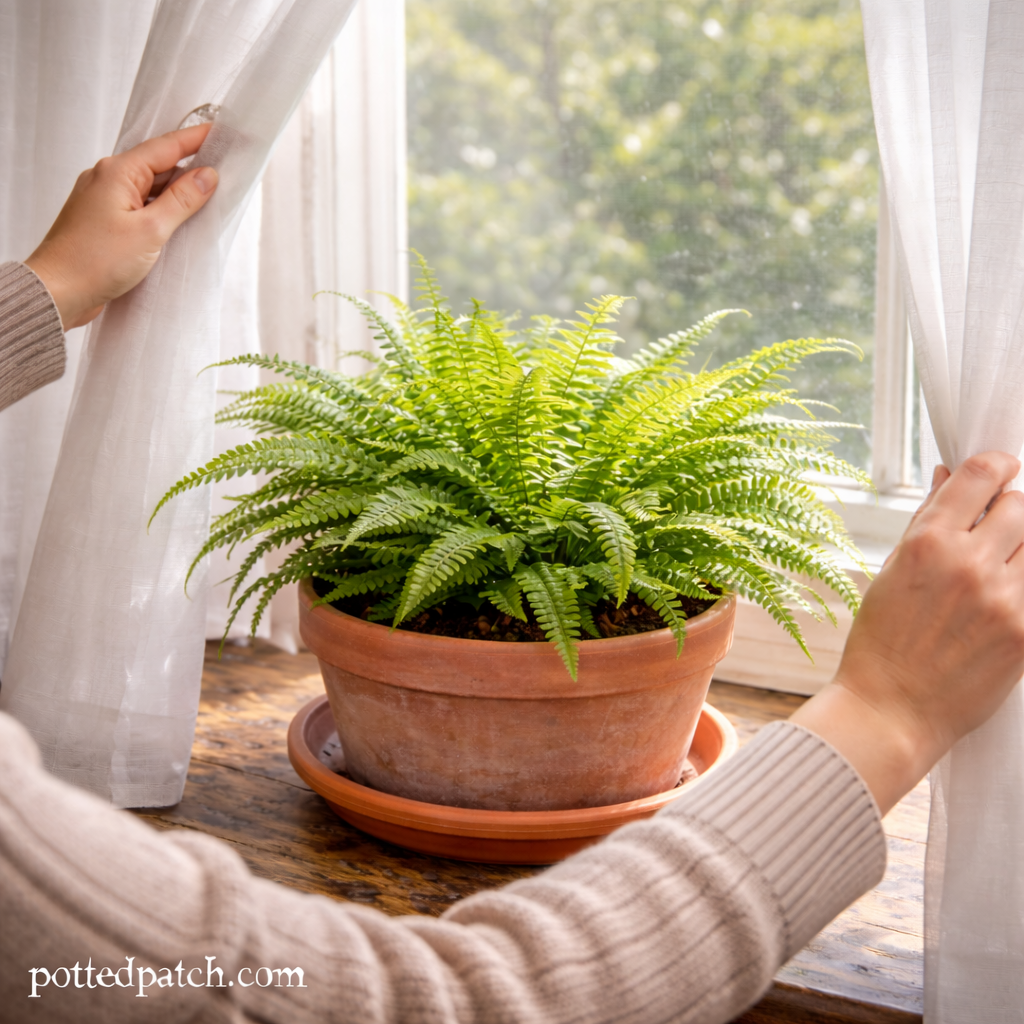
Bright, indirect light means:
- The room feels bright during the day
- Sunlight does not hit the leaves directly
- The plant receives diffused or reflected light
Think of placing your fern:
- Near a window but not directly in the sunbeam
- A few feet back from a south-facing window
- Behind sheer curtains
Best Window Directions for Ferns
North-Facing Windows
- Gentle, consistent light
- Ideal for most fern varieties
East-Facing Windows
- Soft morning sun
- Usually safe and beneficial
South-Facing Windows
- Bright but often too intense
- Keep fern several feet back or use sheer curtains
West-Facing Windows
- Harsh afternoon sun
- Filter light carefully to prevent scorch
North and east windows are generally the safest options.
Signs Your Fern Isn’t Getting Enough Light
Low light can cause subtle changes.
Look for:
- Slower growth
- Pale or dull green color
- Thin, stretched fronds
- Sparse appearance
If growth stalls completely, increase brightness gradually.
Signs of Too Much Light
Excess light shows up quickly.
Watch for:
- Brown, crispy tips
- Yellow patches
- Dry, brittle fronds
- Soil drying out very quickly
If this happens, move the fern farther from the window.
Can Ferns Grow in Low Light?
Some varieties tolerate lower light better than others.
Ferns can survive in moderate to low light, but they won’t thrive.
For best results:
- Provide consistent brightness
- Avoid dark corners
- Rotate occasionally for even growth
Healthy light equals fuller fronds.
Using Grow Lights for Ferns
If your home lacks natural light, grow lights are a great solution.
Grow Light Tips
- Use full-spectrum LED lights
- Place 12–18 inches above the plant
- Provide 10–12 hours of light daily
Grow lights help maintain vibrant color and steady growth.
Light and Humidity Go Together
Bright light increases evaporation.
If your fern receives more light, it may need:
- More frequent watering
- Higher humidity
Always monitor soil moisture after adjusting light conditions.
Seasonal Light Changes
Light shifts throughout the year.
In winter:
- Days are shorter
- Light intensity drops
You may need to:
- Move the fern closer to the window
- Supplement with grow lights
In summer, move slightly back if light becomes too intense.
Quick Light Placement Checklist
For healthy fern growth:
- Bright, indirect light
- No harsh afternoon sun
- North or east windows preferred
- Sheer curtains for strong exposures
- Rotate occasionally
Consistency matters more than perfection.
Final Thoughts
The best light conditions for a fern mimic a forest floor: bright, filtered, and gentle.
Avoid direct sun, provide consistent brightness, and adjust with the seasons.
When your fern gets the right light, you’ll notice:
- Lush, vibrant fronds
- Steady growth
- Fewer brown edges
Dial in the light, and your fern will reward you with beautiful, soft greenery year-round.