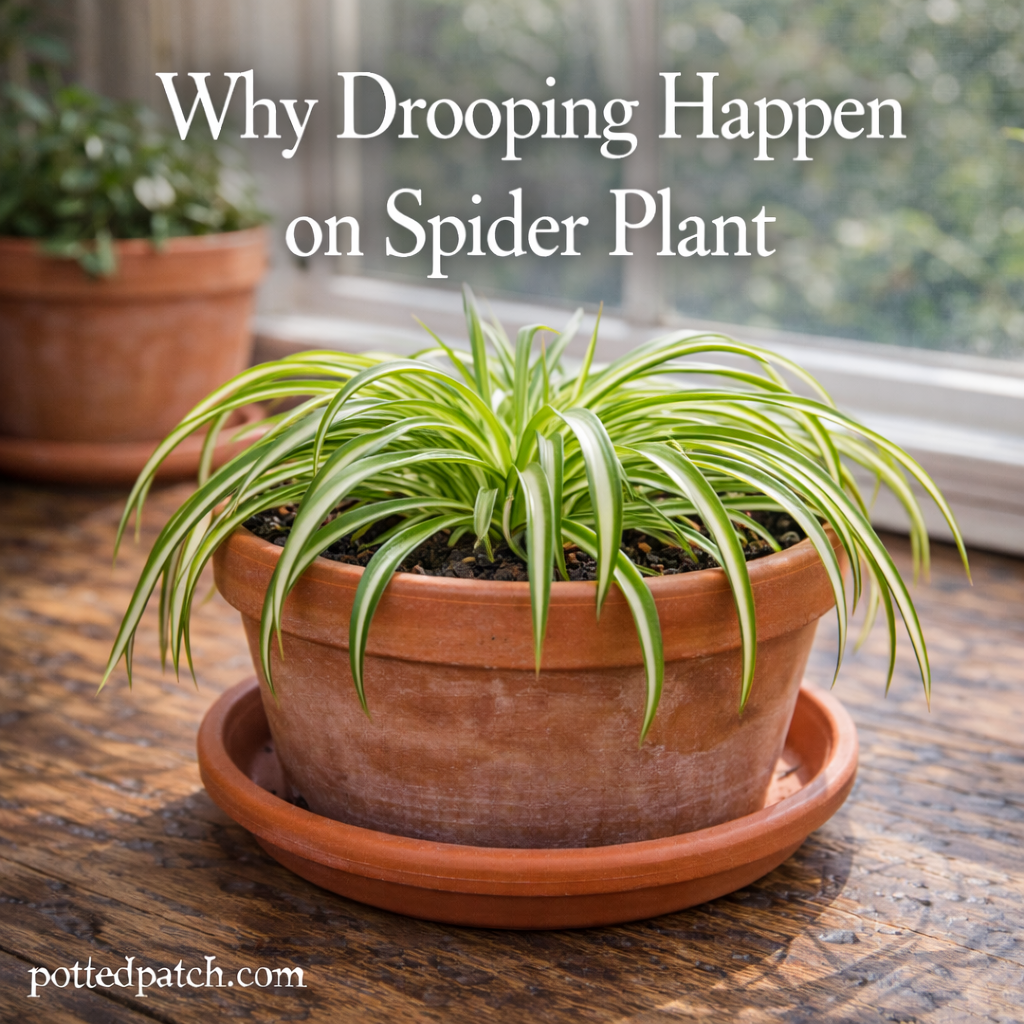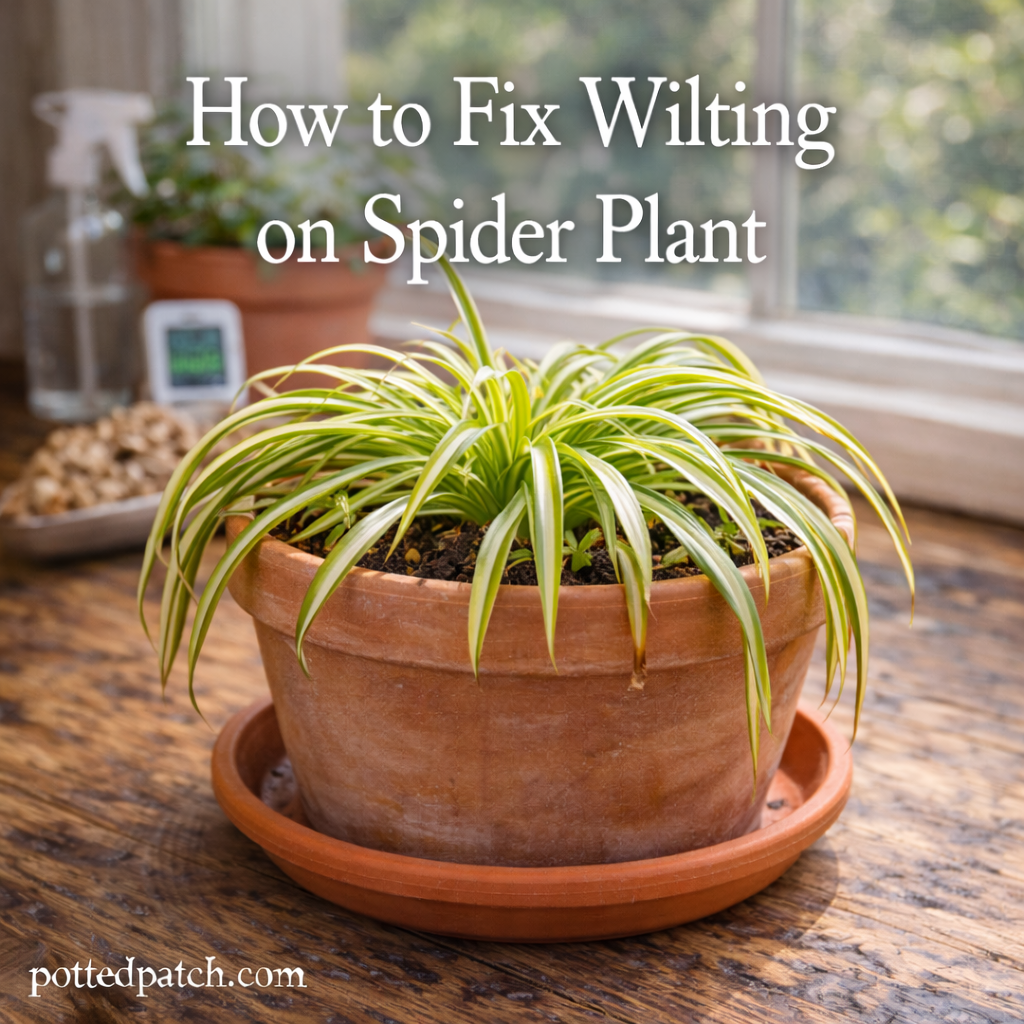
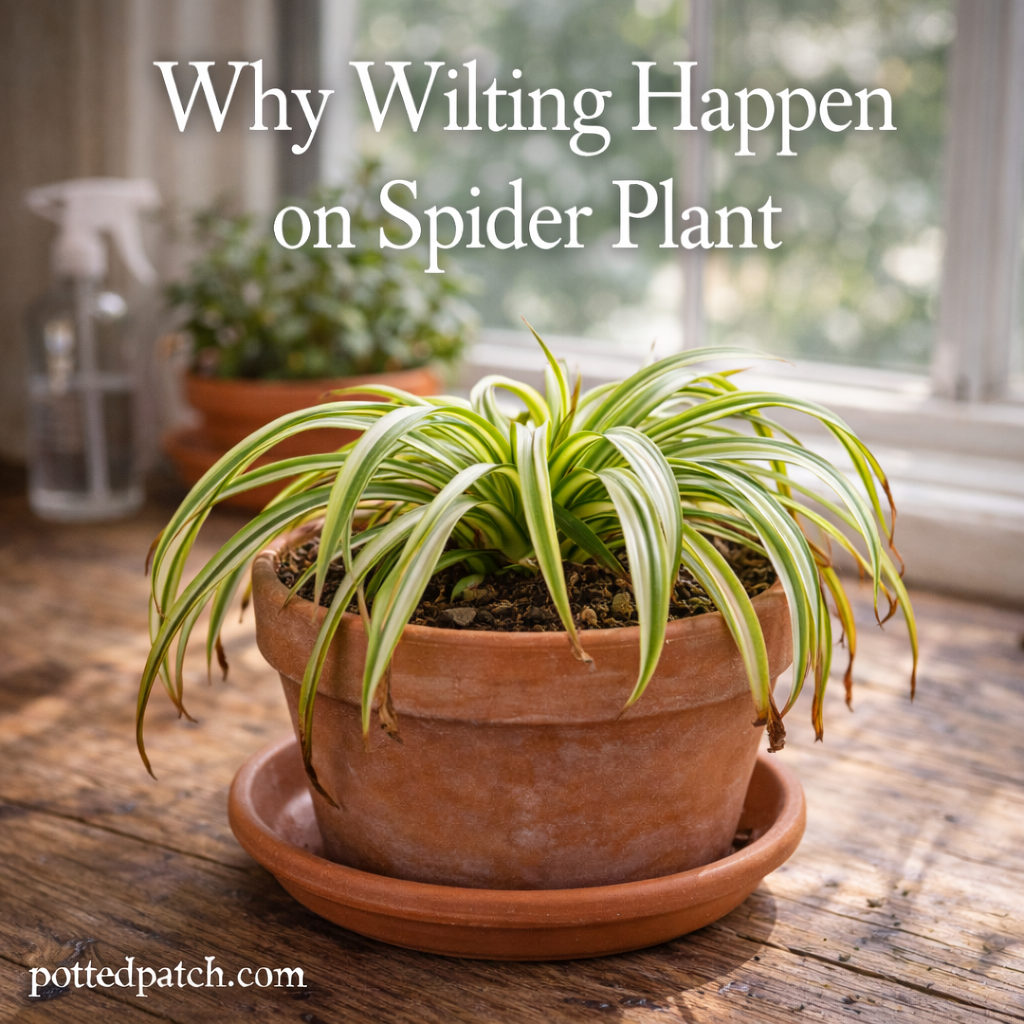
A wilting spider plant can look dramatic — drooping leaves, limp stems, and an overall tired appearance.
The good news?
Wilting is usually a temporary stress response, not permanent damage.
In this guide, you’ll learn why spider plants wilt, how to identify the exact cause, and what to do to fix it quickly.
Is Wilting Always Serious?
Not always.
Spider plants are resilient. Wilting is often their way of signaling:
- Thirst
- Overwatering
- Temperature stress
- Root issues
The key is identifying which type of stress is happening.
1. Underwatering (Most Common Cause)
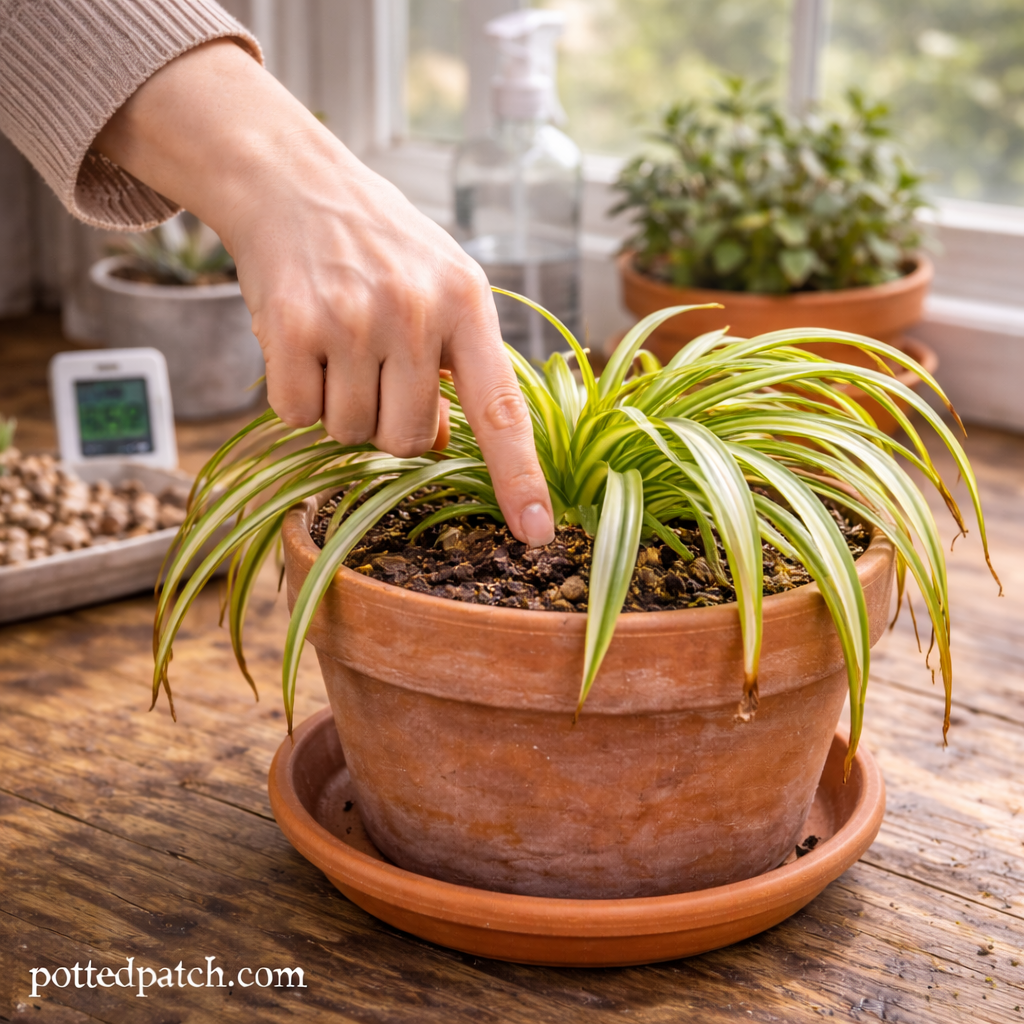
Spider plants wilt quickly when the soil becomes too dry.
Their leaves lose firmness and droop dramatically.
Signs of Underwatering
- Soil is dry and pulling away from the pot
- Pot feels very lightweight
- Leaves feel thin or slightly crispy
How to Fix It
- Water thoroughly until excess drains out
- Allow water to fully drain
- Resume a consistent watering routine
Most underwatered spider plants perk up within hours.
2. Overwatering
Surprisingly, too much water can also cause wilting.
When roots sit in soggy soil, they can’t absorb oxygen properly.
Signs of Overwatering
- Soil feels wet or soggy
- Leaves are limp but not crispy
- Yellowing leaves may appear
- Musty smell from soil
How to Fix It
- Stop watering immediately
- Let soil dry out completely
- Ensure pot has drainage holes
- Repot if root rot is present
Wilting from overwatering often takes longer to recover.
3. Root Bound Stress
Spider plants grow quickly and often outgrow their pots.
When roots are tightly packed, water absorption becomes uneven.
Signs of Being Root Bound
- Roots circling the bottom
- Water drains too quickly
- Stunted growth
- Wilting even after watering
Solution
- Repot into a container 1–2 inches larger
- Refresh with new soil
Giving roots room can restore firmness.
4. Temperature Stress
Spider plants prefer moderate indoor temperatures.
Extreme heat or cold can cause sudden wilting.
Ideal Temperature Range
- 60–80°F
Avoid:
- Cold drafts
- Heating vents
- Direct blasts of air conditioning
Stabilizing the environment usually corrects drooping.
5. Transplant Shock
If you recently repotted or moved your spider plant, temporary wilting can occur.
This is common after:
- Repotting
- Dividing the plant
- Changing light conditions
What to Do
- Keep soil lightly moist
- Maintain consistent light
- Avoid fertilizing for a few weeks
Most plants recover within 1–2 weeks.
6. Poor Drainage
Even if watering seems correct, poor drainage can suffocate roots.
Drainage Warning Signs
- Water pooling in saucer
- Compact soil
- Roots staying wet for days
Switching to well-draining soil often resolves the issue.
How Long Does It Take to Recover?
Recovery depends on the cause:
- Underwatering: Often within hours
- Overwatering: Several days to weeks
- Root issues: 1–3 weeks
- Temperature stress: Within days
New growth is a good sign that recovery is underway.
When to Be Concerned
Wilting becomes serious if you notice:
- Black or mushy roots
- Foul-smelling soil
- Rapid yellowing
- Leaf drop
In these cases, inspect the root system immediately.
Quick Wilting Checklist
If your spider plant is drooping, check:
- Soil moisture
- Drainage holes
- Root crowding
- Temperature exposure
- Recent environmental changes
Start with soil — it’s usually the answer.
Final Thoughts
Wilting on a spider plant is usually reversible.
In most cases, it’s either too little water or too much.
Once you correct the root cause, your plant should regain its upright, vibrant appearance.
Spider plants are forgiving — they just need consistent care.