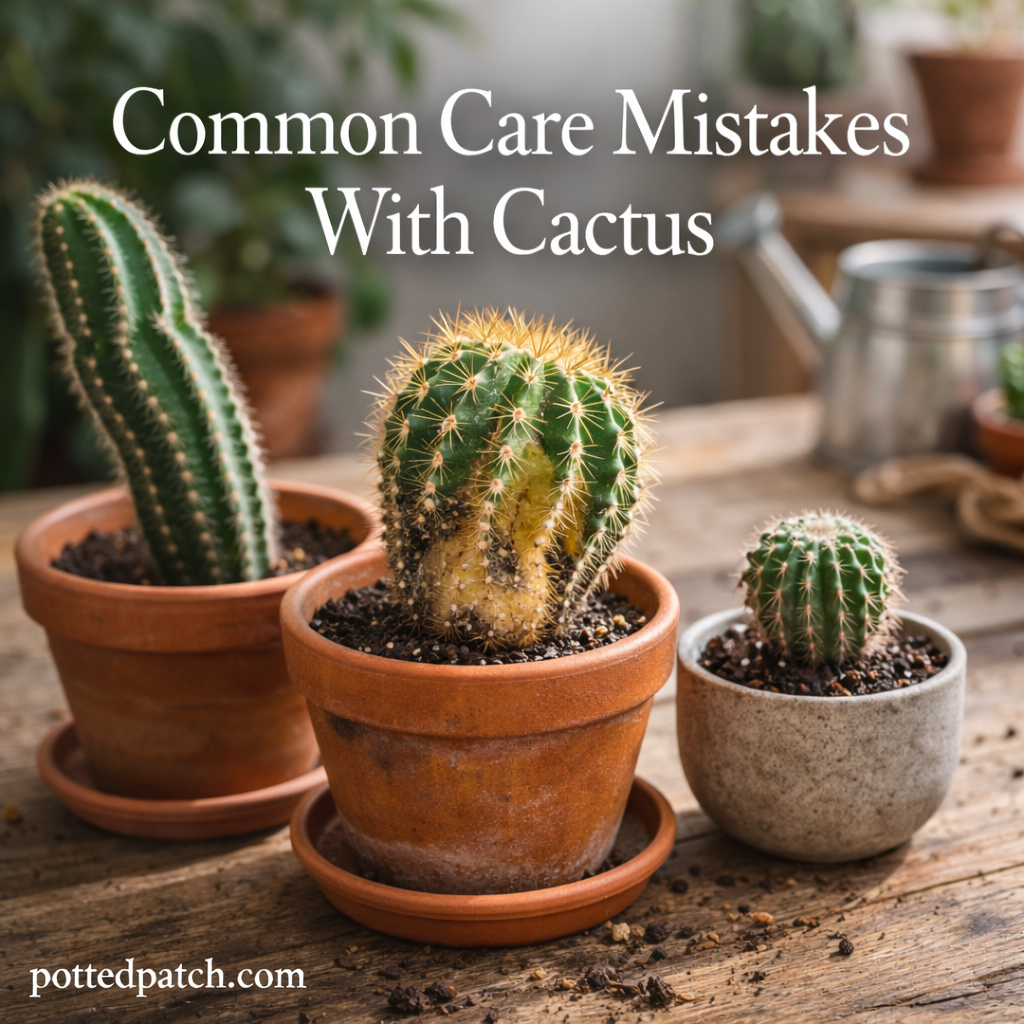
Cacti are often labeled as “impossible to kill.”
But in reality, most cactus problems come from a handful of simple care mistakes.
If your cactus is shrinking, turning yellow, leaning, or becoming soft, chances are one of these common errors is the cause.
Let’s break down the biggest cactus care mistakes — and how to avoid them.
1. Overwatering
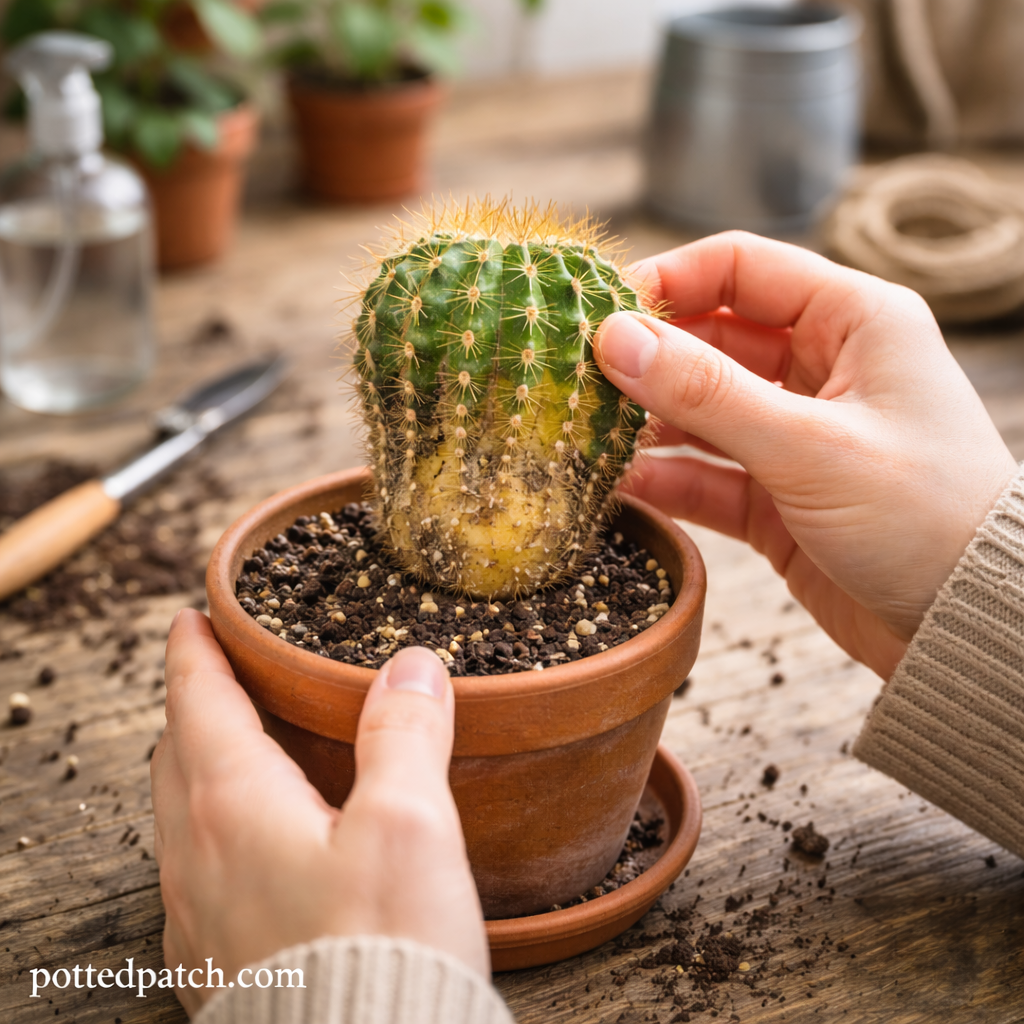
This is by far the most common mistake.
Cacti are desert plants. They store water in their stems and do not need frequent watering.
What Happens When You Overwater
- Roots suffocate
- Root rot develops
- The base becomes soft or mushy
- Yellowing or browning appears
How to Avoid It
- Water only when soil is completely dry
- Always use a pot with drainage holes
- Empty the saucer after watering
- Reduce watering in winter
When in doubt, underwater rather than overwater.
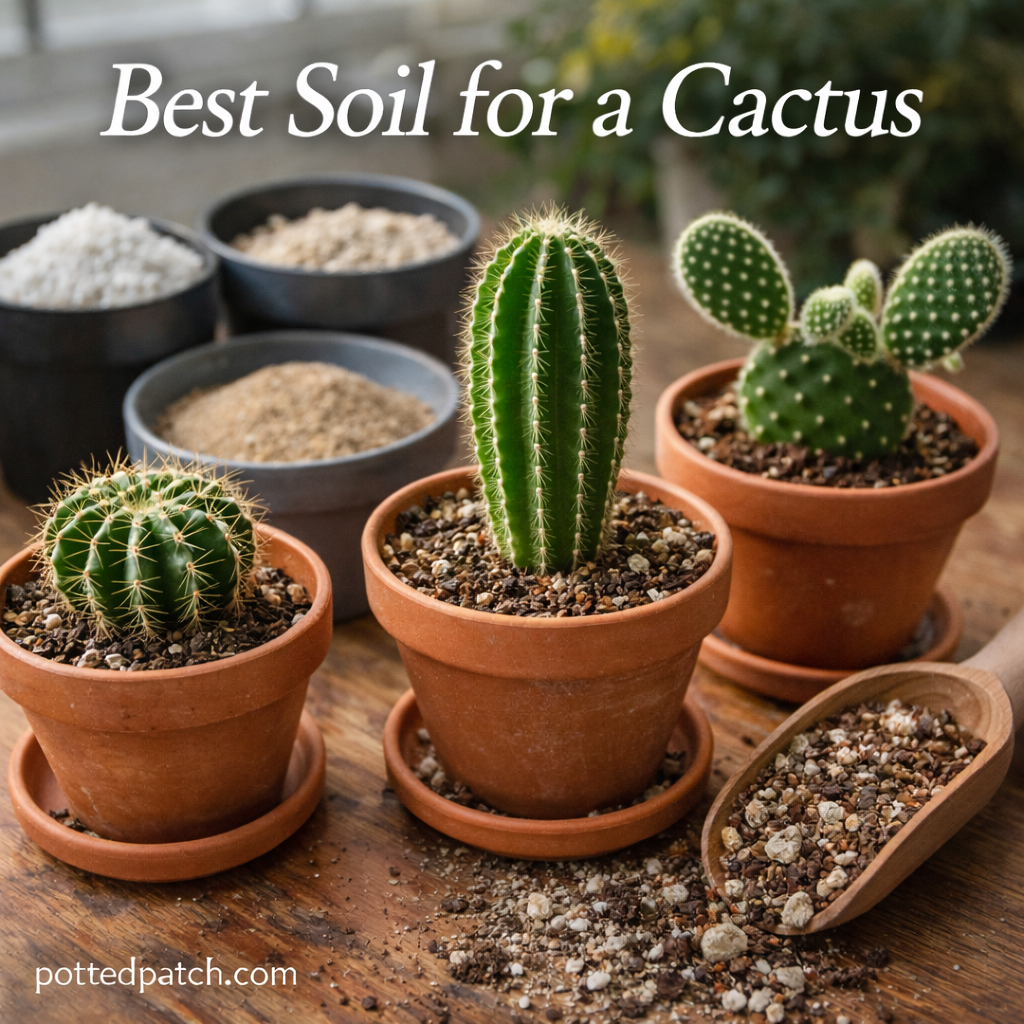
2. Using Regular Potting Soil
Standard houseplant soil holds too much moisture.
Cactus roots need fast drainage and airflow.
Better Option
Use a cactus or succulent mix that includes:
- Sand
- Perlite
- Pumice
- Small gravel
If soil stays wet longer than a few days, it’s too dense.
3. Choosing the Wrong Pot
The container matters more than most people realize.
Common Pot Mistakes
- No drainage holes
- Oversized pots
- Decorative pots without airflow
Oversized pots trap excess moisture and increase rot risk.
Best Choice
- Terracotta pots (they breathe and dry faster)
- Only 1–2 inches larger than the root ball
4. Watering on a Schedule
Cacti don’t follow a strict weekly watering routine.
Watering every Saturday “just because” can quickly lead to root problems.
What to Do Instead
- Check soil dryness with your finger
- Adjust watering based on season
- Water more in spring/summer
- Water far less in fall/winter
Let the plant guide you — not the calendar.
5. Not Giving Enough Light
Cacti love bright light.
Insufficient light leads to:
- Pale color
- Stretching (etiolation)
- Leaning toward the window
- Weak, thin growth
Solution
- Place near a bright south- or west-facing window
- Supplement with grow lights if needed
Most indoor cactus struggles are actually light-related.
6. Moving the Cactus Too Often
Cacti prefer stability.
Constantly relocating them between rooms or light conditions causes stress.
Stress can result in:
- Yellowing
- Dropping segments
- Stalled growth
Find a bright spot and keep it consistent.
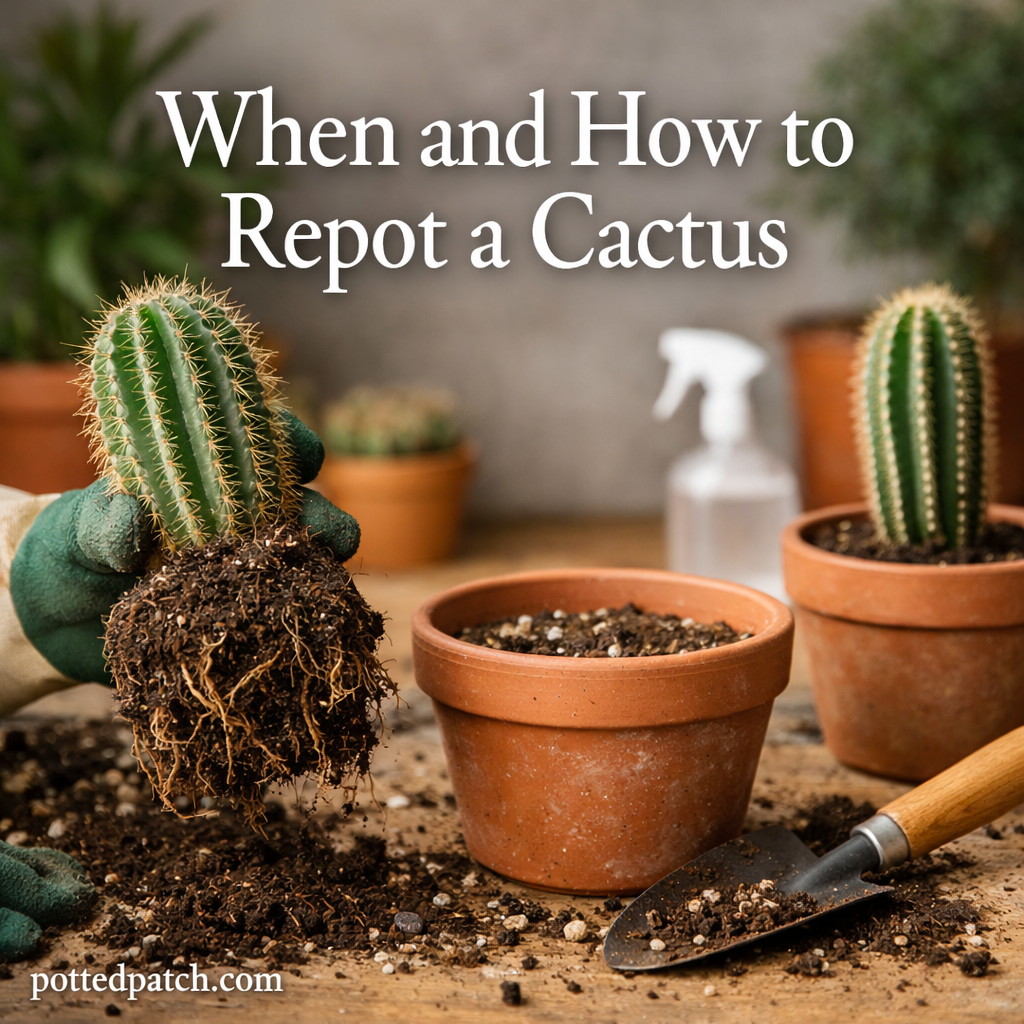
7. Watering Immediately After Repotting
Repotting stresses the roots.
Watering too soon can introduce bacteria into fresh root wounds.
Best Practice
- Wait 5–7 days after repotting
- Allow small root injuries to callous
- Then resume watering
This significantly reduces rot risk.
8. Ignoring Seasonal Dormancy
Many cacti go semi-dormant in fall and winter.
During this time:
- Growth slows
- Water needs drop dramatically
- Fertilizer isn’t necessary
Continuing summer-level care in winter often leads to rot.
9. Fertilizing Too Frequently
More fertilizer does not equal faster growth.
Over-fertilizing can cause:
- Salt buildup
- Root burn
- Yellowing or browning
Safe Fertilizing Tips
- Feed during active growing season only
- Use diluted cactus fertilizer
- Fertilize once monthly in spring/summer
Skip feeding entirely during dormancy.
10. Panicking Over Minor Cosmetic Issues
Not every mark means disaster.
Normal issues include:
- Corking (woody base texture)
- Slight wrinkling before watering
- Occasional lower leaf yellowing
Understanding what’s normal prevents overcorrecting care.
Quick Checklist to Keep Your Cactus Healthy
- Bright light
- Fast-draining soil
- Pot with drainage
- Water only when dry
- Minimal winter watering
- Light, occasional feeding
Simple care leads to long-term success.
Final Thoughts
Cacti don’t fail because they’re fragile.
They fail because we treat them like tropical houseplants.
Most problems trace back to:
- Too much water
- Not enough light
- Poor drainage
Fix those three areas, and your cactus will likely thrive for years — even decades.