
Soft, mushy stems on a peace lily are a warning sign — not just a cosmetic issue.
In most cases, soft stems mean the roots are struggling. The problem is usually excess moisture, poor drainage, or root rot. If you act quickly, your plant can often recover.
This guide walks you step-by-step through diagnosing and fixing soft stems on a peace lily.
Why Peace Lily Stems Turn Soft
Peace lilies prefer consistently moist soil, but they cannot tolerate soggy conditions.
When roots sit in water too long:
- Oxygen can’t reach them
- Roots begin to decay
- Rot spreads upward
- Stems become weak and mushy
Soft stems almost always point to moisture-related stress.
Step 1: Check the Soil First
Before removing the plant, examine the soil.
Ask yourself:
- Is the soil constantly wet?
- Does it smell sour or musty?
- Is water sitting in the drainage tray?
If the soil feels soggy days after watering, overwatering is likely the cause.
Step 2: Inspect the Roots
If stems are very soft at the base, remove the plant from its pot.
Healthy roots look:
- Firm
- White or cream-colored
- Slightly crisp
Rotting roots look:
- Brown or black
- Slimy
- Mushy
- Foul-smelling
Root rot must be addressed immediately.
Step 3: Trim Away Rot
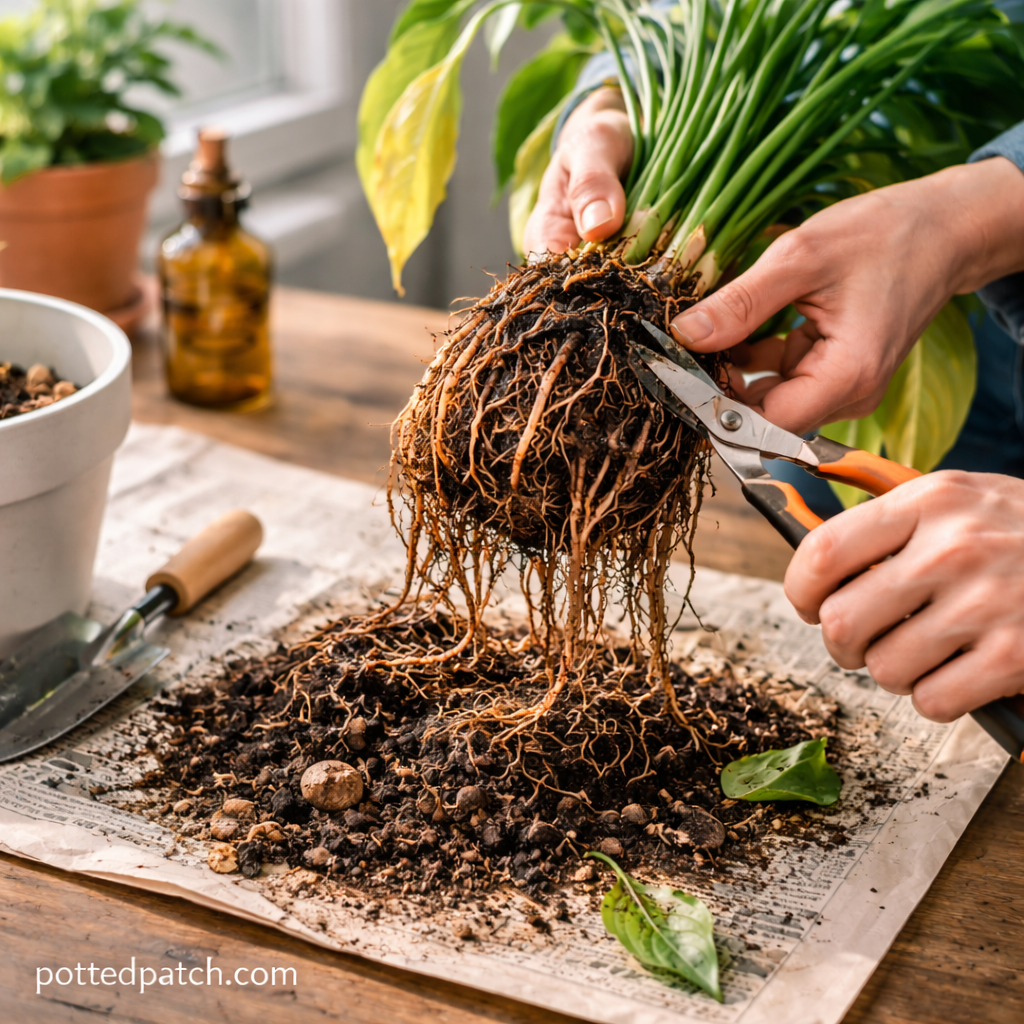
If you find damaged roots:
- Rinse soil off gently.
- Use clean, sterilized scissors.
- Cut away all black or mushy sections.
- Keep only firm, healthy roots.
Do not leave partially rotted roots behind — they will continue spreading decay.
Step 4: Repot in Fresh, Well-Draining Soil
Never reuse contaminated soil.
Choose:
- Fresh indoor potting mix
- A pot with drainage holes
- A slightly smaller or same-sized container
Optional: Mix in perlite or orchid bark to improve airflow.
After repotting, wait about 5–7 days before watering lightly. This gives roots time to settle.
Step 5: Adjust Your Watering Routine
To prevent soft stems from returning:
- Water only when the top 1–2 inches of soil are dry
- Water thoroughly but infrequently
- Empty the drainage tray promptly
- Never let the plant sit in standing water
Peace lilies like moisture — but they need oxygen too.
Improve Light and Airflow
Low light slows evaporation, keeping soil wet longer.
Move your peace lily to:
- Bright, indirect light
- Near a north- or east-facing window
- A room with consistent daylight
Avoid cold drafts and temperature extremes.
Better light helps regulate moisture levels.
Can Soft Stems Recover?
If caught early, yes.
Once roots are healthy again:
- New growth will appear firm and upright
- Existing damaged stems may not fully recover
- Trim severely soft stems to redirect energy
If most of the root system is rotten, recovery may be difficult. Early action makes all the difference.
When to Consider Propagation
If the plant is severely damaged but has healthy sections:
- Divide the plant at the root ball
- Separate healthy clumps
- Repot individually
This can save portions of the plant even if one section fails.
Quick Prevention Checklist
To avoid soft stems in the future:
- Always use pots with drainage holes
- Avoid decorative containers without drainage
- Use well-draining soil
- Provide bright, indirect light
- Repot every 1–2 years
Healthy roots = firm stems.
Final Thoughts
Soft stems on a peace lily are almost always caused by excess moisture and root rot.
The solution isn’t more watering — it’s smarter watering.
Inspect the roots.
Improve drainage.
Adjust light.
With prompt care, your peace lily can regain strength and return to healthy, upright growth.