

Succulents are loved for their compact shape, thick leaves, and low-maintenance reputation. But sometimes they seem to just… sit there.
No new leaves. No visible growth. No change for months.
If you’re wondering how to encourage new growth on a succulent, the solution usually comes down to improving light, watering habits, and overall growing conditions. Here’s exactly what to adjust.
Understand Your Succulent’s Growth Cycle
Before making changes, remember:
- Most succulents grow actively in spring and summer.
- Growth slows significantly in fall and winter.
- Some varieties go dormant during extreme heat.
If it’s winter, slower growth may be completely normal. Focus on creating ideal conditions for when active growth resumes.
1. Increase Light Exposure
Light is the single most important factor for encouraging new growth.
Succulents that don’t get enough light will:
- Grow very slowly
- Stretch toward light (etiolation)
- Lose compact shape
How to Improve Light
- Place your succulent in a bright south- or west-facing window.
- Make sure it receives at least 6 hours of bright indirect or direct sunlight daily.
- Rotate the pot weekly for even growth.
If natural light is limited, consider using a grow light for consistent exposure.
2. Adjust Your Watering Technique
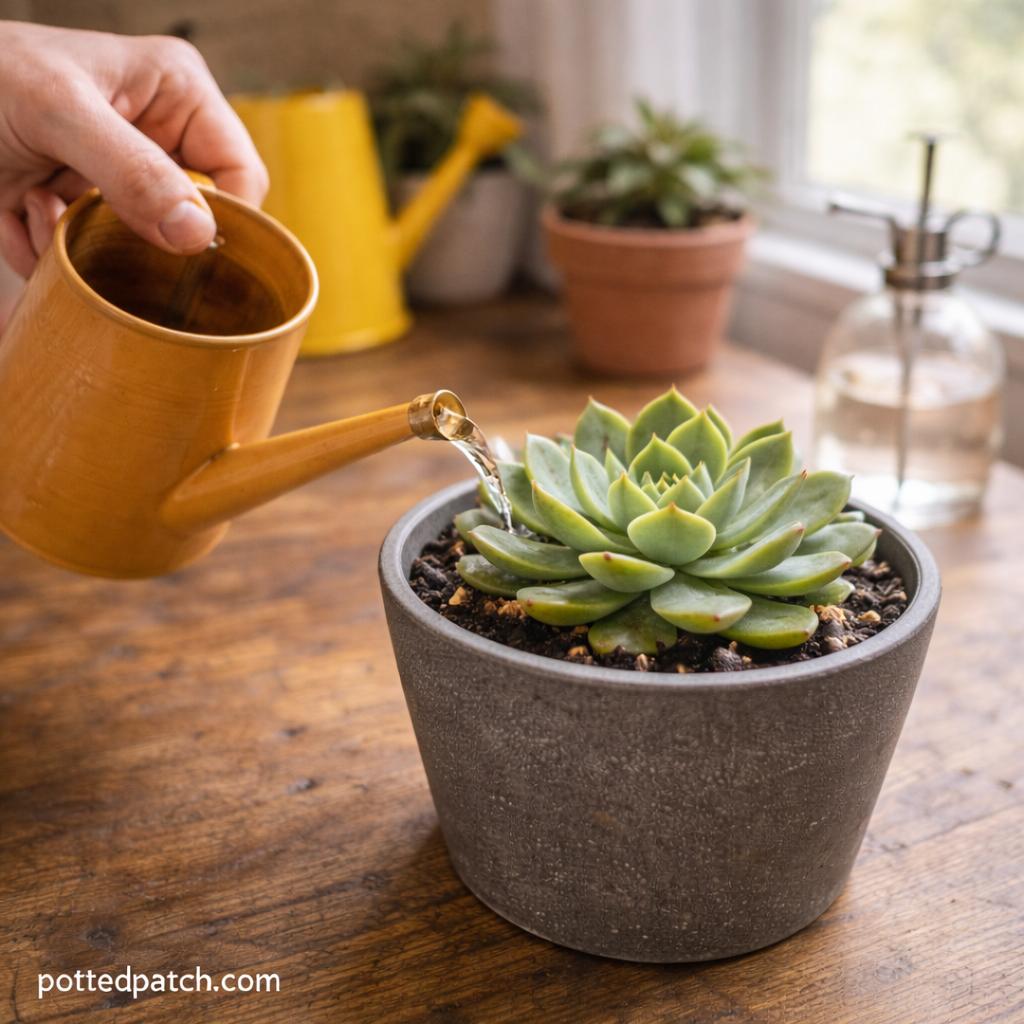
Succulents need a “soak and dry” approach to grow well.
The Correct Watering Method
- Wait until the soil is completely dry.
- Water thoroughly until water drains out of the bottom.
- Let excess water fully drain away.
Light, frequent watering can limit root development and slow growth. Deep watering encourages stronger root systems, which support new leaves.
3. Use Proper Succulent Soil
Heavy soil suffocates roots and slows growth.
For best results, use:
- A cactus or succulent soil mix
- A gritty blend with perlite or pumice
- A pot with drainage holes
Fast-draining soil allows oxygen to reach roots — and healthy roots equal faster growth.
4. Feed During Active Season
Succulents don’t need heavy feeding, but a small nutrient boost can stimulate growth.
Fertilizing Tips
- Use a diluted, balanced liquid fertilizer.
- Feed once per month in spring and summer.
- Avoid fertilizing during dormancy.
Too much fertilizer can cause weak, leggy growth, so moderation is key.
5. Provide Warm Temperatures
Most succulents prefer temperatures between 65–80°F.
If your plant sits in a cold draft or near an air conditioning vent, growth can slow dramatically.
Keep your succulent in:
- Stable indoor temperatures
- Bright, warm areas
- Away from sudden temperature changes
Consistent warmth promotes steady development.
6. Repot If Rootbound
If your succulent has been in the same pot for years, it may be rootbound.
Signs include:
- Roots growing out of drainage holes
- Water draining too quickly
- Stunted growth despite good light
Repot into a container 1–2 inches larger with fresh soil to encourage new root expansion and leaf production.
7. Prune to Stimulate Growth
Light pruning can sometimes trigger branching or offsets.
When to Prune
- If stems are leggy
- If growth is uneven
- If you want a fuller appearance
Use clean scissors to trim stretched stems. Many succulents will produce new growth below the cut point.
8. Be Patient — Growth Takes Time
Even in perfect conditions, succulents grow gradually.
You may notice:
- Small leaves forming in the center rosette
- Thicker, more vibrant foliage
- Offsets (“baby plants”) forming at the base
Growth is often subtle at first but becomes more noticeable over several weeks.
Quick Growth Checklist
To encourage new growth on your succulent:
- Bright, consistent light
- Soak-and-dry watering method
- Fast-draining soil
- Monthly feeding in active season
- Warm, stable temperatures
- Occasional repotting
Master these fundamentals and your succulent will respond.
Final Thoughts
If your succulent isn’t growing, it’s usually a light or watering issue — not a permanent problem.
Small adjustments in care can reignite healthy development. With the right balance of sunlight, drainage, nutrients, and patience, you’ll start seeing fresh leaves and fuller growth before you know it.