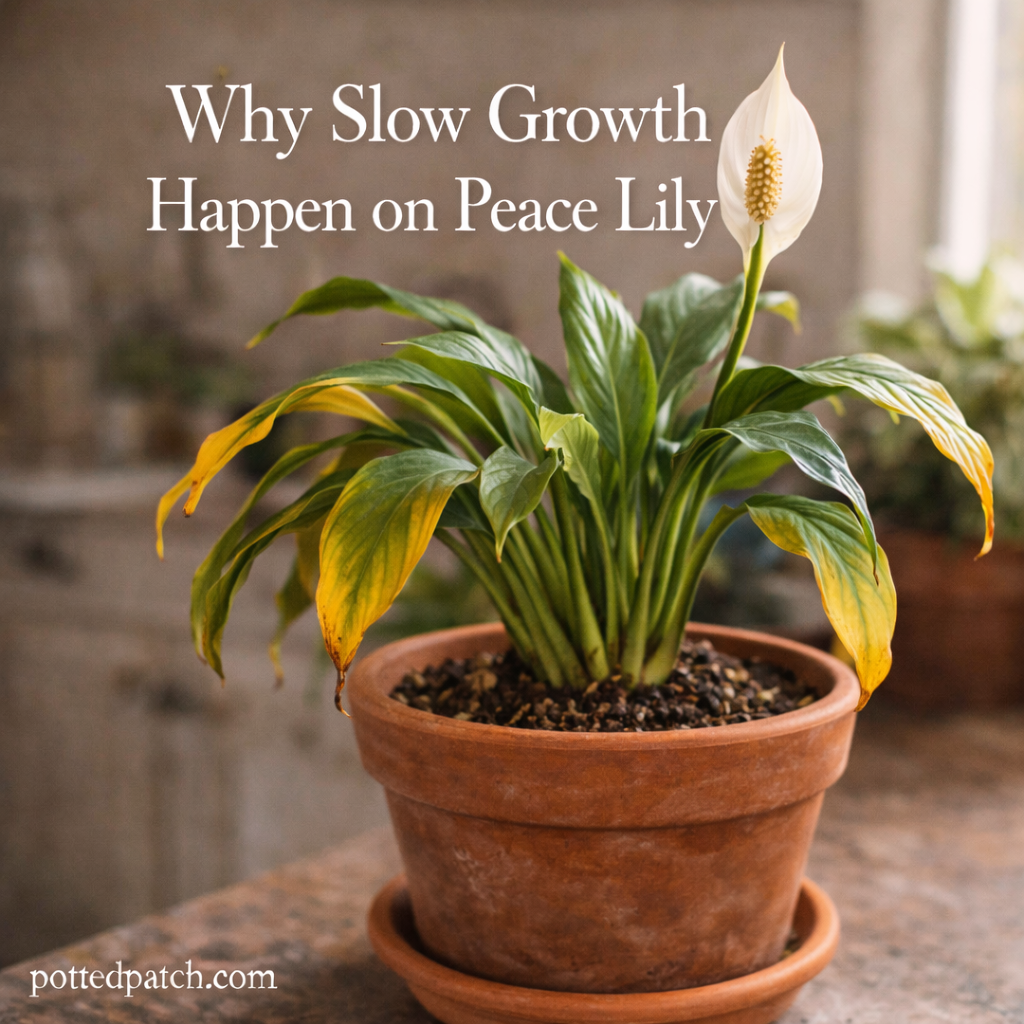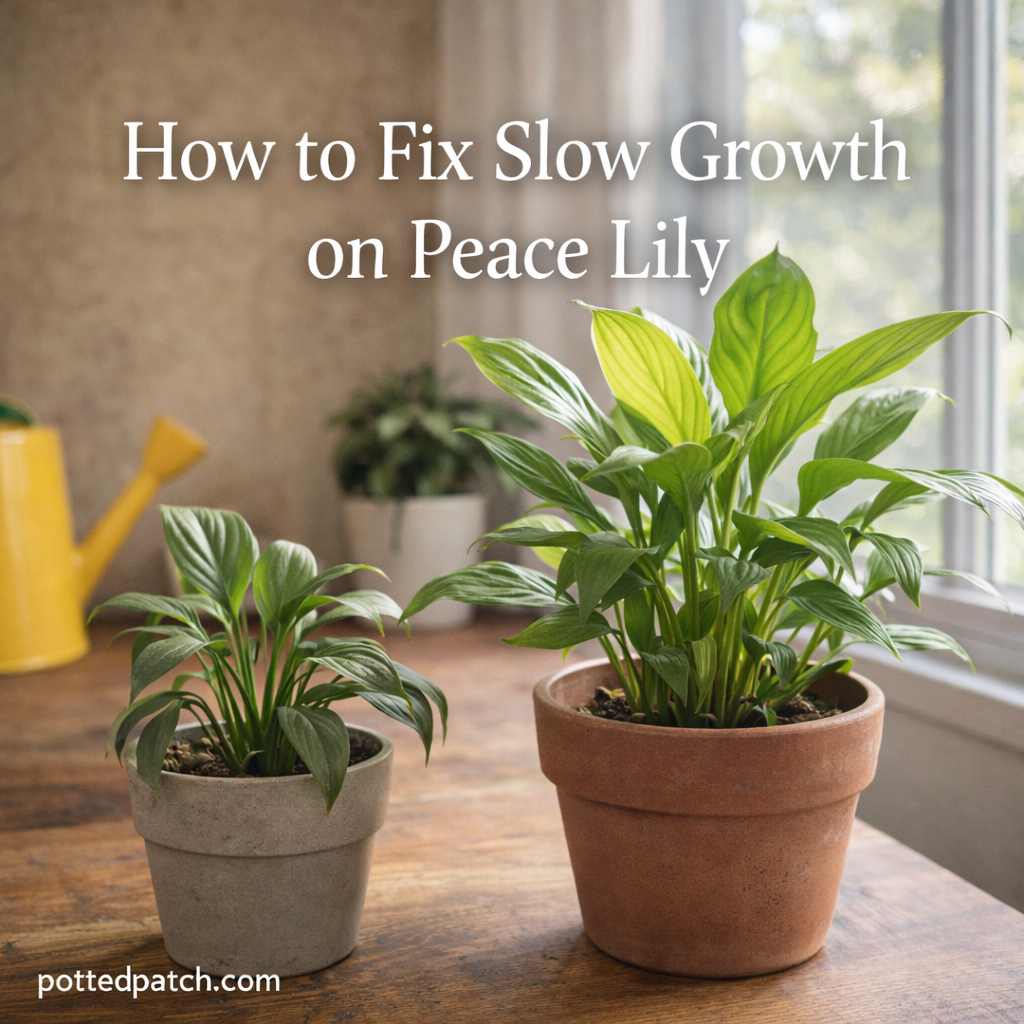
Peace lilies are known for their lush green leaves and elegant white blooms. So when growth slows down — or stops completely — it can be frustrating.
If your peace lily looks healthy but isn’t growing, or hasn’t produced new leaves in months, don’t panic. Slow growth is usually caused by a few fixable environmental or care issues.
Here’s how to diagnose the problem and get your plant growing again.
Is Slow Growth Actually a Problem?
Before troubleshooting, consider this:
- Peace lilies naturally grow slower in fall and winter.
- Newly repotted plants may pause growth while adjusting.
- Smaller plants grow slower than mature ones.
If it’s spring or summer and you’re seeing no new leaves, it’s time to investigate.
1. Not Enough Light
Peace lilies tolerate low light — but they don’t thrive in it.
Low light often leads to:
- Little or no new leaves
- Smaller leaves than usual
- No flowers
- Slower overall growth
How to Fix It
- Move the plant to bright, indirect light.
- Place it near an east- or north-facing window.
- Avoid harsh direct sun, which can scorch leaves.
Bright indirect light is the sweet spot for faster growth and blooming.
2. Underwatering or Overwatering
Peace lilies are sensitive to watering issues.
Signs of Underwatering
- Drooping leaves
- Crispy brown tips
- Soil pulling away from the pot edges
Signs of Overwatering
- Yellowing leaves
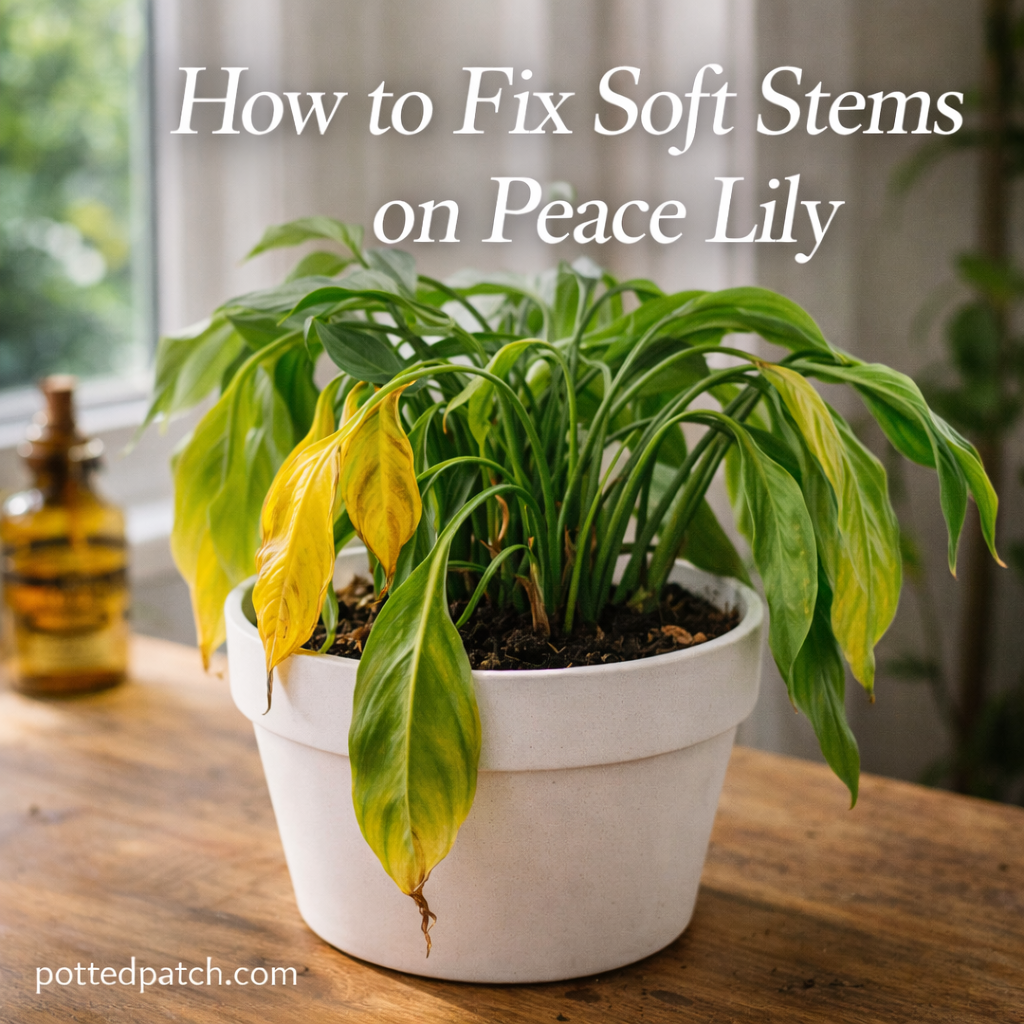
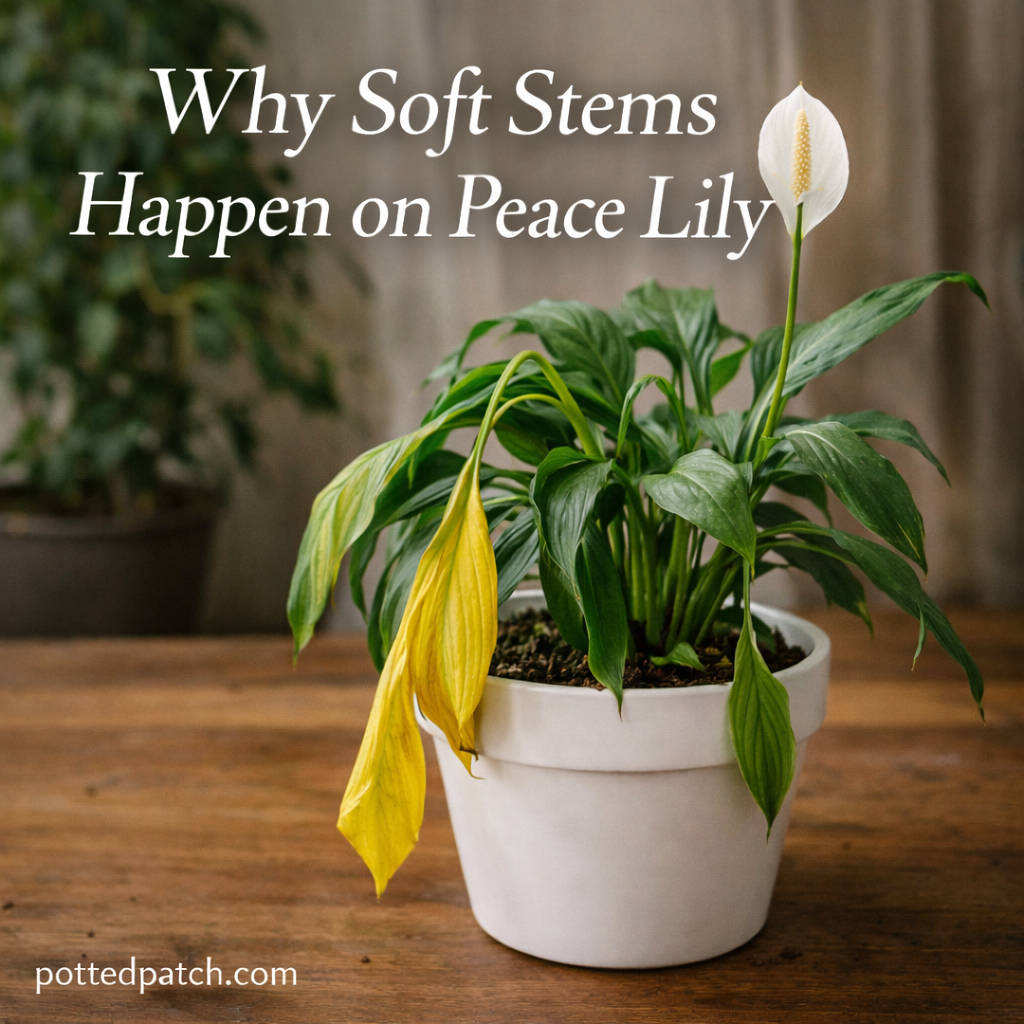
- Mushy stems
- Constantly wet soil
How to Fix It
- Water thoroughly when the top 1–2 inches of soil feel dry.
- Let excess water drain completely.
- Never let the plant sit in standing water.
Consistent watering encourages steady growth.
3. Rootbound Conditions
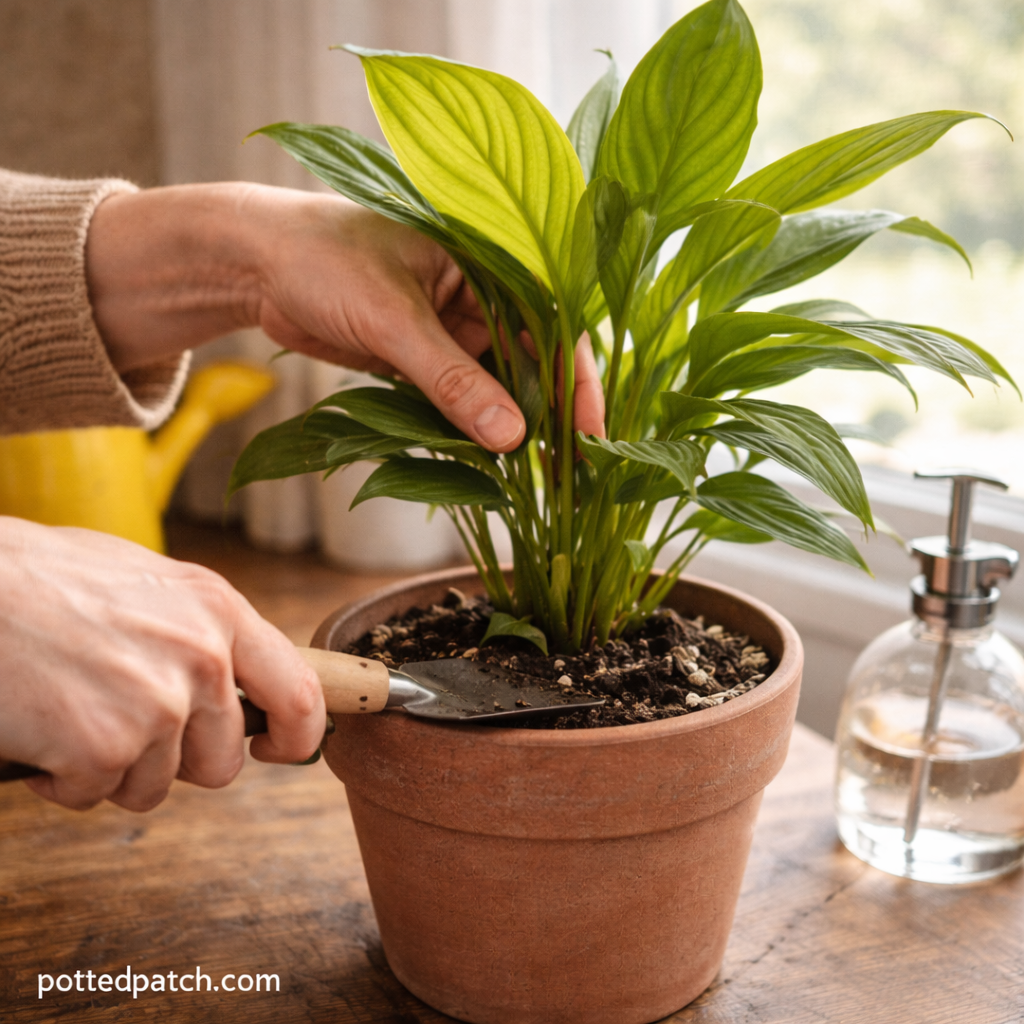
If your peace lily has been in the same pot for years, roots may be overcrowded.
Signs of being rootbound:
- Roots growing out of drainage holes
- Water running straight through the pot
- Soil drying unusually fast
How to Fix It
- Repot into a container 1–2 inches larger in diameter.
- Use fresh, well-draining potting mix.
- Gently loosen compacted roots during repotting.
More root space equals better nutrient absorption and stronger growth.
4. Lack of Nutrients
Peace lilies need nutrients during active growing seasons.
Without feeding, growth can stall.
How to Fix It
- Use a balanced liquid houseplant fertilizer.
- Feed once per month in spring and summer.
- Avoid overfertilizing, which can burn roots.
Proper feeding supports lush foliage and blooms.
5. Poor Soil Drainage
Dense, compacted soil suffocates roots and slows growth.
If water drains slowly or soil stays wet for days, drainage may be the issue.
How to Improve Soil
- Use light, airy potting mix.
- Add perlite for better drainage.
- Ensure the pot has drainage holes.
Healthy roots drive healthy growth.
6. Low Humidity
Peace lilies prefer moderate to high humidity.
Dry indoor air can:
- Slow leaf development
- Cause brown tips
- Reduce flowering
Solutions
- Place the plant near a humidifier.
- Group plants together.
- Use a pebble tray with water.
Improved humidity often results in quicker leaf growth.
7. Temperature Stress
Peace lilies prefer temperatures between 65–80°F.
Cold drafts or sudden temperature changes can slow growth dramatically.
Keep plants away from:
- Air conditioning vents
- Heaters
- Drafty windows
Stable temperatures help maintain steady development.
How Long Does It Take to See Improvement?
After correcting care issues, expect:
- New leaf growth within 2–4 weeks (during active season)
- Increased size and fullness over 1–3 months
- Blooms returning once light and feeding improve
Patience matters — but progress should be visible in healthy conditions.
Quick Recovery Checklist
If your peace lily isn’t growing, check:
- Bright indirect light
- Consistent watering
- Well-draining soil
- Adequate humidity
- Monthly feeding in growing season
- Proper pot size
Fixing just one or two of these often makes a noticeable difference.
Final Thoughts
Slow growth in a peace lily is rarely permanent. Most issues trace back to light, watering, soil, or nutrients.
Once you create the right environment, your peace lily will reward you with lush leaves and beautiful blooms again.
Small adjustments can bring big results.