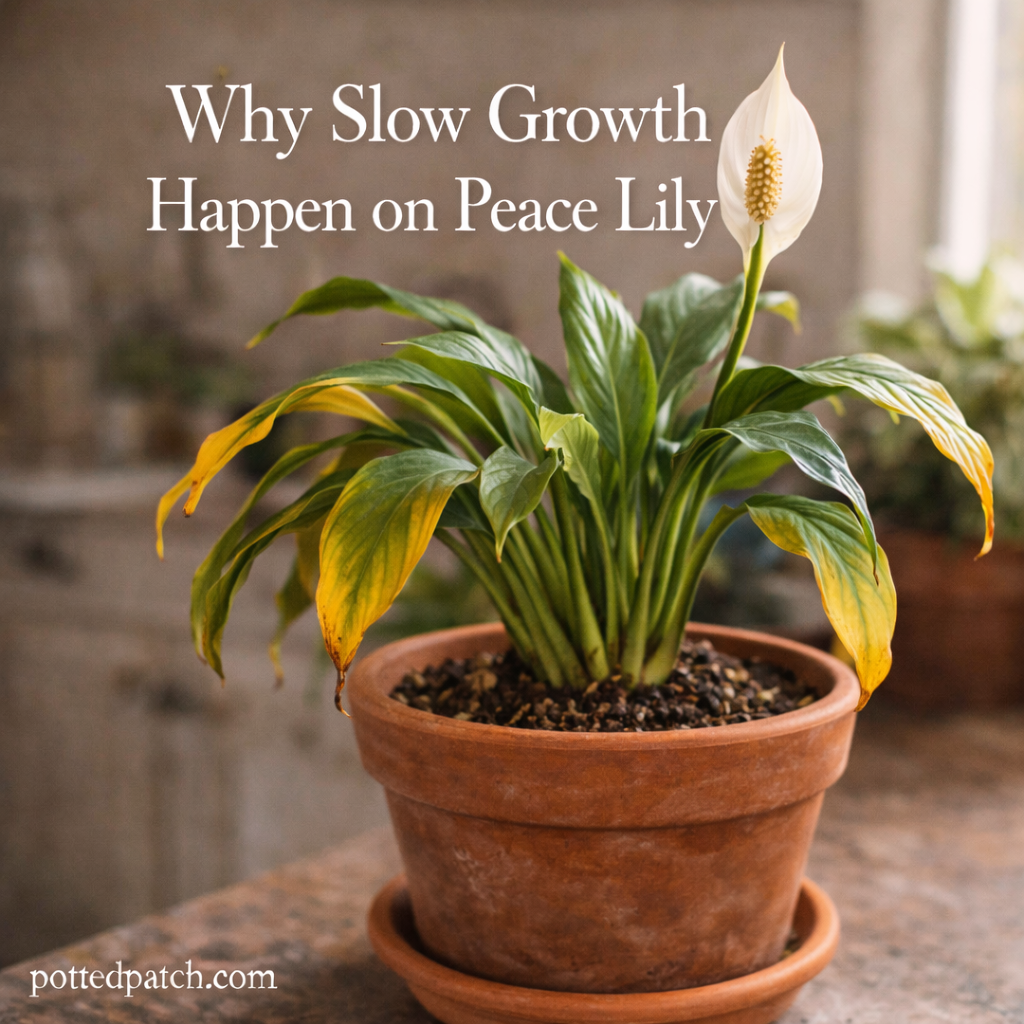
A healthy Peace Lily produces steady new leaves and occasional white blooms throughout the growing season.
If your plant hasn’t pushed out new growth in months, growth is smaller than usual, or flowering has stopped, something in its environment may be limiting it.
Slow growth is usually not a disease — it’s a signal.
Here’s why it happens and how to fix it.
1. Natural Dormancy (Not Always a Problem)
Peace Lilies naturally slow down in fall and winter.
During cooler months:
- Daylight hours decrease
- Growth pauses
- Flowering often stops
If your plant looks healthy but isn’t growing in winter, this is normal.
Growth should resume in spring.
2. Not Enough Light
Light is the most common reason for slow growth.
Peace Lilies tolerate low light — but they don’t thrive in it.
Signs Light Is Too Low
- No new leaves
- Smaller leaves
- No blooms
- Leggy, stretched growth
How to Fix It
Move your plant to:
- Bright, indirect light
- Near an east-facing window
- Or a few feet from a south-facing window
Avoid direct harsh sun, but increase brightness.
More light = faster growth.
3. Overwatering
Too much water slows root function.
When roots stay wet:
- Oxygen levels drop
- Nutrient absorption decreases
- Growth slows
Even without full root rot, constant moisture stresses the plant.
Fix
- Let the top 1–2 inches of soil dry before watering
- Ensure proper drainage
- Empty saucers after watering
Balanced watering restores healthy root activity.
4. Underwatering
While overwatering is common, chronic underwatering can also slow growth.
Signs include:
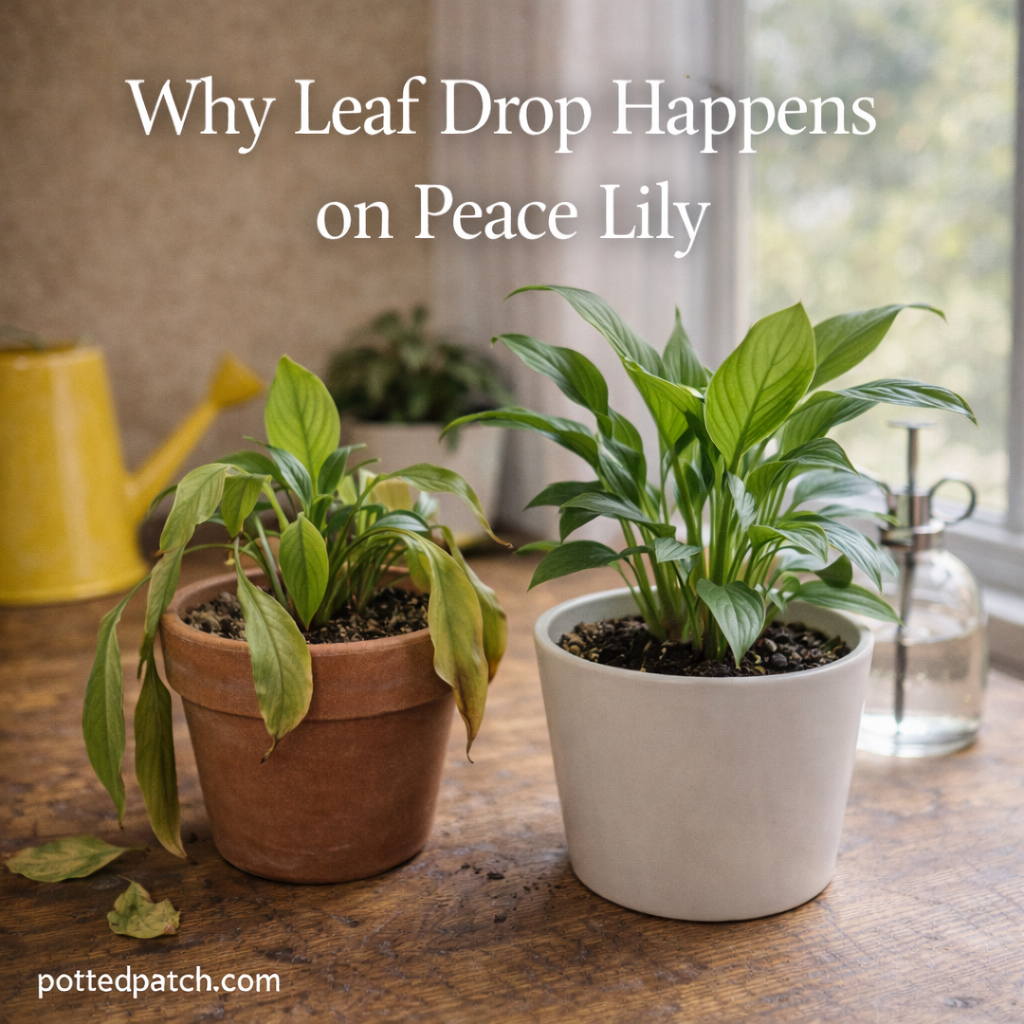
- Drooping leaves
- Thin foliage
- Dry soil pulling from pot edges
If a plant repeatedly dries out completely, it shifts into survival mode rather than growth mode.
Consistency is key.
5. Root Bound Plant
If your Peace Lily hasn’t been repotted in a long time, it may be root bound.
Signs include:
- Roots growing out of drainage holes
- Soil drying extremely fast
- Reduced new leaf size
When roots run out of space, growth slows dramatically.
Fix
Repot into a container 1–2 inches larger with fresh indoor plant soil.
Spring is ideal for repotting.
6. Nutrient Deficiency
Peace Lilies are not heavy feeders, but they still need occasional nutrients.
If never fertilized, you may notice:
- Pale leaves
- Slower growth
- Weak stems
Solution
Feed lightly during spring and summer:
- Use a balanced houseplant fertilizer
- Dilute to half strength
- Fertilize every 6–8 weeks
Avoid fertilizing in winter.
7. Temperature Stress
Peace Lilies prefer temperatures between 65–80°F.
Cold drafts or hot air vents can slow growth.
Keep your plant away from:
- AC units
- Radiators
- Drafty windows
Stable indoor conditions support steady growth.
8. Low Humidity
As tropical plants, Peace Lilies appreciate moderate humidity.
Dry indoor air can cause:
- Brown tips
- Slower leaf expansion
- Reduced flowering
A humidifier or pebble tray can help boost growth conditions.
Quick Growth Troubleshooting Checklist
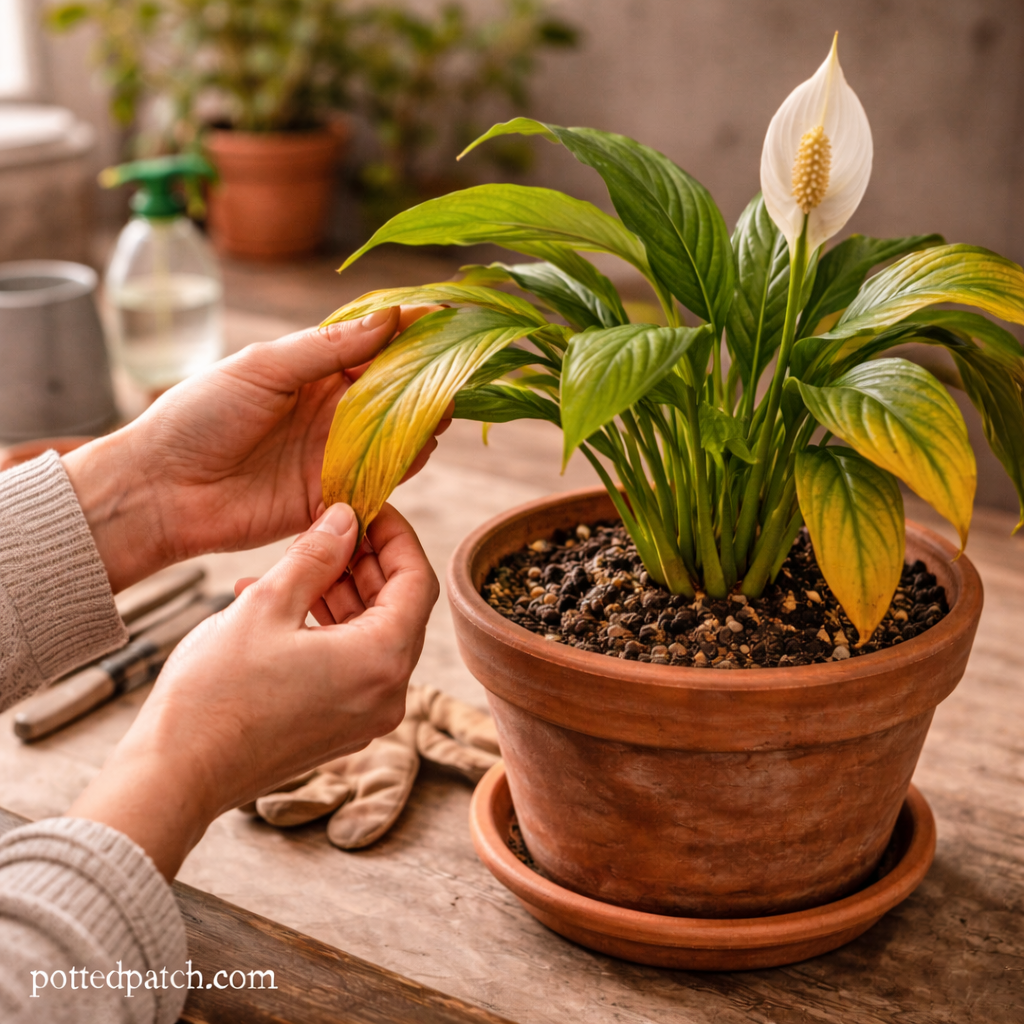
Ask yourself:
- Is it winter? → Dormancy
- Is light dim? → Increase brightness
- Is soil constantly wet? → Reduce watering
- Is plant root bound? → Repot
- Has it been fertilized recently? → Feed lightly
- Is it near drafts? → Move location
Most slow growth issues improve within weeks after adjustment.
When to Be Concerned
Slow growth alone isn’t alarming.
But combine it with:
- Yellowing leaves
- Persistent drooping
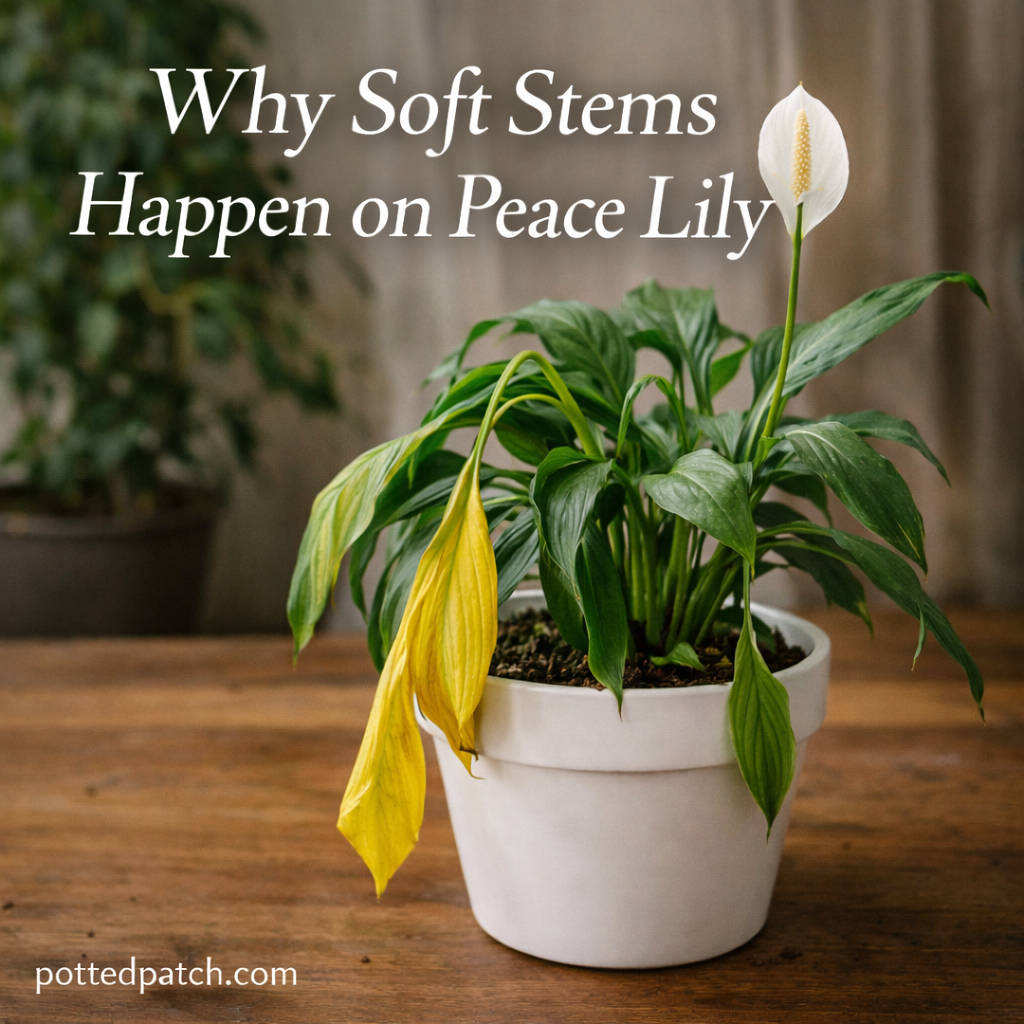
- Soft stems
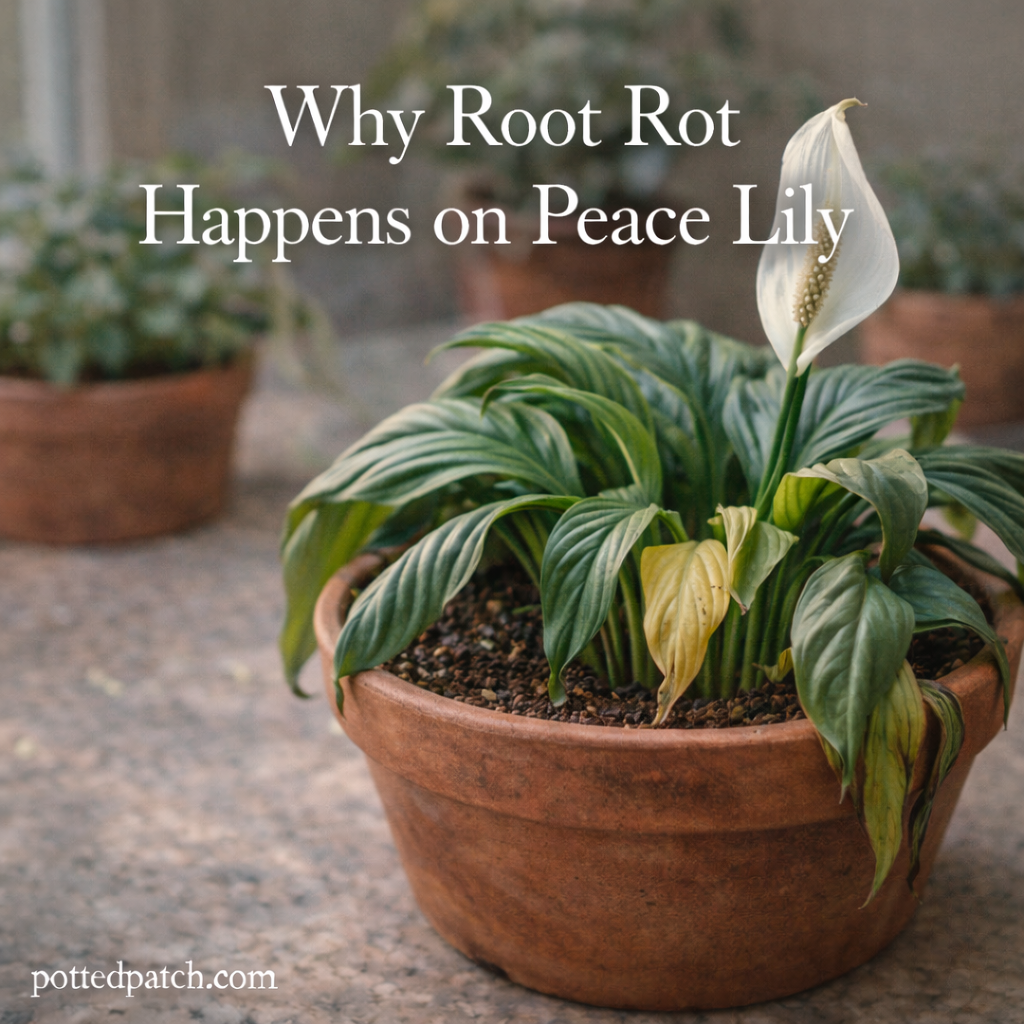
And you may need to check for root rot or pests.
Healthy leaves + slow growth usually means environmental factors, not disease.
Final Thoughts
Slow growth on a Peace Lily is usually a care adjustment issue — not a serious problem.
Improve light, balance watering, refresh soil if needed, and feed lightly during growing season.
Once conditions are right, your Peace Lily should resume steady, healthy growth.