
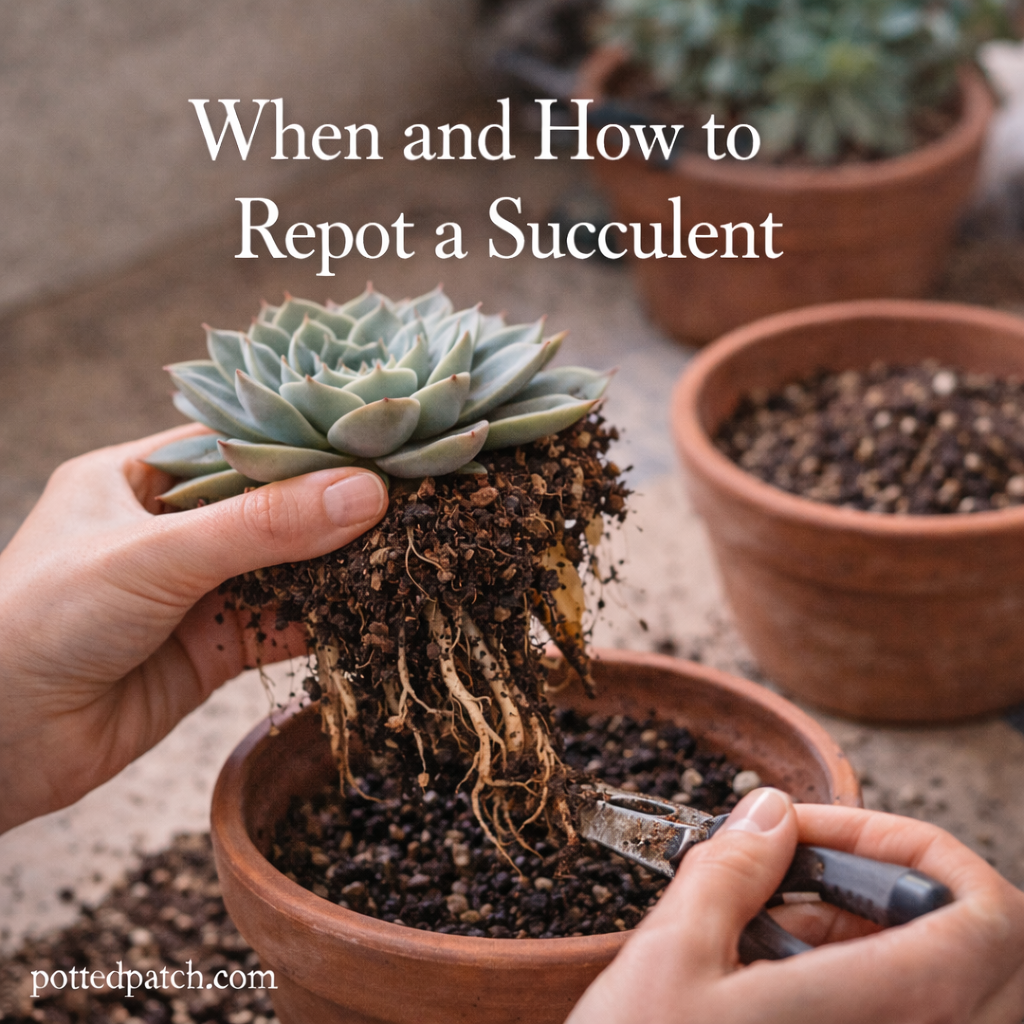
Succulents don’t need frequent repotting — but when they do, timing and technique matter.
Repotting at the right time prevents root rot, improves drainage, and encourages stronger growth. Repotting incorrectly can stress the plant and slow recovery.
Here’s exactly when and how to repot a succulent indoors.
When Should You Repot a Succulent?
Most succulents need repotting every 1–2 years.
But instead of following a strict schedule, look for these signs:
Signs It’s Time to Repot
- Roots growing out of drainage holes
- Soil drying out extremely fast
- Soil staying wet too long
- Compacted or hardened soil
- Plant becoming top-heavy
- Newly purchased plant in dense nursery soil
If you notice any of these, repotting will likely improve plant health.
Best Time of Year to Repot
The ideal time to repot a succulent is:
- Spring
- Early summer
This is the active growing season, which helps the plant recover quickly.
Avoid repotting during winter dormancy unless there is root rot or an urgent issue.
What You’ll Need
Before you begin, gather:
- A pot with drainage holes
- Fresh succulent or cactus soil
- Clean scissors or pruning shears
- Gloves (optional)
Choose a pot only 1–2 inches larger than the current one. Oversized pots hold excess moisture.
Terracotta pots are ideal because they improve airflow and reduce overwatering risk.
Step-by-Step: How to Repot a Succulent
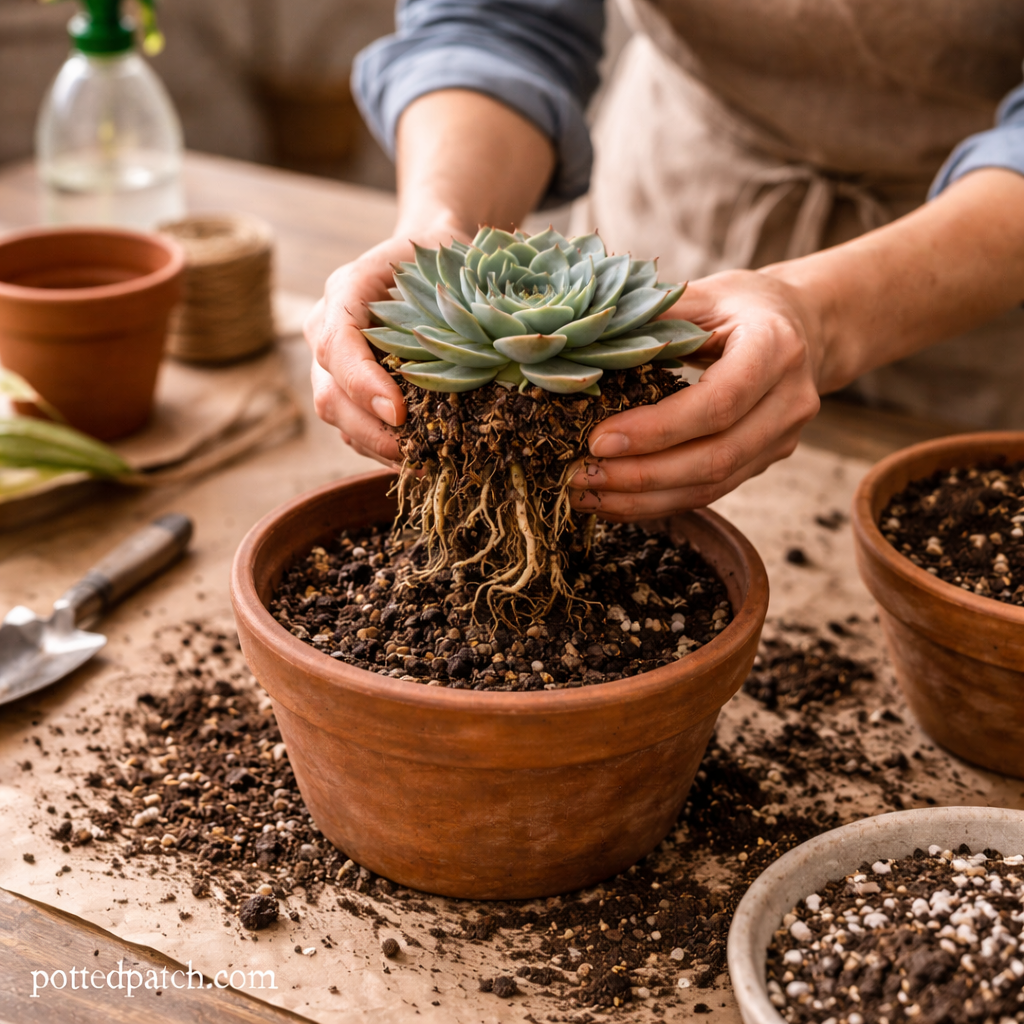
Step 1: Remove the Plant Gently
Turn the pot sideways and gently slide the plant out.
If it’s stuck:
- Squeeze plastic pots lightly
- Tap the sides of the container
Avoid pulling directly on the leaves.
Step 2: Loosen and Inspect the Roots
Shake off old soil.
Check for:
- White, firm roots (healthy)
- Brown, mushy roots (rot)
Trim away any damaged roots using clean scissors.
If roots look healthy, minimal trimming is needed.
Step 3: Let Roots Air Dry (Optional but Helpful)
If you trimmed roots, allow them to air dry for 1–2 hours before repotting.
This helps prevent fungal issues.
Step 4: Add Fresh Soil
Place a layer of fresh, well-draining succulent mix at the bottom of the new pot.
Position the plant so the base sits slightly below the rim.
Fill in around the roots and gently firm the soil.
Do not pack it tightly — airflow is important.
Step 5: Wait Before Watering
After repotting:
- Wait 3–5 days before watering
- This allows roots to heal
- Then water thoroughly
Avoid watering immediately unless the soil was completely dry and roots were untouched.
Aftercare Tips
For the first 1–2 weeks:
- Keep in bright, indirect light
- Avoid harsh direct sun
- Water lightly and only when soil is dry
Mild leaf drooping after repotting is normal.
New growth indicates successful recovery.
Common Repotting Mistakes to Avoid
- Using regular potting soil
- Choosing a pot too large
- Watering immediately after trimming roots
- Skipping drainage holes
- Packing soil too tightly
Proper drainage is the key to succulent success.
How Often Should You Repot?
In general:
- Small indoor succulents: Every 1–2 years
- Fast growers: Every year
- Slow growers: Every 2–3 years
If growth slows or soil condition worsens, it’s time.
Final Thoughts
Repotting a succulent isn’t complicated — but timing and soil quality make all the difference.
Repot during active growth, use fast-draining soil, and avoid watering immediately after transplanting.
When done properly, repotting refreshes your plant’s environment and encourages healthier, stronger growth for years to come.