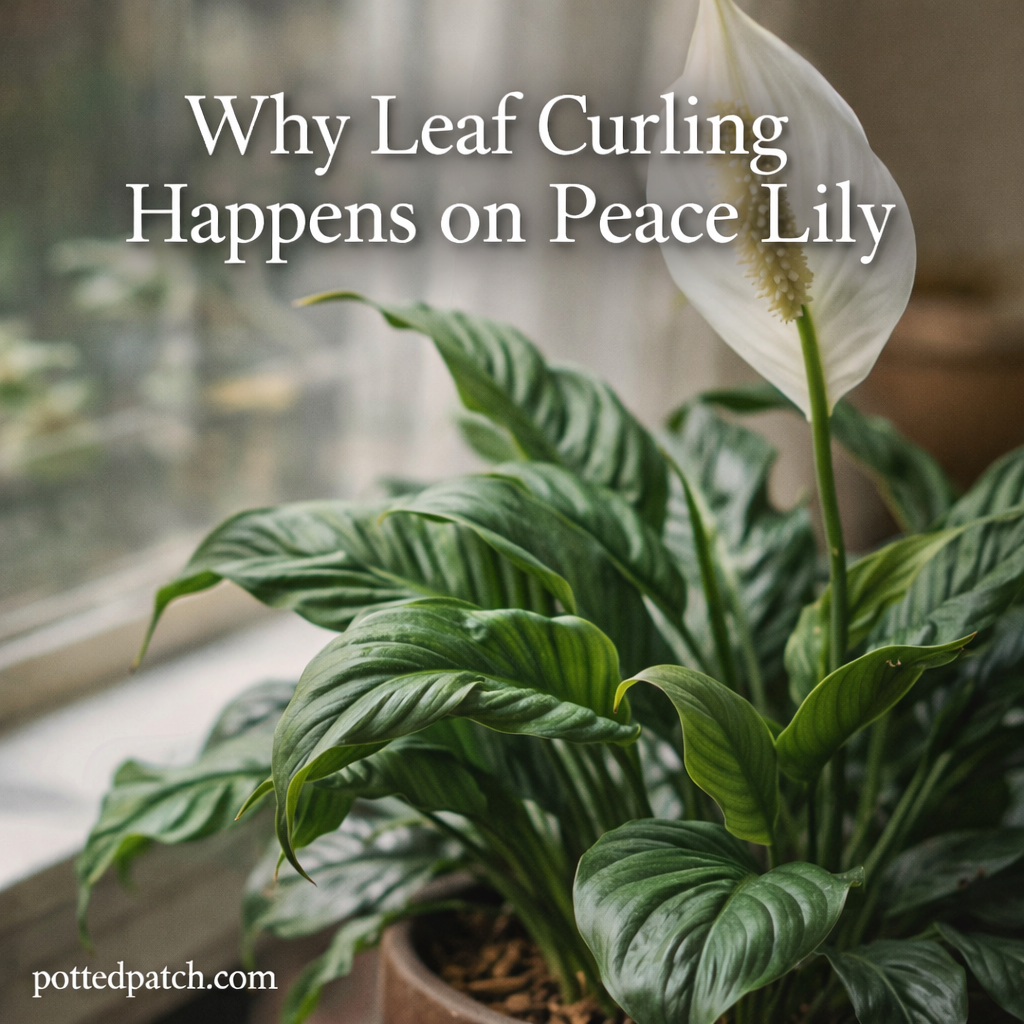
The Peace Lily is known for its glossy green leaves and elegant white blooms. But when those smooth leaves start curling inward or folding up, it’s a sign something isn’t quite right.
Leaf curling is your plant’s way of communicating stress. The good news? Most causes are easy to identify and fix.
Here’s exactly why leaf curling happens on a Peace Lily — and how to correct it.
1. Underwatering (Most Common Cause)
Peace Lilies are dramatic plants. When they’re thirsty, they show it quickly.
Signs It’s Underwatering:
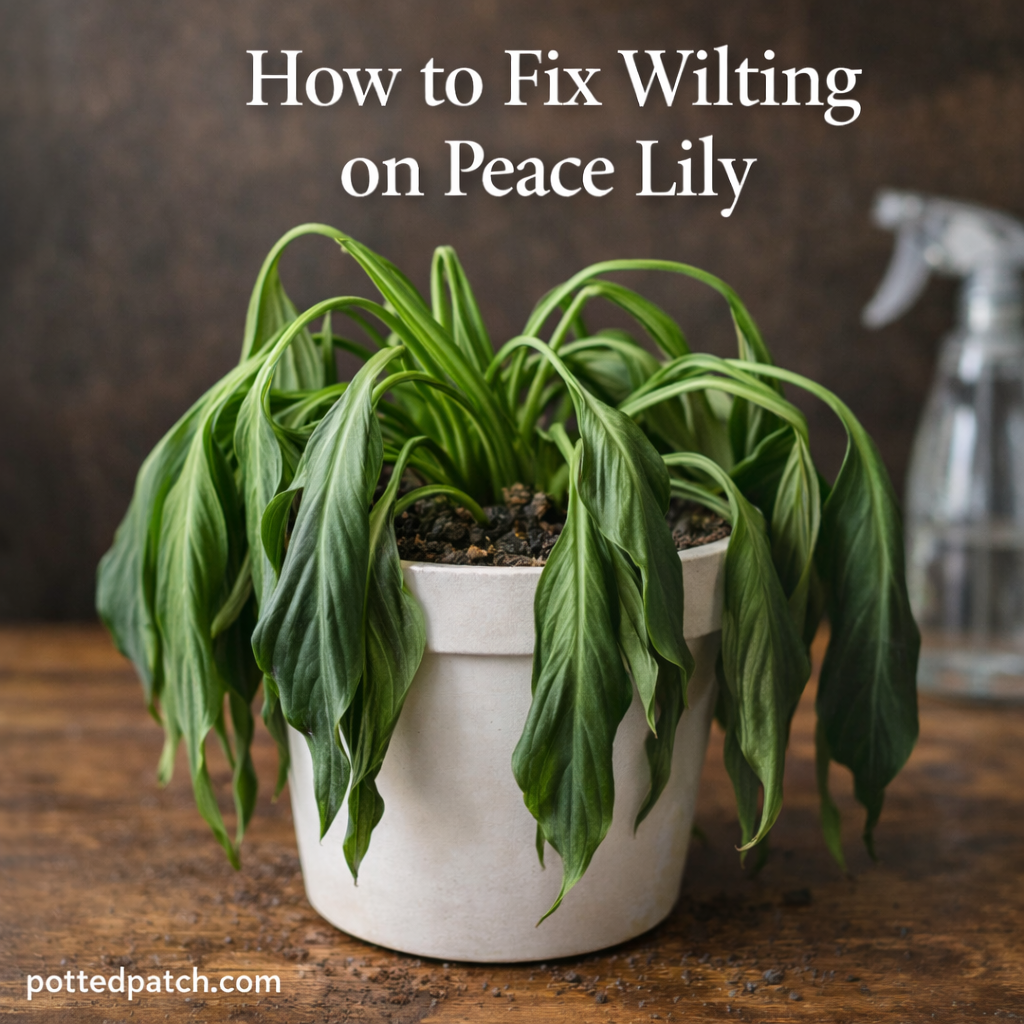
- Leaves curl inward or droop
- Soil feels dry several inches down
- Plant looks limp but revives after watering
When soil dries out too much, leaves curl to reduce moisture loss.
How to Fix It:
- Water thoroughly until water drains from the bottom.
- Empty the saucer.
- Resume a consistent watering schedule.
Peace Lilies prefer evenly moist soil — not soggy, not bone dry.
Tip: Check soil weekly instead of watering on a strict calendar.
2. Overwatering and Root Stress
Surprisingly, too much water can also cause curling.
If roots sit in soggy soil, they struggle to absorb oxygen and nutrients. Leaves may curl, yellow, or feel soft.
Signs of Overwatering:
- Soil stays wet for days
- Yellowing leaves
- Mushy stems
- Musty smell from soil
How to Fix It:
- Allow soil to dry slightly before watering again.
- Ensure the pot has drainage holes.
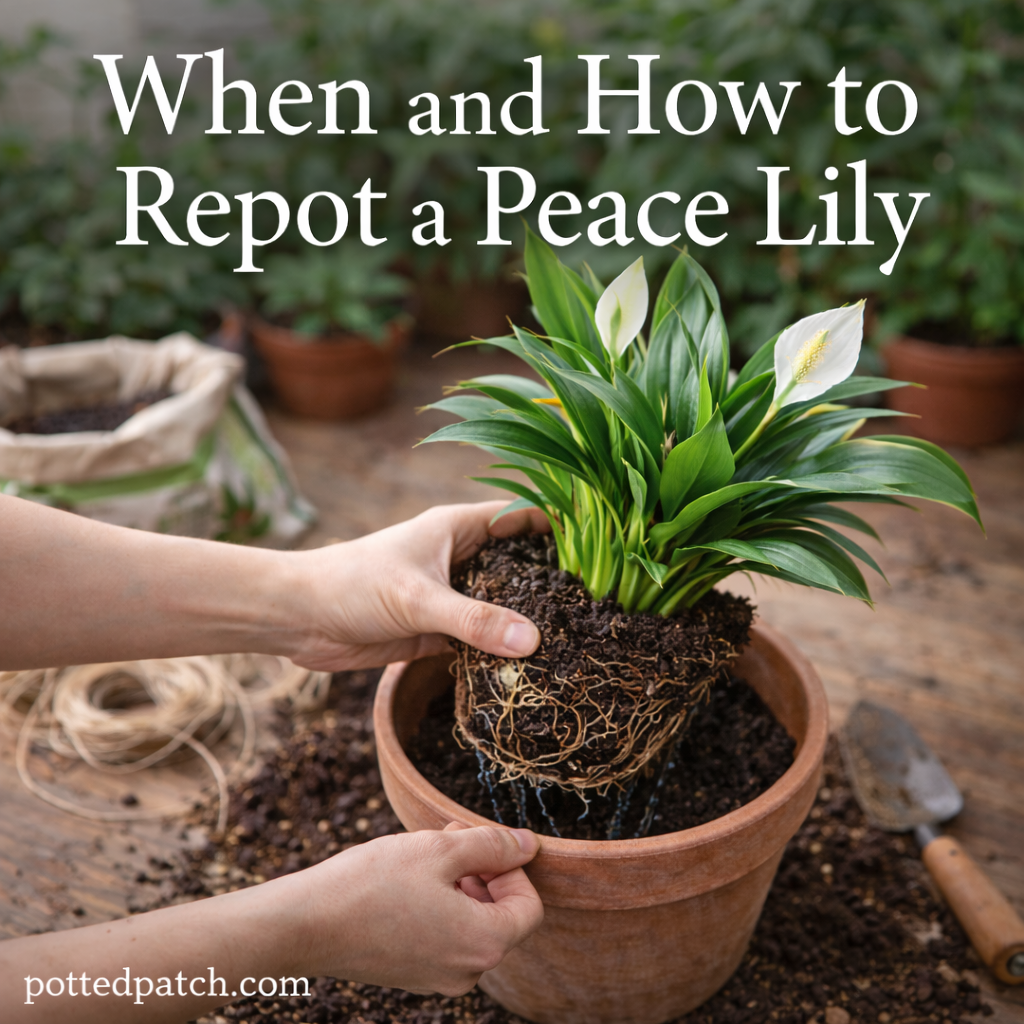
- Consider repotting into fresh, well-draining mix if root rot is suspected.
Balance is key.
3. Low Humidity
Peace Lilies are tropical plants. Dry indoor air — especially in winter — can cause leaves to curl at the edges.
Signs of Low Humidity:
- Brown leaf tips
- Edges curling inward
- Crisp texture on leaf margins
Solutions:
- Place a humidifier nearby.
- Group plants together.
- Set the pot on a pebble tray with water (without the base sitting directly in water).
Bathrooms and kitchens often provide naturally higher humidity.
4. Too Much Direct Sunlight
Peace Lilies prefer bright, indirect light.
If exposed to strong direct sunlight:
- Leaves may curl
- Foliage may fade or scorch
- Edges may turn brown
Fix:
Move the plant to:
- A few feet away from a south- or west-facing window
- Or a bright east-facing window with filtered light
Direct afternoon sun is especially harsh indoors.
5. Temperature Stress
Peace Lilies thrive between 65–80°F.
Cold drafts, heaters, or sudden temperature swings can cause leaves to curl.
Avoid placing your plant near:
- Air conditioning vents
- Radiators
- Drafty doors or windows
Consistency helps maintain healthy foliage.
6. Fertilizer Burn
Too much fertilizer can damage roots, causing curling and browning.
Signs:
- Leaf edge burn
- White crust on soil surface
- Curling with brown margins
Fix:
- Flush the soil thoroughly with distilled water.
- Reduce feeding frequency.
- Fertilize only during active growing season (spring/summer).
Less is more with Peace Lilies.
7. Pests
Though not extremely common, pests like spider mites or thrips can cause leaf distortion and curling.
What to Look For:
- Tiny webbing
- Speckled or stippled leaves
- Sticky residue
Treatment:
- Wipe leaves with damp cloth.
- Use insecticidal soap.
- Isolate plant until resolved.
Catch infestations early for easier control.
How to Quickly Diagnose Leaf Curling
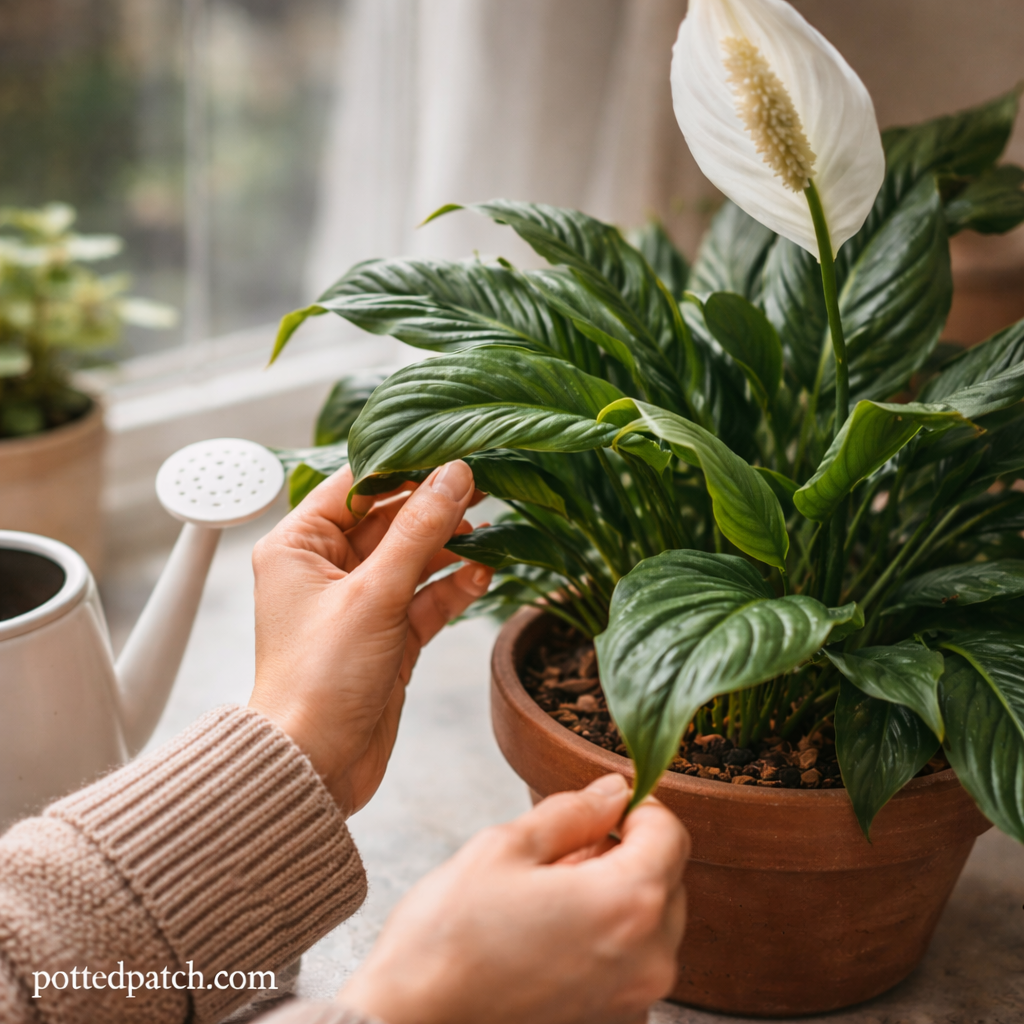
Use this simple checklist:
- Soil dry? → Underwatering
- Soil soggy? → Overwatering
- Brown tips + dry air? → Low humidity
- Harsh sun exposure? → Light stress
- Near vents/drafts? → Temperature stress
- Recently fertilized? → Fertilizer burn
Most cases resolve within 1–2 weeks after correcting the issue.
When Curling Is Temporary
Sometimes minor curling happens after:
- Repotting
- Moving locations
- Seasonal light changes
If the plant otherwise looks healthy, give it time to adjust before making drastic changes.
Final Thoughts
Leaf curling on a Peace Lily is almost always a care-related stress signal — not a permanent problem.
Check water first. Then evaluate light, humidity, and placement. With small adjustments, your plant will usually rebound quickly.
Peace Lilies are resilient when their basic needs are met. Once you understand their signals, caring for them becomes much easier.