
Succulents are some of the easiest and most rewarding houseplants you can grow. Their sculptural shapes, low water needs, and wide variety make them perfect for beginners and experienced plant lovers alike.
But “low maintenance” doesn’t mean “no maintenance.” If your succulent is stretching, turning mushy, or losing leaves, it’s usually a sign that something in its indoor environment needs adjusting.
Here’s a complete, practical guide to caring for a succulent indoors the right way.
Why Succulents Thrive Indoors (When Conditions Are Right)
Succulents store water in their leaves and stems, allowing them to survive dry climates. Indoors, they can thrive beautifully — as long as you recreate a few key conditions:
- Bright light
- Well-draining soil
- Infrequent but thorough watering
- Proper airflow
When these basics are in place, succulents are incredibly resilient.
Choosing the Right Succulent for Indoors
Not all succulents perform equally well inside.
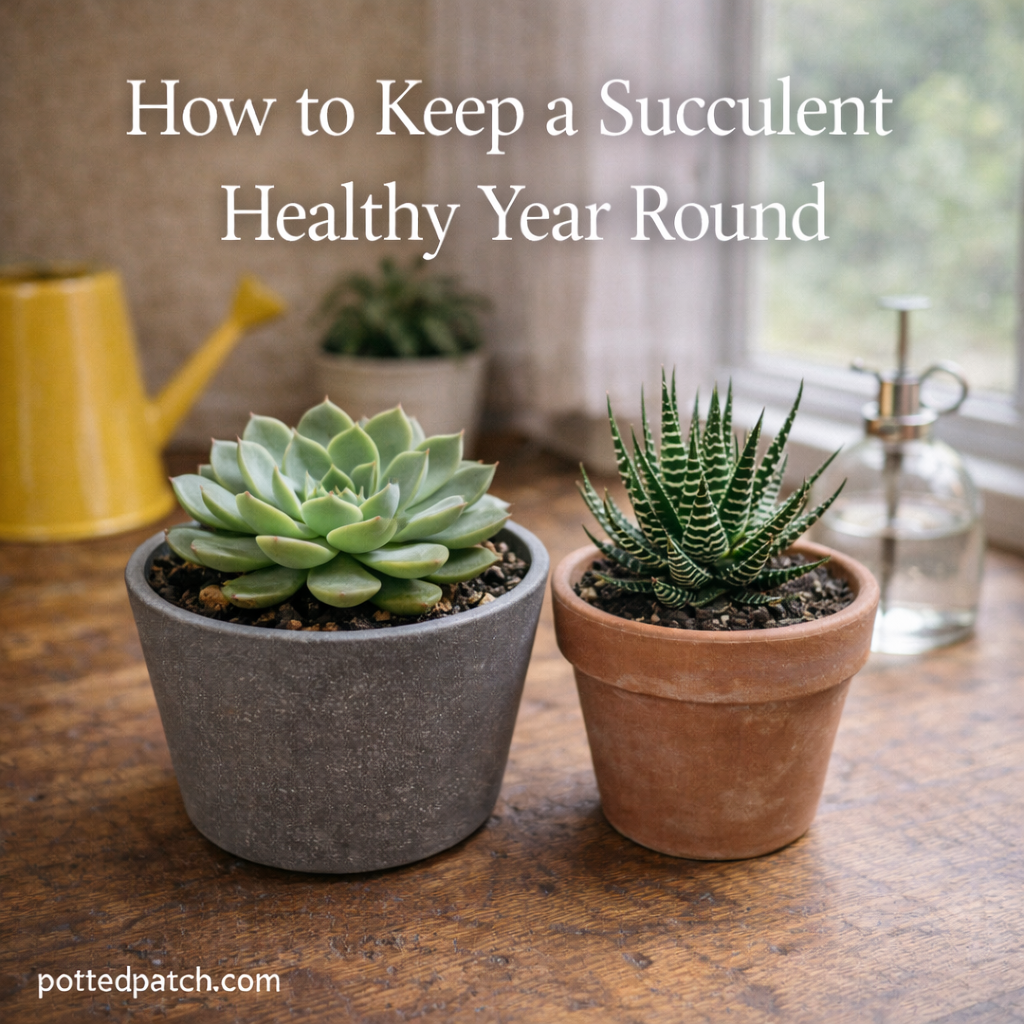
Some of the best indoor-friendly varieties include:
- Echeveria
- Haworthia
- Jade Plant (Crassula ovata)
- Aloe vera
- Gasteria
Compact varieties with thicker leaves typically adapt better to indoor light levels.
If your home has limited sunlight, choose haworthia or gasteria. If you have a bright south-facing window, echeveria and jade plants will thrive.
Light: The Most Important Factor
Light is the number one reason indoor succulents struggle.
How Much Light Do Succulents Need?
Most succulents need:
- 6+ hours of bright, indirect light daily
- Some direct morning sun (but avoid harsh afternoon sun through glass)
Best Placement Indoors
- South-facing window: Ideal
- West-facing window: Good, but monitor for leaf burn
- East-facing window: Great for gentle morning light
- North-facing window: Usually too dim
If natural light is limited, consider a grow light placed 6–12 inches above the plant for 10–12 hours daily.
Signs Your Succulent Needs More Light
- Stretching (etiolation)
- Pale or faded color
- Leaning toward the window
- Leaves spaced far apart
Rotate your plant every 1–2 weeks to keep growth even.
Watering: Less Is More
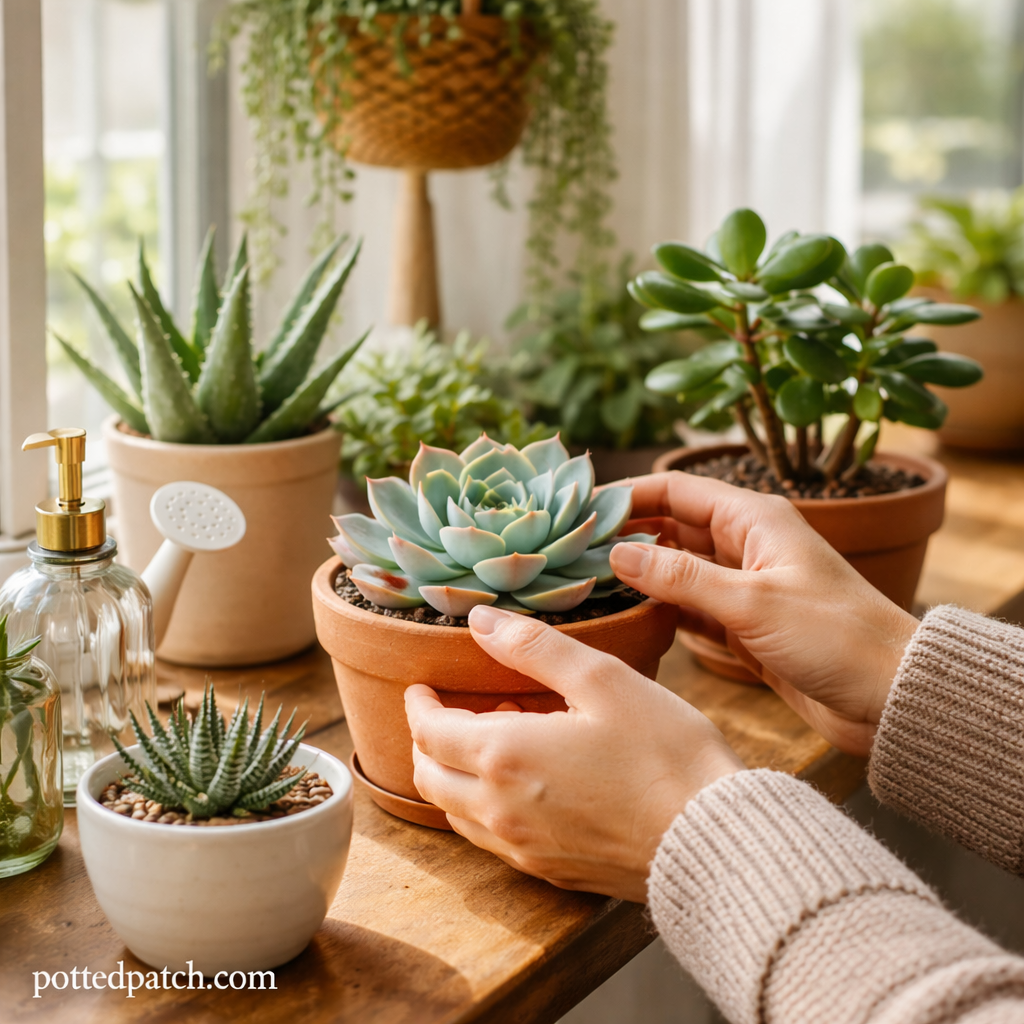
Overwatering kills more succulents than underwatering.
The Right Way to Water
Follow this simple rule:
- Let the soil dry out completely.
- Water thoroughly until it drains from the bottom.
- Empty the saucer.
- Wait until fully dry again before watering.
How Often Should You Water?
- Spring/Summer: Every 2–3 weeks (depending on light and temperature)
- Fall/Winter: Every 3–4+ weeks
Always check soil dryness before watering. Stick your finger 1–2 inches into the soil. If it feels dry, it’s time.
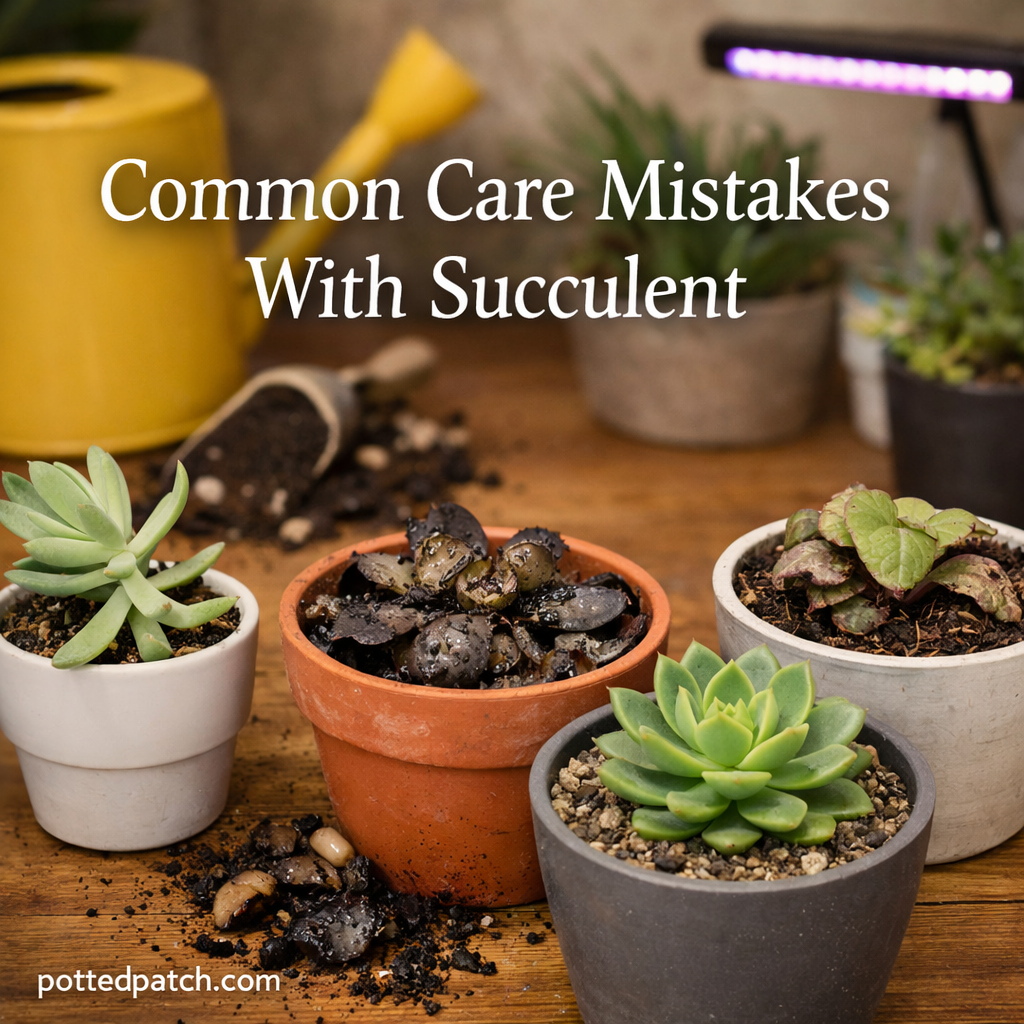
Signs of Overwatering
- Soft, mushy leaves
- Yellowing
- Leaves falling off easily
- Black stem at soil line
Signs of Underwatering
- Wrinkled leaves
- Leaves feel thin or flexible
- Soil pulling away from pot edges
If unsure, wait a few more days. Succulents tolerate drought better than excess moisture.
Soil and Pot Selection
Regular potting soil holds too much moisture for succulents.
Best Soil Type
Use:
- Cactus or succulent mix
- Or a DIY blend of 50% potting soil + 50% perlite or pumice
The goal is fast drainage and airflow around roots.
Choosing the Right Pot
Always use a pot with a drainage hole.
Terracotta pots are excellent because they:
- Absorb excess moisture
- Improve airflow
- Reduce root rot risk
Avoid decorative containers without drainage unless you’re very experienced.
Temperature and Humidity
Succulents prefer:
- Temperatures between 60–80°F
- Low to moderate humidity
They do well in normal indoor household conditions.
Keep them away from:
- Cold drafts
- Heating vents
- Air conditioners
Sudden temperature swings can stress the plant.
Fertilizing Indoor Succulents
Succulents are light feeders.
Fertilize:
- Once in spring
- Once in summer
Use a diluted cactus fertilizer at half strength.
Avoid fertilizing in fall and winter when growth slows.
Repotting: When and How
Repot your succulent every 1–2 years or when:
- Roots grow out of drainage holes
- Soil compacts and drains poorly
- Plant becomes top-heavy
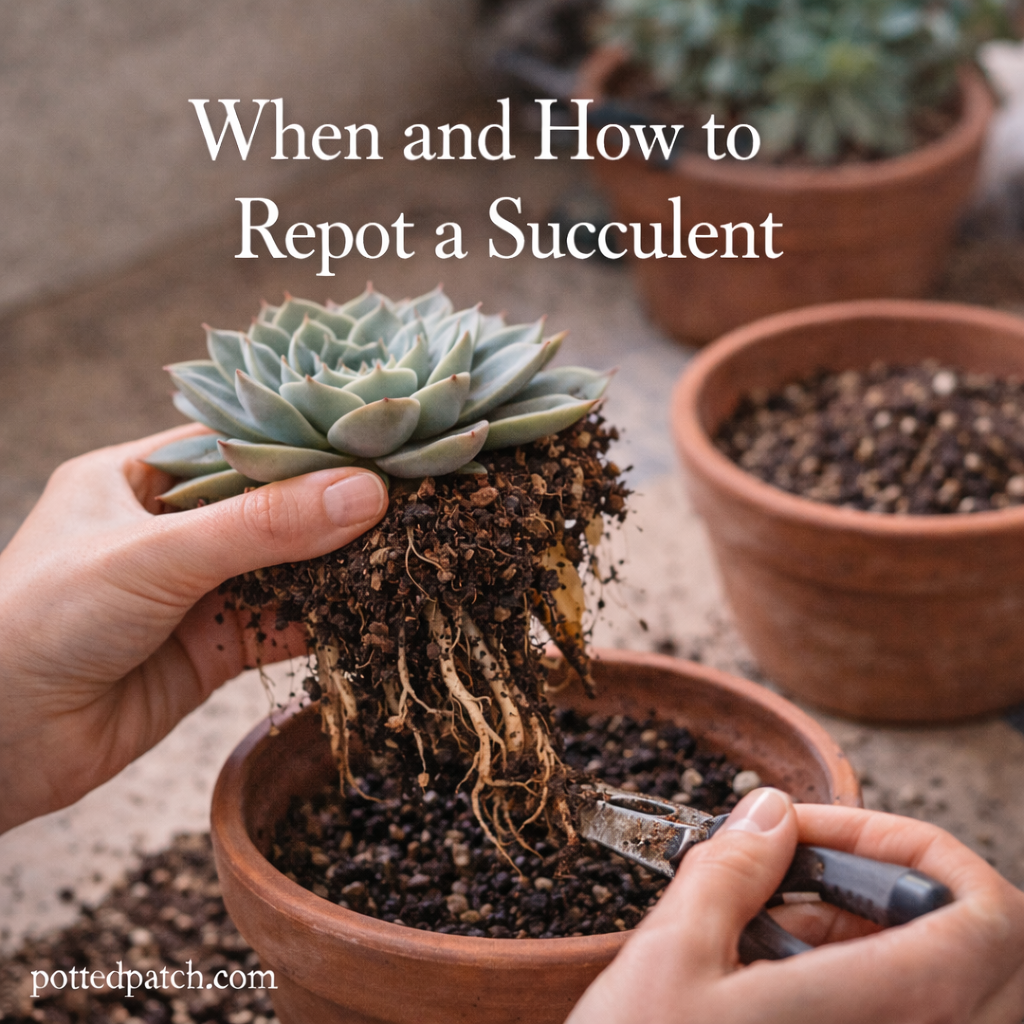
Simple Repotting Steps
- Gently remove plant from old pot.
- Shake off excess soil.
- Inspect and trim dead roots.
- Place in fresh succulent mix.
- Wait 3–5 days before watering.
Waiting prevents root rot while small root breaks heal.
Common Indoor Succulent Problems (And Fixes)
Leggy Growth
Cause: Not enough light
Fix: Move to brighter window or use grow light
Mushy Base
Cause: Overwatering
Fix: Remove from soil, trim rot, repot in dry mix
Leaves Dropping
Cause: Overwatering or natural lower leaf shedding
Fix: Check soil moisture first
Pests (Mealybugs, Spider Mites)
- Wipe leaves with alcohol-dipped cotton swab
- Improve airflow
- Isolate infected plant
Early treatment prevents spread.
Seasonal Care Adjustments
Indoor succulents follow seasonal growth patterns.
Spring & Summer
- More light
- Slightly more frequent watering
- Fertilize lightly
Fall & Winter
- Reduce watering
- No fertilizer
- Keep in brightest possible light
Growth slows, so watering needs decrease.
Simple Indoor Succulent Care Checklist
Use this as your quick reference:
- Bright light (6+ hours daily)
- Let soil dry completely before watering
- Always use drainage holes
- Use fast-draining soil
- Rotate plant regularly
- Avoid overwatering in winter
Final Thoughts
Caring for a succulent indoors is about balance — especially with light and water.
Give them bright conditions, let them dry out fully between waterings, and avoid heavy soil. With these simple habits, your succulent can stay compact, colorful, and healthy for years.
Succulents reward patience. When you learn their rhythm, they become one of the easiest and most beautiful indoor plants to grow.