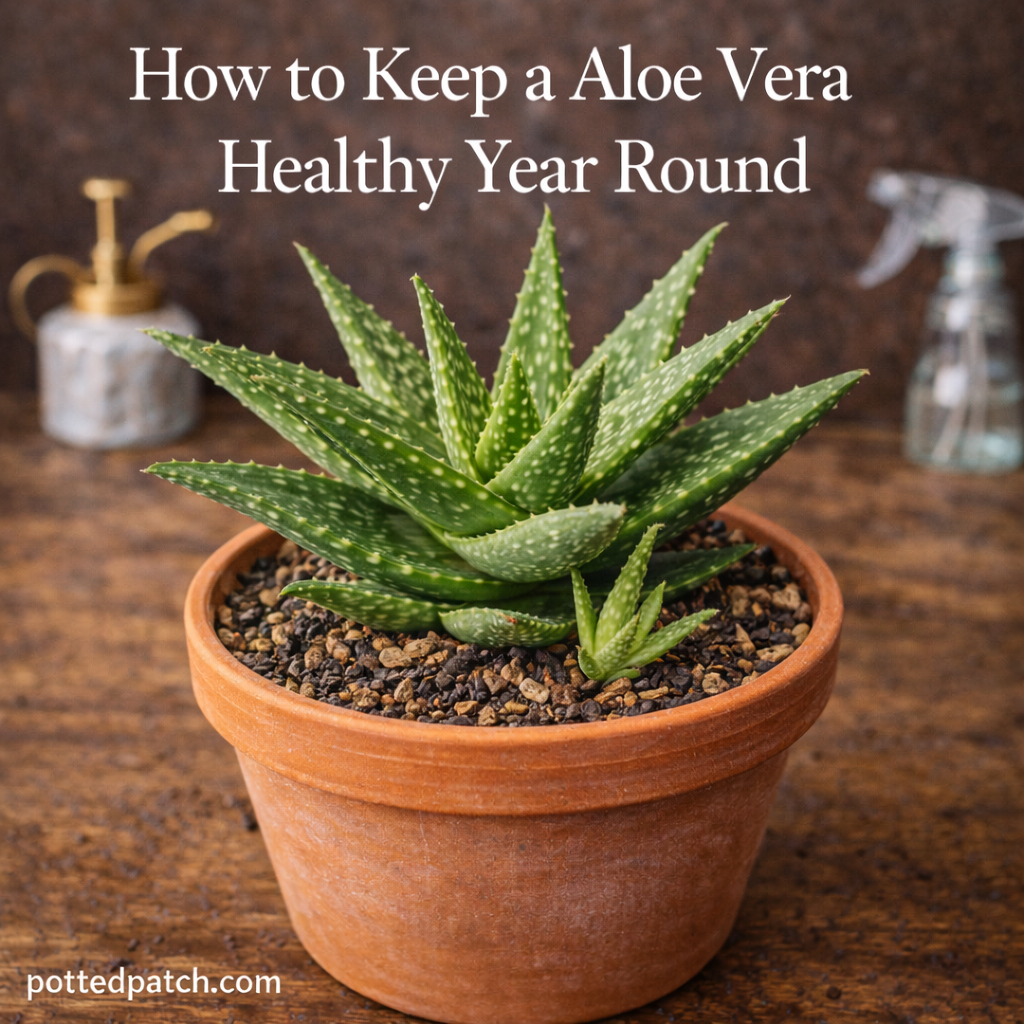
Aloe vera is one of the most resilient indoor plants — but keeping it consistently healthy throughout the year requires small seasonal adjustments.
Because aloe is a succulent, its needs change with light levels, temperature shifts, and growth cycles. The key to year-round health is understanding when to step in — and when to step back.
Here’s how to keep your aloe vera thriving in every season.
Understand Aloe’s Natural Growth Cycle
Aloe vera grows most actively in:
- Spring
- Summer
Growth slows significantly in:
- Fall
- Winter
If your plant seems “stalled” during colder months, that’s normal. Avoid trying to force growth during dormancy.
Provide Consistent Bright Light
Light is the foundation of aloe health.
Ideal Lighting
- 6–8 hours of bright, indirect sunlight daily
- South- or west-facing window preferred
- Rotate the pot every few weeks for even growth
Winter Tip
Days are shorter in winter. Move aloe closer to the window or supplement with a grow light if leaves begin stretching or fading.
Pale, leaning, or thin leaves often signal insufficient light.
Master the Soak-and-Dry Watering Method
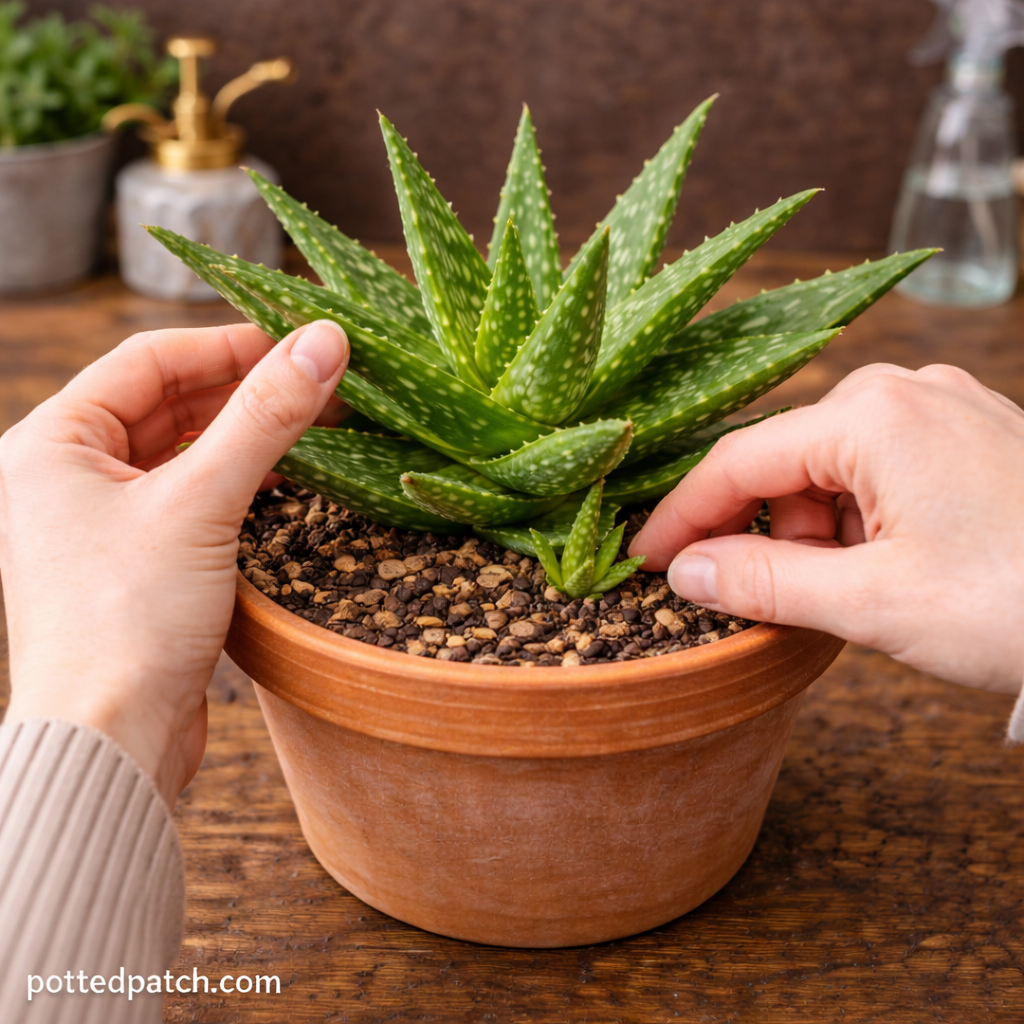
Aloe stores water in its leaves, which means it prefers drying out completely between waterings.
Year-Round Watering Rule
- Wait until soil is completely dry.
- Water deeply until excess drains out.
- Empty the saucer.
Seasonal Adjustments
- Spring/Summer: Every 2–3 weeks (depending on light and heat)
- Fall/Winter: Every 3–5 weeks
Always check the soil — not the calendar.
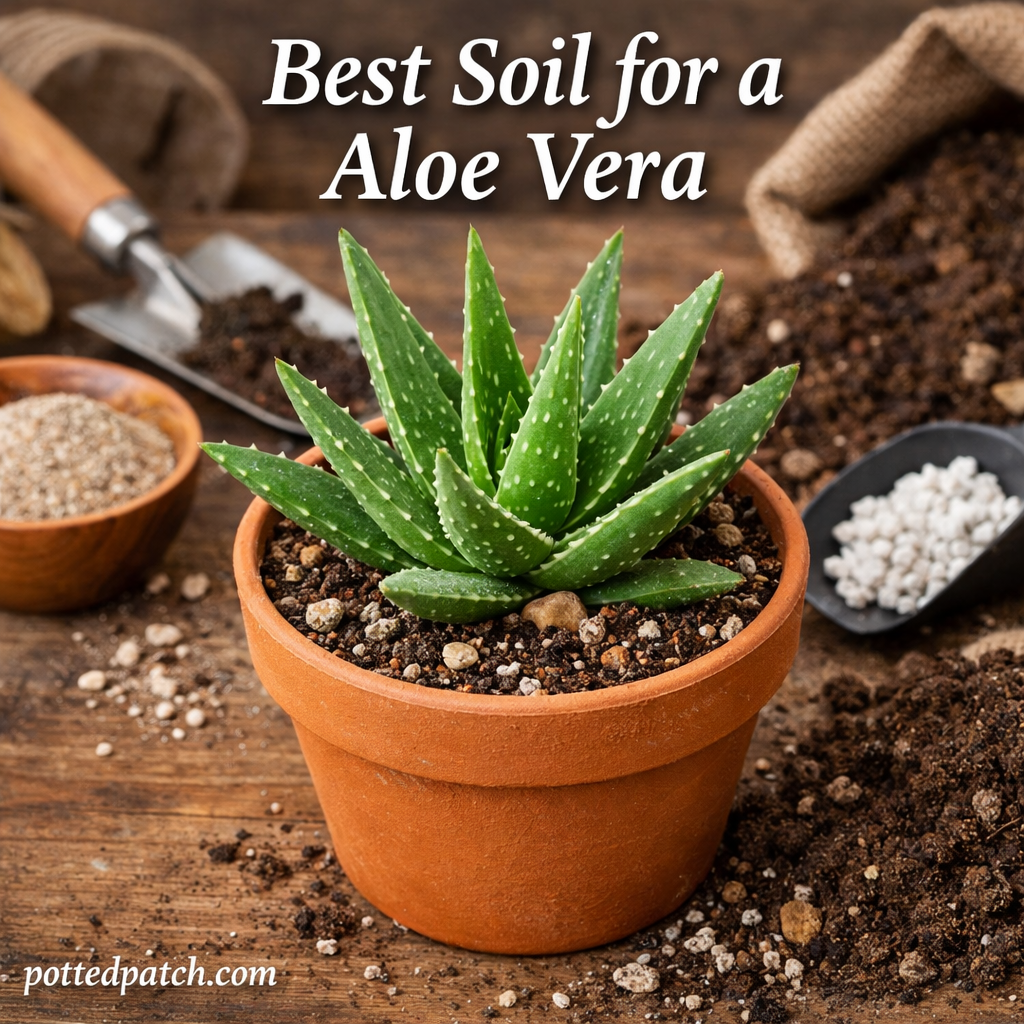
Use Well-Draining Soil
Healthy roots are critical for long-term plant health.
Use:
- Cactus or succulent mix
- Soil amended with perlite or coarse sand
- A pot with drainage holes
Dense soil that stays wet too long can cause root rot — the most common reason aloe declines.
Keep Temperatures Stable
Aloe prefers warm, stable indoor conditions.
Ideal Temperature Range
- 60–85°F
- Protect from temperatures below 50°F
- Avoid cold drafts near windows or doors
During winter, move the plant away from chilly glass and exterior walls.
Fertilize Lightly (But Only in Growing Season)
Aloe doesn’t need heavy feeding.
Best Practice
- Fertilize once in spring
- Optional second feeding in early summer
- Skip fall and winter fertilizing
Use diluted succulent fertilizer to prevent salt buildup and root burn.
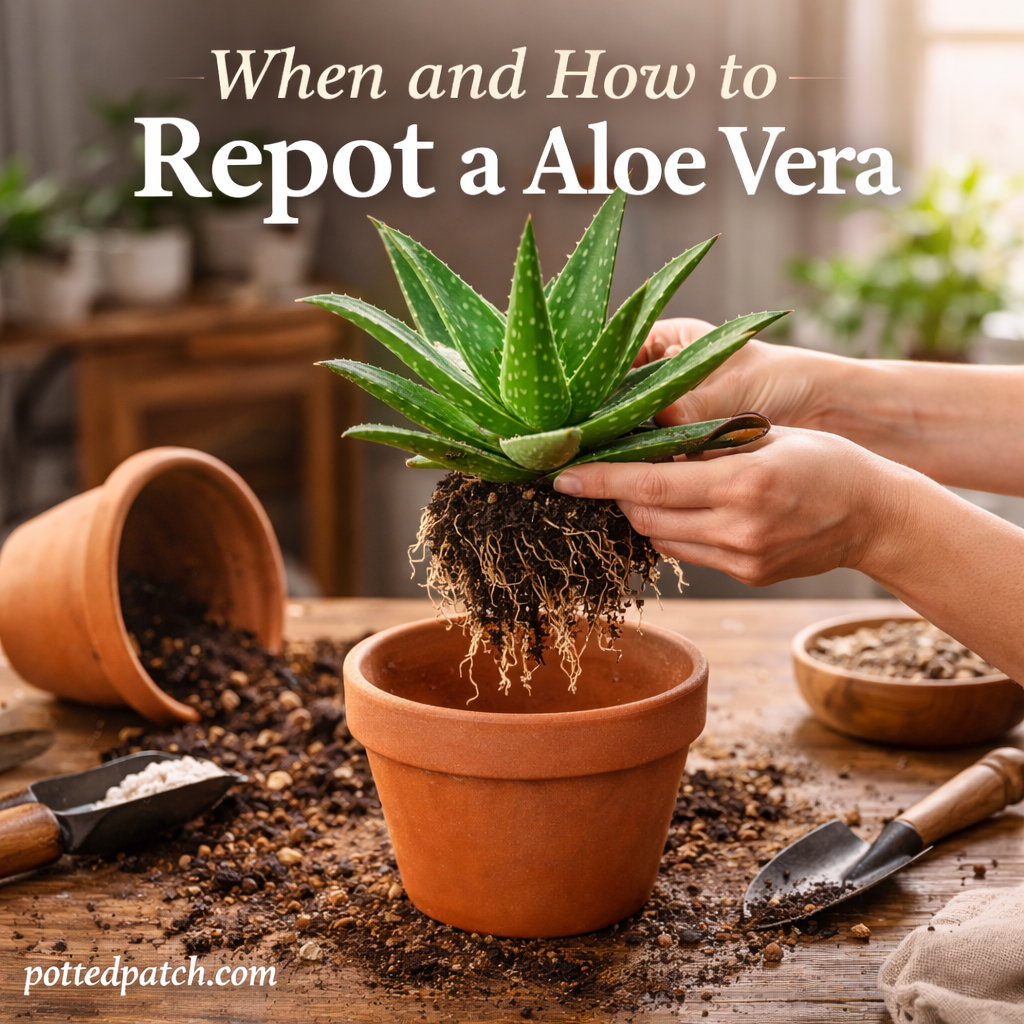
Repot Every 2–3 Years
Over time, aloe may outgrow its container.
Signs It Needs Repotting
- Roots coming out of drainage holes
- Soil dries out extremely fast
- Plant becomes top-heavy
Choose a pot only 1–2 inches larger in diameter to prevent overwatering issues.
Monitor for Pests and Stress
While aloe is low-maintenance, check occasionally for:
- Mealybugs
- Soft, mushy leaves (overwatering)
- Brown or reddish leaves (sun stress)
Early detection makes problems easy to fix.
Seasonal Aloe Care Overview
Here’s a simple seasonal breakdown:
Spring
- Increase watering slightly
- Fertilize once
- Check for new growth
Summer
- Ensure bright light
- Monitor heat and sun intensity
- Water as needed
Fall
- Reduce watering
- Stop fertilizing
Winter
- Water sparingly
- Protect from cold drafts
- Provide maximum available light
Small adjustments keep aloe stable year round.
Quick Year-Round Care Checklist
To maintain a healthy aloe vera plant:
- Bright, consistent light
- Fully drying soil between waterings
- Well-draining soil mix
- Warm indoor temperatures
- Minimal fertilizer
- Occasional rotation for even growth
Consistency matters more than frequent intervention.
Final Thoughts
Keeping aloe vera healthy year round is about balance — not constant attention.
Provide strong light, allow the soil to dry out fully, and adjust watering as seasons change. With these basics in place, aloe remains firm, vibrant, and capable of producing new growth for years to come.
A little awareness goes a long way in maintaining a strong, resilient indoor succulent.