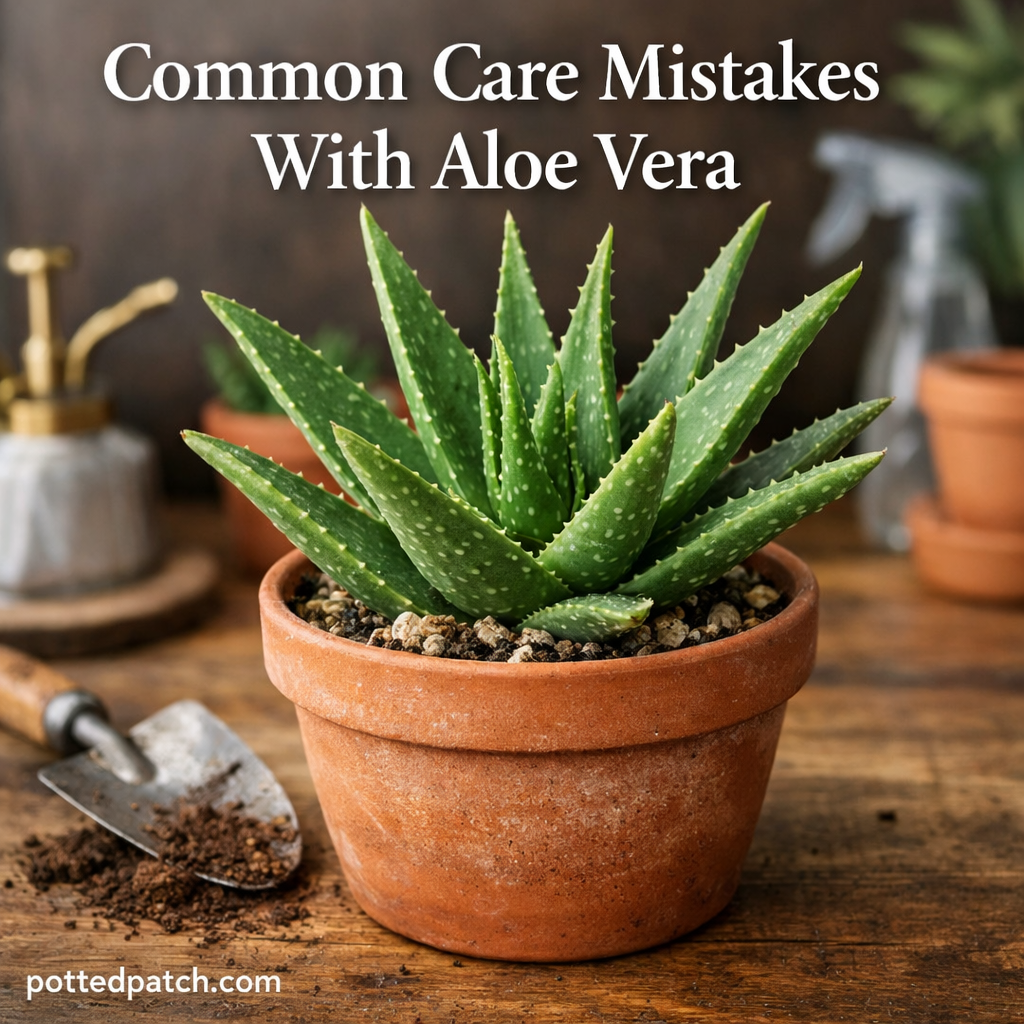
Aloe vera is one of the easiest houseplants to grow — until it suddenly isn’t. If your once-thriving plant is turning brown, going mushy, or refusing to grow, chances are a simple care mistake is the culprit.
The good news? Most aloe vera problems are completely fixable.
In this guide, we’ll cover the most common aloe vera care mistakes, how to recognize them, and what to do instead so your plant stays healthy, firm, and thriving indoors.
Why Aloe Vera Is Often Overcared For
Aloe vera is a succulent. That means it stores water in its thick leaves and is built to survive dry, harsh conditions.
The biggest issue most plant owners face is doing too much instead of too little.
Remember this rule: aloe prefers neglect over attention.
1. Overwatering Aloe Vera
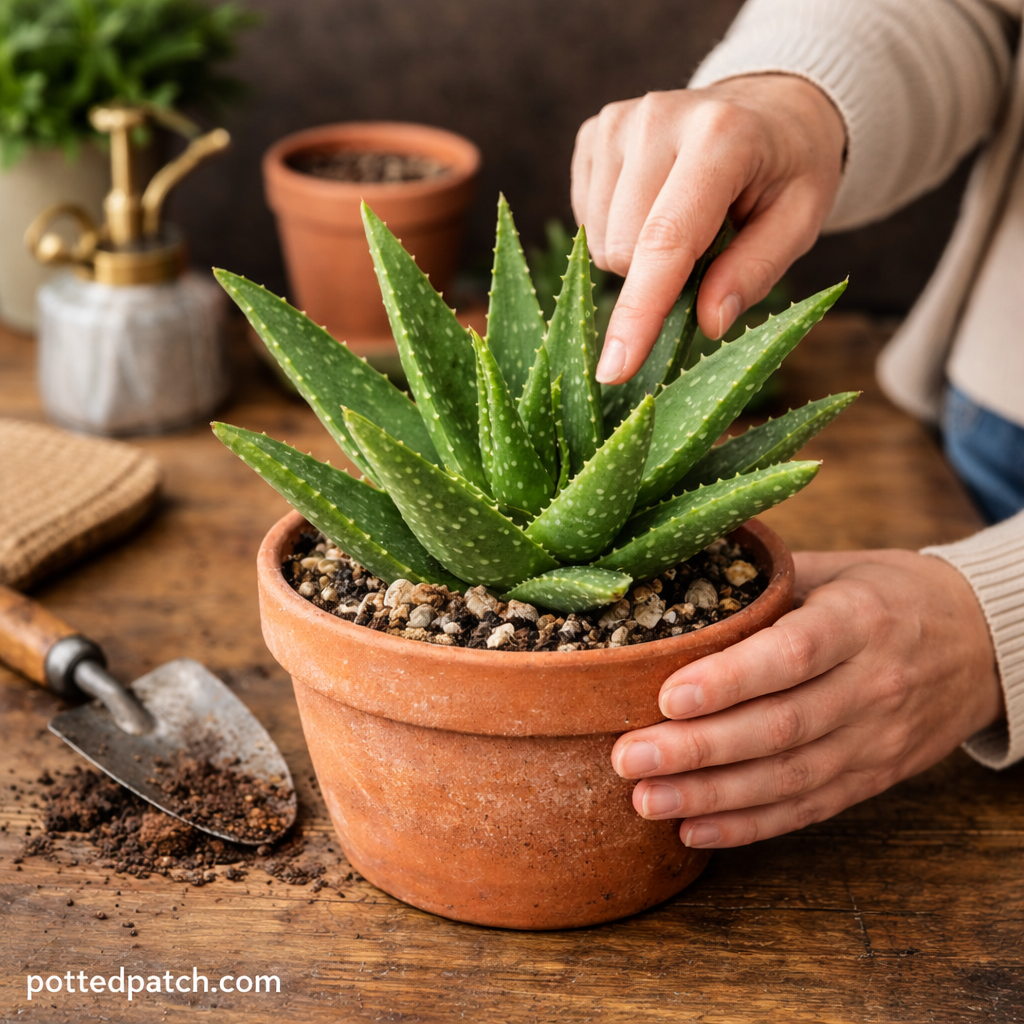
This is the #1 mistake.
Signs You’re Overwatering
- Soft, mushy leaves
- Yellowing or translucent leaves
- Black spots near the base
- A sour smell from the soil
- Leaves collapsing outward
Overwatering causes root rot, which can quickly kill aloe if not corrected.
What To Do Instead
- Water only when the soil is completely dry
- Stick your finger 2 inches into the soil before watering
- In most homes, this means watering every 2–4 weeks
- Reduce watering even more in winter
When in doubt, wait a few more days.
2. Using the Wrong Soil
Aloe vera hates regular potting soil. Standard mixes hold too much moisture.
Why This Is a Problem
Poor drainage leads to soggy roots, which leads to rot.
The Fix
Use:
- Cactus or succulent mix
- A well-draining DIY blend (potting soil + perlite + coarse sand)
- A pot with drainage holes
Fast drainage is critical for aloe health.
3. Not Providing Enough Light
Aloe vera needs bright light to stay compact and healthy.
Signs of Low Light
- Pale or faded green leaves
- Long, stretched growth
- Leaves bending toward the window
- Slow or stalled growth
Ideal Lighting
- Bright, indirect sunlight
- A south- or west-facing window
- At least 6 hours of bright light daily
If natural light is limited, a grow light can help prevent stretching.
4. Using a Pot Without Drainage
Decorative pots without holes trap water at the bottom.
Even if you water lightly, excess moisture has nowhere to escape.
Better Option
Always use:
- A pot with at least one drainage hole
- Terracotta pots (they dry out faster)
If you love decorative planters, place the aloe in a plastic nursery pot inside the decorative one.
5. Watering on a Schedule Instead of Checking Soil
Many people water every Sunday out of habit.
Aloe doesn’t follow a calendar.
Why This Causes Problems
Humidity, temperature, and light all affect how quickly soil dries.
Smarter Approach
Use the soak-and-dry method:
- Water deeply until it drains out the bottom.
- Wait until the soil is fully dry before watering again.
This mimics aloe’s natural desert environment.
6. Exposing Aloe to Sudden Harsh Sun
While aloe loves bright light, sudden exposure to intense direct sun can cause sunburn.
Signs of Sun Stress
- Brown or reddish patches
- Crispy tips
- Bleached spots
How To Prevent It
If moving aloe outdoors:
- Gradually increase sun exposure over 1–2 weeks
- Start in partial shade
- Avoid harsh afternoon sun at first
Acclimation prevents leaf damage.
7. Ignoring Temperature Needs
Aloe prefers warmth.
Ideal Temperature Range
- 60–85°F (15–29°C)
- Keep away from cold drafts
- Protect from temperatures below 50°F
Cold damage can make leaves soft and discolored.
8. Repotting Too Often
Aloe doesn’t need frequent repotting.
Repotting too often stresses the roots and can slow growth.
When to Repot
- Roots are growing out of drainage holes
- The plant is severely rootbound
- Soil no longer drains properly
Usually, every 2–3 years is enough.
9. Removing Too Many Leaves at Once
Harvesting aloe gel is tempting — but overharvesting weakens the plant.
Best Practice
- Remove only outer, mature leaves
- Never take more than 1–2 leaves at a time
- Let the plant recover between harvests
Healthy leaves mean continued growth.
10. Fertilizing Too Frequently
Aloe vera does not need heavy feeding.
Too much fertilizer can cause:
- Leaf burn
- Weak growth
- Salt buildup in soil
If You Choose to Fertilize
- Use diluted succulent fertilizer
- Feed once in spring and once in summer
- Skip feeding in fall and winter
Less is more.
Quick Aloe Vera Care Checklist
If you want a simple reminder, follow these basics:
- Bright, indirect light
- Well-draining succulent soil
- Pot with drainage hole
- Water only when soil is fully dry
- Warm temperatures
- Minimal fertilizer
That’s it.
Final Thoughts
Most aloe vera problems come from good intentions.
Overwatering, overfeeding, and overhandling are far more common than neglect. If your plant looks unhappy, scale back first — not forward.
Give aloe bright light, fast-draining soil, and time to dry out between waterings. When its natural desert conditions are respected, aloe becomes one of the most resilient and rewarding indoor plants you can grow.